
20 tips and tricks to improve your Chinese writing ability

Mastering Chinese writing can be a challenging yet rewarding endeavor, whether you're a beginner or an advanced learner. With its intricate characters, tonal nuances, and grammatical subtleties, improving your writing skills requires consistent practice and the right strategies. This article presents 20 practical tips and tricks to help you enhance your Chinese writing ability, from mastering stroke order and expanding vocabulary to understanding cultural context and refining sentence structure. Whether you're preparing for exams, professional communication, or personal growth, these actionable insights will guide you toward clearer, more confident, and culturally appropriate writing. Dive in and discover how to elevate your Chinese writing to the next level.
20 Tips and Tricks to Improve Your Chinese Writing Ability
1. Master the Basics: Learn Common Characters and Radicals
To improve your Chinese writing, start by mastering the most frequently used characters and radicals. Understanding radicals helps you recognize and remember characters more efficiently. Focus on learning at least 1,000 common characters, as they make up around 90% of written Chinese. Use flashcards or apps like Anki to reinforce memory.
| Tip | Action |
|---|---|
| Learn radicals first | Study 50 basic radicals to recognize character patterns |
| Practice stroke order | Follow correct stroke sequences for better handwriting |
2. Read Extensively to Expand Vocabulary
Reading Chinese texts daily exposes you to new vocabulary and sentence structures. Start with simple materials like children's books or graded readers, then progress to newspapers like 《人民日报》 (People's Daily). Highlight unfamiliar words and review them later.
See AlsoPanning: How to keep similar Chinese characters and words separate| Tip | Action |
|---|---|
| Read aloud | Improves pronunciation and character recognition |
| Keep a reading journal | Summarize texts in Chinese to practice writing |
3. Write Daily and Get Feedback
Consistent practice is key. Write short paragraphs or diary entries in Chinese daily. Use platforms like LangCorrect or find a language partner to review your work. Focus on correcting repeated mistakes in grammar or word usage.
| Tip | Action |
|---|---|
| Start small | Write 3-5 sentences daily, then increase length |
| Track progress | Compare old and new writing samples to see improvement |
4. Use Mnemonics to Remember Characters
Create mnemonic devices to associate characters with stories or images. For example, the character “休” (rest) combines “亻” (person) and “木” (tree), picturing someone leaning against a tree to rest. Apps like Skritter incorporate mnemonics in lessons.
| Tip | Action |
|---|---|
| Visualize characters | Link shapes to real-life objects |
| Use spaced repetition | Review characters at increasing intervals |
5. Study Grammar and Sentence Patterns
Chinese grammar relies on word order and particles rather than verb conjugations. Practice common structures like Subject + Verb + Object or 虽然...但是... (although...but...). Analyze sentences from native materials to understand context.
See AlsoOnline Slang For Texting In Chinese| Tip | Action |
|---|---|
| Memorize measure words | Learn pairs like “一本书” (a book) for accuracy |
| Imitate native writing | Copy essays or articles to absorb style |
How to improve Chinese writing skills?
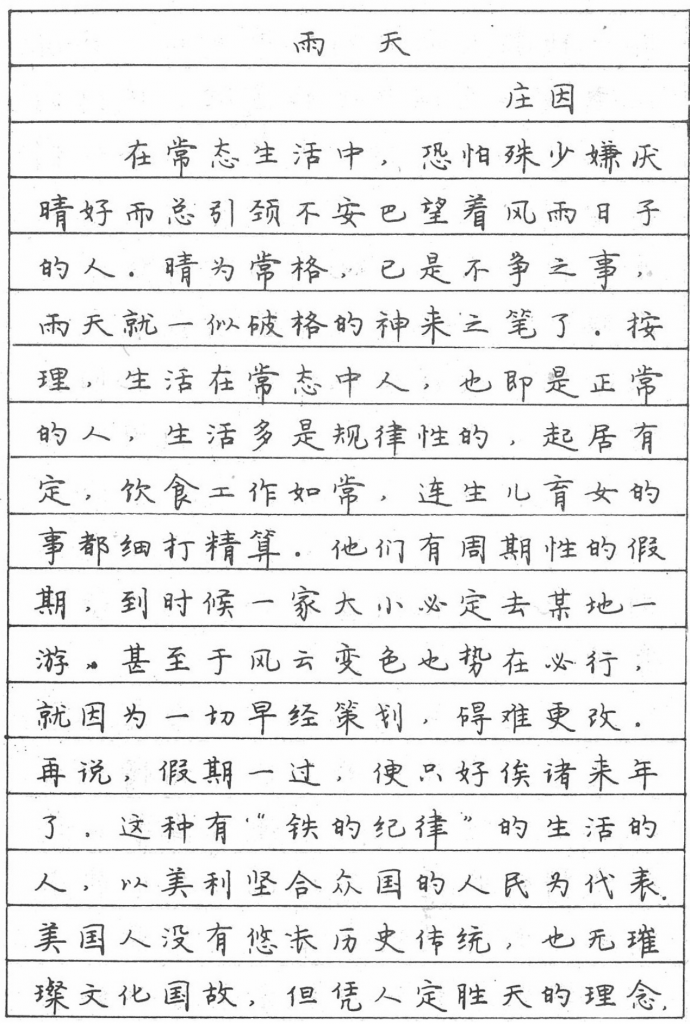
Practice Writing Chinese Characters Daily
To improve Chinese writing skills, consistent practice is essential. Writing characters daily helps reinforce memory and improves stroke order accuracy. Here are key steps:
- Use grid paper to maintain proper character proportions and spacing.
- Copy model texts from textbooks or native materials to learn correct structure.
- Review radicals and common components to understand character composition.
Expand Vocabulary Through Reading
A rich vocabulary is crucial for effective Chinese writing. Reading exposes you to new words and contextual usage. Follow these steps:
See AlsoThe Language of China: Chinese Mandarin - A Comprehensive Guide- Read graded readers or news articles tailored to your proficiency level.
- Highlight unfamiliar words and add them to flashcards for review.
- Practice using new terms in sentences to reinforce retention.
Master Grammar and Sentence Structure
Proper grammar ensures clarity in Chinese writing. Focus on sentence patterns and particles. Key actions include:
- Study basic grammar rules, such as word order (e.g., Subject-Verb-Object).
- Analyze example sentences to identify common structures.
- Write short paragraphs and seek feedback to correct mistakes.
Seek Feedback from Native Speakers
Constructive criticism accelerates writing improvement. Engage with native speakers for corrections. Steps to follow:
- Join language exchange platforms like Tandem or HelloTalk.
- Submit written work for review and note recurring errors.
- Ask for explanations to understand why corrections are made.
Use Technology and Tools
Leverage digital resources to enhance Chinese writing. Recommended tools and methods:
- Install handwriting input apps to practice character recognition.
- Use grammar checkers like LangCorrect or Pleco’s document reader.
- Watch Chinese TV shows with subtitles to absorb natural expressions.
How to improve Chinese composition writing?

Build a Strong Vocabulary Foundation
To improve your Chinese composition writing, start by expanding your vocabulary. A rich vocabulary allows you to express ideas more precisely and creatively.
- Read extensively: Engage with Chinese books, newspapers, and articles to encounter new words in context.
- Use flashcards: Memorize and review key terms regularly to reinforce retention.
- Practice word usage: Write sentences or short paragraphs incorporating newly learned words.
Master Sentence Structure and Grammar
Proper sentence structure and grammar are essential for clear and effective writing in Chinese.
- Study grammar rules: Focus on common patterns, such as subject-verb-object order and modifiers.
- Analyze model essays: Observe how skilled writers construct sentences and paragraphs.
- Write daily: Practice forming correct sentences to internalize grammatical rules.
Develop Logical Flow and Coherence
A well-structured composition requires a logical flow to guide the reader through your ideas smoothly.
- Outline before writing: Plan your introduction, body, and conclusion to ensure coherence.
- Use transitional phrases: Words like 首先 (firstly) and 因此 (therefore) improve readability.
- Revise for clarity: Rearrange sentences or paragraphs if the flow feels disjointed.
Incorporate Idioms and Proverbs
Using idioms and proverbs can elevate your writing and make it more culturally authentic.
- Learn common idioms: Phrases like 一举两得 (kill two birds with one stone) add depth.
- Apply them appropriately: Ensure idioms fit the context to avoid confusion.
- Practice in context: Write passages that naturally include these expressions.
Seek Feedback and Revise
Continuous improvement in Chinese composition requires external input and refinement.
- Share with peers or teachers: Constructive criticism helps identify weaknesses.
- Edit for errors: Check for spelling, grammar, and stylistic inconsistencies.
- Rewrite weak sections: Improve clarity, logic, or creativity based on feedback.
How to have neat Chinese handwriting?
Understand the Basic Strokes of Chinese Characters
To achieve neat Chinese handwriting, you must first master the basic strokes. Each character is built from a combination of strokes, and understanding their correct order and direction is crucial.
- Learn the eight fundamental strokes, such as the horizontal (一), vertical (丨), and hook (亅).
- Practice stroke order rules, like writing from top to bottom and left to right.
- Use grid paper to ensure consistent stroke length and spacing.
Use Proper Writing Tools
The right tools can significantly improve your handwriting. Quality materials help maintain control and precision.
- Choose a comfortable pen or brush with good grip and ink flow.
- Opt for grid or lined paper to guide character proportions.
- Experiment with different nib sizes to find what suits your style.
Practice Character Structure and Balance
Balanced characters are key to neat handwriting. Pay attention to the proportions and spacing within each character.
- Study radicals and components to understand how parts fit together.
- Keep strokes evenly spaced to avoid crowding or gaps.
- Align characters symmetrically for a clean appearance.
Copy Model Handwriting or Calligraphy
Imitating exemplary handwriting helps internalize proper techniques.
- Trace over model sheets to build muscle memory.
- Analyze professional calligraphy to observe stroke flow.
- Reproduce characters slowly before increasing speed.
Develop Consistency Through Daily Practice
Regular practice is essential for maintaining neat handwriting over time.
- Set aside time daily to write characters.
- Focus on problem areas and repeat challenging strokes.
- Track progress by comparing old and new writing samples.
How to revise for Chinese writing?
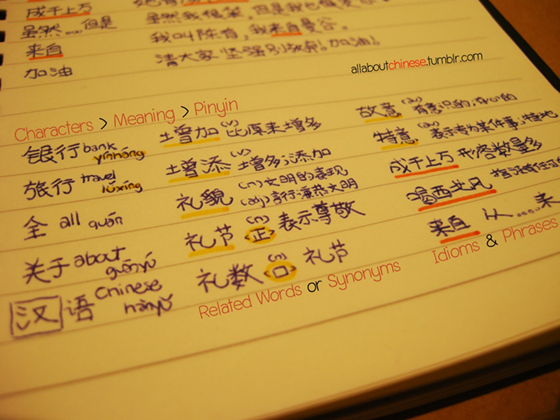
Understand the Basic Structure of Chinese Characters
To revise for Chinese writing, start by mastering the fundamental components of characters, such as radicals and strokes. Break down complex characters into smaller parts to understand their construction.
- Learn radicals: Many characters share common radicals, which indicate meaning or pronunciation.
- Practice stroke order: Correct stroke order ensures characters look balanced and are easier to write.
- Use grids: Writing on grid paper helps maintain proper proportions and alignment.
Build Vocabulary Through Repetition
Expanding your vocabulary is crucial for Chinese writing. Repeated exposure and practice reinforce memory.
- Flashcards: Create flashcards for new characters and review them daily.
- Write sentences: Use new words in sentences to understand context and usage.
- Spaced repetition: Use apps like Anki to schedule reviews at optimal intervals.
Practice Writing Essays and Short Paragraphs
Applying your knowledge in longer texts improves fluency and coherence in Chinese writing.
- Start with simple topics: Write about daily activities or familiar subjects.
- Seek feedback: Ask a teacher or native speaker to correct your work.
- Imitate model essays: Analyze well-written essays and emulate their structure.
Use Online Tools and Resources
Leverage technology to enhance your revision process for Chinese writing.
- Pleco: A dictionary app with handwriting input and example sentences.
- Skritter: An app focused on character writing practice with stroke order guidance.
- Language forums: Join platforms like Reddit or HelloTalk to exchange writing samples.
Review Common Mistakes and Grammar Rules
Avoiding frequent errors strengthens your writing accuracy.
- Identify patterns: Note recurring mistakes in your writing and focus on correcting them.
- Study grammar: Review sentence structures, particles, and measure words.
- Keep a journal: Track progress and reflect on improvements over time.
Frequently Asked Questions (FAQ)
What are the most effective tips to improve Chinese writing skills?
Consistent practice is the cornerstone of improving your Chinese writing ability. Start by writing short paragraphs daily, focusing on grammar, vocabulary, and sentence structure. Additionally, reading Chinese literature or news articles can expose you to natural phrasing and idiomatic expressions. Another key tip is to use flashcards for memorizing characters and reviewing them regularly to reinforce retention.
How can I expand my Chinese vocabulary for better writing?
To expand your vocabulary, make a habit of learning a set number of new words each week and using them in sentences. Contextual learning—such as reading books or watching Chinese shows with subtitles—helps reinforce word usage. Tools like Pleco or Anki can assist in memorization. Additionally, keeping a vocabulary journal where you note down new words, their meanings, and example sentences can significantly boost retention.
What role does grammar play in improving Chinese writing?
Grammar is essential for constructing coherent and accurate sentences in Chinese. Unlike English, Chinese relies heavily on word order and particles rather than verb conjugations. Focus on mastering sentence patterns, such as the 把 (bǎ) structure or the use of 了 (le) for completed actions. Practicing with workbooks or online exercises can help solidify these rules. Mistakes are part of the learning process, so review corrections carefully to avoid repetition.
How can I make my Chinese writing sound more natural?
To achieve a natural flow, immerse yourself in authentic Chinese content, such as blogs, essays, or social media posts by native speakers. Pay attention to commonly used phrases and colloquialisms. Another useful technique is to have a native speaker proofread your work and provide feedback. Avoid direct translations from English, as this often results in unnatural phrasing. Instead, think in Chinese and mimic the style of experienced writers.
Leave a Reply
Related Posts