| Hong Kong |
What does 777 mean in Chinese internet slang?

What is the Origin of 777 in Chinese Internet Slang?
The term 777 originates from gaming culture, particularly in esports and live-streaming platforms like Douyu and Huya. It symbolizes luck and celebration, similar to how 666 represents excellence. The number 7 (七, qī) sounds like cheer in Chinese, making it a playful way to hype up players or streamers.
- Derived from gaming communities as a lucky charm.
- Popularized by streamers and viewers during high-stakes moments.
- Evolved into broader internet slang for encouragement.
How is 777 Used in Online Conversations?
In chats or comments, 777 is spammed to celebrate achievements or wish luck. For example, if a streamer wins a match, viewers flood the chat with 777 instead of applause. It’s also used sarcastically to mock unexpected failures or ironic success.
- Spammed in live streams for hype.
- Represents support or mockery, depending on context.
- Often paired with emojis (e.g., ) for emphasis.
Why is 777 Associated with Luck?
The association stems from Western slot machines, where 777 is a jackpot symbol. Chinese netizens adopted this imagery, linking it to fortune. Additionally, the pronunciation of 7 (qī) resembles upbeat phrases, reinforcing its positive vibe.
- Tied to casino culture and winning streaks.
- Phonetic similarity to encouraging words in Chinese.
- Used to manifest good outcomes in games or real life.
How Does 777 Differ from 666 in Chinese Slang?
While 666 (liùliùliù) means awesome, 777 leans into luck rather than skill. 666 praises performance, whereas 777 wishes for future success or acknowledges fluky wins.
- 666 = admiration for ability.
- 777 = hope or chance.
- Both are spammed but convey distinct tones.
Where Else is 777 Seen in Chinese Digital Culture?
Beyond gaming, 777 appears in social media hashtags, memes, and even brand marketing. Companies use it in promotions to imply exclusivity (e.g., Limited 777 items). It’s also a shorthand for keep going in motivational posts.
- Used in giveaways or sales campaigns.
- Featured in viral challenges (e.g., Post 777 for luck).
- Adapted by influencers to engage followers.
What is CP Chinese Internet slang?

What Does CP Stand for in Chinese Internet Slang?
In Chinese internet slang, CP stands for Coupling or Character Pairing. It refers to the practice of fans pairing two characters (often from movies, TV shows, books, or real life) in a romantic or close relationship. This concept is widely popular in fandoms, fanfiction, and online discussions.
- Origin: The term originates from the Japanese word カップリング (kappuringu), meaning coupling, which was adopted into Chinese online culture.
- Usage: CP is used to describe both fictional and real-life pairings, often in shipping communities.
- Variations: It can be modified with names (e.g., WangYibo CP for a pairing involving the actor Wang Yibo).
How Is CP Used in Chinese Online Communities?
CP is a central concept in fan culture, particularly in platforms like Weibo, Lofter, and Bilibili. Fans create content, such as fan art, stories, and videos, based on their favorite CPs.
- Fanfiction: Many writers create stories exploring romantic or platonic dynamics between CP characters.
- Fan Art: Artists illustrate CPs in various scenarios, often sharing them on social media.
- Shipping Wars: Debates over which CP is canon or superior are common in fandoms.
What Are the Different Types of CPs?
CPs can be categorized based on their source or nature, with some being official (canon) and others fan-made (fanon).
- Canon CPs: Pairings confirmed by the original work (e.g., a married couple in a drama).
- Fanon CPs: Imagined pairings created by fans (e.g., two characters who never interact in the source material).
- Real-Person CP (RPS): Pairings involving real celebrities (e.g., actors or idols).
Why Is CP Culture So Popular in China?
CP culture thrives due to the interactive nature of Chinese fandoms and the emotional investment fans have in their favorite characters or celebrities.
- Escapism: Fans enjoy exploring relationships beyond the original storyline.
- Community Building: Shared interest in CPs fosters strong online communities.
- Commercial Influence: Some media intentionally hints at CPs to engage audiences.
What Are Some Famous CPs in Chinese Media?
Several CPs have gained massive popularity, often driving trends and discussions.
- BoLan (博君一肖): The pairing of Xiao Zhan and Wang Yibo from The Untamed.
- YiZhan (战山为王): Another popular pairing from the same series.
- Historical CPs: Like Wei Wuxian and Lan Wangji, also from The Untamed.
How do you say text message in Chinese?
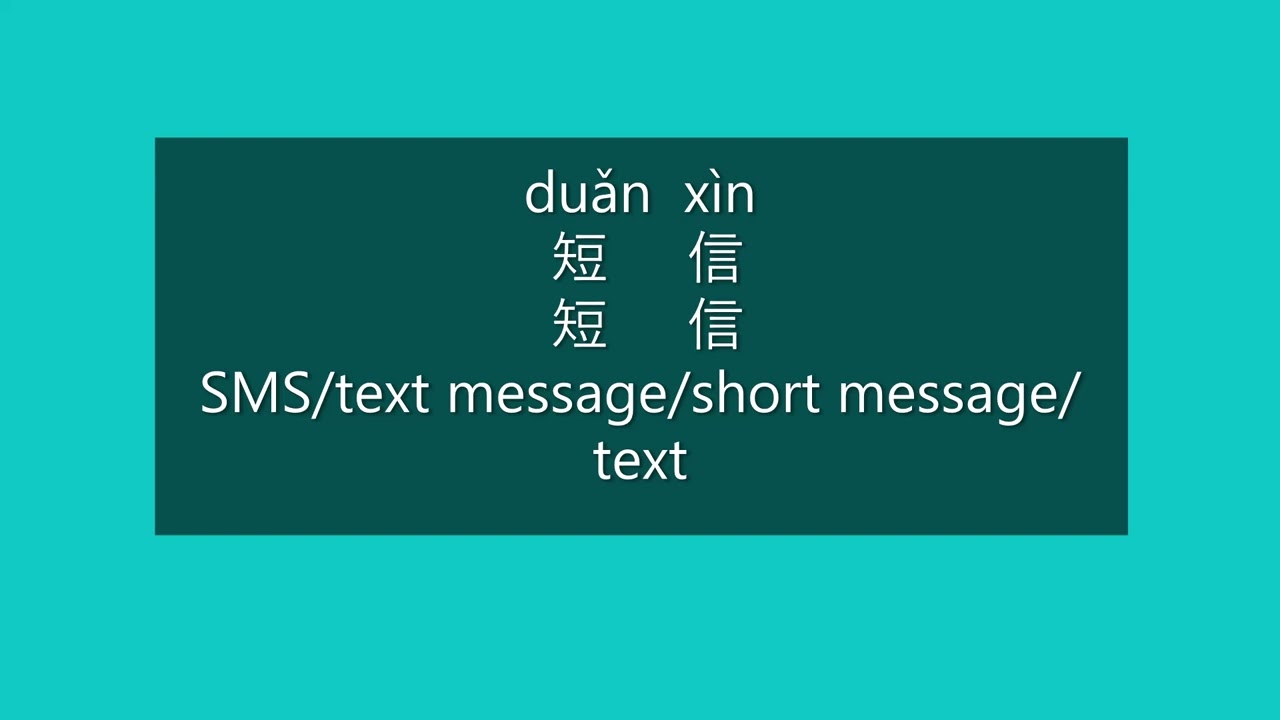
The term for text message in Chinese is 短信 (duǎnxìn), which literally translates to short message.
How to Pronounce 短信 (duǎnxìn) in Chinese?
Pronouncing 短信 (duǎnxìn) correctly involves breaking it down into syllables:
- duǎn – Sounds like dwan with a falling then rising tone (3rd tone).
- xìn – Sounds like sheen with a falling tone (4th tone).
- Together, it is pronounced as dwan-sheen with emphasis on the tones.
Is 短信 (duǎnxìn) Used in Mainland China and Taiwan?
The usage of 短信 (duǎnxìn) varies slightly across Chinese-speaking regions:
- Mainland China – Commonly used for SMS/text messages.
- Taiwan – Prefers the term 簡訊 (jiǎnxùn) instead.
- Hong Kong & Macau – May use 短訊 (dyun2 seon3) in Cantonese.
What Are Some Common Phrases Using 短信 (duǎnxìn)?
Here are useful phrases involving text messages in Chinese:
- 发短信 (fā duǎnxìn) – Send a text message.
- 收到短信 (shōu dào duǎnxìn) – Receive a text message.
- 短信通知 (duǎnxìn tōngzhī) – Text notification.
How Does 短信 (duǎnxìn) Differ from 微信 (WeChat)?
While both involve messaging, key differences include:
- 短信 refers to traditional SMS via mobile carriers.
- 微信 (Wēixìn) is a messaging app requiring internet.
- Cost – SMS may incur fees, while WeChat uses data/Wi-Fi.
Are There Slang or Alternative Terms for Text Message in Chinese?
Informal or slang variations include:
- 消息 (xiāoxi) – General term for message.
- 信息 (xìnxī) – Means information but used for texts.
- 短信儿 (duǎnxìnr) – A colloquial, softened version in Northern China.
What does 2333 mean in Chinese slang?

Origin of 2333 in Chinese Internet Slang
The term 2333 originated from a popular Chinese online forum called MOP (猫扑). It refers to the emoji ID 233, which depicted a laughing cat face. Over time, users began typing 2333 to represent laughter, with the number of 3s varying to show intensity (e.g., 23333 for louder laughter).
- MOP Forum: The platform where the emoji 233 first appeared.
- Emoji Adaptation: Users replaced the image with numbers for convenience.
- Evolution: Extended repetitions (e.g., 23333) became common for exaggerated laughter.
How 2333 Is Used in Online Conversations
In Chinese digital communication, 2333 functions similarly to LOL in English. It expresses amusement, sarcasm, or lightheartedness in chats, comments, and social media.
- Contexts: Common in replies to jokes, funny videos, or memes.
- Variations: Longer strings (e.g., 233333) indicate stronger laughter.
- Combinations: Often paired with other slang like hhh (hahaha).
Differences Between 2333 and Other Laughter Slang
Unlike terms like 哈哈哈 (hahaha) or 笑死 (dying of laughter), 2333 carries a niche, subculture-specific tone tied to early Chinese internet culture.
- Niche Appeal: Recognized mainly by longtime netizens or forum users.
- Visual vs. Text: Derived from an emoji, unlike phonetic-based slang.
- International Comparisons: Similar to Japanese www or Korean ㅋㅋㅋ.
Cultural Significance of 2333
2333 reflects the creativity of Chinese netizens in adapting platform-specific symbols into universal slang. It’s a nostalgic nod to early 2000s internet humor.
- Historical Value: Represents the golden era of BBS forums in China.
- Community Identity: Used to signal familiarity with MOP culture.
- Memetic Spread: Crossed into mainstream platforms like Weibo and Douyin.
Examples of 2333 in Modern Usage
Below are real-world scenarios where 2333 might appear:
- Social Media Comments: This meme is gold! 23333!
- Streaming Platforms: Spammed in live chats during funny moments.
- Gaming Communities: Used after in-game blunders or jokes.
Frequently Asked Questions (FAQ)
What are some common online slang terms for texting in Chinese?
Online slang in Chinese texting is widely used to make communication faster and more casual. Some popular examples include 666 (liù liù liù), which means something is awesome or skillful, and 88 (bā bā), a shorthand for bye-bye. Another common term is 囧 (jiǒng), representing an awkward or embarrassed expression. These slang terms are deeply embedded in internet culture and are frequently used in messaging apps like WeChat and QQ.
How do Chinese netizens use numbers as slang in texting?
Chinese netizens often replace words with numbers that sound similar to phrases in Mandarin. For instance, 520 (wǔ èr líng) sounds like I love you (wǒ ài nǐ), while 2333 mimics laughter, originating from an emoticon on a popular forum. Other examples include 555 (wǔ wǔ wǔ), resembling crying sounds. This numeric slang simplifies typing and adds a playful tone to conversations.
Why do Chinese texters mix English letters with slang?
Mixing English letters with Chinese slang is a trend to save time or add humor. For example, GG stands for good game but is used to admit defeat, and PK (player kill) refers to a competition. Some abbreviations, like BTW (by the way), are borrowed directly from English. This blend reflects the global influence on Chinese internet language while keeping messages concise and trendy.
Are there regional differences in Chinese online texting slang?
Yes, regional variations exist due to dialects and cultural nuances. For example, Cantonese speakers might use 咩 (me1) to mean what, while Mandarin users prefer 啥 (shá). Some slang, like 伐 (fá) in Shanghainese, adds local flavor. However, mainstream slang (e.g., 666) is widely understood across regions, thanks to unified online platforms and media.
Share Our Knowledge
Duolingo Team
Everyone learns in different ways. For the first time in history, we can analyze how millions of people learn at once to create the most effective educational system possible and tailor it to each student.
Our ultimate goal is to give everyone access to a private tutor experience through technology.


Related Posts