
10 ways of using games to learn and teach Chinese

Learning Chinese can be both challenging and rewarding, but traditional methods don’t always keep students engaged. Games offer a dynamic and interactive way to master vocabulary, grammar, and pronunciation while making the process enjoyable. Whether through digital apps, board games, or role-playing activities, gamification transforms language learning into an immersive experience. From memory-matching games to storytelling adventures, these methods cater to different learning styles and skill levels. In this article, we explore 10 creative ways to use games for teaching and learning Chinese, helping learners stay motivated while achieving fluency faster. Discover how play can become a powerful tool in mastering this fascinating language.
10 Effective Ways to Use Games to Learn and Teach Chinese
1. Using Flashcards for Vocabulary Building
Flashcards are a powerful tool for memorizing Chinese vocabulary. Games like memory matching or speed drills turn repetitive learning into an engaging activity. Digital platforms like Anki or Quizlet allow customization with Pinyin, characters, and audio for better retention.
| Game Type | Benefit |
|---|---|
| Memory Match | Improves recall of characters & meanings |
| Speed Quiz | Boosts reaction time & word association |
2. Role-Playing Games for Conversational Practice
Role-playing games (RPGs) simulate real-life scenarios, helping learners practice dialogues in context. Games like The Sims in Chinese or classroom-based role-plays encourage spontaneous speaking.
See AlsoOnline Resources for Learning Chinese| Game Example | Skill Developed |
|---|---|
| Restaurant Role-Play | Food vocabulary & ordering phrases |
| Market Bargaining Game | Negotiation & numbers |
3. Board Games for Grammar and Sentence Structure
Board games like Scrabble (Chinese edition) or custom-made sentence-building games reinforce grammar rules. Players construct phrases, enhancing their understanding of word order and particles like 了 (le) or 的 (de).
| Game | Focus Area |
|---|---|
| Chinese Scrabble | Character combinations |
| Sentence Puzzle | Grammar & syntax |
4. Digital Apps for Listening Comprehension
Apps like Duolingo or HelloChinese incorporate mini-games that train listening skills through audio-based challenges. These games often use native speaker recordings for authenticity.
| App Feature | Advantage |
|---|---|
| Audio Matching | Recognize tones & pronunciation |
| Dialogue Repetition | Improves fluency & rhythm |
5. Charades for Cultural Context Learning
Charades with Chinese idioms (成语 chéngyǔ) or cultural references make learning fun while deepening cultural understanding. Teams act out phrases, fostering teamwork and quick thinking.
See AlsoThe 10 best free Chinese reading resources for beginner, intermediate and advanced learners| Variation | Learning Outcome |
|---|---|
| Idiom Charades | Master figurative expressions |
| Festival-Themed Acts | Cultural knowledge |
How do you teach Chinese in a fun way?
Using Interactive Games and Activities
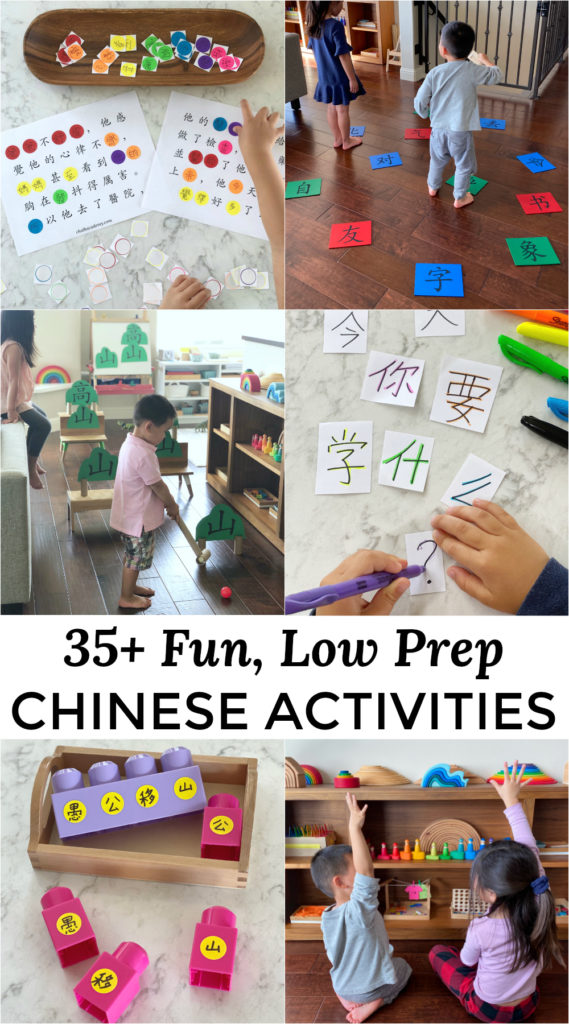
Teaching Chinese can be made fun by incorporating interactive games and engaging activities that encourage participation. Here are some effective methods:
- Charades: Students act out vocabulary words to reinforce memory.
- Flashcard races: Teams compete to match Chinese characters with their meanings.
- Role-playing: Simulate real-life scenarios like ordering food or shopping.
Incorporating Music and Songs
Music is a powerful tool for language learning. Using Chinese songs helps with pronunciation and retention:
See AlsoHelloChinese App Review- Nursery rhymes: Simple tunes for beginners to learn basics.
- Karaoke sessions: Singing along improves tone recognition.
- Lyric analysis: Breaking down song meanings enhances vocabulary.
Leveraging Technology and Apps
Modern tools make learning Chinese interactive and accessible:
- Language apps: Duolingo or HelloChinese for gamified learning.
- Virtual flashcards: Anki or Quizlet for spaced repetition.
- Online tutors: Platforms like iTalki for conversational practice.
Storytelling and Cultural Immersion
Engaging students with Chinese stories and cultural elements makes learning memorable:
- Folktales: Stories like The Monkey King spark interest.
- Festival celebrations: Learning about Lunar New Year traditions.
- Calligraphy practice: Writing characters artistically.
Group Projects and Collaborative Learning
Encouraging teamwork fosters a fun and supportive environment:
See AlsoLearning to read aloud in Chinese- Skits and plays: Performing in Chinese builds confidence.
- Language exchange: Pairing with native speakers for practice.
- Poster presentations: Creating visuals for vocabulary themes.
What are the examples of games that can be used as language learning?

Traditional Board Games Adapted for Language Learning
Traditional board games can be modified to enhance vocabulary and conversation skills. Here are some examples:
- Scrabble: Encourages word formation and spelling in the target language.
- Bananagrams: A fast-paced alternative to Scrabble, ideal for quick thinking and word recognition.
- Taboo: Players describe words without using restricted terms, improving fluency and paraphrasing.
Digital Language Learning Games
Digital games leverage interactivity and engagement for language acquisition. Examples include:
See AlsoHow to survive and thrive in a difficult Chinese course- Duolingo: Uses gamification with levels, rewards, and streaks to teach vocabulary and grammar.
- Memrise: Focuses on memorization through spaced repetition and interactive exercises.
- Rosetta Stone: Immersive gameplay that emphasizes pronunciation and context-based learning.
Role-Playing Games (RPGs) for Immersive Practice
RPGs provide contextual learning through storytelling and character interaction. Notable examples:
- The Sims: Simulates daily life, requiring players to understand commands and dialogues in the target language.
- Skyrim (with language mods): Offers narrative-driven exposure to complex vocabulary and phrases.
- Final Fantasy: Features extensive dialogue, aiding in reading comprehension and cultural references.
Word-Based Mobile Apps for Quick Learning
Mobile apps offer portable and bite-sized language practice. Popular options:
- WordBrain: A puzzle game that strengthens vocabulary retention through anagrams.
- 7 Little Words: Combines clues and word fragments to build language-solving skills.
- Elevate: Includes language-focused mini-games for grammar and sentence structure.
Interactive Multiplayer Games for Real-Time Communication
Multiplayer games foster real-time interaction and collaborative learning. Examples:
- Among Us: Requires players to discuss and debate, enhancing spoken language skills.
- Minecraft (on language servers): Encourages teamwork and instruction-following in the target language.
- Second Life: Virtual worlds with language exchange communities for practical conversation.
What is the most effective way to learn Chinese?

Immerse Yourself in the Language
The most effective way to learn Chinese is through immersion. Surround yourself with the language as much as possible to accelerate your learning.
- Watch Chinese movies, TV shows, or YouTube videos with subtitles.
- Listen to Chinese podcasts or music to familiarize yourself with pronunciation and tones.
- Speak with native speakers through language exchange platforms or apps like Tandem or HelloTalk.
Master the Basics First
Building a strong foundation in basic vocabulary and grammar is crucial before advancing to complex topics.
- Learn essential words and phrases like greetings, numbers, and common verbs.
- Practice writing Chinese characters using apps like Skritter or Pleco.
- Focus on mastering the four tones early to avoid pronunciation issues later.
Use Structured Learning Materials
Following a structured curriculum ensures consistent progress and avoids gaps in knowledge.
- Enroll in a formal course, either online (e.g., Coursera, edX) or in-person.
- Use textbooks like Integrated Chinese or New Practical Chinese Reader.
- Supplement with flashcards (Anki or Quizlet) for spaced repetition.
Practice Speaking Daily
Speaking regularly is key to fluency and overcoming the fear of conversation.
- Join language meetups or online communities like iTalki for practice.
- Repeat sentences aloud to improve tone accuracy and fluency.
- Record yourself speaking and compare it to native speakers.
Leverage Technology and Apps
Technology can significantly enhance learning efficiency and engagement.
- Use apps like Duolingo, HelloChinese, or Memrise for gamified learning.
- Install language plugins or browser extensions for instant translations.
- Follow Chinese social media accounts or forums to read authentic content.
How to start learning Chinese from scratch?
1. Understand the Basics of the Chinese Language
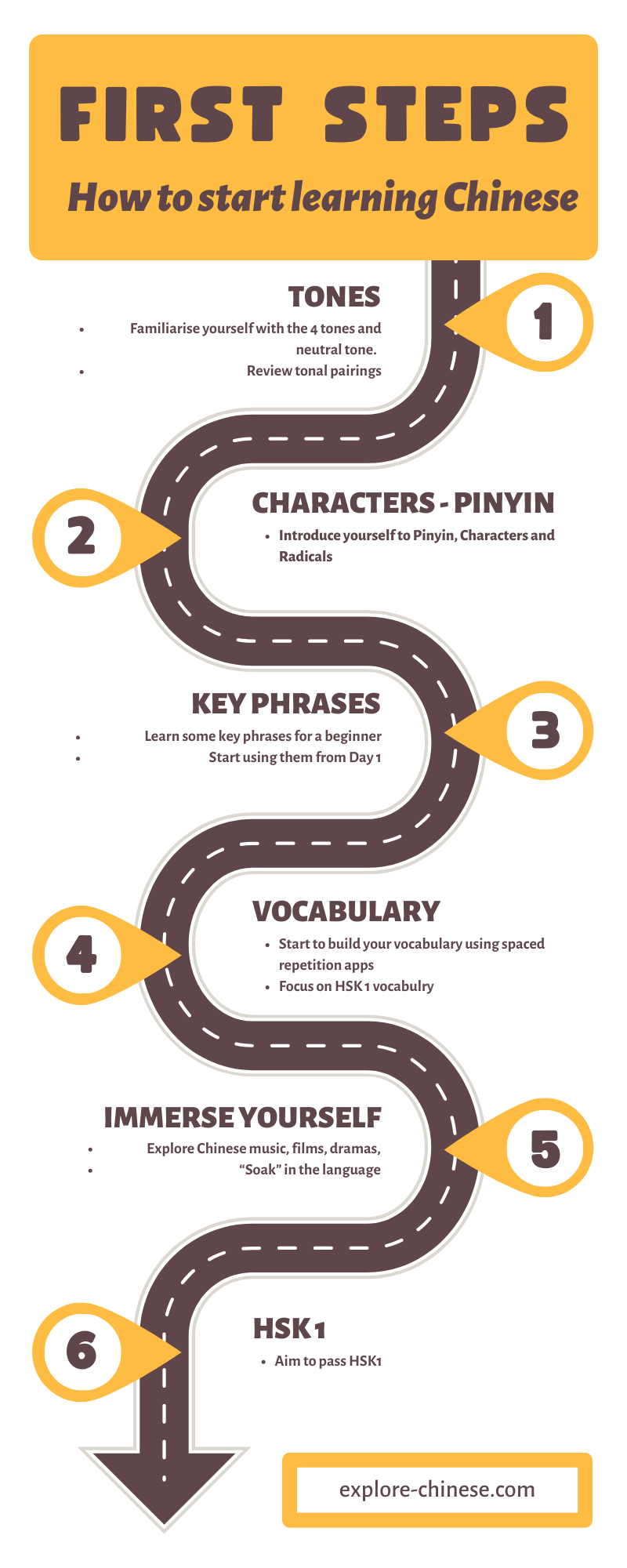
Before diving into learning Chinese, it's essential to grasp its fundamental characteristics. Mandarin Chinese is the most widely spoken dialect and uses characters (汉字) instead of an alphabet. Unlike English, Chinese is a tonal language, meaning the pitch or intonation of a word can change its meaning.
- Learn Pinyin: This is the Romanization system for Chinese characters, helping you pronounce words correctly.
- Master the four tones: Mandarin has four main tones (flat, rising, falling-rising, and falling) that alter word meanings.
- Start with simple characters: Focus on basic radicals and common characters to build a foundation.
2. Set Clear Learning Goals
Establishing specific objectives will keep you motivated and organized. Decide whether you want to focus on speaking, reading, writing, or all three. Break your goals into short-term and long-term milestones.
- Daily practice: Dedicate at least 15–30 minutes daily to listening, speaking, or writing.
- Weekly targets: Aim to learn 10–20 new words or a few grammar structures each week.
- Long-term goals: Plan to take proficiency tests like HSK (Hanyu Shuiping Kaoshi) to measure progress.
3. Use the Right Learning Resources
Choosing effective tools is crucial for efficient learning. A mix of textbooks, apps, and media will provide a well-rounded approach.
- Textbooks: Integrated Chinese or New Practical Chinese Reader are great for structured learning.
- Apps: Duolingo, HelloChinese, or Pleco help with vocabulary and pronunciation.
- Media: Watch Chinese dramas, listen to podcasts, or follow YouTubers for immersion.
4. Practice Speaking and Listening Early
Many beginners neglect speaking and listening, but these skills are vital for fluency. Immersion accelerates learning, even if you're not in a Chinese-speaking environment.
- Language exchange: Use platforms like Tandem or HelloTalk to practice with native speakers.
- Shadowing technique: Repeat sentences from audio clips to improve pronunciation and rhythm.
- Listen actively: Start with slow-paced content like ChinesePod before moving to native-speed materials.
5. Build a Strong Vocabulary and Grammar Foundation
Expanding your vocabulary and understanding grammar rules will help you form sentences correctly. Chinese grammar is simpler than English in some ways but requires consistency.
- Learn measure words: Chinese uses classifiers (e.g., 个, 只) for nouns, which are essential for sentence structure.
- Focus on high-frequency words: Prioritize words used in daily conversations, like greetings and common verbs.
- Practice sentence patterns: Use flashcards or apps to memorize common phrases and their structures.
Frequently Asked Questions (FAQ)
How can games make learning Chinese more engaging?
Games transform the process of learning Chinese by adding elements of fun, competition, and interactivity, which keep learners motivated. Unlike traditional methods, games incorporate challenges, rewards, and storytelling, making vocabulary and grammar practice feel less like a chore. For example, a role-playing game (RPG) might require players to use Mandarin phrases to complete quests, reinforcing language skills in a dynamic context. Additionally, multiplayer games encourage real-time communication, helping learners practice speaking and listening naturally.
What types of games are most effective for teaching Chinese?
Different game genres serve unique purposes in language acquisition. Word puzzles and flashcards are excellent for memorizing characters, while simulation games (like cooking or city-building) immerse players in everyday Mandarin scenarios. Interactive story games enhance comprehension by requiring players to make dialogue choices. For younger learners, rhythm or singing games can improve tonal accuracy, a critical aspect of Chinese. The key is to match the game type with the learner's proficiency level and goals.
Can multiplayer games improve conversational Chinese?
Absolutely. Multiplayer games create opportunities for authentic conversations with native speakers or fellow learners. Titles like MMORPGs or language-exchange platforms often include voice or text chat, forcing players to use Chinese to collaborate or compete. This real-world practice builds confidence, fluency, and cultural understanding. For instance, negotiating trades or strategizing in a game requires practical vocabulary, far beyond textbook examples. However, moderation is key—structured guidance ensures learners focus on educational value rather than just gameplay.
How do games help with memorizing Chinese characters?
Games leverage spaced repetition and visual mnemonics to make character retention easier. For example, matching games pair characters with images or pinyin, while writing apps turn stroke order into a timed challenge. Some games use radical-based puzzles, breaking complex characters into smaller, recognizable components. By turning rote memorization into a reward-driven activity, games reduce frustration and increase long-term recall. Studies show that the emotional engagement from gaming activates memory centers in the brain more effectively than passive study.
Leave a Reply
Related Posts