
A minimum-effort approach to writing Chinese characters by hand

Learning to write Chinese characters by hand can seem daunting, but it doesn’t have to be overwhelming. By adopting a minimum-effort approach, you can simplify the process while still retaining accuracy and efficiency. This method focuses on recognizing key strokes, understanding basic radicals, and practicing only the most essential characters. Instead of memorizing every detail, prioritize patterns and repetition to build muscle memory. Whether you're a beginner or looking to refine your skills, this streamlined technique helps you write with confidence—without unnecessary complexity. Discover how to make Chinese handwriting more manageable and enjoyable by working smarter, not harder.
- A Minimum-Effort Approach to Writing Chinese Characters by Hand
- What is the Chinese character writing method?
- What are the two rules you should follow when writing Chinese characters?
- What is Chinese writing style called?
- What is the easiest Chinese character to write?
- Frequently Asked Questions (FAQ)
A Minimum-Effort Approach to Writing Chinese Characters by Hand
Detailed Explanation:
Writing Chinese characters by hand can seem daunting due to their complexity. However, adopting a minimum-effort approach focuses on simplification and efficiency without sacrificing legibility. This method prioritizes recognizable shapes over perfect strokes, making learning faster and less stressful. By understanding key components and common shortcuts, learners can write effectively with minimal practice.
---
See AlsoMemrise Review (Updated for 2025) - Is It Worth Downloading?1. Understanding Basic Stroke Order
Detailed Explanation:
Mastering stroke order is crucial for writing Chinese characters efficiently. The general rules include writing from top to bottom, left to right, and horizontal before vertical. Following these principles ensures fluidity and speed while maintaining character structure.
| Rule | Example |
|---|---|
| Top to bottom | 三 (sān) – write upper strokes first |
| Left to right | 你 (nǐ) – left radical before right component |
| Horizontal before vertical | 十 (shí) – horizontal line first |
---
2. Simplifying Complex Characters
Detailed Explanation:
Breaking characters into smaller components reduces memorization effort. Focus on high-frequency radicals (e.g., 氵 for water-related characters) and recurring patterns. This approach minimizes redundant practice and improves recall.
| Character | Components |
|---|---|
| 好 (hǎo – good) | 女 (nǚ – woman) + 子 (zǐ – child) |
| 明 (míng – bright) | 日 (rì – sun) + 月 (yuè – moon) |
---
3. Prioritizing Common Characters
Detailed Explanation:
Learning 500-1,000 frequent characters covers ~80% of written texts. Prioritize daily-use words (e.g., 的, 是, 我) to maximize practicality. This strategy ensures functional literacy with minimal effort.
| Character | Usage Frequency |
|---|---|
| 的 (de) | ~4% of all written Chinese |
| 是 (shì) | ~1.5% of all written Chinese |
---
See Also7 Disney Songs in Chinese - Learn Chinese The Fun Way4. Using Cursive Shortcuts
Detailed Explanation:
Adopting semi-cursive (行书 xíngshū) techniques speeds up writing. Connected strokes and omitted details (e.g., merging 口 as a loop) maintain readability while reducing effort.
| Standard | Cursive Shortcut |
|---|---|
| 我 (wǒ – I) | Simplified strokes, linked lines |
| 的 (de) | Left radical merged with right component |
---
5. Leveraging Mnemonics
Detailed Explanation:
Visual associations (e.g., 木 mù tree resembling branches) and story-based mnemonics enhance retention. This method reduces reliance on rote memorization.
| Character | Mnemonic |
|---|---|
| 休 (xiū – rest) | Person (亻) leaning against a tree (木) |
| 森 (sēn – forest) | Three trees (木) together |
What is the Chinese character writing method?
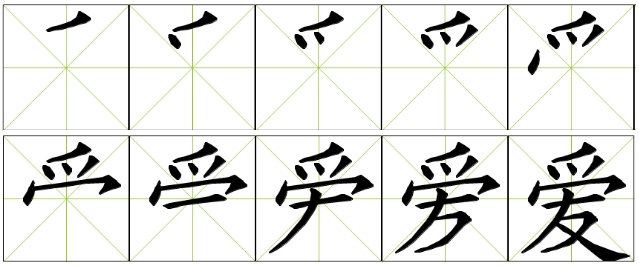
What Are the Basic Strokes in Chinese Character Writing?
The foundation of Chinese character writing lies in mastering the basic strokes, which are the smallest units used to form characters. These strokes vary in direction, length, and curvature. Here are the most common ones:
- Horizontal stroke (一): Drawn from left to right.
- Vertical stroke (丨): Drawn from top to bottom.
- Dot stroke (丶): A small downward or rightward tap.
- Hook stroke (亅): A small upward or downward hook at the end of another stroke.
- Diagonal strokes (丿, 乀): Slanted strokes in opposite directions.
What Is the Stroke Order in Chinese Characters?
Writing Chinese characters follows specific stroke order rules to ensure consistency and readability. The general principles include:
See Also10 ways of using games to learn and teach Chinese- Top to bottom: Start with the highest stroke and move downward.
- Left to right: Begin strokes on the left side before moving right.
- Horizontal before vertical: Write horizontal strokes first, then vertical ones.
- Enclosures before contents: Draw the outer frame before filling in inner strokes.
- Center before sides: For symmetrical characters, start with the middle stroke.
What Are the Different Types of Chinese Characters?
Chinese characters can be categorized into six main types, known as liùshū (六书). These classifications explain their formation:
- Pictograms (象形字): Characters resembling physical objects (e.g., 山 for mountain).
- Ideograms (指事字): Symbols representing abstract ideas (e.g., 上 for up).
- Compound ideograms (会意字): Combinations of characters to convey meaning (e.g., 休 for rest, combining 人 person and 木 tree).
- Phonetic-semantic compounds (形声字): Characters with a radical (meaning clue) and phonetic component (sound clue).
- Transferred characters (转注字): Characters repurposed with related meanings.
- Loan characters (假借字): Borrowed characters for unrelated words.
How Are Radicals Used in Chinese Character Writing?
Radicals are essential components of Chinese characters, often indicating meaning or pronunciation. Key points include:
- Meaning radicals: Provide clues about the character's category (e.g., 氵 for water-related words).
- Phonetic radicals: Suggest pronunciation but may not always be accurate.
- Positioning: Radicals can appear on the left, right, top, bottom, or surrounding the character.
- Dictionary use: Radicals help organize and look up characters in dictionaries.
- Common radicals: Examples include 女 (female), 口 (mouth), and 心 (heart).
What Tools Are Used for Chinese Calligraphy?
Traditional Chinese calligraphy relies on specific tools, collectively called the Four Treasures of the Study:
- Brush (毛笔): Made from animal hair, varying in flexibility and thickness.
- Ink (墨): Solid ink sticks ground with water on an inkstone.
- Paper (宣纸): Absorbent rice paper designed for ink flow.
- Inkstone (砚台): Used to grind ink sticks and hold liquid ink.
- Additional tools: Include paperweights, seals, and brush stands.
What are the two rules you should follow when writing Chinese characters?
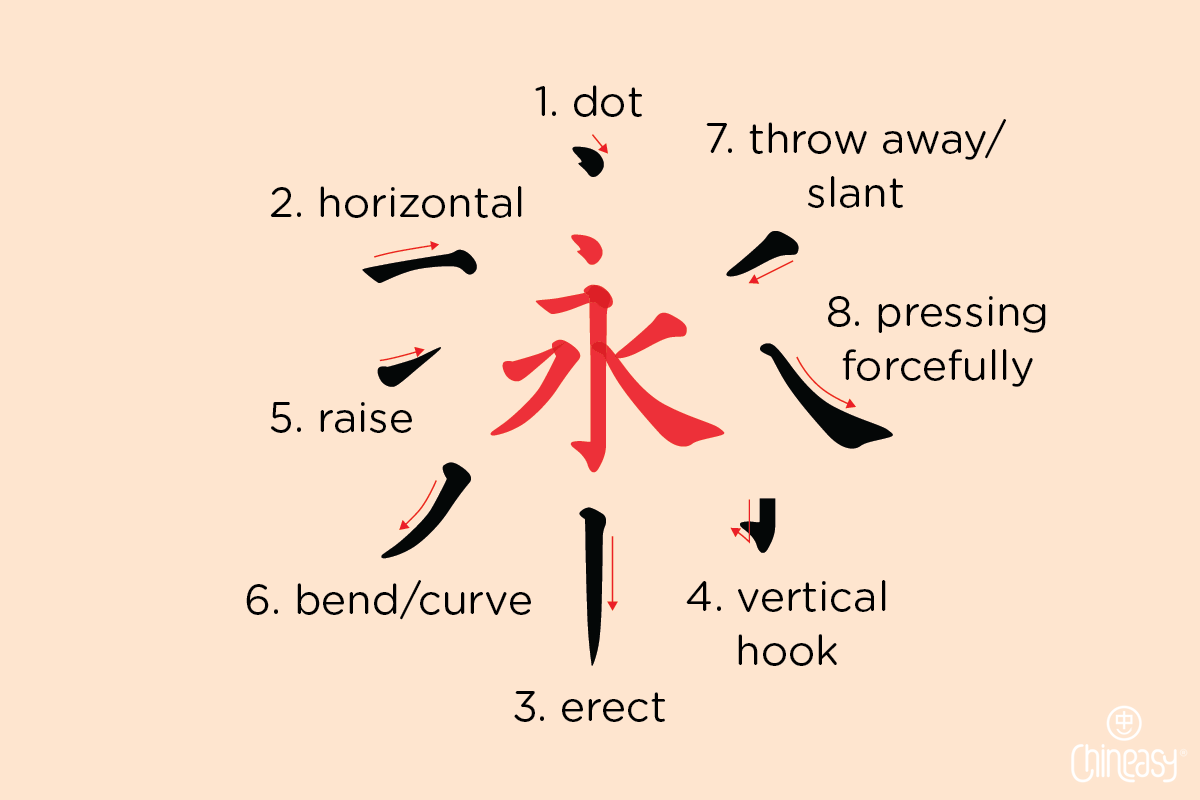
Understanding Stroke Order in Chinese Characters
One of the most important rules when writing Chinese characters is following the correct stroke order. This ensures consistency and readability. Here’s why it matters:
- Top to bottom: Always start strokes from the top of the character and move downward.
- Left to right: Horizontal strokes should be written from left to right.
- Outside before inside: Enclosing components are written before the internal strokes.
Maintaining Proper Character Structure
The second rule is preserving the structure and proportions of each character. A well-balanced character is easier to recognize and write. Key points include:
- Symmetry matters: Characters with symmetrical components should be evenly spaced.
- Radical placement: The radical (component) often dictates the character’s overall layout.
- Avoid crowding: Ensure strokes don’t overlap or touch unintentionally.
Why Stroke Order Affects Writing Speed
Following stroke order isn’t just about correctness—it also improves efficiency. Benefits include:
- Muscle memory: Consistent stroke order helps build faster writing habits.
- Legibility: Proper strokes prevent messy or unclear characters.
- Digital input: Many typing systems rely on correct stroke order for predictions.
Common Mistakes in Character Structure
Ignoring structural rules leads to errors that can change a character’s meaning. Watch out for:
- Incorrect proportions: Overemphasizing one part distorts the character.
- Misplaced radicals: A radical in the wrong spot can make the character unrecognizable.
- Broken strokes: Stopping and restarting strokes disrupts flow.
Tools to Practice Chinese Character Writing
To master these rules, use resources that reinforce proper techniques. Recommended tools:
- Grid paper: Helps maintain proportions and alignment.
- Stroke order diagrams: Visual guides for correct sequencing.
- Apps and tutorials: Interactive tools provide real-time feedback.
What is Chinese writing style called?
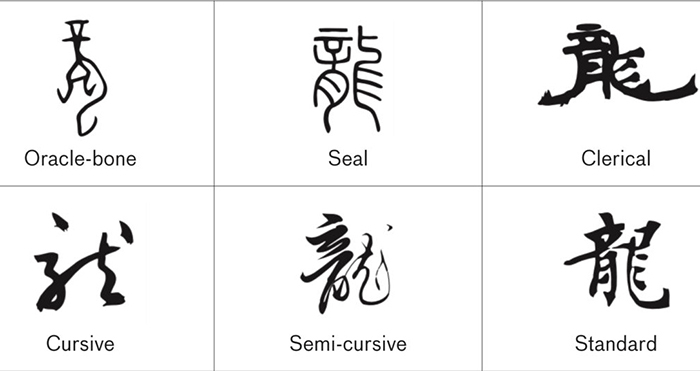
What is the Chinese Writing System Called?
The Chinese writing system is called Hanzi, which translates to Han characters. It is one of the oldest continuously used writing systems in the world, with a history spanning thousands of years. Hanzi is used to write several languages, including Mandarin, Cantonese, and Classical Chinese.
- Logographic System: Each character represents a word or a meaningful part of a word.
- Thousands of Characters: There are over 50,000 Hanzi, though only about 3,000-5,000 are commonly used.
- Regional Variations: Simplified characters are used in mainland China, while traditional characters are used in Taiwan, Hong Kong, and Macau.
How Does Chinese Calligraphy Relate to the Writing Style?
Chinese calligraphy, or Shūfǎ, is the artistic expression of Hanzi. It is considered a high art form in Chinese culture and involves precise brush strokes to create visually appealing characters.
- Five Major Scripts: Seal, Clerical, Regular, Running, and Cursive scripts.
- Cultural Significance: Calligraphy is deeply tied to Chinese philosophy and aesthetics.
- Tools Used: Brush, ink, paper, and inkstone are essential for traditional calligraphy.
What Are the Differences Between Simplified and Traditional Chinese?
Simplified and Traditional Chinese refer to two forms of Hanzi. Simplified characters have fewer strokes and were introduced to improve literacy rates, while Traditional characters retain their original form.
- Simplified Characters: Used in mainland China and Singapore.
- Traditional Characters: Used in Taiwan, Hong Kong, and Macau.
- Complexity: Traditional characters often have more strokes and historical roots.
How Are Chinese Characters Constructed?
Chinese characters are constructed using radicals and components, which provide clues to their meaning and pronunciation.
- Radicals: The building blocks of characters, often indicating meaning.
- Phonetic Components: Parts of characters that suggest pronunciation.
- Stroke Order: A specific sequence for writing strokes is followed.
What Role Does Pinyin Play in Chinese Writing?
Pinyin is the Romanization system for Mandarin Chinese, using the Latin alphabet to represent pronunciation. It helps learners and non-native speakers read and pronounce Hanzi.
- Learning Aid: Essential for beginners to understand pronunciation.
- Standardization: Officially adopted by the Chinese government in 1958.
- Input Method: Used to type Chinese characters on digital devices.
What is the easiest Chinese character to write?
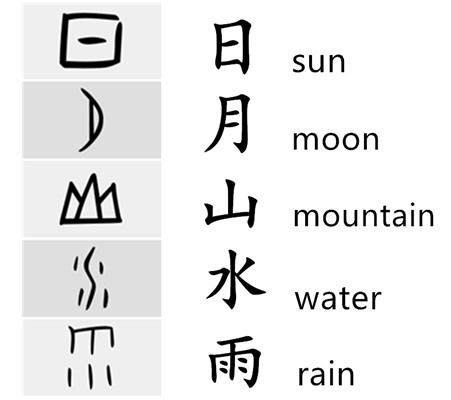
What Makes a Chinese Character Easy to Write?
The easiest Chinese characters to write are typically those with the fewest strokes and simplest structure. Key factors include:
- Stroke count: Characters with 1-3 strokes are easiest.
- Symmetry: Balanced shapes like 一 (yī) are simpler.
- Common usage: Frequently seen characters become familiar faster.
Top 5 Easiest Chinese Characters for Beginners
These characters are ideal for new learners due to their minimal strokes:
- 一 (yī) - Meaning one, just a single horizontal line.
- 丨 (gǔn) - A single vertical stroke, though rarely used alone.
- 人 (rén) - Meaning person, two simple strokes.
- 口 (kǒu) - Meaning mouth, a square with 3 strokes.
- 日 (rì) - Meaning sun, a rectangle with 4 strokes.
Why Is 一 (yī) Considered the Simplest Character?
The character 一 (yī) is universally recognized as the easiest because:
- It consists of a single horizontal stroke.
- It requires no complex pen movements.
- It appears frequently in daily use.
How Do Simple Characters Help in Learning Chinese?
Mastering easy characters first builds confidence and foundational skills:
- They introduce basic stroke order rules.
- They reinforce memory retention through repetition.
- They serve as building blocks for more complex characters.
Common Mistakes When Writing Simple Chinese Characters
Even easy characters can be miswritten. Watch for these errors:
- Incorrect stroke direction (e.g., writing 一 right to left).
- Uneven stroke thickness or proportions.
- Ignoring balance in symmetrical characters like 人.
Frequently Asked Questions (FAQ)
What is the minimum-effort approach to writing Chinese characters by hand?
The minimum-effort approach to writing Chinese characters focuses on simplifying the process of handwriting by prioritizing efficiency and practicality. Instead of striving for perfect stroke order or artistic precision, this method emphasizes recognizing and reproducing the key structural components of each character. By breaking down characters into their most essential parts, learners can reduce the cognitive load and write more fluidly without sacrificing legibility. This approach is particularly useful for beginners or those who need to write quickly in everyday situations.
How does this method differ from traditional stroke-order learning?
Unlike traditional methods that demand strict adherence to stroke order and meticulous attention to detail, the minimum-effort approach prioritizes speed and recognition. While stroke order is still acknowledged as helpful, it is not treated as an absolute rule. Instead, learners focus on identifying the most recognizable features of a character, allowing for slight deviations in writing style. This flexibility makes handwriting less intimidating and more adaptable to real-world use, such as note-taking or filling out forms.
Can this approach help with character retention and memorization?
Yes, the minimum-effort approach can actually enhance retention by reducing the mental strain associated with memorizing complex stroke sequences. By concentrating on the core elements of each character, learners create stronger mental associations with its meaning and pronunciation. Additionally, the act of writing—even in a simplified manner—reinforces muscle memory. Over time, this method can lead to a more intuitive grasp of Chinese characters, making it easier to recall and reproduce them accurately.
Is this method suitable for advanced learners or formal writing?
While the minimum-effort approach is ideal for beginners or casual use, advanced learners can also benefit by using it as a complementary tool for quick note-taking or drafting. However, for formal contexts like calligraphy, exams, or official documents, adhering to standard stroke order and precision remains important. The key is balancing efficiency with correctness—using the simplified method for everyday tasks while maintaining the ability to write characters properly when required.
Leave a Reply
Related Posts