
Wuxia, a key to Chinese language and culture

Wuxia, a genre deeply rooted in Chinese literature and cinema, offers a fascinating lens through which to explore Chinese language and culture. These tales of martial heroes, honor, and adventure are more than mere entertainment; they reflect traditional values, philosophical ideals, and historical contexts unique to China. Through Wuxia, learners encounter rich vocabulary, idiomatic expressions, and classical references that deepen their understanding of the language. The genre’s emphasis on morality, loyalty, and the interplay between individuals and society provides cultural insights often overlooked in conventional studies. By delving into Wuxia, one gains not only linguistic proficiency but also a profound appreciation for China’s enduring heritage.
Wuxia: A Gateway to Understanding Chinese Language and Culture
Wuxia, a genre deeply rooted in Chinese literature and cinema, serves as a fascinating lens through which to explore Chinese language, cultural values, and historical traditions. This genre, characterized by martial arts heroes, chivalry, and ancient settings, offers more than just entertainment—it provides insights into Confucian ideals, Daoist philosophies, and the linguistic richness of the Chinese language. By studying Wuxia, learners and enthusiasts can uncover layers of meaning in idioms, classical poetry, and historical references that are often embedded in these stories.
The Historical Roots of Wuxia in Chinese Literature
Wuxia traces its origins to ancient Chinese folklore and classic novels like Water Margin and The Legend of the Condor Heroes. These stories emphasize loyalty, justice, and personal honor, reflecting the societal values of their times. The genre evolved through dynastic tales and oral storytelling, eventually becoming a cornerstone of modern Chinese cinema and TV dramas.
See Also5 insights from the first year of a master’s program in Taiwan| Key Aspect | Description |
|---|---|
| Ancient Folklore | Early Wuxia themes emerged from heroic legends and myths. |
| Classic Novels | Stories like Water Margin formalized the genre's tropes. |
| Modern Adaptations | Films and TV series globalized Wuxia's appeal. |
Wuxia’s Influence on Chinese Language Learning
Engaging with Wuxia materials can significantly enhance language proficiency by exposing learners to classical Chinese, dialects, and martial arts terminology. Dialogues often include proverbs and poetic expressions, making them valuable for understanding linguistic nuances.
| Language Element | Benefit |
|---|---|
| Classical Chinese | Improves comprehension of historical texts. |
| Idioms & Proverbs | Deepens cultural and contextual understanding. |
Cultural Values Embedded in Wuxia Narratives
Wuxia stories often revolve around filial piety, righteousness, and sacrifice, mirroring Confucian ethics. The protagonists' struggles highlight the tension between individual freedom and social duty, a recurring theme in Chinese philosophy.
| Value | Representation in Wuxia |
|---|---|
| Filial Piety | Heroes often avenge or honor their families. |
| Righteousness | Protagonists uphold moral codes despite personal cost. |
The Role of Martial Arts in Wuxia Culture
Martial arts in Wuxia are not just combat techniques but philosophical practices tied to Daoist and Buddhist principles. Styles like Tai Chi and Shaolin Kung Fu symbolize inner harmony and discipline.
See AlsoChinese Translation Volunteers: Where To Apply| Martial Art | Philosophical Link |
|---|---|
| Tai Chi | Emphasizes balance and Daoist principles. |
| Shaolin Kung Fu | Integrates Buddhist meditation with physical training. |
Wuxia’s Global Impact and Modern Adaptations
From Ang Lee’s Crouching Tiger, Hidden Dragon to Netflix adaptations, Wuxia has captivated global audiences. These works bridge cultural gaps while preserving traditional aesthetics and storytelling techniques.
| Adaptation | Contribution |
|---|---|
| Crouching Tiger, Hidden Dragon | Popularized Wuxia in Western cinema. |
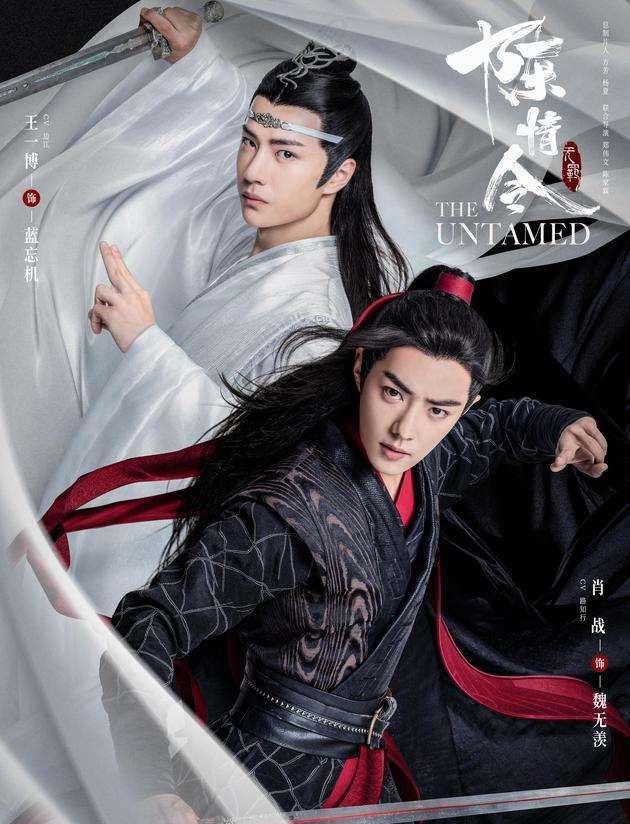
| Netflix’s The Untamed | Revitalized interest in Wuxia among younger viewers. |
Why was wuxia banned in China?
Historical Context of Wuxia in China
The wuxia genre, rooted in Chinese literature and folklore, gained immense popularity in the early 20th century. However, its themes often clashed with the ideologies of the ruling government. Here’s why:
See AlsoHow Does China Celebrate Western New Year?- Individualism: Wuxia stories glorified heroic outlaws, which contradicted the Communist Party's emphasis on collective identity.
- Feudal Values: Many wuxia tales romanticized pre-modern China, clashing with the push for modernization.
- Political Allegories: Some works were interpreted as critiques of authoritarian rule, making them a target for censorship.
Government Censorship and Cultural Control
The Chinese government has long sought to control cultural output to align with its political agenda. Wuxia faced restrictions due to:
- Subversive Themes: Stories often depicted corrupt officials, indirectly criticizing the state.
- Alternative Morality: Wuxia heroes operated outside the law, undermining state authority.
- Foreign Influence: Some adaptations were seen as promoting Westernized interpretations of Chinese culture.
The Role of the Cultural Revolution
During the Cultural Revolution (1966–1976), wuxia was heavily suppressed as part of a broader crackdown on traditional culture. Key reasons include:
- Anti-Feudalism Campaigns: Wuxia was labeled as a relic of feudal society.
- Red Guard Actions: Books and films were destroyed for promoting reactionary ideas.
- Propaganda Priorities: The state promoted revolutionary art over traditional storytelling.
Modern Restrictions and Media Regulations
Even today, wuxia faces limitations under China's strict media laws. The reasons are:
See Also10 Best Resources to Learn Chinese Through News- Content Guidelines: Stories must avoid glorifying violence or rebellion.
- Historical Accuracy: Works must align with state-approved historical narratives.
- Online Censorship: Digital platforms heavily monitor and restrict wuxia content.
Exceptions and State-Sanctioned Wuxia
Not all wuxia is banned; some works are tolerated if they meet government standards. Examples include:
- Patriotic Themes: Stories that emphasize loyalty to the state are permitted.
- Approved Adaptations: Films and TV shows must pass strict censorship reviews.
- Neutralized Content: Removing subversive elements allows some wuxia to be published.
What are the principles of the wuxia?

The Concept of Xia (Chivalry) in Wuxia
The principle of Xia is central to wuxia, embodying the ideals of heroism, justice, and moral integrity. A true xia (knight-errant) follows a strict code of conduct, prioritizing righteousness over personal gain.
See AlsoTop Tips for Guest Etiquette in China- Altruism: A xia acts selflessly, defending the weak and oppressed.
- Loyalty: They remain steadfast to their vows and comrades.
- Courage: Fearlessness in the face of injustice is a defining trait.
The Role of Martial Arts (Wushu) in Wuxia
Wushu (martial arts) is the physical expression of wuxia, blending combat skill with philosophical depth. Mastery of martial arts symbolizes discipline and spiritual growth.
- Technique Mastery: Proficiency in both armed and unarmed combat is essential.
- Inner Strength (Neigong): Cultivating internal energy for superhuman abilities.
- Style Diversity: Schools and lineages often have unique fighting philosophies.
The Importance of Jianghu (The Martial World)
The Jianghu represents the alternate society where wuxia heroes operate, governed by its own rules and hierarchies.
- Clans and Sects: Factions with distinct ideologies and rivalries.
- Code of Honor: Unwritten laws dictate behavior and conflicts.
- Isolation from Authority: Often exists outside imperial control.
The Pursuit of Righteousness (Yi) in Wuxia
Yi (righteousness) is the moral compass guiding a xia's actions, emphasizing fairness and ethical duty.
- Justice Over Law: Personal ethics may defy societal norms.
- Sacrifice: Willingness to endure suffering for a greater cause.
- Humility: True heroes avoid arrogance despite their prowess.
The Balance of Power and Wisdom in Wuxia
A wuxia hero must harmonize physical prowess with intellectual and spiritual wisdom to achieve true mastery.
- Meditation and Strategy: Mental clarity complements combat skill.
- Moral Dilemmas: Choices often test a hero's principles.
- Legacy: Wisdom is passed through mentorship and teachings.
How long is the AP Chinese language and culture exam?
What is the Total Duration of the AP Chinese Exam?
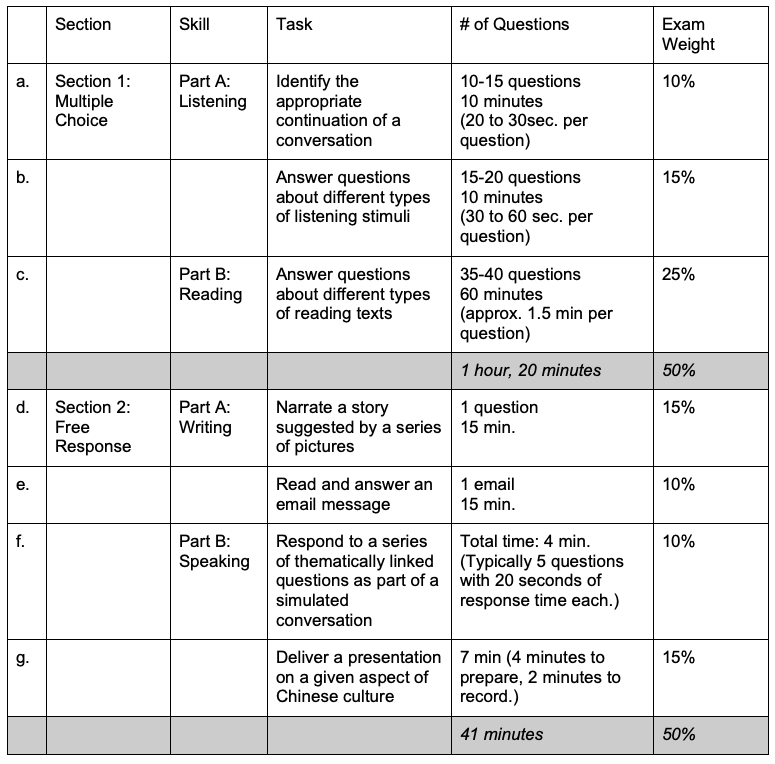
The AP Chinese Language and Culture exam lasts approximately 2 hours and 15 minutes in total. It is divided into two main sections:
- Section I: Multiple-choice questions (1 hour and 30 minutes).
- Section II: Free-response tasks (45 minutes).
How is the Multiple-Choice Section Structured?
The multiple-choice section accounts for 50% of the total score and includes:
- Listening comprehension: 25–35 questions based on audio prompts.
- Reading comprehension: 30–40 questions assessing written passages.
What Does the Free-Response Section Include?
The free-response section also contributes 50% of the score and consists of:
- Interpersonal writing: Email response task (15 minutes).
- Presentational writing: Story narration using images (15 minutes).
- Interpersonal speaking: Simulated conversation (5 prompts, 20 seconds each).
- Presentational speaking: Cultural comparison (2 minutes to prepare, 2 minutes to speak).
Are There Breaks During the AP Chinese Exam?
The AP Chinese exam does not include scheduled breaks. However:
- Students may have short pauses between sections.
- Time management is crucial to avoid rushing.
How Should Students Manage Time During the Exam?
Effective time management is key for success:
- Practice pacing: Simulate exam conditions beforehand.
- Prioritize tasks: Allocate more time to higher-weighted sections.
- Review instructions: Avoid mistakes due to misreading prompts.
Frequently Asked Questions (FAQ)
What is Wuxia and how does it relate to Chinese language and culture?
Wuxia is a genre of Chinese fiction that focuses on the adventures of martial artists in ancient China, often emphasizing themes of honor, loyalty, and chivalry. It serves as a cultural bridge, offering deep insights into traditional Chinese values, philosophy, and societal norms. The language used in Wuxia literature is rich in classical Chinese expressions, idioms, and historical references, making it a valuable resource for understanding both the linguistic nuances and cultural context of China. Through its stories, Wuxia preserves and transmits the essence of Chinese heritage.
Why is Wuxia considered important for learning Chinese?
Wuxia is a treasure trove for language learners because it incorporates classical Chinese alongside modern vernacular, providing exposure to diverse linguistic styles. The dialogues and narratives often include proverbs, poetry, and historical terms, which are essential for grasping the depth of the language. Additionally, the genre's focus on moral dilemmas and interpersonal relationships helps learners understand the cultural subtleties that influence communication in Chinese society. Engaging with Wuxia can significantly enhance both vocabulary and cultural fluency.
How does Wuxia reflect traditional Chinese values?
Wuxia stories are deeply rooted in Confucian, Daoist, and Buddhist philosophies, showcasing ideals like righteousness (义), filial piety (孝), and humility (谦). The protagonists often embody these virtues, navigating conflicts between personal desires and societal duties. By exploring these themes, Wuxia offers a window into the moral framework that has shaped Chinese culture for centuries. The genre also highlights the importance of harmony, resilience, and the balance between power and responsibility, reflecting core aspects of China's ethical traditions.
Can Wuxia help non-Chinese audiences appreciate Chinese culture?
Absolutely. Wuxia's universal themes of heroism, love, and justice resonate across cultures, making it an accessible entry point for global audiences. Through its vivid depictions of landscapes, customs, and historical events, Wuxia fosters a deeper appreciation for China's artistic and spiritual heritage. Films like Crouching Tiger, Hidden Dragon and translations of novels by authors like Jin Yong have introduced millions to the genre, sparking interest in Chinese history, martial arts, and philosophy. For non-Chinese viewers and readers, Wuxia is both entertainment and an educational tool.
Leave a Reply
Related Posts