
Chinese Translation Volunteers: Where To Apply

Chinese translation volunteers play a crucial role in bridging language gaps, fostering cultural exchange, and supporting global communication. Whether for nonprofits, educational institutions, or international events, these volunteers contribute their language skills to make information accessible to diverse audiences. If you're fluent in Chinese and eager to help, numerous organizations and platforms welcome volunteer translators. This article explores the best places to apply, from well-known NGOs to online communities, and provides insights into the application process. Discover how you can leverage your language proficiency to make a meaningful impact while gaining valuable experience in translation and cross-cultural collaboration.
Chinese Translation Volunteers: Where To Apply
1. Online Platforms for Chinese Translation Volunteer Opportunities
If you're looking to apply as a Chinese translation volunteer, numerous online platforms connect volunteers with organizations in need. Websites like Translators Without Borders, United Nations Volunteers (UNV), and Catchafire often list opportunities for mandarin speakers. These platforms allow you to contribute to non-profit projects, humanitarian efforts, or educational content.
| Platform | Focus Area |
|---|---|
| Translators Without Borders | Humanitarian & Medical |
| UN Volunteers | Global Development |
| Catchafire | Non-Profit Support |
2. Universities and Cultural Organizations
Many universities and cultural institutions seek Chinese translation volunteers for events, research, or community outreach. Check with Confucius Institutes, local Chinese student associations, or international departments at universities. These roles often involve translating academic papers, cultural materials, or assisting in bilingual workshops.
See AlsoSimple Chinese Food: Braised Pork With Dry Bean Curd| Organization Type | Potential Tasks |
|---|---|
| Confucius Institute | Language Education |
| University Departments | Research Translation |
3. Non-Governmental Organizations (NGOs)
NGOs working in cross-border initiatives frequently need Chinese translators for reports, campaigns, or communication with local communities. Organizations like Amnesty International or Red Cross may require volunteer translators to support their missions.
| NGO | Translation Needs |
|---|---|
| Amnesty International | Human Rights Reports |
| Red Cross | Crisis Communication |
4. Government and Embassy Programs
Some government agencies or embassies offer volunteer translation programs to facilitate diplomatic or consular services. For example, the Chinese Embassy or local immigration offices may seek volunteers to assist with document translations or community integration efforts.
| Entity | Volunteer Role |
|---|---|
| Chinese Embassy | Consular Support |
| Immigration Offices | Legal Documents |
Facebook groups, LinkedIn communities, and Reddit forums often share Chinese translation volunteer openings. Join groups like Translation Volunteers Worldwide or follow hashtags like ChineseTranslation to discover real-time opportunities.
See AlsoChinese 5 Elements Personality Quiz & Complete Guide| Platform | Search Keywords |
|---|---|
| TranslationVolunteer | |
| Chinese Translators Group |
Where can I volunteer as a translator?
Online Platforms for Volunteer Translation
Several online platforms connect volunteers with translation opportunities. These platforms often collaborate with nonprofits, NGOs, and global organizations. Here are some notable options:
- Translators Without Borders: A well-known organization that provides translations for humanitarian causes.
- UN Volunteers: Offers translation roles for United Nations projects and initiatives.
- Global Voices: A community that translates news and stories from underrepresented regions.
Nonprofit Organizations Needing Translators
Many nonprofit organizations rely on volunteer translators to support their missions. These groups often work in education, health, or human rights. Consider the following:
See AlsoFive of the Most Beautiful Chinese Songs to Learn Mandarin- Amnesty International: Requires translators for reports and advocacy materials.
- Doctors Without Borders: Seeks translators for medical documents and patient communications.
- Wikimedia Foundation: Needs volunteers to translate articles for Wikipedia in various languages.
Local Community Translation Opportunities
Your local community may also have translation needs, especially in diverse or immigrant-heavy areas. Opportunities include:
- Community Centers: Often need help translating flyers, forms, or event materials.
- Hospitals and Clinics: Require translators for patient intake forms and informational brochures.
- Schools and Libraries: Seek volunteers to translate educational resources or parent communications.
Translation for Open Source Projects
Open source projects often need translators to make software accessible globally. Examples include:
- Mozilla Firefox: Volunteers can translate the browser and its support documentation.
- LibreOffice: Seeks help localizing its office suite for different languages.
- WordPress: Offers translation opportunities for its CMS and themes.
University and Research Translation Programs
Universities and research institutions sometimes need volunteer translators for academic purposes. Key options include:
- Academic Journals: Many open-access journals need translations of research papers.
- Study Abroad Programs: Universities may require translators for international student materials.
- Research NGOs: Organizations like the Red Cross often translate field reports and studies.
How to get a job as a Chinese translator?

1. Develop Strong Language Skills in Both Chinese and English
To become a Chinese translator, you must achieve fluency in both Mandarin (or another Chinese dialect) and English. This includes mastering grammar, vocabulary, idioms, and cultural nuances. Consider the following steps:
- Enroll in language courses or degree programs focused on Chinese and English.
- Practice daily through reading, writing, speaking, and listening exercises.
- Immerse yourself in Chinese culture via media, travel, or conversations with native speakers.
2. Obtain Relevant Certifications or Degrees
Certifications and formal education can validate your skills and make you more competitive in the job market. Key options include:
- Bachelor’s or Master’s degree in Translation, Linguistics, or Chinese Studies.
- Professional certifications like the ATA certification (American Translators Association) or HSK (for Chinese proficiency).
- Specialized training in legal, medical, or technical translation if targeting niche industries.
3. Gain Practical Experience Through Internships or Freelancing
Real-world experience is crucial for building credibility. Consider these avenues:
- Internships at translation agencies, multinational companies, or government organizations.
- Freelance platforms like Upwork, ProZ, or Fiverr to build a portfolio.
- Volunteer work for NGOs or community projects requiring translation services.
4. Build a Professional Network and Online Presence
Networking can open doors to job opportunities and collaborations. Focus on:
- Joining professional associations such as ATA or CIOL (Chartered Institute of Linguists).
- Attending industry events, conferences, or workshops.
- Creating a LinkedIn profile and showcasing your work samples or testimonials.
5. Apply for Jobs and Tailor Your Approach
When seeking employment, customize your applications to stand out. Key strategies include:
- Targeting industries like tech, law, or healthcare that need Chinese translators.
- Writing a strong resume highlighting language skills, certifications, and experience.
- Preparing for tests or trials often required by employers to assess your abilities.
Is there a demand for Chinese interpreters?

Why is there a growing demand for Chinese interpreters?
The demand for Chinese interpreters has surged due to China's expanding global influence in trade, technology, and diplomacy. Businesses and governments require skilled interpreters to bridge communication gaps. Key reasons include:
- Economic growth: China is a major player in international trade, increasing the need for interpreters in negotiations and partnerships.
- Cultural exchange: Rising tourism and academic collaborations between China and other nations drive demand.
- Political relations: Diplomatic engagements and multinational forums require precise interpretation services.
Which industries hire the most Chinese interpreters?
Several industries rely heavily on Chinese interpreters to facilitate smooth operations. The top sectors include:
- Business and finance: Corporations engaging with Chinese partners need interpreters for meetings and contracts.
- Healthcare: Hospitals and clinics employ interpreters to assist Mandarin-speaking patients.
- Legal services: Courtrooms and law firms require interpreters for cases involving Chinese clients.
What skills are essential for Chinese interpreters?
To succeed as a Chinese interpreter, professionals must possess a combination of linguistic and soft skills. Critical competencies include:
- Fluency in Mandarin and English: Mastery of both languages is non-negotiable.
- Cultural awareness: Understanding nuances prevents miscommunication.
- Quick thinking: Real-time interpretation demands fast, accurate responses.
How does technology impact the demand for Chinese interpreters?
While AI translation tools are advancing, human interpreters remain irreplaceable in many scenarios. Technology's role includes:
- Supporting tools: Interpreters use software for glossaries but still handle complex conversations.
- Remote interpreting: Video calls increase accessibility but require skilled professionals.
- Limitations: Machines struggle with idioms, emotions, and context-sensitive dialogue.
What are the career prospects for Chinese interpreters?
The job outlook for Chinese interpreters is promising due to sustained global demand. Opportunities include:
- Freelancing: Many interpreters work independently for diverse clients.
- Government roles: Embassies and international agencies hire interpreters.
- Corporate positions: Multinational companies seek in-house interpreters for long-term projects.
How do I get hired as a translator?
Build Strong Language Skills
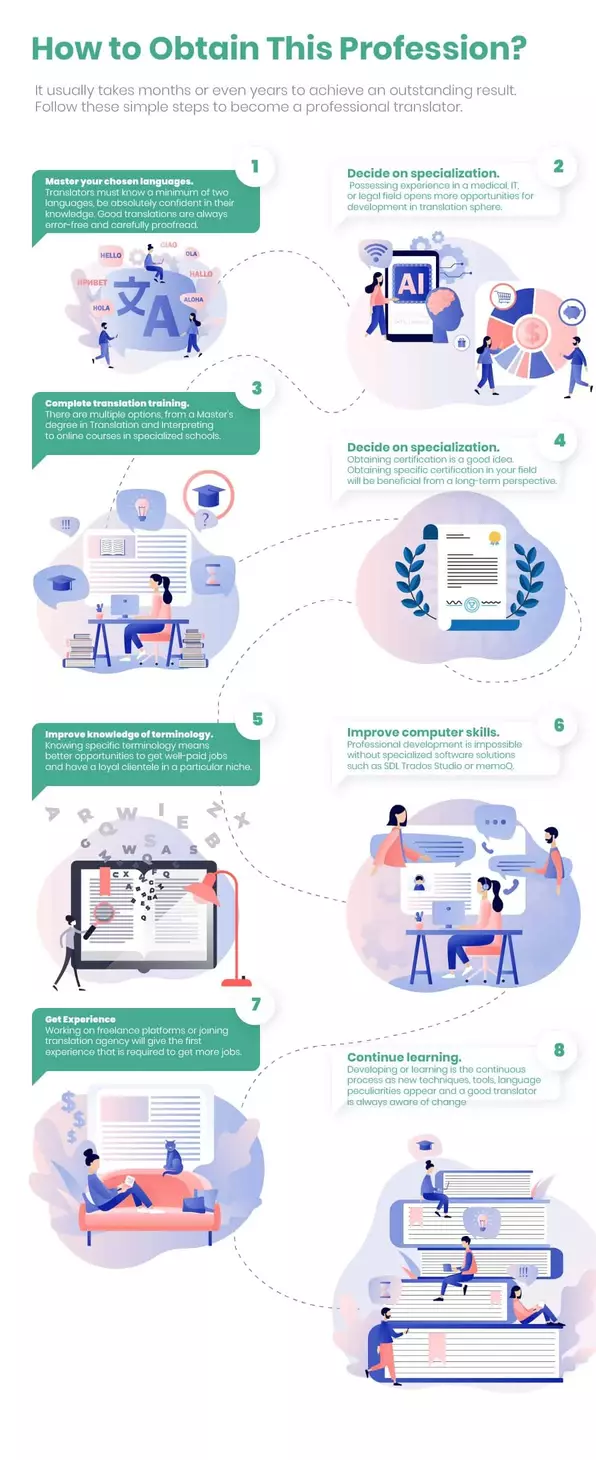
To become a translator, you must have fluency in at least two languages, including your native language. Focus on improving your grammar, vocabulary, and cultural understanding of both languages. Here’s how:
- Take language courses or certifications to validate your proficiency.
- Practice daily by reading, writing, and speaking in both languages.
- Immerse yourself in the culture through media, books, and conversations.
Gain Relevant Education or Certification
While not always mandatory, formal education or certifications can boost your credibility. Consider the following steps:
- Pursue a degree in translation, linguistics, or a related field.
- Obtain certifications like ATA (American Translators Association) or equivalent in your country.
- Attend workshops to stay updated on industry standards and tools.
Develop Specialized Knowledge
Many clients seek translators with specialized expertise in fields like legal, medical, or technical translation. To stand out:
- Choose a niche based on your background or interests.
- Study industry-specific terminology through courses or self-learning.
- Gain experience by working on small projects or internships in your chosen field.
Build a Portfolio and Gain Experience
A strong portfolio showcases your skills and attracts clients. Follow these steps:
- Start with volunteer work or pro bono projects to build samples.
- Use freelance platforms like Upwork or ProZ to find entry-level jobs.
- Create a professional website or LinkedIn profile to display your work.
Network and Market Yourself
Networking is crucial for finding translation jobs. Implement these strategies:
- Join professional associations like ATA or ITI (Institute of Translation and Interpreting).
- Attend industry events to connect with potential clients or employers.
- Leverage social media to share your expertise and engage with translation communities.
Frequently Asked Questions (FAQ)
Where can I apply to become a Chinese translation volunteer?
You can apply to become a Chinese translation volunteer through various platforms, including non-profit organizations, language service providers, and online volunteer communities. Websites like Translators Without Borders, United Nations Volunteers, and local cultural exchange programs often seek volunteers for translation projects. Additionally, social media groups and forums dedicated to language learning or translation work may post opportunities.
What qualifications do I need to volunteer as a Chinese translator?
To volunteer as a Chinese translator, you typically need fluency in both Chinese and the target language, as well as strong writing and cultural understanding skills. While formal qualifications like a degree in translation or certification (e.g., from the American Translators Association) can be helpful, many organizations prioritize practical experience and passion for the cause. Some may require a test translation to assess your abilities before accepting you as a volunteer.
Are there any remote opportunities for Chinese translation volunteers?
Yes, many remote opportunities exist for Chinese translation volunteers, especially with global organizations and online platforms. Websites like ProZ.com, VolunteerMatch, and Red Cross often list remote translation tasks. Additionally, crowdsourcing projects for open-source software, educational content, or humanitarian efforts frequently seek volunteers who can work from anywhere. Ensure you have a stable internet connection and the necessary translation tools to contribute effectively.
How much time do I need to commit as a Chinese translation volunteer?
The time commitment for Chinese translation volunteers varies depending on the organization and project scope. Some roles may require just a few hours per week, while others might involve long-term commitments for large-scale projects. Before applying, clarify the expected time investment with the organization. Many groups appreciate flexible schedules, allowing volunteers to contribute as their availability permits. However, consistency and meeting deadlines are crucial to maintaining trust and efficiency in volunteer translation work.
Leave a Reply
Related Posts