
Timeboxing Chinese: Get more done in less time

In today’s fast-paced world, mastering productivity techniques is essential—especially when tackling complex tasks like learning Chinese. Timeboxing, a powerful time management method, can help you achieve more in less time by breaking study sessions into focused, structured intervals. By allocating specific blocks for vocabulary, grammar, and practice, you eliminate distractions and maximize efficiency. This approach not only boosts retention but also prevents burnout, making language learning more sustainable. Whether you're a beginner or advancing your skills, timeboxing Chinese transforms overwhelming goals into manageable steps. Discover how this strategy can streamline your progress, turning hours of unfocused study into targeted, results-driven sessions.
Timeboxing Chinese: Boost Productivity with Structured Time Management
What Is Timeboxing and How Does It Work?
Timeboxing is a time management technique where you allocate a fixed period, or box, to complete a specific task. This method helps prevent procrastination by creating urgency and focus. For learning Chinese, timeboxing ensures consistent practice without burnout.
| Key Aspect | Benefit |
|---|---|
| Fixed duration | Prevents overworking |
| Clear goals | Enhances focus |
| Prioritization | Improves efficiency |
Why Timeboxing Is Effective for Learning Chinese
Chinese requires consistent practice in characters, tones, and grammar. Timeboxing breaks study sessions into manageable chunks, making retention easier. For example, 25-minute blocks for vocabulary followed by 5-minute breaks align with the Pomodoro Technique.
See Also7 mistakes I made when writing Chinese characters and what I learnt from them| Chinese Skill | Recommended Timebox |
|---|---|
| Character writing | 20-30 mins |
| Listening practice | 15-20 mins |
| Grammar drills | 25 mins |
Steps to Implement Timeboxing for Chinese Mastery
1. Define objectives (e.g., Learn 10 characters).
2. Set a strict timer (e.g., 30 minutes).
3. Eliminate distractions (turn off notifications).
4. Review progress post-session.
| Step | Tool |
|---|---|
| Tracking time | Toggl/Google Calendar |
| Task lists | Notion/Trello |
Common Timeboxing Mistakes to Avoid
- Overestimating capacity: 4-hour blocks lead to fatigue.
- Ignoring breaks: 5-10 minutes between boxes sustain energy.
- Multitasking: Focus on one skill per box (e.g., only speaking).
| Mistake | Solution |
|---|---|
| No breaks | Schedule 5-min rests |
| Vague goals | Use SMART criteria |
Tools to Supercharge Your Timeboxing Routine
- Focus@Will: Music for concentration.
- Forest App: Gamifies focused time.
- Google Calendar: Color-coded time blocks.
| Tool | Use Case |
|---|---|
| Pomodone | Integrates with Trello/Asana |
| RescueTime | Tracks productivity |
What is the time box technique?
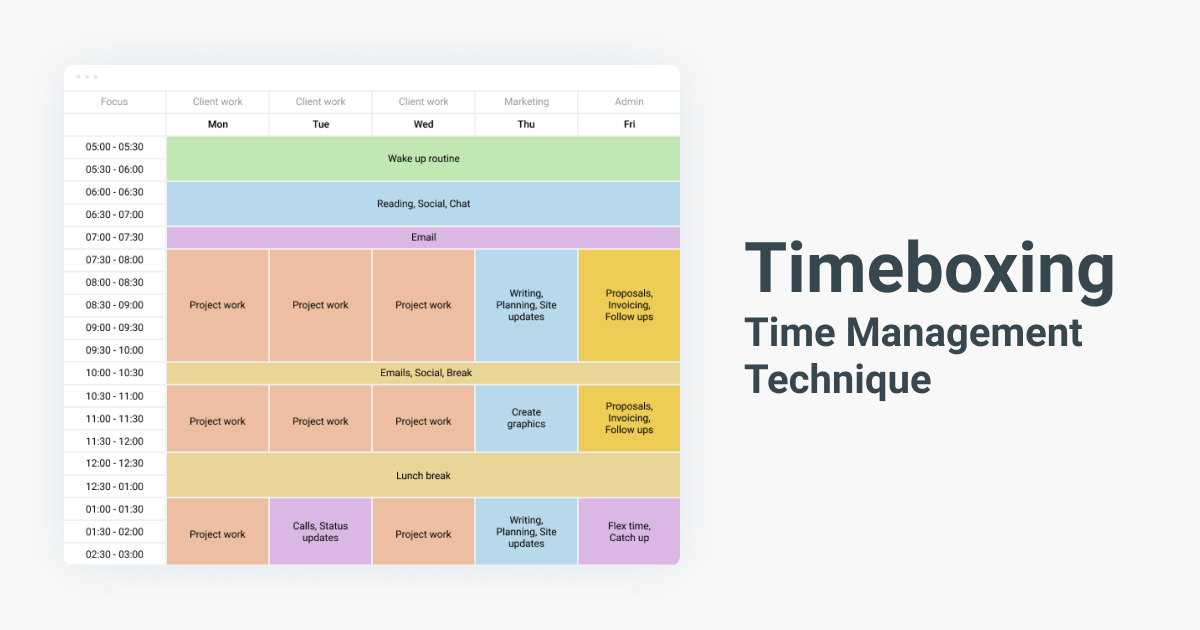
What Is the Time Box Technique?
The time box technique is a time management strategy where a fixed, predetermined period (called a time box) is allocated to complete a specific task or activity. Once the time expires, work stops, regardless of progress. This method helps improve focus, productivity, and efficiency by creating a sense of urgency and reducing procrastination.
- Defined duration: Tasks are assigned strict start and end times.
- Prioritization: Forces teams or individuals to focus on high-value activities.
- Prevents perfectionism: Encourages progress over endless refinement.
How Does the Time Box Technique Work?
The technique operates by breaking work into short, manageable intervals, often ranging from 15 minutes to a few hours. Each interval is dedicated to a single task or goal, minimizing distractions and promoting deep work.
See AlsoHow to find out how good your Chinese pronunciation really is- Set a clear objective: Define what must be accomplished within the time box.
- Use a timer: Track the allocated time strictly.
- Review results: Assess outcomes after the time box ends.
Benefits of Using the Time Box Technique
Implementing this method offers several advantages, including better deadline adherence, reduced stress, and higher accountability.
- Enhanced productivity: Limits time wasted on low-priority tasks.
- Improved focus: Reduces multitasking and distractions.
- Measurable progress: Provides clear benchmarks for completion.
Common Applications of Time Boxing
The technique is widely used in project management, software development (e.g., Agile sprints), and personal productivity systems like the Pomodoro Technique.
- Agile methodologies: Sprints are time-boxed iterations.
- Meetings: Prevents unnecessary prolongation.
- Creative work: Helps avoid endless revisions.
Tips for Effective Time Boxing
To maximize results, follow best practices such as realistic planning, buffer time, and consistent evaluation.
- Estimate accurately: Avoid overly ambitious time boxes.
- Minimize interruptions: Silence notifications and close unrelated tabs.
- Adjust as needed: Refine time allocations based on past performance.
What is the time boxing process?

What Is the Definition of Time Boxing?
Time boxing is a time management technique where a fixed period, or box, is allocated to complete a specific task or activity. This method helps improve focus, reduce procrastination, and enhance productivity by setting clear boundaries.
- Fixed duration: Tasks are assigned a strict start and end time.
- Goal-oriented: Encourages completion within the allotted time.
- Flexible adaptation: Adjustable based on task complexity.
How Does Time Boxing Improve Productivity?
By enforcing deadlines, time boxing minimizes distractions and promotes efficient work habits. It breaks larger tasks into manageable segments, reducing overwhelm.
- Prevents perfectionism: Limits overworking on minor details.
- Enhances focus: Encourages deep work during the boxed time.
- Tracks progress: Provides measurable milestones.
What Are the Key Steps to Implement Time Boxing?
Successful time boxing requires planning and discipline. Follow these steps to integrate it into your workflow.
- Identify tasks: List activities needing completion.
- Set time limits: Assign realistic durations.
- Use tools: Timers or apps to enforce boxes.
What Tools Can Support Time Boxing?
Several digital and analog tools can streamline the time boxing process, ensuring adherence and efficiency.
- Pomodoro timers: Breaks work into intervals.
- Calendar apps: Blocks time visually.
- Task managers: Tracks boxed tasks.
What Are Common Challenges in Time Boxing?
While effective, time boxing may face obstacles like unrealistic time estimates or interruptions. Addressing these ensures success.
- Underestimating tasks: Leads to rushed work.
- External disruptions: Requires boundary-setting.
- Rigidity: Needs flexibility for adjustments.
How to create time boxing?
Understanding Time Boxing Basics
Time boxing is a productivity technique where you allocate a fixed period, or box, to complete a specific task. This method helps improve focus, reduce procrastination, and enhance efficiency. Here’s how to grasp the fundamentals:
- Define the task: Clearly identify what you need to accomplish.
- Set a time limit: Assign a realistic but strict deadline for the task.
- Eliminate distractions: Focus solely on the task during the allotted time.
Choosing the Right Tasks for Time Boxing
Not all tasks are suitable for time boxing. Prioritize activities that benefit from structured focus. Follow these steps to select the right tasks:
- Break down large projects: Divide complex tasks into smaller, manageable chunks.
- Avoid open-ended tasks: Choose tasks with clear endpoints, like writing or coding.
- Prioritize deadlines: Focus on time-sensitive assignments first.
Setting Realistic Time Limits
Effective time boxing relies on setting achievable deadlines. Overestimating or underestimating can hinder productivity. Use these guidelines:
- Assess task complexity: Estimate how long the task should take based on experience.
- Add buffer time: Include extra minutes for unexpected delays.
- Use a timer: Track time strictly to stay disciplined.
Implementing Time Boxing Tools
Leverage tools to streamline time boxing and maintain consistency. Here are some effective options:
- Digital timers: Apps like Toggl or Focus Booster help track sessions.
- Calendars: Block time slots in Google Calendar or Outlook.
- Task managers: Tools like Todoist or Trello can integrate time-boxed tasks.
Reviewing and Adjusting Time Boxes
Regularly evaluate your time boxing strategy to ensure it remains effective. Follow these steps for optimization:
- Analyze completed tasks: Check if time limits were realistic.
- Adjust durations: Modify future time boxes based on past performance.
- Refine priorities: Shift focus to higher-impact tasks if needed.
Frequently Asked Questions (FAQ)
What is Timeboxing Chinese and how does it work?
Timeboxing Chinese is a productivity technique that involves allocating fixed time periods, or timeboxes, to specific tasks or learning activities. By setting strict limits, you focus intensely on completing a task within the allotted time, reducing procrastination and increasing efficiency. This method is particularly effective for language learning, as it encourages consistent practice and prevents burnout by breaking study sessions into manageable chunks.
Why is Timeboxing Chinese effective for learning Mandarin?
Learning Mandarin can be overwhelming due to its complex characters and tones. Timeboxing Chinese helps by creating a structured approach, ensuring you dedicate focused time to vocabulary, grammar, and pronunciation without distractions. The technique also leverages the Pomodoro Principle, where short bursts of concentrated effort lead to better retention and long-term progress in mastering the language.
How can beginners implement Timeboxing Chinese into their routine?
Beginners should start by identifying their learning priorities, such as memorizing characters or practicing speaking. Then, they can allocate 15-30 minute timeboxes for each activity, using tools like timers or apps to stay disciplined. Consistency is key—scheduling daily or weekly sessions ensures steady improvement. Over time, learners can adjust the duration and complexity of tasks based on their progress.
What tools or apps complement Timeboxing Chinese for better results?
To maximize the benefits of Timeboxing Chinese, learners can use apps like Toggl for tracking time, Anki for spaced repetition of vocabulary, or HelloTalk for conversational practice. Combining these tools with timeboxing creates a balanced and measurable learning experience, helping users stay accountable and motivated while achieving their Mandarin goals efficiently.
Leave a Reply
Related Posts