
Review: The Outlier Dictionary of Chinese Characters

The Outlier Dictionary of Chinese Characters is a groundbreaking resource for learners and scholars of Mandarin, offering unparalleled insights into the structure and history of Chinese characters. Unlike traditional dictionaries, it combines rigorous etymological research with practical learning tools, making complex characters more accessible. Each entry breaks down components, explains origins, and highlights patterns, empowering users to decode characters systematically. Designed for both beginners and advanced learners, the dictionary bridges the gap between memorization and understanding. With clear explanations and visual aids, it transforms character study into an engaging, logical process. This review explores its strengths, usability, and how it stands out in the crowded field of Chinese language references.
- Review: The Outlier Dictionary of Chinese Characters – A Comprehensive Analysis
- How many Chinese characters do you need to know to read a book?
- What is the largest Chinese character dictionary?
- What is the legend of the Chinese characters?
- What is the point of Chinese characters?
-
Frequently Asked Questions (FAQ)
- What makes The Outlier Dictionary of Chinese Characters unique compared to other Chinese character dictionaries?
- How does The Outlier Dictionary of Chinese Characters help with memorization?
- Is The Outlier Dictionary of Chinese Characters suitable for beginners?
- Does The Outlier Dictionary of Chinese Characters cover both simplified and traditional characters?
Review: The Outlier Dictionary of Chinese Characters – A Comprehensive Analysis
The Outlier Dictionary of Chinese Characters is a groundbreaking resource for learners seeking a deep understanding of Chinese characters. Unlike traditional dictionaries, it breaks down characters into their etymological components, offering insightful explanations on their historical development and semantic evolution. This review explores its strengths, weaknesses, and unique features, helping learners decide if it’s the right tool for their studies.
1. What Makes The Outlier Dictionary Unique?
The Outlier Dictionary stands out by focusing on the historical and linguistic roots of Chinese characters. It provides detailed breakdowns of character components, explaining how their meanings and pronunciations evolved. Unlike conventional dictionaries, it avoids oversimplification, making it ideal for advanced learners and enthusiasts of Chinese etymology.
See AlsoHSK 3 Vocabulary Test (300 Words)| Feature | Description |
| Etymology-Based | Explains character origins and evolution |
| Component Analysis | Breaks down characters into meaningful parts |
| Advanced Learning | Best for intermediate to advanced learners |
2. How Accurate Are The Explanations?
The dictionary relies on scholarly research and linguistic studies, ensuring high accuracy in its explanations. Each entry is cross-referenced with historical scripts, such as Oracle Bone and Bronze inscriptions, to validate its claims. However, some interpretations may still be debated among Chinese philologists.
| Aspect | Accuracy Level |
| Historical Evidence | Well-documented with ancient scripts |
| Linguistic Consistency | Follows academic standards |
| Debatable Points | Minor discrepancies in interpretation |
3. Is It Suitable For Beginners?
While the Outlier Dictionary is highly informative, its complexity may overwhelm beginners. It assumes prior knowledge of basic character structures and common components. New learners might benefit more from simplified resources before transitioning to this advanced reference.
| User Level | Suitability |
| Beginner | Not recommended |
| Intermediate | Useful with foundational knowledge |
| Advanced | Highly beneficial |
4. How Does It Compare To Pleco or Hanping?
Unlike Pleco or Hanping, which focus on quick lookups and practical usage, the Outlier Dictionary prioritizes depth over speed. It’s not a replacement but a complementary tool for those who want detailed etymological insights rather than just definitions.
See AlsoHSK 5 Vocabulary Test (450+ Words)| Dictionary | Primary Focus |
| Outlier Dictionary | Etymology & historical analysis |
| Pleco/Hanping | Quick definitions & example sentences |
5. What Are The Limitations?
Despite its strengths, the Outlier Dictionary has some limitations. It lacks audio pronunciations, example sentences, and extensive vocabulary coverage, making it less practical for daily conversation or flashcard-based learning.
| Limitation | Impact |
| No Audio | No pronunciation guidance |
| Minimal Examples | Less context for usage |
| Narrow Focus | Not ideal for general vocabulary |
How many Chinese characters do you need to know to read a book?

How Many Chinese Characters Are Needed for Basic Literacy?
To achieve basic literacy in Chinese, you typically need to know around 1,000 to 2,000 characters. This allows you to understand approximately 80-90% of everyday written material, such as simple books, newspapers, or online articles.
See AlsoThe 10 best free Chinese reading resources for beginner, intermediate and advanced learners- 1,000 characters: Covers common words and phrases in daily life.
- 1,500 characters: Enables reading children's books and basic literature.
- 2,000 characters: Provides a stronger grasp of more complex texts.
How Many Characters Are Required to Read a Novel?
To comfortably read a Chinese novel, you should know 3,000 to 4,000 characters. This range helps you understand 95-98% of the text, though some rare or specialized terms may still require a dictionary.
- 3,000 characters: Suitable for young adult and popular fiction.
- 3,500 characters: Helps with classical references and idioms.
- 4,000 characters: Reduces dependency on dictionaries for most novels.
What Is the Role of Context in Reading Chinese?
Context plays a crucial role in reading Chinese, as many characters share pronunciations or meanings. Even with a limited vocabulary, readers can often infer meanings based on surrounding words.
- Compound words: Many terms combine simpler characters.
- Radicals: Provide clues about a character's meaning.
- Grammar patterns: Help predict unfamiliar characters.
How Do Native Speakers Compare to Learners?
Native speakers typically know 4,000 to 5,000 characters by adulthood, allowing them to read most materials fluently. Learners, however, can achieve functional literacy with fewer characters.
See AlsoHow to Learn Chinese Characters: Six Effective Techniques- 4,000 characters: Standard for high school graduates.
- 5,000+ characters: Used in academic or professional settings.
- Learners' advantage: Focus on high-frequency characters first.
What Are the Best Strategies to Learn Characters Efficiently?
To learn Chinese characters efficiently, focus on high-frequency characters, spaced repetition, and practical reading practice.
- Prioritize common characters: Start with the top 1,000-2,000.
- Use flashcards: Apps like Anki or Pleco help with retention.
- Read graded readers: Gradually increase difficulty.
What is the largest Chinese character dictionary?

The largest Chinese character dictionary is the Zhonghua Zihai (中华字海), compiled by Leng Yulong and published in 1994. It contains over 85,000 characters, including rare, archaic, and variant forms. This dictionary surpasses others in scope by encompassing characters from historical texts, dialects, and even Japanese kanji and Korean hanja.
- Comprehensive coverage: Includes characters from oracle bone script, bronze inscriptions, and seal script.
- Historical and regional variants: Documents characters used in different dynasties and regions.
- Cross-linguistic inclusion: Features characters borrowed or adapted by other East Asian languages.
How was the Zhonghua Zihai compiled?
The compilation of Zhonghua Zihai involved decades of research by linguists and scholars. It synthesized data from earlier dictionaries like Kangxi Zidian and Hanyu Da Zidian, as well as excavated manuscripts and epigraphic materials.
- Source integration: Combined entries from over 200 historical and modern dictionaries.
- Collaborative effort: Involved contributions from universities and research institutions across China.
- Digitalization challenges: Required manual verification due to the lack of OCR technology for rare characters.
What distinguishes Zhonghua Zihai from other Chinese dictionaries?
Zhonghua Zihai stands out due to its unparalleled breadth, focusing on exhaustive character collection rather than definitions or usage examples. Unlike Hanyu Da Zidian (which emphasizes meanings), it prioritizes cataloging every known character form.
- Character-centric approach: Lists glyphs without extensive explanations.
- Inclusivity of obsolete forms: Covers characters no longer in use but found in ancient texts.
- Non-standard variants: Includes folkloric, calligraphic, and shorthand characters.
Are there digital versions of Zhonghua Zihai?
While no official digital edition exists, partial datasets and OCR projects have attempted to digitize Zhonghua Zihai. The complexity of rare characters has hindered full digitalization, but some academic platforms offer searchable excerpts.
- Unofficial databases: Community-driven projects host scanned pages or transcribed entries.
- Research tools: Scholars use segmented PDFs or image-based archives.
- Technical limitations: Unicode incompatibility for many archaic glyphs slows progress.
How is Zhonghua Zihai used today?
Primarily a reference for specialists, Zhonghua Zihai aids paleographers, historians, and linguists studying character evolution. It’s less practical for everyday learners due to its lack of definitions or pinyin.
- Academic research: Essential for decoding ancient manuscripts or inscriptions.
- Font design: Helps typographers recreate historical glyphs.
- Comparative linguistics: Assists in tracing cross-cultural character adaptations.
What is the legend of the Chinese characters?

The Origin of Chinese Characters According to Legend
The legend of Chinese characters traces back to Cangjie, a mythical figure and official historian of the Yellow Emperor (Huangdi). Inspired by animal footprints and natural patterns, he is said to have created the earliest writing system. Key elements of the legend include:
- Cangjie's divine inspiration: He observed the tracks of birds and beasts, leading him to develop symbols representing objects and ideas.
- Heavenly reaction: Upon completion, the gods wept, and millet rained from the sky, symbolizing the profound impact of written language.
- Cultural significance: This myth underscores the reverence for literacy and knowledge in ancient China.
The Role of Cangjie in Chinese Writing
Cangjie is central to the legend, credited with unifying earlier primitive symbols into a coherent system. His contributions are highlighted in:
- Systematization: He organized disparate pictographs into a structured script, laying the foundation for modern Chinese characters.
- Four-eyed sage: Folklore describes him with four eyes, symbolizing extraordinary perception and wisdom.
- Historical records: Texts like the Shuowen Jiezi (an ancient dictionary) reference his role in character creation.
Symbolism in the Creation Myth
The legend is rich with symbolic meaning, reflecting ancient Chinese cosmology and values. Notable aspects include:
- Nature as inspiration: Characters were derived from observations of the natural world, emphasizing harmony with the environment.
- Divine approval: The gods' tears and millet shower signify the sacredness of writing.
- Power of knowledge: Writing was seen as a bridge between humanity and the divine.
Archaeological Evidence vs. Legend
While the Cangjie legend is poetic, archaeological findings suggest a more gradual evolution of Chinese script. Key points of comparison:
- Oracle bone script: The earliest known characters (Shang Dynasty, 1600–1046 BCE) predate Cangjie's mythical timeline.
- Multiple contributors: Scholars believe characters evolved through collective efforts over centuries.
- Cultural persistence: The legend endures as a cultural touchstone despite historical evidence.
Legacy of the Legend in Modern Times
The Cangjie myth continues to influence Chinese culture and education. Its enduring impact is seen in:
- Language reverence: Calligraphy remains a highly respected art form, tied to the legend's spiritual roots.
- Educational narratives: Children learn the story to appreciate the origins of their writing system.
- Technological adaptations: The Cangjie input method for computers pays homage to the legendary creator.
What is the point of Chinese characters?
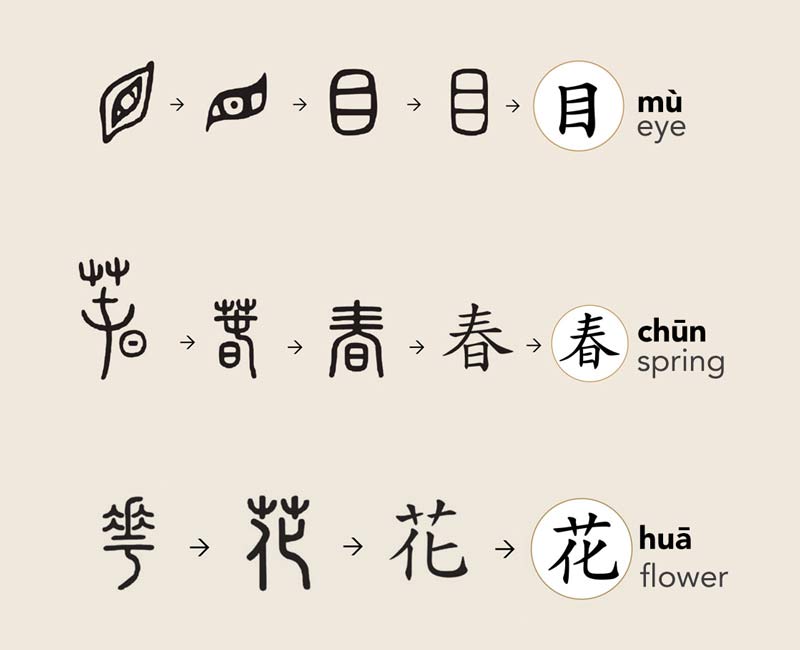
The Historical Significance of Chinese Characters
Chinese characters, or Hanzi, have a history spanning over 3,000 years, making them one of the oldest writing systems still in use today. They serve as a cultural bridge connecting modern China to its ancient past. Key points include:
- Oracle Bone Script: The earliest known form of Chinese writing, used for divination during the Shang Dynasty.
- Cultural Continuity: Characters preserve classical texts, philosophies, and historical records unchanged for millennia.
- Unifying Influence: Despite regional dialects, characters maintain linguistic unity across China.
The Functional Role of Chinese Characters
Chinese characters are logograms, representing meaning rather than sound, which offers unique advantages. Their functionality includes:
- Efficiency: A single character can convey complex ideas, reducing the need for lengthy explanations.
- Precision: Homophones (words with the same sound but different meanings) are distinguished by distinct characters.
- Adaptability: Characters can be combined to form new words, accommodating modern concepts.
Chinese Characters in Modern Communication
Despite the digital age, Chinese characters remain indispensable for daily communication. Their modern applications include:
- Digital Input: Pinyin and handwriting recognition systems enable typing on devices.
- Global Reach: Used by over 1.3 billion people, including diaspora communities worldwide.
- Artistic Expression: Calligraphy and design leverage characters for aesthetic and symbolic value.
The Cognitive Benefits of Learning Chinese Characters
Mastering Chinese characters engages the brain in unique ways, offering cognitive advantages. Notable benefits include:
- Memory Enhancement: Learning characters strengthens visual and spatial memory.
- Pattern Recognition: Identifying radicals and strokes improves analytical skills.
- Multilingual Flexibility: Bilinguals who read characters often exhibit better problem-solving abilities.
Chinese Characters as a Cultural Symbol
Beyond utility, characters embody cultural identity and philosophical depth. Their symbolic importance includes:
- Philosophical Roots: Characters reflect Confucian, Daoist, and Buddhist concepts.
- Artistic Heritage: Calligraphy is revered as a high art form, blending skill and spirituality.
- National Pride: Characters are a source of unity and pride in Chinese-speaking regions.
Frequently Asked Questions (FAQ)
What makes The Outlier Dictionary of Chinese Characters unique compared to other Chinese character dictionaries?
The Outlier Dictionary of Chinese Characters stands out due to its rigorous etymological research and user-friendly explanations. Unlike traditional dictionaries that focus solely on definitions and stroke order, this resource delves into the historical development of characters, breaking them down into their functional components. It also provides mnemonic techniques and visual aids to help learners understand and remember characters more effectively. The dictionary is particularly praised for its clear, structured approach, making complex characters accessible even to beginners.
How does The Outlier Dictionary of Chinese Characters help with memorization?
The dictionary employs a systematic method to deconstruct characters into their semantic and phonetic components, revealing logical patterns that aid memorization. Each entry includes detailed explanations of how a character evolved, along with memory tips and associations to reinforce learning. By emphasizing the logic behind character construction, it transforms rote memorization into an engaging, intuitive process. Users often report that this approach significantly reduces the time needed to learn and retain characters.
Is The Outlier Dictionary of Chinese Characters suitable for beginners?
Yes, the dictionary is designed to cater to learners of all levels, including beginners. While it delves into advanced etymological details, the explanations are presented in a clear and digestible manner. The inclusion of visual diagrams and practical examples ensures that even those new to Chinese can grasp the material. Additionally, the progressive structure allows beginners to build a strong foundation before tackling more complex characters.
Does The Outlier Dictionary of Chinese Characters cover both simplified and traditional characters?
Absolutely. The dictionary provides comprehensive coverage of both simplified and traditional characters, making it a valuable resource for learners regardless of which script they study. Each entry highlights the differences and connections between the two forms, ensuring users understand their relationship. This dual focus is particularly useful for those transitioning between systems or studying regional variations of Chinese, such as Mandarin in mainland China versus Taiwan or Hong Kong.
Leave a Reply
Related Posts