
Learning the third tone in Mandarin Chinese

Mastering the third tone in Mandarin Chinese is often considered one of the biggest challenges for learners. Known for its distinctive dipping pitch, this tone requires precise control to avoid common mistakes, such as confusing it with the second tone or failing to pronounce it fully. Unlike the more straightforward high or rising tones, the third tone demands a subtle fall and rise in pitch, which can vary depending on its position in a sentence. Understanding its nuances is crucial for clear communication, as mispronunciation can lead to misunderstandings. This article explores effective techniques and practice strategies to help learners conquer the elusive third tone with confidence.
Mastering the Third Tone in Mandarin Chinese: A Comprehensive Guide
Understanding the Basics of the Third Tone
The third tone in Mandarin Chinese is one of the four main tones and is often described as a low-dipping tone. It starts at a mid-low pitch, dips down to the lowest pitch, and then rises slightly. However, in natural speech, the full dipping contour is not always pronounced. Instead, it often appears as a low-flat tone unless it is at the end of a sentence or emphasized.
| Aspect | Description |
|---|---|
| Pitch Contour | Starts mid-low, dips down, then rises slightly (2-1-4) |
| Common Variations | Often pronounced as a low-flat tone in fast speech |
Common Mistakes When Pronouncing the Third Tone
Many learners struggle with the third tone because they either overemphasize the dipping motion or fail to lower their pitch enough. Some common errors include:
- Pronouncing it too similarly to the second tone (rising tone).
- Not dropping the pitch low enough before the rise.
- Over-exaggerating the rise, making it sound unnatural.
| Mistake | Correction |
|---|---|
| Over-dipping | Keep the dip subtle unless emphasizing the word |
| Confusing with Tone 2 | Ensure the pitch drops before any rise |
The Third Tone in Connected Speech
In natural conversation, the third tone often changes depending on its position in a sentence. Before another third tone, it usually becomes a rising tone (similar to the second tone). This is called tone sandhi.
| Context | Pronunciation Change |
|---|---|
| Before another 3rd tone | Changes to a rising tone (like Tone 2) |
| In fast speech | Often pronounced as a low-flat tone |
Practice Techniques for the Third Tone
To master the third tone, consistent practice is key. Some effective methods include:
- Shadowing native speakers to mimic natural intonation.
- Using pitch visualization tools to see the tone contour.
- Practicing minimal pairs (e.g., mǎ [horse] vs. má [hemp]).
| Technique | Benefit |
|---|---|
| Shadowing | Improves natural intonation |
| Pitch Tools | Helps visualize correct tone contour |
Examples of Third Tone Words and Phrases
Here are some common words and phrases that use the third tone:
- nǐ hǎo (你好) – Hello (both syllables are 3rd tone, so the first changes to 2nd tone).
- hěn hǎo (很好) – Very good (first syllable is 3rd tone, second is 3rd tone).
| Word/Phrase | Pinyin | Meaning |
|---|---|---|
| nǐ hǎo | nǐ hǎo | Hello |
| hěn hǎo | hěn hǎo | Very good |
What is the 3 3 3 tone rule?

Understanding the 3 3 3 Tone Rule
The 3 3 3 tone rule is a guideline used in communication, particularly in writing and public speaking, to maintain a balanced and engaging tone. It suggests structuring content or speech in a way that ensures clarity, consistency, and audience engagement. The rule breaks down as follows:
- 3 Sentences: Limit paragraphs or sections to three sentences to keep them concise and digestible.
- 3 Paragraphs: Structure key points into three paragraphs for better readability and logical flow.
- 3 Key Messages: Focus on three main ideas to avoid overwhelming the audience and ensure retention.
Origins of the 3 3 3 Tone Rule
The 3 3 3 tone rule draws inspiration from the Rule of Three, a principle rooted in rhetoric and psychology. This rule capitalizes on the human brain's tendency to remember and process information in patterns of three. Here’s how it connects:
See AlsoFocusing on radicals, character components and building blocks- Historical Use: Ancient orators like Aristotle and Cicero used triple structures for persuasive speeches.
- Psychological Impact: Groups of three are easier to recall and more satisfying to audiences.
- Modern Adaptation: The rule has been adapted for contemporary communication, including marketing and storytelling.
Applying the 3 3 3 Tone Rule in Writing
Writers use the 3 3 3 tone rule to craft compelling and structured content. Here’s how to implement it effectively:
- Sentence Structure: Keep sentences short and impactful, aiming for three per paragraph.
- Paragraph Organization: Divide ideas into three paragraphs to maintain clarity and progression.
- Message Focus: Highlight three core takeaways to reinforce understanding and engagement.
Benefits of the 3 3 3 Tone Rule
Adopting the 3 3 3 tone rule offers several advantages for both creators and audiences:
- Improved Clarity: Simplifies complex ideas by breaking them into manageable parts.
- Enhanced Retention: Leverages the brain's preference for trios to boost memory.
- Engagement: Maintains audience interest by avoiding information overload.
Examples of the 3 3 3 Tone Rule in Practice
The 3 3 3 tone rule appears in various forms of communication. Here are real-world applications:
See AlsoUsing memory aids and mnemonics to make Chinese easier- Speeches: TED Talks often structure key points in sets of three for maximum impact.
- Marketing: Advertisements use triple slogans (e.g., Just Do It) for memorability.
- Storytelling: Fairy tales and jokes frequently rely on three-part structures (e.g., Three Little Pigs).
How to memorize Mandarin tones?
Understanding the Basics of Mandarin Tones
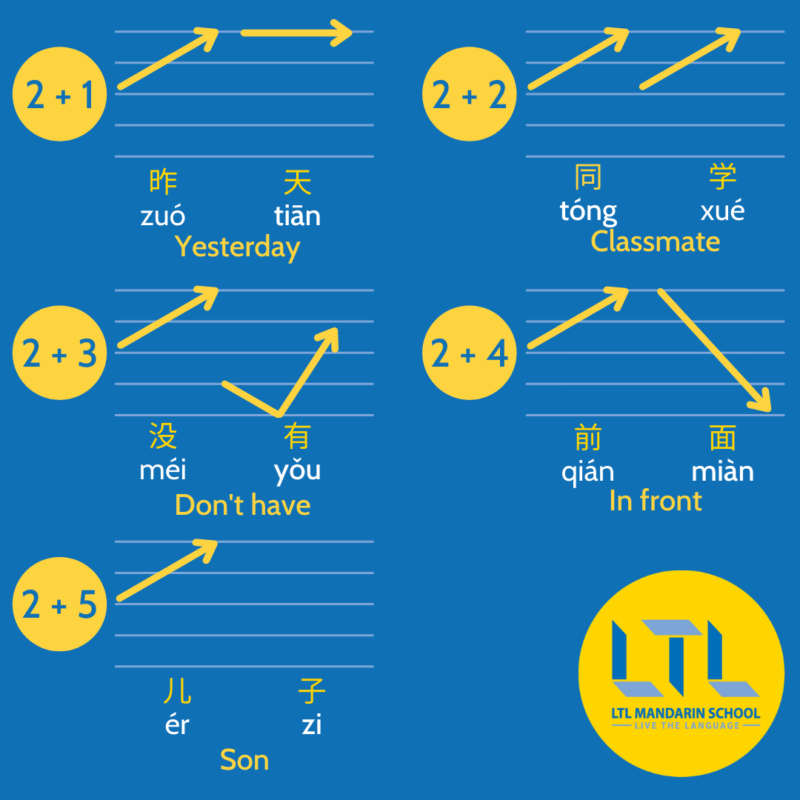
Mandarin Chinese has four primary tones and a neutral tone, each altering the meaning of a word. To memorize them effectively, start by recognizing their distinct pitch patterns:
- First tone (高平): High and steady, like singing a musical note.
- Second tone (升调): Rising, similar to the inflection in a question.
- Third tone (降升): Falls then rises, often described as a dipping sound.
- Fourth tone (降调): Sharp and falling, like a command.
- Neutral tone: Light and quick, with no fixed pitch.
Using Mnemonics to Reinforce Tone Memory
Associating tones with visual or auditory cues can accelerate learning. Here’s how:
- Link tones to gestures: Raise your hand for the second tone or dip it for the third.
- Create stories: Imagine a character’s voice (e.g., a grumpy fourth-tone boss).
- Use color-coding: Assign colors to tones (e.g., red for first tone).
Practicing with Tone Pairs and Minimal Pairs
Contrasting similar words (minimal pairs) sharpens tonal awareness:
- Compare words: Practice mā (mother) vs. mà (scold).
- Listen and repeat: Use apps like Pleco or HelloChinese.
- Record yourself: Identify discrepancies in your pronunciation.
Incorporating Tones into Daily Vocabulary Practice
Consistency is key. Integrate tones into every new word you learn:
- Label flashcards: Include tone marks and pitch contours.
- Sing or chant: Turn vocabulary lists into tonal melodies.
- Use tone drills: Focus on one tone per session.
Leveraging Technology and Apps for Tone Mastery
Digital tools offer interactive tone training:
- Tone recognition apps: Try Skritter or ToneTest.
- YouTube tutorials: Watch native speakers demonstrate tones.
- Speech-to-text: Test accuracy by speaking into apps like Google Pinyin.
What is an example of tone 3 sandhi in mandarin?
What is Tone 3 Sandhi in Mandarin?
Tone 3 sandhi is a phonological rule in Mandarin where a third tone (falling-rising) changes to a second tone (rising) when followed by another third tone. This occurs to make speech flow more naturally. For example, the word 你好 (nǐ hǎo) is pronounced as ní hǎo because both syllables are originally third tones.
How Does Tone 3 Sandhi Work?
The rule applies when two third-tone syllables appear consecutively. The first syllable's tone shifts from 214 (falling-rising) to 35 (rising), resembling a second tone. Here’s how it works:
- Original tones: nǐ (3) + hǎo (3) → nǐ hǎo
- After sandhi: ní (2) + hǎo (3) → ní hǎo
- Result: The first syllable sounds like a second tone.
Common Examples of Tone 3 Sandhi
Here are some frequently used Mandarin words and phrases that demonstrate tone 3 sandhi:
- 很好 (hěn hǎo) → hén hǎo (very good)
- 可以 (kě yǐ) → ké yǐ (can/possible)
- 水果 (shuǐ guǒ) → shuí guǒ (fruit)
Why Is Tone 3 Sandhi Important?
Mastering tone 3 sandhi is crucial for accurate Mandarin pronunciation. Without it, speech sounds unnatural or even confusing. Key reasons include:
- Fluency: Native speakers use sandhi instinctively.
- Clarity: Prevents misinterpretation of words.
- Rhythm: Maintains the melodic flow of Mandarin.
Exceptions to Tone 3 Sandhi Rules
While tone 3 sandhi is widespread, there are exceptions where it doesn’t apply:
- Single third-tone syllables: No sandhi if standalone (e.g., 我 wǒ).
- Pauses between syllables: Sandhi may not occur in slow speech.
- Multiple third tones: In sequences like 我很好 (wǒ hěn hǎo), only the first pair undergoes sandhi (wǒ hén hǎo).
Frequently Asked Questions (FAQ)
What is the third tone in Mandarin Chinese?
The third tone in Mandarin Chinese is one of the four main tones used to differentiate word meanings. It is characterized by a falling-rising pitch contour, starting at a mid-low level, dipping down, and then rising again. For example, the word hǎo (好), meaning good, uses the third tone. Mastering this tone is crucial because mispronunciation can lead to misunderstandings, as many words differ only by tone.
Why is the third tone often pronounced as a low-flat tone?
In natural speech, the third tone is frequently pronounced as a low-flat tone instead of the full falling-rising contour. This happens because the complete dip-and-rise requires more effort and can slow down conversation. Native speakers simplify it to a low, steady pitch unless the word is emphasized or spoken in isolation. For learners, recognizing this variation is essential to sound more natural and understand native speakers better.
How can I practice the third tone effectively?
To practice the third tone, start by isolating the tone and repeating words like mǎ (马, horse) or nǐ (你, you). Use tone pairs to practice combinations, such as third tone followed by another third tone (e.g., nǐ hǎo → ní hǎo). Recording yourself and comparing it to native speakers can help identify errors. Additionally, listening exercises and mimicking dialogues will improve your ability to distinguish and produce the tone accurately.
What are common mistakes when learning the third tone?
Learners often make two key mistakes with the third tone: overemphasizing the rising part or skipping the dip entirely, making it sound like a second tone. Another error is failing to adjust the tone in tone sandhi situations, like when two third tones appear consecutively (the first becomes a second tone). Consistent practice and feedback from teachers or language partners can help correct these mistakes over time.
Leave a Reply
Related Posts