
Learning how to ask for and receive directions in Chinese

Navigating a new place can be challenging, especially when language barriers stand in the way. Learning how to ask for and receive directions in Chinese is an essential skill for travelers, expats, or anyone engaging with Mandarin-speaking communities. Whether you're exploring bustling cities or rural areas, understanding key phrases and polite expressions will help you communicate effectively. This guide covers common vocabulary, sentence structures, and cultural tips to ensure smooth interactions. From asking for landmarks to understanding responses, mastering these basics builds confidence and fosters meaningful connections. With practice, you’ll find that getting around in Chinese becomes not just easier, but also an enriching part of your language journey.
Learning How to Ask for and Receive Directions in Chinese
Basic Phrases for Asking Directions
When navigating in a Chinese-speaking area, knowing basic phrases is essential. Start with simple questions like:
- 请问... (Qǐngwèn...) – Excuse me, may I ask...
- ...在哪里? (...zài nǎlǐ?) – Where is...?
| Phrase | Meaning |
|---|---|
| 请问地铁站在哪里? | Excuse me, where is the subway station? |
| 银行怎么走? | How do I get to the bank? |
Understanding Common Directional Words
Chinese directions often use spatial terms. Key words include:
- 左 (zuǒ) – Left
- 右 (yòu) – Right
- 直走 (zhí zǒu) – Go straight
| Term | Usage Example |
|---|---|
| 在前面 | In front |
| 在右边 | On the right |
Responding to Directions Given in Chinese
When someone provides directions, confirm understanding with:
- 明白了 (Míngbái le) – I understand.
- 谢谢 (Xièxiè) – Thank you.
| Response | Situation |
|---|---|
| 我听懂了 | I understood |
| 请再说一遍 | Please repeat |
Chinese speakers often reference landmarks like:
- 超市 (chāoshì) – Supermarket
- 医院 (yīyuàn) – Hospital
| Landmark | Example Phrase |
|---|---|
| 公园旁边 | Next to the park |
| 学校对面 | Opposite the school |
Practicing with Real-Life Scenarios
To improve, simulate situations like:
- Asking for a restroom: 洗手间在哪儿? (Xǐshǒujiān zài nǎr?)
- Finding a taxi stand: 出租车站在哪里? (Chūzūchē zhàn zài nǎlǐ?)
| Scenario | Phrase to Use |
|---|---|
| Bus stop | 公交车站在哪里? |
| Hotel | 酒店怎么走? |
How do you teach asking for and giving directions?
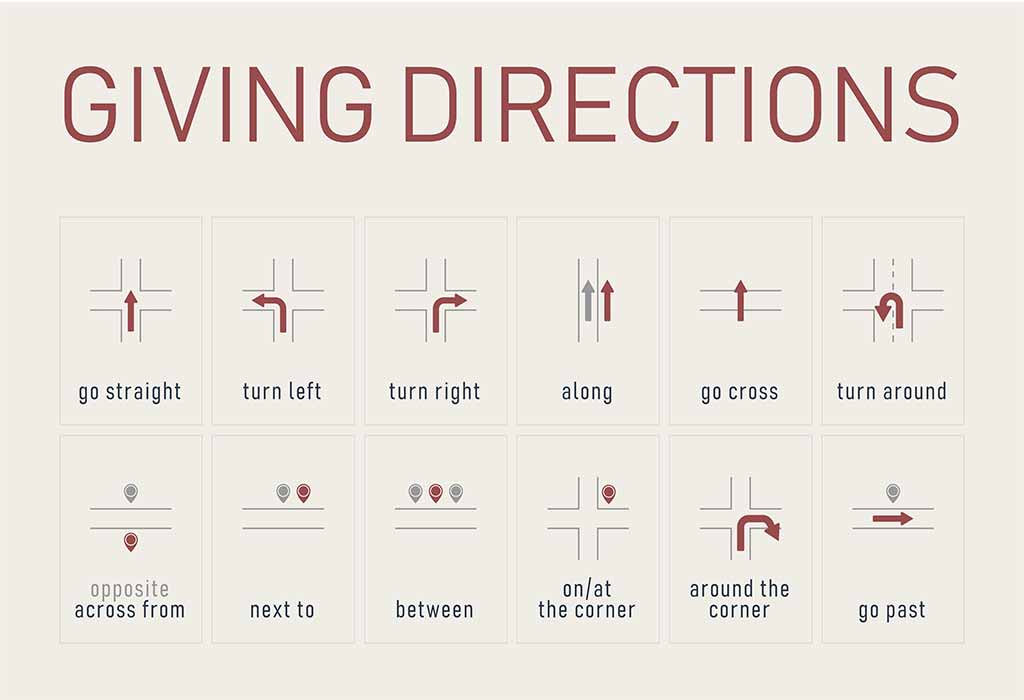
How to Introduce Basic Direction Vocabulary
To teach asking for and giving directions, start by introducing essential vocabulary. Focus on words like left, right, straight, turn, and landmarks such as traffic light or bank. Use visual aids like maps or diagrams to reinforce understanding.
- Teach prepositions of place (next to, between, across from).
- Introduce common phrases (Excuse me, how do I get to...?).
- Practice pronunciation through repetition and role-playing.
Using Real-Life Scenarios for Practice
Simulate real-world situations to help learners apply direction-related language. Create mock scenarios where students ask for or give directions to familiar locations like a school, supermarket, or bus station.
See AlsoChinese Summer Solstice | How is the Longest Day Celebrated in China?- Assign roles: one student asks, another guides.
- Use authentic materials (city maps, street signs).
- Encourage improvisation to build confidence.
Incorporating Interactive Activities
Engage students with hands-on activities to reinforce learning. Games like treasure hunts or map-drawing exercises make the process dynamic and memorable.
- Organize a direction-based scavenger hunt.
- Have students draw and label their own neighborhood maps.
- Use digital tools (Google Maps) for virtual exploration.
Teaching Polite and Clear Communication
Emphasize the importance of politeness and clarity when asking for or giving directions. Teach phrases like Could you please...? and Thank you for your help.
- Model polite requests and responses.
- Highlight the use of sequencing words (first, then, finally).
- Correct common mistakes (e.g., unclear instructions).
Assessing Progress Through Role-Plays
Evaluate students' understanding by conducting role-play assessments. Provide feedback on accuracy, fluency, and politeness.
See AlsoIndicating Change: 了in Chinese Grammar- Assign specific locations for direction-based dialogues.
- Grade based on vocabulary use and clarity.
- Encourage peer feedback for collaborative learning.
Frequently Asked Questions (FAQ)
What are some basic Chinese phrases for asking directions?
When asking for directions in Chinese, it's helpful to know a few key phrases. For example, 请问 (qǐng wèn) means Excuse me and is a polite way to start. To ask where a place is, use 在哪里? (zài nǎ lǐ?), meaning Where is...? Combine these with location names, such as 地铁站在哪里? (dì tiě zhàn zài nǎ lǐ?) for Where is the subway station? Mastering these basics will make navigating much easier.
How do I understand directions given in Chinese?
Understanding directions in Chinese requires familiarity with common terms like 左转 (zuǒ zhuǎn) for turn left, 右转 (yòu zhuǎn) for turn right, and 直走 (zhí zǒu) for go straight. Landmarks are often referenced, such as 红绿灯 (hóng lǜ dēng) for traffic light or 路口 (lù kǒu) for intersection. If you're unsure, ask the speaker to 请再说一遍 (qǐng zài shuō yī biàn)—Please say it again.
What should I do if I get lost in a Chinese-speaking area?
If you get lost, stay calm and approach someone politely with 请问,我迷路了 (qǐng wèn, wǒ mí lù le)—Excuse me, I'm lost. Carry a written note with your destination in Chinese, like 请带我去... (qǐng dài wǒ qù...)—Please take me to... Use translation apps or show a map if needed. Locals are usually willing to help, especially if you’ve made an effort with basic phrases.
Are there cultural tips to keep in mind when asking for directions in China?
Yes, cultural etiquette matters when seeking help. Always begin with 请问 (qǐng wèn) to show politeness. Avoid interrupting or being overly direct—Chinese communication tends to be indirect. If someone can’t help, they might say 不知道 (bù zhī dào)—I don’t know—politely. Offering a small smile or nod shows appreciation. Remember, patience and respect go a long way in ensuring a positive interaction.
Leave a Reply
Related Posts