
Why Are Fast Fashion Brands Fleeing China?

In recent years, China has been a dominant force in fast fashion, serving as the manufacturing hub for countless global brands. However, a noticeable shift is underway as many companies are relocating production to other regions. Rising labor costs, stricter environmental regulations, and geopolitical tensions are key factors driving this exodus. Additionally, consumer demand for ethical and sustainable practices is pushing brands to explore alternatives with lower risks and reputational benefits. As supply chains diversify, countries like Vietnam, Bangladesh, and India are emerging as preferred destinations. This article explores the reasons behind fast fashion’s retreat from China and the implications for the industry’s future.
Why Are Fast Fashion Brands Leaving China?
Detailed Explanation:
The fast fashion industry, known for its quick production cycles and low-cost garments, has been a dominant force in China for decades. However, recent trends show that many brands are shifting their manufacturing bases to other countries. This move is driven by several factors, including rising labor costs, geopolitical tensions, sustainability concerns, and changing consumer demands. Below, we explore these reasons in detail.
---
See AlsoHow many Chinese characters do I need to know to be fluent?1. Rising Labor Costs in China
The cost of labor in China has increased significantly over the past decade. Once a hub for cheap manufacturing, the country now faces higher wages due to economic growth and government policies. Fast fashion brands, which rely on low production costs, are seeking alternatives in countries like Vietnam, Bangladesh, and India, where labor remains more affordable.
| Country | Average Monthly Wage (USD) |
|---|---|
| China | $500 - $800 |
| Vietnam | $200 - $300 |
| Bangladesh | $100 - $150 |
---
2. Geopolitical Tensions and Trade Wars
Trade disputes between China and Western nations, particularly the U.S., have led to tariffs and supply chain disruptions. Fast fashion brands, which depend on global exports, are reducing their reliance on China to avoid additional costs and logistical challenges. Some companies are moving production to Southeast Asia or Africa to mitigate risks.
See AlsoChina’s Housing Bubble – Explained| Factor | Impact on Fast Fashion |
|---|---|
| U.S.-China Tariffs | Increased production costs |
| Supply Chain Risks | Delays and unpredictability |
---
3. Sustainability and Ethical Concerns
Consumers are increasingly demanding sustainable and ethical fashion. China’s environmental regulations have tightened, making it harder for fast fashion brands to maintain low-cost, high-pollution practices. Many brands are relocating to countries with less stringent regulations or investing in eco-friendly production elsewhere.
| Issue | Brand Response |
|---|---|
| Pollution Regulations | Shift to greener markets |
| Consumer Pressure | Adoption of sustainable practices |
---
See AlsoWhat Chinese Zodiac Animals Say About Your Personality4. Shifting Consumer Preferences
Chinese consumers are becoming more quality-conscious and less inclined toward disposable fashion. This shift has forced fast fashion brands to either adapt their strategies or exit the market. Meanwhile, local Chinese brands are gaining traction, offering better quality at competitive prices.
| Trend | Impact |
|---|---|
| Preference for Quality | Decline in fast fashion sales |
| Rise of Local Brands | Increased competition |
---
5. Diversification of Supply Chains
The COVID-19 pandemic exposed vulnerabilities in global supply chains, prompting brands to reduce dependence on China. Many are adopting a China Plus One strategy, spreading production across multiple countries to minimize risks and ensure business continuity.
See AlsoShould you throw away your Chinese textbook?| Strategy | Benefit |
|---|---|
| China Plus One | Risk mitigation |
| Multi-Country Sourcing | Supply chain resilience |
What is the problem with fast fashion in China?
Environmental Impact of Fast Fashion in China
The fast fashion industry in China contributes significantly to environmental degradation due to its high resource consumption and waste generation. The sector relies on cheap, non-sustainable materials and inefficient production processes, leading to severe ecological consequences.
- Water pollution: Textile dyeing and treatment release toxic chemicals into rivers, affecting ecosystems and drinking water.
- Carbon emissions: Mass production and transportation contribute heavily to China's carbon footprint.
- Textile waste: Discarded clothing piles up in landfills, as recycling infrastructure remains underdeveloped.
Labor Exploitation in Chinese Fast Fashion Factories
Many fast fashion brands outsource production to China, where labor rights violations are prevalent. Workers often face poor conditions, low wages, and excessive overtime to meet high demand.
See AlsoIf you think spaced repetition software is a panacea you are wrong- Low wages: Garment workers earn far below living wages despite long hours.
- Unsafe workplaces: Factories often lack proper safety measures, leading to accidents.
- Child labor: Some suppliers exploit underage workers to cut costs.
Overconsumption and Waste Generation
China's fast fashion industry fuels a culture of disposable clothing, encouraging excessive buying and short-term use of garments, which exacerbates waste problems.
- Short product lifecycles: Trends change rapidly, leading to quicker disposal of clothes.
- Low-quality materials: Cheap fabrics wear out fast, increasing discard rates.
- Consumer behavior: Heavy marketing promotes impulse purchases and overconsumption.
Dependence on Non-Renewable Resources
The fast fashion model relies on non-sustainable materials like polyester, which are derived from fossil fuels and contribute to long-term environmental harm.
- Plastic-based fabrics: Polyester and nylon shed microplastics during washing.
- High energy use: Synthetic fiber production consumes large amounts of petroleum.
- Limited recycling: Most blended fabrics cannot be efficiently recycled.
Regulatory and Enforcement Challenges
China struggles with weak enforcement of environmental and labor laws, allowing fast fashion brands to operate with minimal accountability.
- Lax regulations: Environmental standards are often ignored or loosely applied.
- Corruption: Some factories bribe officials to bypass inspections.
- Global supply chain opacity: Brands distance themselves from supplier misconduct.
Which country has the most fast fashion?

Which Country Dominates the Fast Fashion Industry?
China is the undisputed leader in fast fashion production, supplying a significant portion of the world's clothing. The country's dominance stems from its massive manufacturing infrastructure, low labor costs, and efficient supply chains. Key factors include:
- Large-scale factories capable of rapid production cycles.
- Cost-effective labor, enabling cheaper garment production.
- Export dominance, with brands like Shein and Zara relying heavily on Chinese manufacturers.
How Does China's Fast Fashion Industry Operate?
China's fast fashion sector thrives on speed and scalability, with manufacturers able to produce and ship trends within weeks. The process involves:
- Trend replication: Quick adaptation of global fashion trends.
- Vertical integration: Factories control every step from fabric sourcing to final production.
- E-commerce partnerships: Platforms like AliExpress and Shein streamline direct-to-consumer sales.
What Role Do Other Countries Play in Fast Fashion?
While China leads, other nations contribute significantly to fast fashion:
- Bangladesh: Second-largest exporter, known for low wages but poor labor conditions.
- Vietnam: Growing hub for brands seeking alternatives to China.
- India: Major textile producer, though slower in adopting ultra-fast fashion models.
Why Is China the Top Choice for Fast Fashion Brands?
Brands prefer China due to its unmatched efficiency and infrastructure:
- Logistics networks: Ports and shipping routes optimized for global exports.
- Technology adoption: Automation and AI-driven design processes.
- Regulatory flexibility: Fewer restrictions compared to Western manufacturers.
What Are the Environmental Impacts of China's Fast Fashion Dominance?
China's fast fashion boom has severe ecological consequences:
- Textile waste: Millions of tons of unsold or discarded clothing annually.
- Water pollution: Dyeing processes contaminate rivers.
- Carbon emissions: High energy use in production and shipping.
Who is Zara competitors in China?
Major International Fast Fashion Competitors of Zara in China
Zara faces strong competition from several international fast fashion brands in China, which target similar consumer segments with trendy and affordable clothing. Key competitors include:
- H&M: A Swedish brand known for its rapid production cycles and collaborations with high-profile designers.
- Uniqlo: A Japanese retailer focusing on minimalist, high-quality basics and innovative fabrics.
- Forever 21: An American brand offering youthful, budget-friendly fashion, though its presence in China has fluctuated.
Local Chinese Fast Fashion Brands Competing with Zara
Chinese domestic brands have gained traction by leveraging local market insights and digital strategies. Notable competitors include:
- UR (Urban Revivo): Mimics Zara’s fast-fashion model but with lower prices and a strong e-commerce presence.
- Peacebird: Blends international trends with Chinese cultural elements, appealing to younger consumers.
- Metersbonwe: A long-established brand revitalizing its image to compete with global fast-fashion giants.
E-commerce and Digital-First Competitors in China
Zara also competes with digital-native brands that dominate China’s online shopping landscape. These include:
- SHEIN: A global leader in ultra-fast fashion, known for its data-driven designs and aggressive social media marketing.
- Zaful: Focuses on swimwear and casual wear, targeting Gen Z through influencer collaborations.
- Chuu: A Korean brand gaining popularity in China for its quirky, youthful styles and TikTok-driven campaigns.
Some luxury and premium brands are encroaching on Zara’s space by offering accessible lines. Competitors in this category include:
- Mango: A Spanish brand with a slightly higher price point but strong emphasis on contemporary designs.
- Massimo Dutti: Zara’s sister brand, targeting a more mature audience with premium casual wear.
- COS: Owned by H&M, it combines minimalist aesthetics with higher-quality materials.
Niche and Sustainable Fashion Brands Challenging Zara
As sustainability gains importance, eco-conscious brands are emerging as competitors. Examples include:
- ICICLE: A Chinese brand focusing on sustainable materials and ethical production.
- Everlane: An American brand transparent about its supply chain, appealing to ethically minded shoppers.
- Patagonia: Though outdoor-focused, its commitment to sustainability attracts overlapping consumers.
Who is the largest producer of fast fashion?
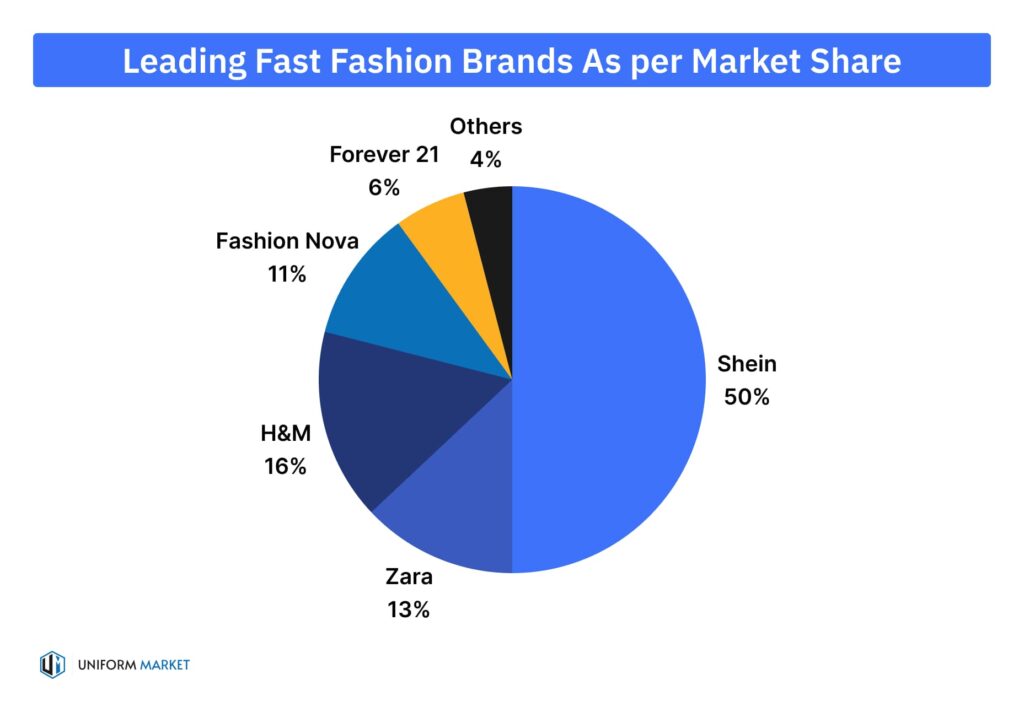
The largest producer of fast fashion globally is China. The country dominates the industry due to its massive manufacturing infrastructure, low labor costs, and efficient supply chains. Many well-known fast fashion brands, such as Shein, Zara (Inditex), H&M, and Uniqlo, rely heavily on Chinese factories for production. Additionally, China's ability to quickly adapt to trends and produce large volumes at low costs solidifies its position as the top producer.
Why is China the Largest Producer of Fast Fashion?
China leads the fast fashion industry due to several key factors:
- Manufacturing capacity: China has the world's largest textile and garment production infrastructure.
- Cost efficiency: Lower labor and production costs allow for competitive pricing.
- Supply chain speed: Rapid production cycles enable quick response to fashion trends.
Which Brands Rely on Chinese Fast Fashion Production?
Many global fast fashion brands depend on China for manufacturing:
- Shein: Operates almost entirely from Chinese factories.
- Zara (Inditex): Sources a significant portion of its products from China.
- H&M: Uses Chinese suppliers for cost-effective production.
How Does China Maintain Its Dominance in Fast Fashion?
China sustains its leadership through:
- Technological advancements: Automation and AI improve efficiency.
- Scalability: Factories can quickly increase output to meet demand.
- Export policies: Favorable trade agreements facilitate global distribution.
What Are the Environmental Impacts of China’s Fast Fashion Industry?
The environmental consequences include:
- High pollution levels: Textile dyeing contributes to water contamination.
- Waste generation: Overproduction leads to massive textile waste.
- Carbon emissions: Shipping and manufacturing increase greenhouse gases.
Are Other Countries Competing with China in Fast Fashion Production?
While China remains dominant, other countries are emerging as competitors:
- Bangladesh: Offers even lower labor costs than China.
- Vietnam: Growing textile industry with competitive pricing.
- India: Large workforce and increasing manufacturing capabilities.
Frequently Asked Questions (FAQ)
Why are fast fashion brands leaving China?
Fast fashion brands are exiting China due to a combination of rising production costs, shifting consumer preferences, and increased competition from local brands. Over the past decade, wages in China have risen significantly, making manufacturing less cost-effective compared to countries like Vietnam, Bangladesh, or India. Additionally, Chinese consumers are becoming more environmentally conscious, favoring sustainable and high-quality products over cheap, disposable fashion. Local brands such as Shein and Urban Revivo have also gained dominance by offering faster turnaround times and better-tailored designs for the domestic market.
How does China's economic slowdown affect fast fashion brands?
China's economic slowdown has reduced consumer spending on non-essential goods, including fast fashion. With slower GDP growth and declining retail sales, international brands face weaker demand. Additionally, the Chinese government's focus on high-value manufacturing and domestic consumption has made it harder for foreign fast fashion companies to compete. Many brands are now relocating to markets with higher growth potential, such as Southeast Asia or Africa, where labor is cheaper and consumer bases are expanding rapidly.
What role do tariffs and trade policies play in this shift?
Tariffs and trade tensions, particularly between China and the U.S., have disrupted supply chains and increased costs for fast fashion brands. The U.S.-China trade war led to higher import duties on Chinese-made textiles, forcing companies to seek alternative manufacturing hubs. Additionally, China's stricter environmental regulations have increased compliance costs, making production less attractive. Brands are now diversifying their supply chains to mitigate risks, often moving operations to countries with more favorable trade agreements and lower regulatory burdens.
Are Chinese consumers still interested in Western fast fashion brands?
While some Chinese consumers still purchase from Western fast fashion brands, preferences are shifting toward local and niche labels. Younger shoppers, in particular, prioritize unique designs, digital shopping experiences, and sustainability—areas where Chinese brands like Shein excel. Western brands often struggle to keep up with the rapid pace of trends in China, where social media platforms like Douyin (TikTok) drive demand at an unprecedented speed. As a result, many international brands are losing market share to homegrown competitors who better understand local tastes and shopping behaviors.
Leave a Reply
Related Posts