
The Best Graded Reading Apps for Learning Chinese

Learning Chinese can be a rewarding yet challenging journey, especially when it comes to building reading skills. Graded reading apps offer a structured approach, presenting texts tailored to different proficiency levels, from beginners to advanced learners. These apps combine engaging content with adaptive learning techniques, helping users gradually expand their vocabulary and comprehension. Whether you're looking for simplified stories, interactive exercises, or audio support, the right app can make a significant difference in your progress. In this article, we explore the best graded reading apps for learning Chinese, highlighting their unique features and benefits to help you find the perfect tool for your language goals.
- The Best Graded Reading Apps for Learning Chinese
- Which app is the best for learning Chinese?
- Can you learn Chinese by reading books?
- What is the best app to read Chinese novels for free?
- What is the most commonly used method for beginning language learners to read Chinese?
- Frequently Asked Questions (FAQ)
The Best Graded Reading Apps for Learning Chinese
1. What Are Graded Reading Apps?
Graded reading apps are digital tools designed to help language learners improve their skills through texts tailored to their proficiency level. These apps provide structured content, from beginner to advanced, ensuring gradual progression. For Chinese learners, they often include pinyin annotations, translations, and audio support to enhance comprehension.
| Feature | Benefit |
|---|---|
| Level-based texts | Matches learner's proficiency |
| Audio support | Improves pronunciation |
| Interactive exercises | Reinforces learning |
2. Top Features to Look for in a Chinese Graded Reading App
When choosing a graded reading app for Chinese, prioritize features like adaptive leveling, vocabulary tracking, and cultural notes. Apps with spaced repetition systems (SRS) help retain new characters, while offline access ensures learning on the go.
See AlsoWho Has The Most XP On Duolingo? Top Users Ranked In 2025| Feature | Importance |
|---|---|
| Adaptive leveling | Adjusts difficulty dynamically |
| Vocabulary tracking | Monitors progress |
| Cultural context | Deepens understanding |
3. Best Graded Reading Apps for Beginners
For beginners, apps like Du Chinese and The Chairman's Bao offer simplified texts with pinyin and English translations. These apps focus on high-frequency vocabulary and basic grammar, making them ideal for newcomers to Mandarin.
| App | Key Benefit |
|---|---|
| Du Chinese | Interactive word lookup |
| The Chairman's Bao | News-based learning |
4. Intermediate Learners: Apps to Bridge the Gap
Intermediate learners benefit from apps like Mandarin Companion and Chinese Breeze, which offer longer texts with minimal translations. These apps emphasize contextual learning and introduce more complex sentence structures.
| App | Key Benefit |
|---|---|
| Mandarin Companion | Engaging storylines |
| Chinese Breeze | Gradual difficulty increase |
5. Advanced Tools for Fluent Reading
Advanced learners should explore apps like Pleco (with graded readers add-on) and Decipher Chinese, which provide authentic materials like novels and articles. These tools focus on nuanced vocabulary and cultural insights to refine fluency.
See AlsoChinese Invention: 9 Things China Gave The World| App | Key Benefit |
|---|---|
| Pleco | Comprehensive dictionary integration |
| Decipher Chinese | Real-world content |
Which app is the best for learning Chinese?
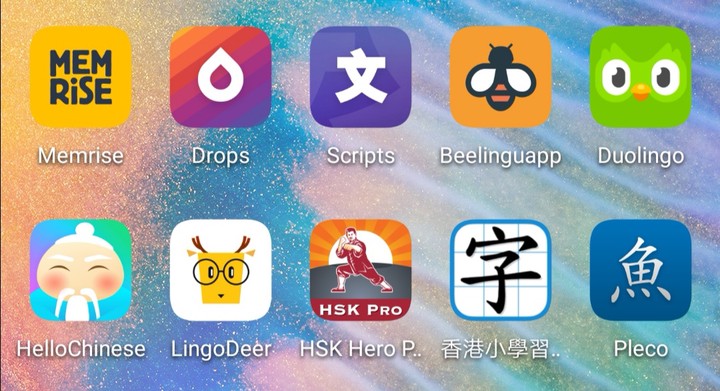
Top Apps for Learning Chinese in 2024
Choosing the best app for learning Chinese depends on your goals, whether it's mastering Mandarin for business, travel, or fluency. Here are the top contenders:
- Duolingo: Gamified lessons ideal for beginners, focusing on vocabulary and basic sentences.
- HelloChinese: Interactive exercises with speech recognition, tailored for practical conversation.
- Pleco: A must-have dictionary app with flashcards and OCR for translating text.
- Anki: Customizable flashcards for memorizing characters and phrases efficiently.
- ChineseSkill: Structured courses covering listening, speaking, reading, and writing.
Features to Look for in a Chinese Learning App
A high-quality app should offer tools to accelerate your progress. Key features include:
See AlsoHow to Prepare for a Chinese Test- Speech recognition to improve pronunciation accuracy.
- HSK-aligned content for standardized proficiency tests.
- Offline access for learning without an internet connection.
- Grammar explanations to understand sentence structures.
- Community features for practicing with native speakers.
Free vs. Paid Chinese Learning Apps
While free apps provide foundational knowledge, paid options often deliver deeper learning experiences:
- Free apps (e.g., Duolingo, HelloChinese) are great for casual learners.
- Paid apps (e.g., Skritter, FluentU) offer advanced tools like handwriting practice.
- Subscription models (e.g., Rosetta Stone) provide comprehensive curricula.
- Free trials help evaluate if premium features justify the cost.
- Some apps offer one-time purchases for lifetime access.
Best Apps for Learning Chinese Characters
Mastering Hanzi requires specialized tools. These apps excel in character retention:
- Skritter: Focuses on stroke order and writing practice.
- Pleco: Includes flashcards with example sentences.
- TOFU Learn: Spaced repetition system (SRS) for long-term memorization.
- Hanping Lite: Breaks down characters by radicals and components.
- Anki: Custom decks for targeted character drilling.
Apps for Practicing Chinese Conversation
To achieve fluency, speaking practice is essential. These apps emphasize real-world dialogue:
See Also5 of the Strangest Chinese Foods- HelloTalk: Connects you with native speakers for language exchange.
- Tandem: Video/audio chat with corrections from partners.
- italki: Book lessons with professional tutors.
- LingoDeer: Scenario-based lessons for practical phrases.
- Speakly: Teaches high-frequency vocabulary used in conversations.
Can you learn Chinese by reading books?

Can Reading Books Help You Learn Chinese Effectively?
Reading books can be a valuable tool for learning Chinese, but it depends on how you use them. Books provide structured content, vocabulary, and grammar explanations, which are essential for beginners. However, they should be combined with other methods for a well-rounded approach.
- Vocabulary expansion: Books expose you to new words in context.
- Grammar understanding: They explain sentence structures clearly.
- Cultural insights: Books often include cultural references that aid comprehension.
What Types of Books Are Best for Learning Chinese?
Choosing the right books is crucial for effective learning. Beginners should start with graded readers or textbooks, while advanced learners can explore novels or newspapers.
See AlsoUsing Audacity to learn Chinese (speaking and listening)- Textbooks: Provide structured lessons and exercises.
- Graded readers: Offer simplified stories for different proficiency levels.
- Children’s books: Use basic vocabulary and repetitive phrases.
How to Maximize Learning Chinese Through Books?
To get the most out of reading, you need an active approach. Simply reading passively won’t yield significant progress.
- Take notes: Write down unfamiliar words and review them.
- Read aloud: Improves pronunciation and speaking skills.
- Use a dictionary: Look up unknown characters to build vocabulary.
What Are the Limitations of Learning Chinese Only Through Books?
Books alone may not cover all aspects of language learning, such as listening and speaking skills.
- No audio input: Missing pronunciation and tone practice.
- Limited interaction: No conversational practice.
- Outdated content: Some books may not reflect modern usage.
Should You Combine Books with Other Learning Methods?
For the best results, books should be part of a broader learning strategy that includes multiple resources.
- Language apps: Reinforce vocabulary and grammar.
- Conversation practice: Improves fluency and listening skills.
- Media consumption: Movies and podcasts enhance real-world understanding.
What is the best app to read Chinese novels for free?

Best Free Apps for Reading Chinese Novels
If you're looking for free apps to read Chinese novels, here are some top options:
- WebNovel: Offers a vast library of Chinese web novels, including popular genres like xianxia and romance.
- Baidu Tieba: A forum-based app where users share and discuss free Chinese novels.
- Qidian International: Provides official translations of Chinese web novels with some free chapters.
Features to Look for in a Chinese Novel App
When choosing an app, consider these key features:
- Offline Reading: Download novels to read without an internet connection.
- Bookmarking: Save your progress for easy continuation.
- Translation Quality: Ensure accurate and fluent translations.
Popular Genres in Chinese Novel Apps
Chinese novel apps often feature these popular genres:
- Xianxia: Fantasy novels with cultivation and immortality themes.
- Wuxia: Martial arts adventures set in ancient China.
- Romance: Modern or historical love stories.
How to Find Free Chinese Novels
To access free content, try these methods:
- Community Forums: Platforms like Reddit or NovelUpdates share free novel links.
- Fan Translations: Many independent translators publish free chapters online.
- App Promotions: Some apps offer free chapters as part of promotions.
Pros and Cons of Free Chinese Novel Apps
Here are the advantages and drawbacks of free apps:
- Pros: No cost, wide variety, and accessibility.
- Cons: Ads, limited updates, and potential low-quality translations.
- Alternative: Paid apps offer better quality but require subscriptions.
What is the most commonly used method for beginning language learners to read Chinese?

Pinyin: The Foundation for Reading Chinese
The most commonly used method for beginning language learners to read Chinese is Pinyin, a romanization system that uses the Latin alphabet to represent Mandarin pronunciation. It serves as a bridge for learners to associate sounds with Chinese characters.
- Pinyin breaks down characters into recognizable phonetic components.
- It helps learners pronounce words correctly before memorizing characters.
- Many textbooks and apps use Pinyin alongside characters for gradual learning.
Graded Readers for Progressive Learning
Graded readers are another effective tool, offering texts tailored to different proficiency levels. These books introduce vocabulary and grammar gradually.
- They often include Pinyin annotations for beginners.
- Stories are simplified to match the learner’s current ability.
- They build confidence by reinforcing common words and phrases.
Flashcards for Character Recognition
Using flashcards is a popular technique to memorize Chinese characters efficiently. Tools like Anki or physical flashcards help with repetition.
- Focus on high-frequency characters first.
- Combine characters with images or Pinyin for better recall.
- Spaced repetition systems (SRS) optimize retention.
Mobile Apps for Interactive Learning
Language apps like Duolingo, HelloChinese, and Pleco make reading Chinese accessible through interactive exercises.
- They offer gamified lessons to keep learners engaged.
- Include audio pronunciations for correct tones.
- Provide stroke order guides for writing practice.
Structured Textbook Courses
Many beginners rely on textbooks like Integrated Chinese or New Practical Chinese Reader for systematic learning.
- Textbooks introduce grammar and vocabulary in a logical sequence.
- Often include workbook exercises for practice.
- Some come with audio materials for listening and speaking.
Frequently Asked Questions (FAQ)
What are the best graded reading apps for learning Chinese?
Graded reading apps are an excellent way to improve your Chinese skills systematically. Some of the top-rated apps include Du Chinese, The Chairman's Bao, and Mandarin Companion. These apps offer level-appropriate content, from beginner to advanced, with features like pinyin annotations, audio support, and interactive exercises. They focus on real-world vocabulary and grammar structures, making them ideal for learners who want to progress efficiently.
How do graded reading apps help with learning Chinese?
Graded reading apps are designed to enhance language acquisition by providing texts tailored to your proficiency level. They help improve reading comprehension, vocabulary retention, and grammar understanding through contextual learning. Many apps include audio recordings by native speakers, which aid in pronunciation and listening skills. Additionally, features like flashcards and quizzes reinforce learning, making these apps a comprehensive tool for mastering Chinese.
Are graded reading apps suitable for beginners?
Yes, graded reading apps are highly suitable for beginners. Apps like Du Chinese and The Chairman's Bao offer simplified texts with basic vocabulary and sentence structures for new learners. These apps often include pinyin and English translations to help beginners understand the content. The progressive difficulty ensures that learners can advance at their own pace, building confidence as they move to higher levels.
Do graded reading apps require an internet connection?
Most graded reading apps require an internet connection to access their full features, such as downloading new content or syncing progress. However, some apps like Mandarin Companion allow users to download stories for offline reading. It's best to check the specific app's functionality before relying on it without internet access. Offline modes are particularly useful for learners who want to study on the go or in areas with limited connectivity.
Leave a Reply
Related Posts