
Analyse and balance your Chinese learning with Paul Nation’s four strands

Learning Chinese effectively requires a balanced approach, and Paul Nation’s four strands framework offers a proven method to achieve this. The model emphasizes equal focus on meaning-focused input, meaning-focused output, language-focused learning, and fluency development. By integrating these strands, learners can optimize their study routine, ensuring comprehensive progress in listening, speaking, reading, and writing. This article explores how to apply Nation’s principles to Chinese language acquisition, providing practical strategies for each strand. Whether you're a beginner or an advanced learner, understanding and balancing these four components can enhance your efficiency, motivation, and long-term success in mastering Mandarin.
How to Analyse and Balance Your Chinese Learning with Paul Nation’s Four Strands
1. Understanding Paul Nation’s Four Strands Framework
Paul Nation’s Four Strands is a framework designed to create a balanced language learning approach. The four key components are: meaning-focused input, meaning-focused output, language-focused learning, and fluency development. Each strand plays a crucial role in mastering a language like Chinese, ensuring learners develop comprehension, speaking, grammar, and speed simultaneously.
| Strand | Focus | Example Activities |
|---|---|---|
| Meaning-Focused Input | Comprehension (Listening/Reading) | Watching Chinese dramas, reading news |
| Meaning-Focused Output | Production (Speaking/Writing) | Conversing with natives, writing essays |
| Language-Focused Learning | Grammar & Vocabulary | Studying hanzi, practicing tones |
| Fluency Development | Speed & Automaticity | Shadowing exercises, timed readings |
2. Applying Meaning-Focused Input to Chinese Learning
Meaning-focused input involves absorbing the language through listening and reading. For Chinese, this could include watching Chinese movies, listening to podcasts, or reading simplified texts. The goal is to understand messages without overanalyzing grammar, helping learners acquire vocabulary naturally.
See AlsoWhatsApp vs WeChat || Who Wins?| Resource Type | Example |
|---|---|
| Listening | Mandarin Corner (YouTube) |
| Reading | Du Chinese (Graded Readers) |
3. Enhancing Meaning-Focused Output in Chinese
Meaning-focused output requires active language use, such as speaking or writing. For Chinese learners, this means practicing conversations with tutors, writing diary entries, or participating in language exchanges. Regular output builds confidence and reinforces vocabulary.
| Activity | Platform |
|---|---|
| Speaking | HelloTalk, iTalki |
| Writing | LangCorrect, journals |
4. The Role of Language-Focused Learning in Chinese
Language-focused learning targets explicit knowledge, like grammar rules and character memorization. For Chinese, this includes studying pinyin, stroke order, and sentence structures. Tools like flashcards (Anki) or textbooks (HSK标准教程) are essential here.
| Focus Area | Tool/Method |
|---|---|
| Characters | Skritter, Pleco |
| Grammar | Chinese Grammar Wiki |
5. Developing Fluency in Chinese
Fluency development emphasizes speed and ease in using the language. For Chinese, this involves repetitive practice, such as shadowing native speakers or doing timed readings. The aim is to reduce hesitation and improve reaction time in real-life situations.
See AlsoThe grand listening cycle: Improve your Chinese listening ability| Fluency Exercise | Description |
|---|---|
| Shadowing | Repeating audio immediately |
| Speed Drills | Timed vocabulary recall |
What is the four strands theory?
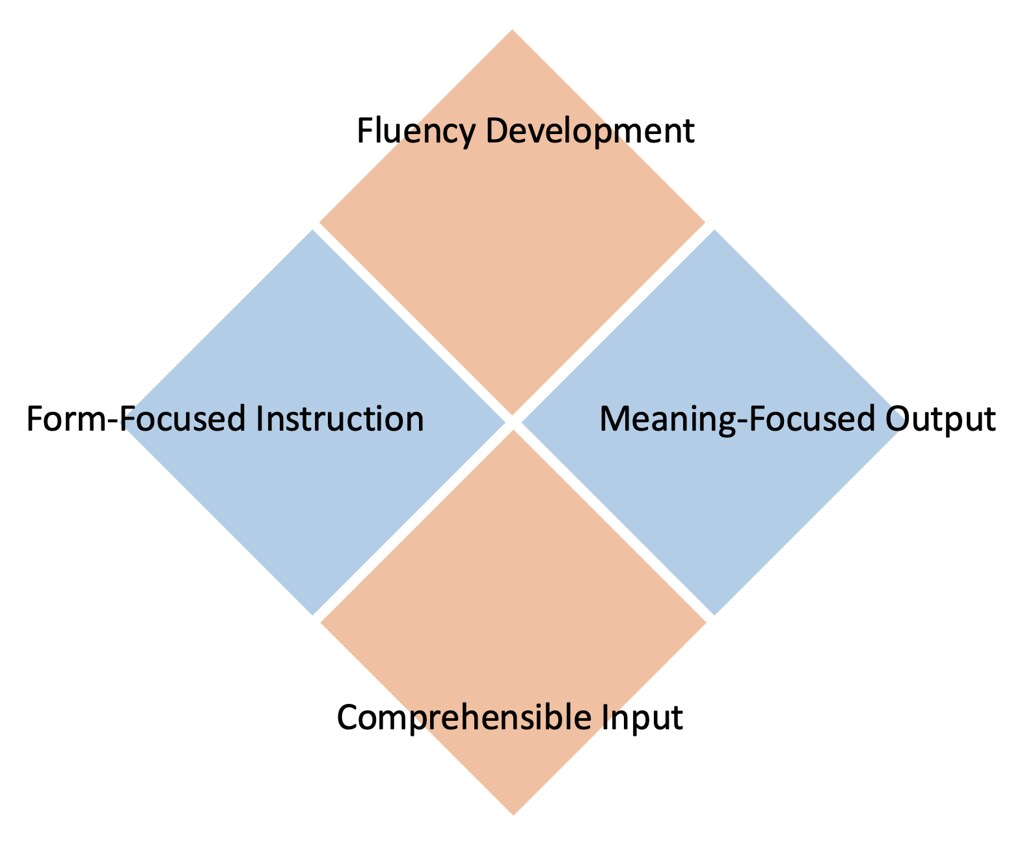
What is the Four Strands Theory?
The Four Strands Theory is a framework in language learning proposed by Paul Nation, emphasizing a balanced approach to language acquisition. It suggests that effective learning occurs through four equally important components: meaning-focused input, meaning-focused output, language-focused learning, and fluency development. Each strand plays a critical role in developing proficiency.
- Meaning-focused input: Engaging with comprehensible language through listening and reading.
- Meaning-focused output: Practicing language production via speaking and writing.
- Language-focused learning: Direct study of vocabulary, grammar, and pronunciation.
- Fluency development: Improving speed and ease in using known language elements.
Meaning-Focused Input in the Four Strands Theory
Meaning-focused input involves exposure to language that learners can understand, such as reading books or listening to conversations. The goal is to absorb language naturally without explicit instruction.
See AlsoWork in China: How to Find a Job Overseas- Comprehensible input: Learners engage with material slightly above their current level.
- Contextual learning: Language is acquired through meaningful contexts, not isolated rules.
- Extensive exposure: Regular interaction with the language builds implicit knowledge.
Meaning-Focused Output in the Four Strands Theory
Meaning-focused output focuses on producing language through speaking and writing. Learners refine their skills by expressing ideas and receiving feedback.
- Communication practice: Learners use language for real purposes, not just drills.
- Error correction: Feedback helps improve accuracy and clarity.
- Confidence building: Regular output activities reduce hesitation and increase fluency.
Language-Focused Learning in the Four Strands Theory
Language-focused learning involves deliberate study of linguistic features like grammar rules, vocabulary, and pronunciation.
- Explicit instruction: Direct teaching of language rules and structures.
- Vocabulary expansion: Targeted learning of new words and phrases.
- Accuracy focus: Attention to correct usage and form.
Fluency Development in the Four Strands Theory
Fluency development ensures learners can use known language quickly and effortlessly in real-time communication.
- Speed practice: Activities like timed readings or rapid conversations.
- Automaticity: Reducing cognitive load for smoother language use.
- Repetition: Reinforcing familiar language to enhance recall.
What is the Chinese method of learning?
The Emphasis on Memorization and Repetition
The Chinese method of learning heavily relies on memorization and repetition to reinforce knowledge. This approach is deeply rooted in Confucian traditions, where mastery comes from consistent practice. Key aspects include:
- Rote learning: Students repeatedly write or recite material until it is ingrained.
- Drill-based exercises: Frequent quizzes and tests ensure retention.
- Character writing: In language learning, writing Chinese characters multiple times is standard.
Teacher-Centered Instruction
In the Chinese education system, the teacher plays a central role, with students expected to listen and absorb knowledge passively. Characteristics include:
- Lecture-based teaching: Teachers deliver information while students take notes.
- High respect for authority: Questioning the teacher is less common compared to Western methods.
- Standardized curricula: Lessons follow strict government guidelines.
Focus on Discipline and Hard Work
The Chinese learning philosophy prioritizes discipline and perseverance. Students are encouraged to dedicate long hours to study. Key elements are:
- Strict schedules: Long school days and additional tutoring are common.
- High expectations: Academic success is seen as a moral duty.
- Endurance training: Mental toughness is cultivated through challenging tasks.
Competitive Examination Culture
Exams, particularly the Gaokao, shape the Chinese learning method. This high-stakes testing system influences teaching strategies:
- Test-oriented preparation: Lessons focus on exam content.
- Intense pressure: Performance determines future opportunities.
- Ranking systems: Students are frequently evaluated against peers.
Integration of Technology and Modern Tools
While traditional methods dominate, China increasingly incorporates technology into education. Modern adaptations include:
- E-learning platforms: Apps like Xuexi Qiangguo supplement studies.
- AI-driven tutoring: Adaptive software personalizes practice.
- Online classrooms: Virtual lessons expand access to resources.
What is the Chinese learning style?

Traditional Chinese Learning Methods
The traditional Chinese learning style emphasizes rote memorization and repetition, deeply rooted in Confucian values. Key characteristics include:
- Memorization of classics: Students often recite ancient texts like the Analects of Confucius to build foundational knowledge.
- Teacher-centered instruction: Educators hold authority, and students are expected to listen and absorb information passively.
- Emphasis on discipline: Rigorous practice and repetition are prioritized over creative exploration.
Modern Adaptations in Chinese Education
While retaining traditional elements, modern Chinese learning incorporates new pedagogical approaches:
- Interactive classrooms: Schools now encourage discussions and group activities to foster critical thinking.
- Technology integration: Digital tools like online platforms and AI tutors supplement traditional teaching.
- Focus on STEM: Science, technology, engineering, and math are heavily emphasized to align with global competitiveness.
Role of Examinations in Chinese Learning
High-stakes testing, like the Gaokao, shapes the Chinese learning style significantly:
- Exam-driven curriculum: Teaching methods are tailored to maximize test performance.
- Intensive preparation: Students spend years preparing for standardized exams with rigorous practice tests.
- Parental involvement: Families often invest heavily in tutoring and extra classes to ensure success.
Cultural Influences on Learning
Chinese learning is deeply influenced by cultural values such as diligence and respect for authority:
- Collectivist mindset: Group success is prioritized over individual achievement.
- Respect for elders: Teachers and parents are seen as ultimate knowledge sources.
- Perseverance: The concept of eating bitterness (吃苦) encourages enduring hardship for long-term gains.
Differences Between Urban and Rural Learning Styles
Educational disparities exist between urban and rural areas in China:
- Resource allocation: Urban schools have better facilities, while rural institutions often lack funding.
- Teaching quality: Urban educators typically receive more training and support.
- Access to technology: Rural students may have limited exposure to digital learning tools compared to their urban counterparts.
Frequently Asked Questions (FAQ)
What are Paul Nation’s four strands in Chinese language learning?
Paul Nation’s four strands are a framework designed to create a balanced approach to language learning. They include meaning-focused input (listening/reading for comprehension), meaning-focused output (speaking/writing to communicate), language-focused learning (explicit study of vocabulary/grammar), and fluency development (practicing known material for speed/confidence). Applying these strands to Chinese learning ensures learners develop all key skills—listening, speaking, reading, and writing—without overemphasizing one area at the expense of others.
How can I balance the four strands when learning Chinese?
Balancing the four strands requires intentional planning. Dedicate equal time to each strand: for example, spend 25% on meaning-focused input (e.g., watching Chinese shows), 25% on meaning-focused output (e.g., conversing with native speakers), 25% on language-focused learning (e.g., memorizing characters), and 25% on fluency development (e.g., timed reading exercises). Adjust the ratio based on weaknesses—if speaking lags, increase output practice while maintaining the others.
Why is fluency development important in Chinese language learning?
Fluency development is often overlooked but critical for using Chinese in real-time. It involves practicing familiar material (words/grammar you already know) until you can process them quickly and effortlessly. For example, rereading graded readers or shadowing dialogues boosts listening/speaking speed. Without fluency, even learners with vast vocabulary may struggle in conversations or while reading, as hesitation disrupts communication flow.
Can I skip language-focused learning if I focus on immersion?
While immersion (a form of meaning-focused input/output) is powerful, skipping language-focused learning can leave gaps. Chinese has unique challenges like characters, tones, and grammar patterns that often require explicit study. For instance, knowing radicals helps decode new characters, and drilling tones prevents misunderstandings. A blend of immersion and targeted study ensures deeper understanding and accuracy alongside natural acquisition.
Leave a Reply
Related Posts