
How to Pass HSK 6? 10 Tips to Pass HSK 6 Comfortably

Passing the HSK 6, the highest level of the Chinese proficiency test, is a challenging yet achievable goal with the right approach. This exam demands advanced vocabulary, grammar mastery, and strong comprehension skills. Whether you're aiming for academic, professional, or personal growth, thorough preparation is key. In this article, we share 10 practical tips to help you pass HSK 6 comfortably. From expanding your vocabulary to refining listening and reading strategies, these insights will guide your study plan. With consistent effort and smart techniques, you can boost your confidence and performance on test day. Let’s explore how to tackle HSK 6 successfully.
How to Pass HSK 6? 10 Tips to Pass HSK 6 Comfortably
Detailed Explanation:
Passing the HSK 6 (Hanyu Shuiping Kaoshi Level 6) requires a strong command of advanced Chinese vocabulary, grammar, listening, and reading comprehension. Below are 10 essential tips to help you prepare effectively and pass comfortably.
---
See AlsoA student’s guide to comprehension-based learning1. Master Advanced Vocabulary
To succeed in HSK 6, you must know 5,000+ words. Focus on academic, formal, and idiomatic expressions. Use flashcards and spaced repetition to retain difficult terms.
| Method | Effectiveness |
|---|---|
| Flashcards (Anki) | High |
| Reading Novels/News | Medium-High |
| Word Lists | Medium |
---
2. Improve Listening Comprehension
HSK 6 listening includes fast-paced dialogues and academic lectures. Train with Chinese podcasts, news (CCTV), and HSK 6 mock tests.
See AlsoEasy Chinese News Articles for Beginners| Resource | Difficulty |
|---|---|
| Chinese Podcasts (Slow Chinese) | Medium |
| HSK 6 Listening Tests | High |
| Watching Chinese Movies | Medium-High |
---
3. Strengthen Reading Speed & Analysis
The reading section tests speed and comprehension of complex texts. Practice with academic articles, newspapers (People’s Daily), and past papers.
| Material | Usefulness |
|---|---|
| HSK 6 Past Papers | Very High |
| Chinese Literature | High |
| News Articles | Medium-High |
---
See AlsoPreparing for rainy days and dealing with slumps4. Perfect Grammar & Sentence Structures
HSK 6 grammar includes advanced patterns like passive voice, rhetorical questions, and formal conjunctions. Study grammar books and practice writing essays.
| Grammar Focus | Difficulty |
|---|---|
| Passive Voice (被/让) | Medium-High |
| Rhetorical Questions | Medium |
| Formal Conjunctions | High |
---
5. Simulate Real Exam Conditions
Take timed mock tests under exam conditions to build stamina and reduce anxiety. Track your weaknesses and adjust study plans accordingly.
See AlsoMeasuring your language learning is a double-edged sword| Strategy | Impact |
|---|---|
| Full-Length Mock Tests | Very High |
| Time Management | High |
| Error Analysis | High |
How hard is it to pass HSK 6?

Understanding the HSK 6 Exam Structure
The HSK 6 is the highest level of the Chinese Proficiency Test, designed for learners who can easily comprehend and express complex ideas in Mandarin. The exam consists of three sections: listening, reading, and writing, each demanding advanced language skills.
- Listening: Requires understanding extended dialogues, news reports, and academic content.
- Reading: Involves analyzing long passages, identifying nuances, and answering detailed questions.
- Writing: Tests the ability to summarize a 1000-character passage in 400 characters within 45 minutes.
Vocabulary and Grammar Requirements
Passing HSK 6 requires mastery of 5,000+ words and advanced grammar structures. The vocabulary includes specialized terms from fields like politics, science, and literature.
See AlsoDon’t be a tourist if you want to learn Chinese- Word retention: Memorizing and actively using a vast lexicon is critical.
- Grammar complexity: Understanding nuanced sentence patterns and idiomatic expressions.
- Contextual usage: Applying vocabulary appropriately in formal and informal settings.
Time Management Challenges
The HSK 6 exam is time-pressured, especially in the reading and writing sections. Many test-takers struggle to complete all questions within the allotted time.
- Reading speed: Skimming and scanning long texts efficiently is essential.
- Writing under pressure: Summarizing a lengthy passage quickly without sacrificing accuracy.
- Balancing sections: Allocating time wisely to avoid rushing through any part.
Listening Comprehension Difficulties
The listening section of HSK 6 features fast-paced, accented, and context-heavy audio, making it one of the toughest hurdles.
- Accent variations: Exposure to different regional pronunciations is necessary.
- Speed: Native-level listening speed is required to follow conversations.
- Note-taking: Jotting down key points while listening is a valuable skill.
Preparation Strategies for Success
To pass HSK 6, a structured and intensive study plan is crucial, combining practice tests, immersive learning, and targeted skill improvement.
- Mock exams: Simulating test conditions to identify weaknesses.
- Extensive reading: Engaging with newspapers, novels, and academic articles.
- Speaking practice: Conversing with native speakers to refine fluency and comprehension.
How many hours does it take to get to HSK 6?

Understanding the HSK 6 Exam Structure
The HSK 6 is the highest level of the Chinese Proficiency Test, requiring mastery of 5,000+ vocabulary words and advanced grammar. To reach this level, learners typically need 2,200 to 2,500 hours of study, depending on prior experience and learning methods. Key factors include:
- Vocabulary acquisition: Memorizing and retaining complex words and phrases.
- Listening comprehension: Understanding native speakers at natural speed.
- Reading fluency: Analyzing long texts and literary passages.
Factors Influencing Study Time for HSK 6
The time required varies based on several individual factors:
- Prior knowledge: Learners with HSK 5 proficiency may need fewer hours.
- Study intensity: Daily immersion accelerates progress.
- Learning environment: Living in a Chinese-speaking country reduces study time.
Recommended Study Methods for HSK 6
Efficient strategies can optimize preparation time:
- Structured courses: Enroll in advanced Mandarin programs.
- Immersion techniques: Watch Chinese news, read novels, and practice speaking.
- Mock exams: Simulate test conditions to identify weaknesses.
Common Challenges When Preparing for HSK 6
Learners often face these hurdles:
- Idiomatic expressions: Mastering colloquial and literary phrases.
- Time management: Balancing study with other commitments.
- Retention: Keeping advanced vocabulary active in memory.
Comparing HSK 6 to Other Language Proficiency Levels
Reaching HSK 6 is comparable to:
- CEFR C2: Near-native fluency in European frameworks.
- ACTFL Superior: The highest tier in the American Council system.
- JLPT N1: The top level for Japanese proficiency tests.
Is HSK 6 considered fluent?
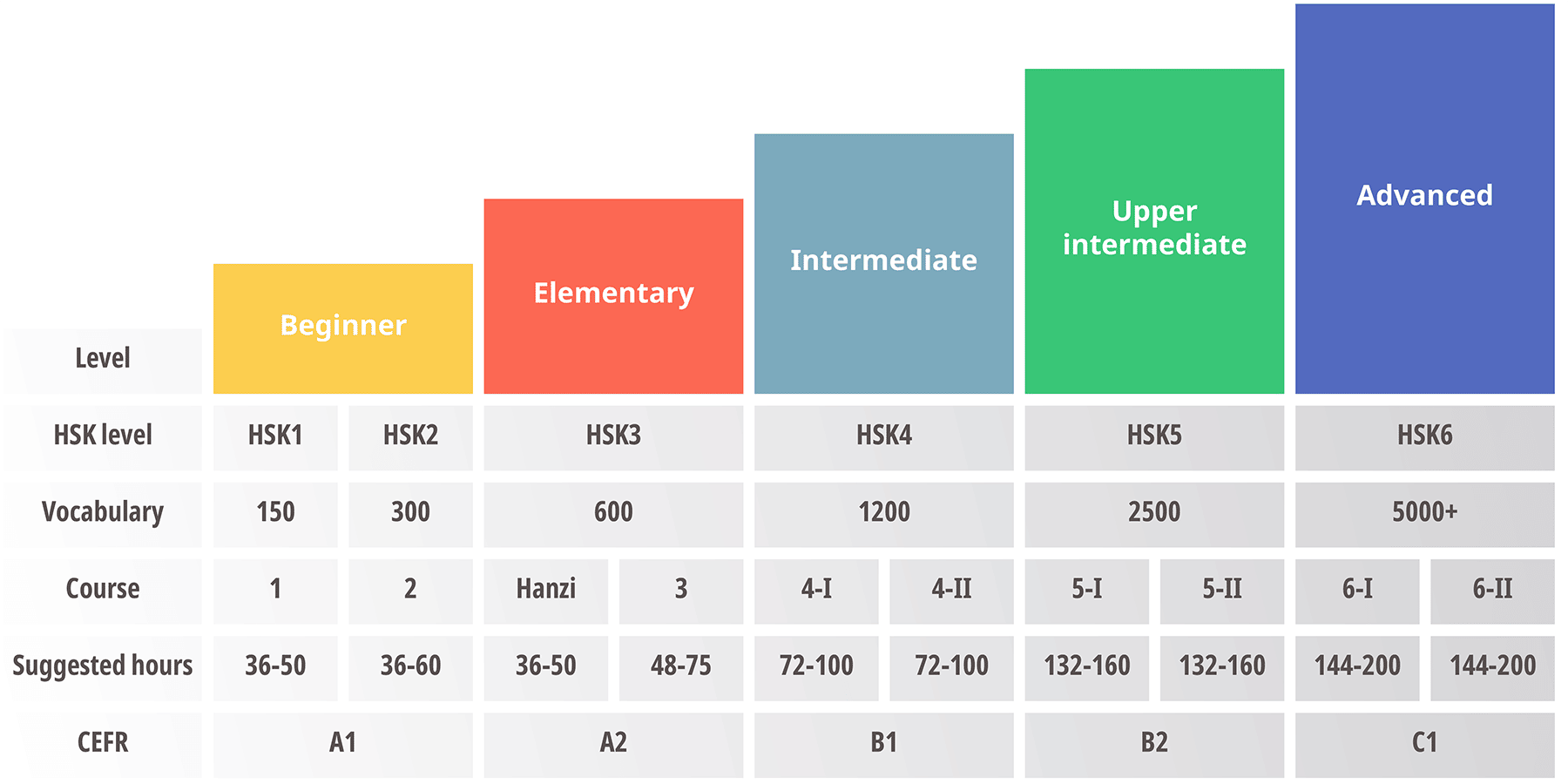
What Does HSK 6 Represent in Language Proficiency?
The HSK 6 is the highest level of the Hanyu Shuiping Kaoshi (HSK), China's standardized Mandarin proficiency test. It assesses advanced language skills, including comprehension of complex texts, nuanced expressions, and spontaneous communication. However, fluency is subjective and depends on real-world application beyond test parameters.
- Vocabulary: Requires knowledge of 5,000+ words and advanced grammar.
- Listening/Reading: Ability to understand academic, professional, or literary content.
- Speaking/Writing: Must articulate opinions coherently on abstract topics.
Does HSK 6 Guarantee Native-Level Fluency?
While HSK 6 indicates high proficiency, it doesn’t equate to native-level fluency. The test focuses on structured scenarios, whereas real-life interactions involve slang, cultural references, and rapid dialogue.
- Cultural Nuances: May lack depth in idioms or regional dialects.
- Spontaneity: Test conditions differ from unscripted conversations.
- Specialized Contexts: Technical jargon or humor might still pose challenges.
How Does HSK 6 Compare to CEFR C2?
HSK 6 is often likened to CEFR C1 (Advanced), not C2 (Mastery). The Common European Framework of Reference (CEFR) emphasizes broader communicative competence, including adaptability across cultures.
- Scope: CEFR C2 demands near-native versatility; HSK 6 has a narrower focus.
- Skills Assessed: CEFR evaluates social integration; HSK prioritizes academic/professional tasks.
- Recognition: CEFR is globally standardized; HSK is China-centric.
Can HSK 6 Holders Work Professionally in Mandarin?
Yes, HSK 6 holders can work in Mandarin-speaking environments, especially in formal settings like business or education. However, industry-specific terminology or high-stakes negotiations may require additional training.
- Business Communication: Adequate for reports, emails, and presentations.
- Limitations: May struggle with informal networking or creative fields.
- Continuous Learning: Real-world practice bridges test knowledge gaps.
What Are the Gaps Between HSK 6 and True Fluency?
True fluency encompasses cultural immersion and instinctive language use, areas where HSK 6 may fall short despite its rigor.
- Idiomatic Usage: Textbooks often omit colloquialisms.
- Accent/Intonation: The test doesn’t fully assess pronunciation subtleties.
- Emotional Expression: Conveying sarcasm or empathy requires lived experience.
Frequently Asked Questions (FAQ)
What is the HSK 6 exam, and why is it challenging?
The HSK 6 is the highest level of the Chinese Proficiency Test, designed for advanced learners who can easily comprehend and express complex ideas in Mandarin. It is challenging because it requires a vocabulary of around 5,000 words, mastery of advanced grammar, and the ability to read and analyze lengthy texts. Additionally, the listening and writing sections demand a high level of fluency and precision, making thorough preparation essential.
How long does it take to prepare for HSK 6?
The preparation time varies depending on your current proficiency, but most learners need 6 to 12 months of consistent study to pass HSK 6 comfortably. If you already have a strong foundation (e.g., HSK 5 level), you may need less time. However, if you're starting from a lower level, dedicating daily practice to vocabulary, listening, reading, and writing is crucial. Using structured study plans and mock tests can significantly speed up progress.
What are the best study resources for HSK 6?
Effective resources include the official HSK 6 textbooks, past exam papers, and specialized vocabulary lists. Online platforms like YouTube and language apps (e.g., Pleco or Anki) can help with flashcards and listening practice. Reading Chinese newspapers, novels, or academic articles will improve comprehension, while language exchange partners or tutors can refine speaking and writing skills. Consistency with these materials is key to success.
How can I improve my listening skills for HSK 6?
To excel in the listening section, expose yourself to native-level content daily, such as Chinese podcasts, news broadcasts, or TV shows. Focus on understanding context and nuances rather than just individual words. Practicing with HSK 6 mock tests will familiarize you with the exam format and speed. Additionally, transcribing short audio clips and reviewing them can sharpen your ability to catch details, a critical skill for high scores.
Leave a Reply
Related Posts