
HSK vs TOCFL - Which Chinese Language Test Should I Take?

Choosing the right Chinese proficiency test can be challenging, especially when deciding between the HSK (Hanyu Shuiping Kaoshi) and TOCFL (Test of Chinese as a Foreign Language). Both exams assess Mandarin skills but cater to different goals and regions. The HSK, widely recognized in mainland China, is ideal for academic or professional pursuits there. Meanwhile, the TOCFL, popular in Taiwan, focuses on traditional characters and local usage. Understanding their formats, levels, and recognition is key to selecting the best fit for your needs. This article compares the HSK and TOCFL, helping you determine which test aligns with your language-learning objectives.
HSK vs TOCFL: Key Differences and How to Choose the Right Test
1. What Are HSK and TOCFL?
The HSK (Hanyu Shuiping Kaoshi) and TOCFL (Test of Chinese as a Foreign Language) are the two most widely recognized proficiency tests for Mandarin Chinese. The HSK is administered by Hanban/Confucius Institute and is primarily used in Mainland China, while the TOCFL is developed by Taiwan's Ministry of Education and is more common in Taiwan. Both tests assess listening, reading, and writing skills, but their structures and focuses differ.
| Test | Administered By | Primary Region |
|---|---|---|
| HSK | Hanban/Confucius Institute | Mainland China |
| TOCFL | Taiwan's Ministry of Education | Taiwan |
2. Test Structure and Levels
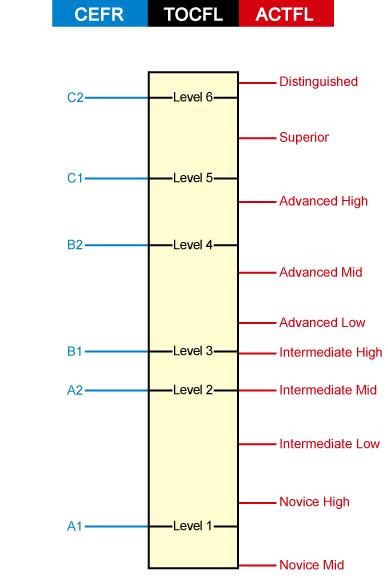
The HSK has six levels, with HSK 1-2 being beginner, HSK 3-4 intermediate, and HSK 5-6 advanced. The TOCFL, on the other hand, offers three main bands (A, B, C) with two sub-levels each (e.g., B1, B2), totaling six levels as well. The TOCFL includes an additional speaking section in some levels, while the HSK speaking test (HSKK) is separate.
See AlsoMandarin Matrix and The Chairman’s Bao: A Powerful Combination for Teaching Chinese| Test | Levels | Speaking Section |
|---|---|---|
| HSK | 1-6 | Separate (HSKK) |
| TOCFL | Band A, B, C (6 sub-levels) | Included in some levels |
3. Which Test Is Recognized Where?
If you plan to study or work in Mainland China, the HSK is the preferred choice, as it is widely accepted by Chinese universities and employers. The TOCFL is more recognized in Taiwan, and some international institutions may accept it. However, HSK has broader global recognition due to China's influence.
| Test | Mainland China | Taiwan | Global Recognition |
|---|---|---|---|
| HSK | Yes | Limited | High |
| TOCFL | No | Yes | Moderate |
4. Difficulty and Vocabulary Differences
The HSK uses Simplified Chinese and focuses on Mainland Mandarin vocabulary, while the TOCFL uses Traditional Chinese and incorporates Taiwanese Mandarin terms. The TOCFL is often considered slightly more challenging due to its in-depth grammar and cultural references.
| Test | Script | Vocabulary Focus |
|---|---|---|
| HSK | Simplified | Mainland Mandarin |
| TOCFL | Traditional | Taiwanese Mandarin |
5. Which Test Should You Take?
Your choice depends on your goals:
- HSK is ideal for those targeting Mainland China for study, work, or business.
- TOCFL suits those focusing on Taiwan or preferring Traditional Chinese.
- If you need global recognition, HSK is safer.
- If you want a speaking component, TOCFL includes it in some levels.
| Goal | Recommended Test |
|---|---|
| Mainland China | HSK |
| Taiwan | TOCFL |
| Global Recognition | HSK |
| Speaking Test Included | TOCFL |
What is the best Chinese proficiency test?
What Are the Most Recognized Chinese Proficiency Tests?
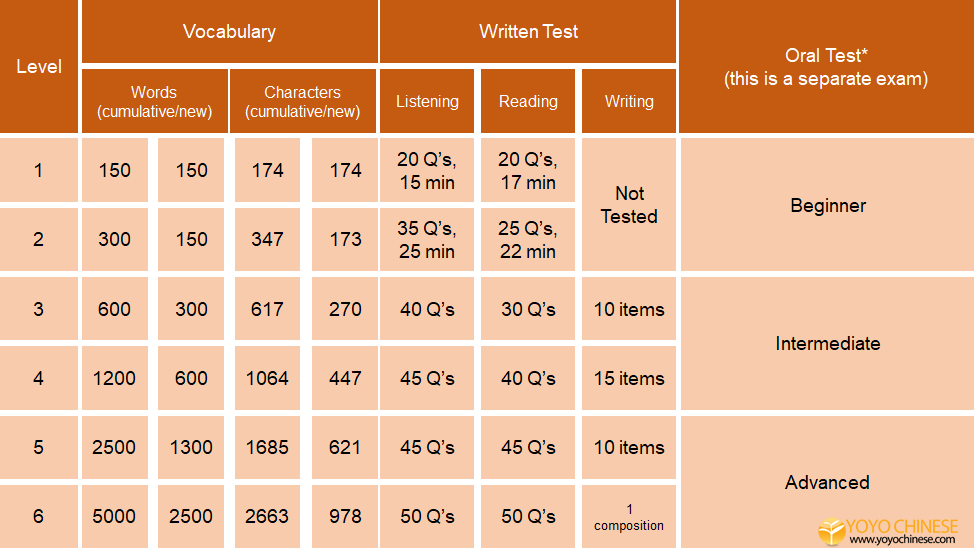
The most widely recognized Chinese proficiency tests include the HSK (Hanyu Shuiping Kaoshi), HSKK (Hanyu Shuiping Kouyu Kaoshi), and BCT (Business Chinese Test). These exams are administered by Hanban and are accepted globally for academic and professional purposes.
- HSK: Measures general Mandarin proficiency across six levels.
- HSKK: Focuses on speaking skills, divided into three levels.
- BCT: Designed for business-related Chinese language use.
How Does the HSK Compare to Other Chinese Tests?
The HSK is the most popular test for non-native speakers, covering listening, reading, and writing. Unlike the TOCFL (Test of Chinese as a Foreign Language), which is used primarily in Taiwan, the HSK follows Mainland Mandarin standards.
See AlsoHealth in Chinese - Most Common Symptoms & Illnesses- HSK: Standardized for Mainland China, recognized worldwide.
- TOCFL: Uses Traditional Chinese and focuses on Taiwanese Mandarin.
- YCT: Targets younger learners with simplified content.
Which Test Is Best for Academic Purposes?
For academic goals, the HSK is the top choice, especially for studying in China. Many universities require HSK 4 or higher for undergraduate programs and HSK 5-6 for postgraduate studies.
- HSK 4-6: Essential for university admissions in China.
- HSKK Advanced: Required for some research-based programs.
- TOCFL Band B-C: Accepted by Taiwanese universities.
What Is the Best Test for Business Chinese?
The BCT (Business Chinese Test) is tailored for professionals, assessing vocabulary and scenarios in corporate environments. However, HSK 4-6 also holds value for business roles due to its comprehensive structure.
- BCT A/B: Evaluates basic to intermediate business communication.
- BCT C: Tests advanced professional fluency.
- HSK 5-6: Demonstrates high-level language mastery for executives.
Which Test Is Easier: HSK or TOCFL?
Difficulty depends on the learner’s background. The HSK uses Simplified Chinese and focuses on Mainland standards, while the TOCFL uses Traditional Chinese and reflects Taiwanese usage. Those familiar with one system may find the other harder.
See AlsoThe Most Common Chinese Loanwords in English- HSK: Easier for learners exposed to Mainland materials.
- TOCFL: More accessible for those studying Taiwanese Mandarin.
- Vocabulary differences: HSK leans toward Putonghua, TOCFL includes local idioms.
Is TOCFL in traditional Chinese?
What is TOCFL?
The TOCFL (Test of Chinese as a Foreign Language) is a standardized proficiency test for non-native speakers of Chinese. It assesses listening, reading, speaking, and writing skills, similar to tests like HSK. The test is administered in both Traditional Chinese and Simplified Chinese, depending on the region where it is taken.
- TOCFL evaluates language ability across multiple levels, from beginner to advanced.
- It is widely recognized in Taiwan, where Traditional Chinese is the standard script.
- Test-takers can choose their preferred script, but Traditional Chinese is more common in certain regions.
Is TOCFL Conducted in Traditional Chinese?
Yes, the TOCFL is available in Traditional Chinese, particularly in regions like Taiwan, where this script is the official writing system. However, in other areas, such as mainland China, Simplified Chinese is more commonly used.
- The test format remains the same, but the script differs based on location.
- Test-takers must confirm the script version when registering.
- Traditional Chinese is the default for TOCFL in Taiwan.
Differences Between Traditional and Simplified Chinese in TOCFL
The primary difference lies in the writing system. Traditional Chinese uses more complex characters, while Simplified Chinese reduces stroke count for ease of learning. This distinction affects reading and writing sections of the TOCFL.
- Traditional Chinese characters are more detailed and historically rooted.
- Simplified Chinese is streamlined for faster writing and memorization.
- The choice of script does not impact the difficulty of listening or speaking sections.
Where is TOCFL in Traditional Chinese Used?
TOCFL in Traditional Chinese is primarily used in Taiwan, where it is the official script. It is also preferred in Hong Kong and Macau, though these regions have their own language variations.
- Taiwan exclusively uses Traditional Chinese for education and testing.
- Some overseas Chinese communities also favor Traditional Chinese.
- Test centers outside Taiwan may offer both scripts.
How to Prepare for TOCFL in Traditional Chinese?
To prepare for the TOCFL in Traditional Chinese, focus on reading materials from Taiwanese publishers and practice writing characters correctly. Familiarity with Taiwanese Mandarin pronunciation is also beneficial.
- Use textbooks and resources from Taiwan to study.
- Practice writing Traditional Chinese characters regularly.
- Listen to Taiwanese media to adapt to regional accents.
Should I learn Chinese with HSK?
Is HSK the Best Way to Learn Chinese?
The HSK (Hanyu Shuiping Kaoshi) is a standardized test designed to assess non-native Chinese speakers' proficiency. It can be a useful tool for structured learning, but whether it's the best method depends on your goals:
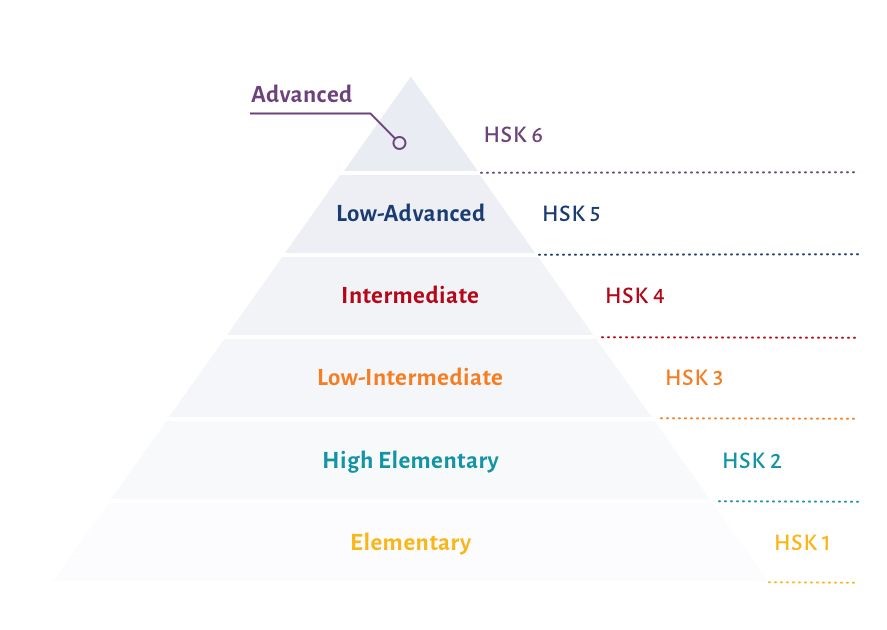
- Structured Curriculum: HSK provides a clear progression from beginner (HSK 1) to advanced (HSK 6), making it easier to track progress.
- Recognition: Many employers and universities recognize HSK as proof of Chinese proficiency, which can be beneficial for career or academic purposes.
- Focus on Formal Language: HSK emphasizes standard Mandarin, which may not cover regional dialects or colloquial expressions used in daily conversations.
What Are the Pros of Learning Chinese with HSK?
Learning Chinese through the HSK system offers several advantages:
- Clear Benchmarks: Each HSK level defines specific vocabulary and grammar points, helping learners measure their progress.
- Test Preparation: If you plan to take the official HSK exam, studying with HSK materials ensures alignment with the test format.
- Resource Availability: Numerous textbooks, apps, and courses are tailored to HSK, making it easier to find study materials.
What Are the Cons of Learning Chinese with HSK?
While HSK has benefits, there are also limitations:
- Limited Practical Usage: HSK focuses on formal language, which may not fully prepare you for informal or regional conversations.
- Rigid Structure: The fixed vocabulary lists might not align with your personal or professional needs.
- Exam Pressure: Some learners may feel stressed by the test-oriented approach rather than enjoying the language naturally.
How Does HSK Compare to Other Learning Methods?
Comparing HSK to alternative methods highlights key differences:
- Immersion vs. HSK: Immersion focuses on real-life usage, while HSK prioritizes testable skills.
- Tutoring vs. HSK: A tutor can customize lessons, whereas HSK follows a standardized path.
- Apps vs. HSK: Apps like Duolingo offer flexibility, but HSK provides a more systematic framework.
Who Should Consider Learning Chinese with HSK?
The HSK system is particularly suitable for specific learners:
- Academic Students: Those planning to study in China may need HSK certification for university applications.
- Professionals: Individuals seeking jobs requiring formal Chinese proficiency can benefit from HSK credentials.
- Goal-Oriented Learners: If you thrive on structured milestones, HSK’s level-based system can keep you motivated.
Which HSK exam should I take?
Understanding the HSK Exam Levels
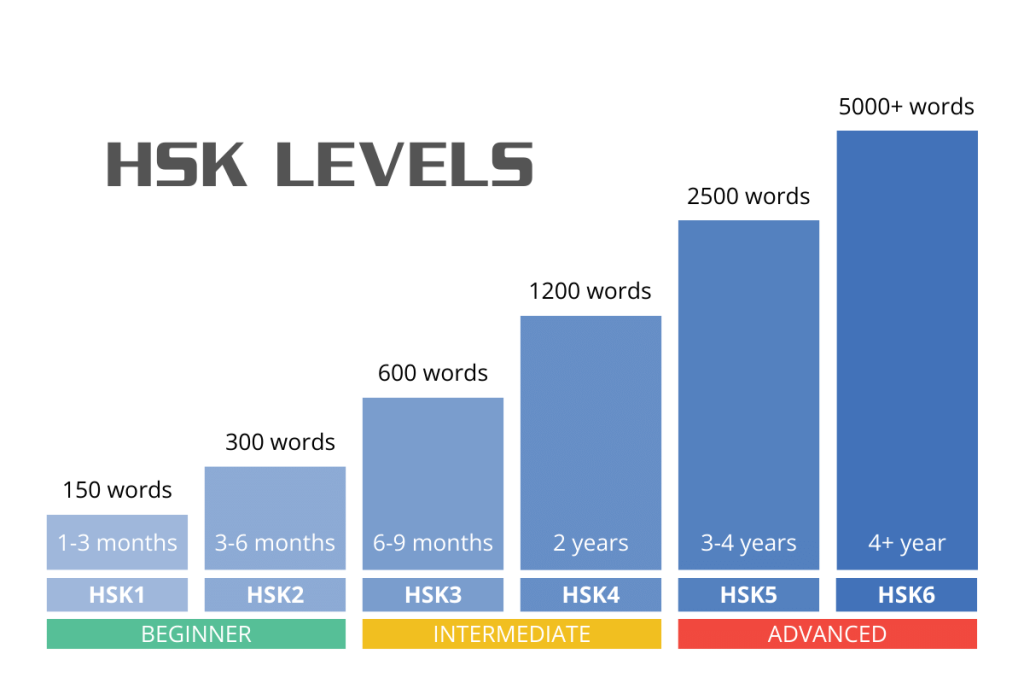
The HSK (Hanyu Shuiping Kaoshi) is a standardized test for non-native Chinese speakers, divided into six levels. Each level corresponds to different language proficiency benchmarks:
- HSK 1-2: Basic vocabulary (150-300 words) for simple daily conversations.
- HSK 3-4: Intermediate proficiency (600-1,200 words) for discussing familiar topics.
- HSK 5-6: Advanced mastery (2,500-5,000+ words) for complex communication and professional use.
Assessing Your Current Chinese Proficiency
Before choosing an HSK level, evaluate your language skills objectively:
- Vocabulary: Count how many words you recognize from the HSK word lists.
- Listening/Speaking: Test comprehension with native content like podcasts or videos.
- Grammar: Ensure you can construct sentences accurately for your target level.
Aligning HSK Levels with Your Goals
Your purpose for taking the HSK determines the ideal level:
- University Admission: Most programs require HSK 4-5 for undergraduate/graduate studies.
- Job Requirements: Companies often expect HSK 3-4 for bilingual roles.
- Personal Achievement: Start with lower levels (1-3) to build confidence progressively.
Preparation Time and Study Resources
Consider the time investment needed for each HSK level:
- HSK 1-2: 3-6 months with consistent practice (1-2 hours daily).
- HSK 3-4: 6-12 months, focusing on expanding vocabulary and grammar.
- HSK 5-6: 1-2 years, emphasizing advanced reading and writing skills.
Exam Structure and Scoring Criteria
Familiarize yourself with the test format to choose the right level:
- Listening, Reading, Writing: All levels include these sections, but complexity increases.
- Passing Score: 120/200 for HSK 1-2; 180/300 for HSK 3-6.
- Time Limits: Ranges from 40 minutes (HSK 1) to 135 minutes (HSK 6).
Frequently Asked Questions (FAQ)
What are the main differences between HSK and TOCFL?
The HSK (Hanyu Shuiping Kaoshi) and TOCFL (Test of Chinese as a Foreign Language) are both standardized tests for assessing Chinese proficiency, but they differ in structure and regional focus. The HSK, administered by China's Hanban, follows a six-level system and emphasizes Mainland Mandarin, including simplified characters. In contrast, the TOCFL, developed in Taiwan, uses a five-band system and tests Traditional Chinese characters and Taiwanese Mandarin pronunciation. Additionally, the TOCFL includes listening, reading, and writing components at higher levels, while the HSK separates speaking into an optional test.
Which test is more widely recognized internationally?
The HSK is generally more recognized globally, especially in Mainland China and countries with strong ties to it, such as those involved in the Belt and Road Initiative. Many universities and employers in China require HSK scores for admissions or job applications. On the other hand, the TOCFL is more commonly accepted in Taiwan and some academic institutions in Southeast Asia. If your goal is to study or work in Mainland China, the HSK is usually the better choice, while the TOCFL suits those focusing on Taiwan.
How do the difficulty levels compare between HSK and TOCFL?
While both tests assess Chinese proficiency, their difficulty structures vary. The HSK levels are more segmented, with HSK 1-2 targeting beginners and HSK 5-6 covering advanced learners. The TOCFL, however, groups proficiency into broader bands (A1-C2), aligning with the CEFR framework. Some learners find the TOCFL slightly more challenging due to its inclusion of Taiwanese-specific vocabulary and idioms, whereas the HSK focuses on standardized Mandarin. Your choice may depend on whether you’re more comfortable with simplified or traditional characters and regional linguistic nuances.
Can I use HSK or TOCFL scores interchangeably for academic or visa purposes?
Generally, HSK and TOCFL scores are not interchangeable for official purposes. Mainland Chinese universities and employers typically require the HSK, while Taiwanese institutions prioritize the TOCFL. For example, a Taiwanese student visa may require a specific TOCFL level, whereas a Chinese work visa might demand an HSK score. Always check the specific requirements of your target institution or immigration authority. Some international programs may accept both, but this is not guaranteed without prior confirmation.
Leave a Reply
Related Posts