
Chinese character variants and font differences for language learners

Learning Chinese characters presents unique challenges, especially when encountering variants and font differences. Simplified and traditional forms, along with regional variations, can confuse even intermediate learners. Additionally, fonts may alter character appearance—some strokes appear connected in one font but separate in another, affecting readability and recognition. Understanding these differences is crucial for accurate reading and writing, as well as navigating diverse texts across mainland China, Taiwan, Hong Kong, and other regions. This article explores common character variants, key font distinctions, and practical tips to help learners adapt to these variations efficiently. Mastering these nuances ensures smoother progress in Chinese literacy and communication.
- Understanding Chinese Character Variants and Font Differences for Language Learners
- How do Chinese characters differ from alphabetic writing systems?
- Are there different fonts for Chinese characters?
- What is the difference between characters and words in Chinese?
- What is the difference between traditional Chinese and simplified Chinese characters?
-
Frequently Asked Questions (FAQ)
- What are the main differences between Simplified and Traditional Chinese characters?
- How do font choices affect the readability of Chinese characters for learners?
- Why do some Chinese characters look different in various regions despite being the same word?
- What tools or resources can help learners distinguish between Chinese character variants?
Understanding Chinese Character Variants and Font Differences for Language Learners
Learning Chinese involves not only mastering pronunciation and grammar but also navigating the complexities of character variants and font differences. These variations can be confusing for learners, as the same character may appear differently depending on the region (Mainland China, Taiwan, Hong Kong) or the font style used. Recognizing these differences is crucial for reading comprehension and writing accuracy.
1. Simplified vs. Traditional Chinese Characters
The most fundamental distinction in Chinese characters is between Simplified (used in Mainland China and Singapore) and Traditional (used in Taiwan, Hong Kong, and Macau). Simplified characters have fewer strokes, making them easier to write, while Traditional characters retain their original form.
See AlsoWhat native speakers know about Chinese (and what they don’t)| Simplified | Traditional | Example |
|---|---|---|
| 国 | 國 | Country |
| 学 | 學 | Study |
2. Regional Variations in Character Forms
Even within Traditional Chinese, there are regional differences. For example, some characters in Taiwanese Mandarin differ slightly from those in Hong Kong Cantonese. These variations can affect handwriting and digital fonts.
| Taiwan | Hong Kong | Meaning |
|---|---|---|
| 為 | 爲 | For |
| 裡 | 裏 | Inside |
3. Font Style Differences in Printed and Digital Text
Chinese fonts can vary significantly in appearance. Serif fonts (like Ming-style) are common in print, while sans-serif fonts (like Heiti) dominate digital screens. Some fonts may alter stroke shapes, affecting readability.
| Font Type | Example Character | Usage |
|---|---|---|
| Ming (Serif) | 書 | Books, formal documents |
| Heiti (Sans-serif) | 书 | Websites, mobile apps |
4. Handwritten vs. Printed Character Forms
Handwritten Chinese often includes cursive or semi-cursive styles, where strokes are connected or simplified further. This differs from printed forms, which follow strict standards.
See AlsoChinese Online Slang| Printed Form | Handwritten Form | Notes |
|---|---|---|
| 說 | 说 (simplified-like) | Informal writing may blend styles |
| 門 | 门 (cursive-like) | Faster writing alters strokes |
5. Importance of Recognizing Variants for Language Learners
Being aware of character variants and font differences helps learners avoid confusion when reading materials from different regions or written in various styles. It also improves adaptability in both formal and informal contexts.
| Skill | Benefit |
|---|---|
| Reading | Better comprehension across regions |
| Writing | Accurate character usage |
How do Chinese characters differ from alphabetic writing systems?
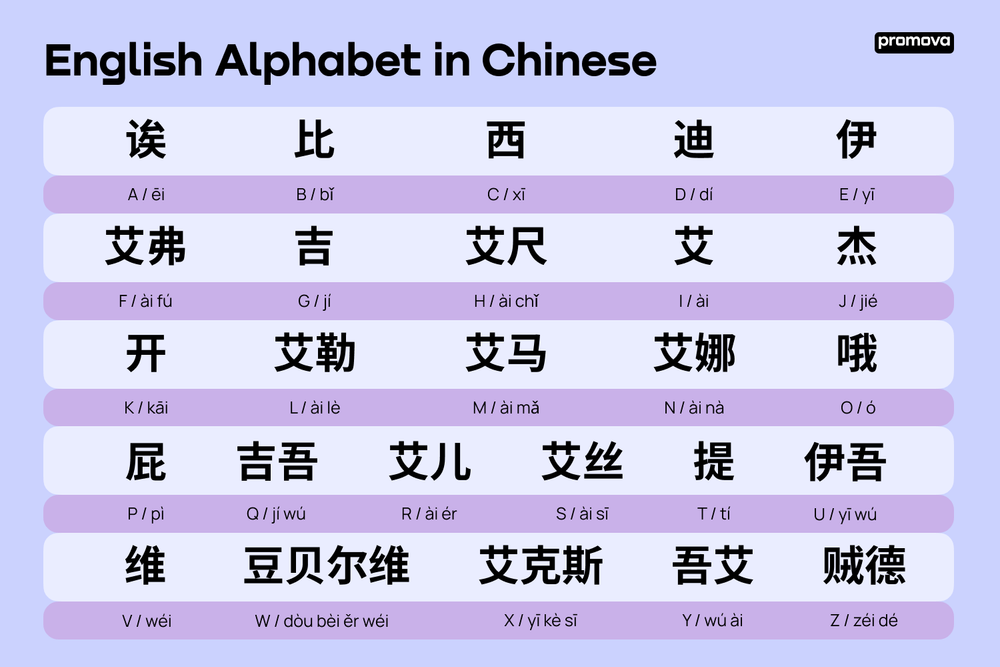
Structure and Composition
Chinese characters are logograms, meaning each character represents a word or a meaningful part of a word, whereas alphabetic writing systems use letters to represent sounds. Here are key differences:
See AlsoLearn Chinese character meaning and pronunciation together- Logographic vs. Phonetic: Chinese characters convey meaning directly, while alphabetic systems rely on combinations of letters to represent sounds.
- Complexity: Characters often consist of multiple strokes and radicals, unlike the simpler linear arrangement of alphabetic letters.
- No Alphabet: Chinese lacks an alphabet; instead, it uses thousands of unique characters, whereas alphabetic systems have a small set of letters (e.g., 26 in English).
Phonetic Representation
Unlike alphabetic systems, where letters correspond to specific sounds, Chinese characters provide limited phonetic cues:
- Phonetic Components: Some characters include phonetic hints, but these are inconsistent and not universally reliable.
- Tonal Language: Mandarin Chinese uses tones, which are not represented in characters but are critical for pronunciation.
- Homophones: Many characters share the same pronunciation but differ in meaning, unlike alphabetic systems where spelling usually reflects pronunciation.
Learning and Memorization
Mastering Chinese characters requires different cognitive skills compared to alphabetic writing:
- Visual Memory: Learners must memorize characters as whole units, relying heavily on visual recognition.
- Stroke Order: Proper writing demands adherence to specific stroke sequences, unlike the freeform lettering in alphabetic systems.
- Volume: Fluency requires knowledge of thousands of characters, whereas alphabetic literacy needs mastery of far fewer symbols.
Grammar and Syntax
Chinese writing influences sentence structure differently than alphabetic systems:
See AlsoThe Meaning of Numbers in Chinese Culture- No Inflections: Characters remain unchanged regardless of tense, number, or case, unlike alphabetic languages with suffixes (e.g., -ed, -s).
- Word Order: Meaning relies heavily on syntax, as characters lack grammatical markers common in alphabetic languages.
- Context Dependency: Characters often derive meaning from surrounding characters, requiring broader contextual understanding.
Historical and Cultural Impact
The evolution of Chinese characters contrasts sharply with alphabetic systems:
- Ancient Origins: Characters date back over 3,000 years, preserving historical continuity, while alphabetic systems evolved later.
- Cultural Unifier: Characters allowed communication across diverse Chinese dialects, unlike alphabetic systems tied to specific languages.
- Artistic Expression: Calligraphy elevates characters to an art form, a tradition less emphasized in alphabetic writing.
Are there different fonts for Chinese characters?

What Are the Main Types of Chinese Character Fonts?
Chinese characters can be displayed in various font styles, each with distinct visual characteristics. The most common types include:
- Songti (宋体): A serif font often used in print due to its readability.
- Heiti (黑体): A sans-serif font with uniform strokes, popular for digital displays.
- Kaiti (楷体): A calligraphy-inspired font resembling handwritten characters.
How Do Chinese Fonts Differ from Western Fonts?
Unlike Western alphabets, Chinese fonts emphasize stroke order and balance. Key differences include:
- Complexity: Chinese characters have more intricate structures.
- Uniformity: Strokes must maintain harmony across thousands of characters.
- Cultural Influence: Fonts often reflect historical calligraphic traditions.
What Are the Most Popular Modern Chinese Fonts?
Modern designers have created versatile Chinese fonts, such as:
- Microsoft YaHei: A clean sans-serif font optimized for screens.
- SimSun: A classic Songti variant widely used in documents.
- FangSong: A hybrid style blending Songti and Kaiti elements.
Why Are Chinese Fonts Important in Design?
Choosing the right Chinese font impacts readability and aesthetics. Considerations include:
- Legibility: Dense characters require clear spacing.
- Emotion: Fonts convey formality or creativity.
- Compatibility: Fonts must render correctly across devices.
How Are Chinese Fonts Created?
Designing Chinese fonts involves meticulous craftsmanship. The process includes:
- Stroke Analysis: Ensuring consistency in every character.
- Grid Systems: Aligning characters proportionally.
- Testing: Validating readability at different sizes.
What is the difference between characters and words in Chinese?
Understanding Chinese Characters vs. Words
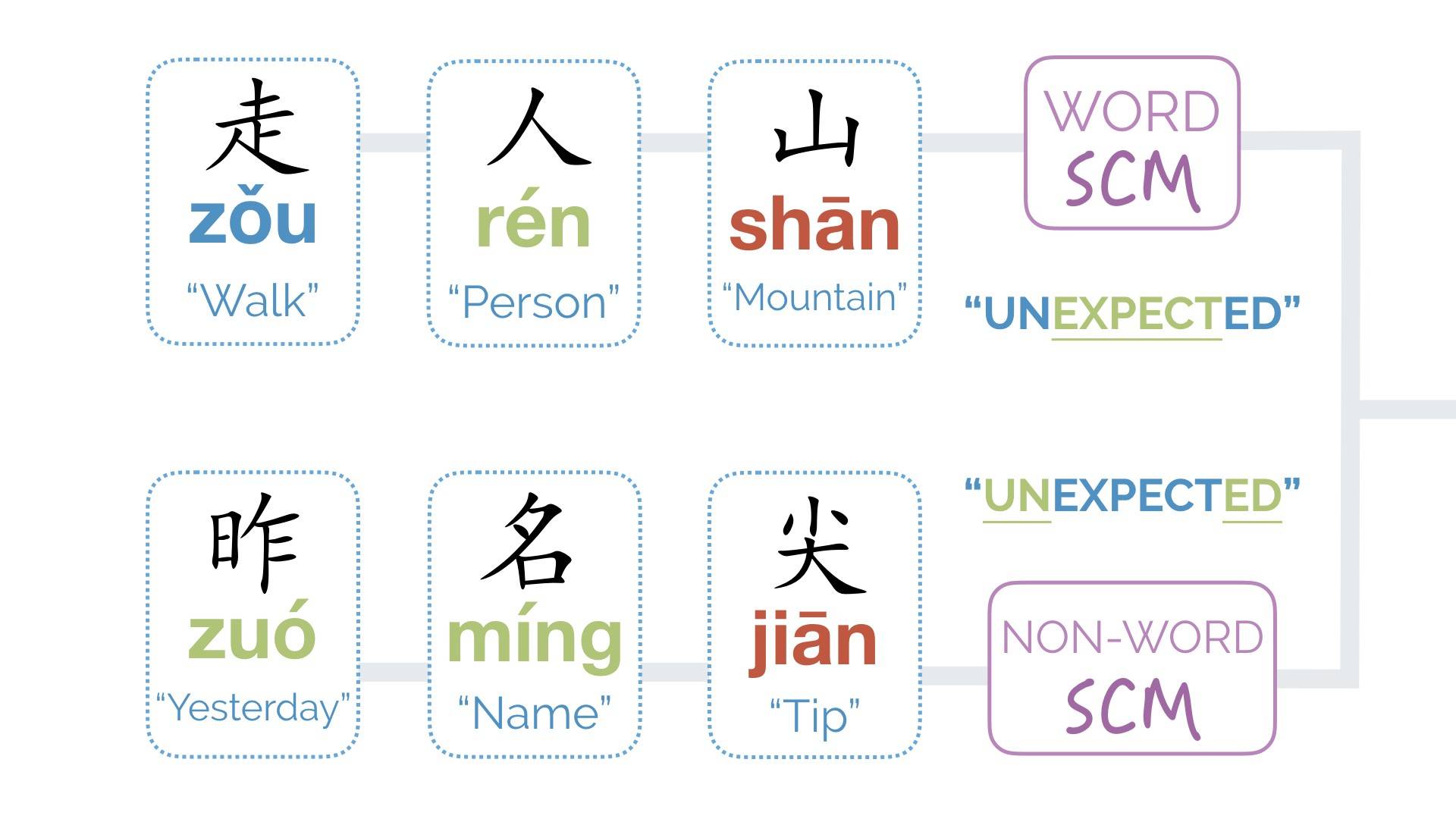
In Chinese, a character (汉字, hànzì) is a single written symbol representing a syllable and often a basic meaning. A word (词, cí), however, is a meaningful unit formed by one or more characters. For example:
- 人 (rén) is a character meaning person, but it can also function as a word.
- 人民 (rénmín) is a two-character word meaning people, combining 人 (person) and 民 (citizens).
- Some words, like 蝴蝶 (húdié, butterfly), require two characters to convey meaning, as neither character alone suffices.
How Characters Build Words in Chinese
Chinese words are constructed by combining characters, each contributing to the overall meaning. Key points include:
- Single-character words: Like 水 (shuǐ, water), where one character equals one word.
- Compound words: Such as 电脑 (diànnǎo, computer), merging 电 (electric) and 脑 (brain).
- Context matters: The same character may form different words, e.g., 生 (shēng) in 生活 (shēnghuó, life) vs. 生日 (shēngrì, birthday).
Functional Differences Between Characters and Words
Characters and words serve distinct roles in Chinese:
- Characters are the building blocks, often carrying standalone meanings or phonetic cues.
- Words express complete ideas, with multi-character combinations clarifying nuances.
- Grammar: Words function as nouns, verbs, etc., while characters lack grammatical roles alone.
Examples of Ambiguity in Single Characters
Some characters are ambiguous alone but clear in words:
- 打 (dǎ) means hit but expands in words like 打电话 (dǎ diànhuà, make a call).
- 行 (xíng/háng) can mean walk or row depending on context and word pairing.
- 发 (fā/fà) means send or hair (e.g., 发展 (fāzhǎn, develop) vs. 头发 (tóufa, hair)).
Why Learning Words Matters More Than Just Characters
Focusing solely on characters can mislead learners:
- Efficiency: Words convey meaning faster in context (e.g., 飞机 (fēijī, airplane) vs. 飞 (fly) + 机 (machine)).
- Fluency: Native speakers think in words, not isolated characters.
- Usage: Many characters are rare alone but common in words (e.g., 睛 (jīng) appears mostly in 眼睛 (yǎnjing, eyes)).
What is the difference between traditional Chinese and simplified Chinese characters?
Historical Development of Traditional and Simplified Chinese Characters
The primary difference between traditional Chinese characters and simplified Chinese characters lies in their historical evolution. Traditional characters have been used for centuries and retain the original complex forms, while simplified characters were introduced in the mid-20th century to promote literacy by reducing stroke counts.
- Traditional characters date back to ancient scripts and were standardized during the Han dynasty.
- Simplified characters were officially adopted in mainland China in the 1950s and 1960s.
- Some simplified characters were derived from historical cursive or shorthand forms.
Geographical Usage of Traditional and Simplified Chinese
The use of traditional or simplified characters depends largely on the region. While simplified characters dominate in mainland China, traditional characters remain prevalent in other Chinese-speaking areas.
- Simplified characters are the standard in mainland China and Singapore.
- Traditional characters are used in Taiwan, Hong Kong, and Macau.
- Overseas Chinese communities may use either system, often influenced by their country of origin.
Structural Differences Between Traditional and Simplified Characters
The most noticeable distinction is the complexity of traditional characters versus the simplicity of simplified ones. Simplified characters often merge components or reduce strokes.
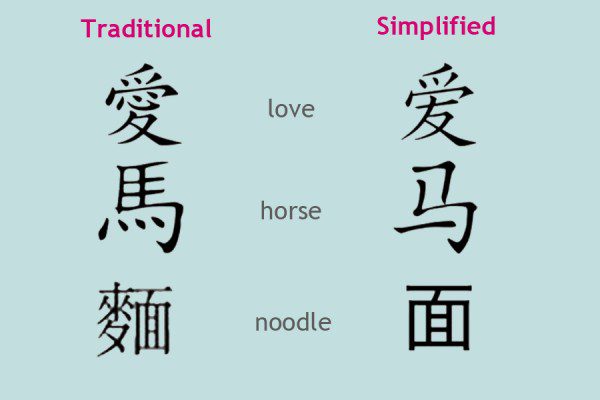
- Traditional characters like 愛 (love) have more strokes than their simplified counterpart 爱.
- Some simplified characters replace complex radicals with simpler ones, e.g., 語 (language) becomes 语.
- A few characters remain identical in both systems, such as 人 (person).
Cultural and Political Significance
The adoption of simplified characters was part of a broader reform movement in China, while traditional characters are often associated with cultural preservation.
- Simplification was aimed at increasing literacy rates and modernization.
- Traditional characters are seen as a link to classical Chinese literature and history.
- The choice of script can sometimes reflect political or regional identity.
Learning and Practical Implications
Deciding whether to learn traditional or simplified characters depends on goals, such as travel, business, or academic study.
- Simplified characters are generally easier for beginners due to fewer strokes.
- Traditional characters provide deeper access to historical texts and some regional media.
- Many learners eventually study both to maximize comprehension across different Chinese-speaking regions.
Frequently Asked Questions (FAQ)
What are the main differences between Simplified and Traditional Chinese characters?
Simplified Chinese characters were introduced in the mid-20th century to increase literacy by reducing the number of strokes in many characters. They are primarily used in mainland China and Singapore. Traditional Chinese characters, on the other hand, retain the original, more complex forms and are used in Taiwan, Hong Kong, and Macau. The differences can range from minor stroke adjustments to entirely different representations of the same word. For language learners, recognizing these variations is crucial, especially when reading materials from different regions.
How do font choices affect the readability of Chinese characters for learners?
Font styles play a significant role in how easily learners can recognize and read Chinese characters. Some fonts, like KaiTi (楷体), mimic handwritten strokes, making them useful for beginners to understand stroke order. Others, like SimSun (宋体), are more rigid and common in printed materials. Fonts with heavy stylization, such as calligraphic styles, may obscure details, making them challenging for learners. Choosing a clear, standardized font can greatly improve comprehension and retention.
Why do some Chinese characters look different in various regions despite being the same word?
Regional character variants exist due to historical, cultural, and political influences. For example, the character for country (国) is written as 「國」 in Traditional Chinese but simplified to 「国」 in Simplified Chinese. Additionally, some regions may use slightly different glyphs for the same character, such as 「為」 (Taiwan) vs. 「为」 (mainland China). These differences can confuse learners, so it's important to familiarize oneself with the variants used in the target region.
What tools or resources can help learners distinguish between Chinese character variants?
Several tools can assist learners in identifying and understanding character variants. Online dictionaries like Pleco or Line Dictionary often display both Simplified and Traditional forms. Browser extensions like Zhongwen provide instant translations and variant comparisons. Additionally, textbooks and apps tailored to specific regions (e.g., China vs. Taiwan) can clarify usage. Practicing with native materials, such as news websites or subtitles, also helps learners adapt to regional differences.
Leave a Reply
Related Posts