
Use the benefits of teaching to boost your own Chinese learning

Learning Chinese can be a challenging yet rewarding journey, and one of the most effective ways to accelerate your progress is by teaching the language to others. Sharing your knowledge not only reinforces what you’ve learned but also deepens your understanding of grammar, vocabulary, and cultural nuances. Teaching forces you to break down complex concepts, identify gaps in your own skills, and stay motivated through consistent practice. Whether tutoring a friend, leading a study group, or creating educational content, the act of teaching transforms passive learning into active mastery. Discover how leveraging the benefits of instruction can elevate your Chinese proficiency while helping others along the way.
How Teaching Others Can Enhance Your Chinese Learning Journey
1. Reinforcing Your Knowledge Through Explanation
When you teach Chinese to others, you must break down concepts into understandable parts, which strengthens your own comprehension. Explaining grammar rules, vocabulary, or pronunciation forces you to internalize the material more deeply. This process helps identify gaps in your knowledge, allowing you to refine your skills.
| Benefit | How It Helps |
|---|---|
| Clarifies Understanding | Ensures you truly grasp concepts before explaining them. |
| Identifies Weaknesses | Highlights areas where you need further study. |
2. Expanding Vocabulary Through Teaching Materials
Preparing lessons requires you to research and use diverse vocabulary, exposing you to new words and phrases. Teaching different topics—such as business Chinese or casual conversations—broadens your lexical range and helps you retain terms more effectively.
See AlsoWill a Chinese-only rule improve your learning?| Activity | Vocabulary Gain |
|---|---|
| Creating Flashcards | Reinforces memory through repetition. |
| Designing Dialogues | Encourages contextual usage of new words. |
3. Improving Pronunciation by Modeling Correct Speech
When teaching, you must articulate words clearly, which sharpens your own pronunciation. Repeatedly speaking aloud helps train your mouth and ears to recognize tones and accents accurately, leading to more fluent speech.
| Practice | Pronunciation Benefit |
|---|---|
| Mimicking Native Speakers | Improves tone accuracy and rhythm. |
| Recording Lessons | Allows self-assessment of speech clarity. |
4. Gaining Confidence in Real Conversations
Teaching involves constant interaction, simulating real-life conversations. This practice reduces anxiety when speaking Chinese in social or professional settings, as you become accustomed to thinking on your feet and responding naturally.
| Situation | Confidence Boost |
|---|---|
| Answering Student Questions | Trains quick, accurate responses. |
| Role-Playing Scenarios | Prepares for practical language use. |
5. Deepening Cultural Understanding
To teach Chinese effectively, you must also explain cultural contexts, such as idioms or traditions. This deepens your appreciation and knowledge of Chinese culture, making your language skills more nuanced and authentic.
See AlsoHow to not fail with your New Year resolution to learn Chinese| Cultural Element | Learning Impact |
|---|---|
| Festivals and Customs | Enhances conversational relevance. |
| Historical References | Adds depth to language comprehension. |
How can I improve my Chinese learning?
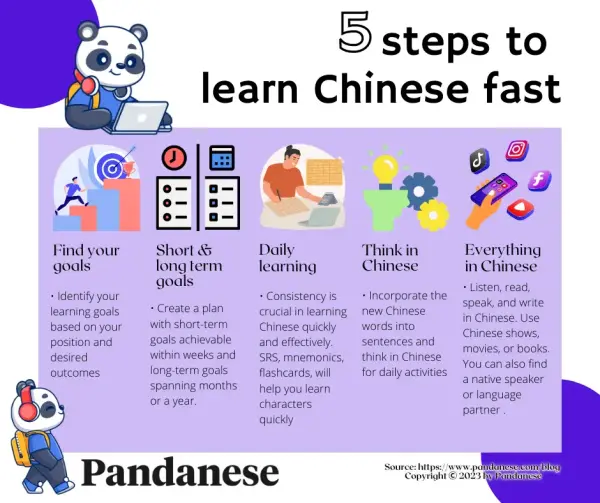
1. Build a Strong Foundation in Chinese Basics
To improve your Chinese learning, start by mastering the fundamentals. Focus on pronunciation, tones, and basic characters to avoid developing bad habits early on.
- Practice Pinyin daily to improve your pronunciation and tone recognition.
- Learn radicals to understand how Chinese characters are structured.
- Memorize common phrases to build a functional vocabulary quickly.
2. Immerse Yourself in the Language
Immersion is key to fluency. Surround yourself with Chinese media and real-life interactions to reinforce learning.
See AlsoZizzle App | A Neat Way to Learn Chinese Characters- Watch Chinese shows or movies with subtitles to improve listening skills.
- Listen to Chinese music or podcasts to get used to natural speech patterns.
- Join language exchange groups to practice speaking with native speakers.
3. Use Spaced Repetition for Vocabulary Retention
Spaced repetition helps retain new words efficiently. Use tools like Anki or Pleco to reinforce memory.
- Review flashcards daily to strengthen long-term retention.
- Group related words (e.g., food, travel) to make learning contextual.
- Test yourself regularly to identify weak areas in your vocabulary.
4. Practice Writing Characters Consistently
Writing Chinese characters improves recognition and recall. Dedicate time to handwriting practice to reinforce memory.
- Trace characters first to understand stroke order.
- Write sentences instead of isolated characters for better context.
- Use grid paper to maintain proper character proportions.
5. Engage in Active Speaking Practice
Speaking is crucial for fluency. Find opportunities to converse in Chinese regularly, even if you make mistakes.
See AlsoChinese Writing Practice Online - Top 3 Free Sites- Shadow native speakers by repeating phrases aloud.
- Record yourself to identify pronunciation errors.
- Find a tutor or language partner for structured speaking practice.
What are the benefits of learning Chinese?

Enhanced Career Opportunities
Learning Chinese opens doors to a wide range of career opportunities, especially in global business, trade, and diplomacy. China's growing economy makes Mandarin a valuable skill for professionals.
- Business expansion: Many multinational companies seek employees fluent in Chinese to tap into China's market.
- Competitive edge: Bilingual candidates stand out in industries like finance, technology, and international relations.
- Higher salaries: Proficiency in Chinese often leads to better-paying jobs due to high demand.
Cultural Understanding and Appreciation
Mastering Chinese allows deeper cultural immersion, providing insights into China's rich history, traditions, and societal values.
- Literature and arts: Access to classical texts, poetry, and films in their original language.
- Social connections: Build meaningful relationships with native speakers by understanding cultural nuances.
- Travel experiences: Navigate China more authentically while appreciating local customs.
Cognitive and Academic Benefits
Studying Chinese enhances brain function and academic performance due to its unique writing system and tonal nature.
- Memory improvement: Learning characters strengthens visual and spatial memory.
- Problem-solving skills: Tonal recognition and grammar patterns boost analytical thinking.
- Multitasking ability: Switching between languages improves cognitive flexibility.
Global Communication Advantage
With over 1 billion speakers, Chinese is the most spoken language worldwide, offering unparalleled communication reach.
- Networking: Connect with a vast population across China, Taiwan, Singapore, and diaspora communities.
- Media consumption: Engage with Chinese news, podcasts, and social media platforms firsthand.
- Diplomatic relevance: Facilitate cross-cultural dialogue in international settings.
Technological and Innovation Insights
China leads in technology and innovation, making Chinese proficiency valuable for staying ahead in cutting-edge fields.
- Tech industry access: Understand patents, research papers, and developments from Chinese tech giants.
- Entrepreneurial opportunities: Collaborate with startups or investors in China's booming tech scene.
- AI and e-commerce: Navigate platforms like Alibaba or WeChat more effectively for business or research.
How will learning Chinese benefit your future career?

Enhanced Career Opportunities in Global Markets
Learning Chinese opens doors to career opportunities in one of the world's largest economies. As China continues to grow as a global business hub, professionals with Mandarin skills are in high demand across industries like finance, trade, and technology. Here’s how it benefits your career:
- Competitive edge in multinational companies seeking bilingual talent.
- Access to job markets in China and other Mandarin-speaking regions.
- Higher earning potential due to specialized language skills.
Strengthening Cross-Cultural Communication
Mastering Chinese allows you to bridge cultural gaps and build stronger professional relationships. Effective communication with Chinese clients, partners, or colleagues can lead to successful collaborations. Key advantages include:
- Improved negotiation skills when dealing with Chinese businesses.
- Deeper understanding of cultural nuances that influence business etiquette.
- Ability to network confidently in Mandarin-speaking circles.
Advantage in Technology and Innovation Sectors
China is a leader in technology and innovation, making Mandarin a valuable asset in fields like AI, e-commerce, and engineering. Professionals who speak Chinese can:
- Collaborate with cutting-edge companies like Huawei, Alibaba, or Tencent.
- Stay updated on industry trends by accessing Mandarin-language research.
- Participate in international conferences and projects with Chinese partners.
Expanding Entrepreneurial Ventures
For entrepreneurs, learning Chinese provides a direct pathway to tap into China's vast consumer market. It enables you to:
- Launch products or services in China’s booming economy.
- Build trust with local suppliers and manufacturers.
- Navigate legal and regulatory frameworks more effectively.
Boosting Employability in Government and Diplomacy
Proficiency in Chinese is highly valued in government roles, international relations, and diplomacy. Careers in these fields benefit from:
- Opportunities in foreign service or global policy-making.
- Enhanced ability to analyze China’s geopolitical strategies.
- Roles in cultural exchange programs or international NGOs.
Is it possible to learn Chinese on your own?
Can You Learn Chinese Without a Teacher?
Yes, it is possible to learn Chinese on your own, but it requires discipline, consistent practice, and the right resources. Many learners succeed through self-study by leveraging online courses, apps, and immersion techniques.
- Online platforms like Duolingo, Memrise, and HelloChinese offer structured lessons.
- Textbooks and workbooks provide grammar explanations and exercises.
- Language exchange partners help practice speaking and listening.
What Are the Best Resources for Self-Learning Chinese?
Choosing the right resources is crucial for effective self-study. A combination of digital tools, books, and media can accelerate progress.
- Apps: Anki for flashcards, Pleco for dictionaries, and ChineseSkill for gamified learning.
- YouTube channels like Learn Chinese with Emma or Mandarin Corner for free lessons.
- Podcasts such as ChinesePod for listening practice.
How Important Is Practice in Learning Chinese Alone?
Practice is essential when learning Chinese independently. Without regular use, retention becomes difficult.
- Daily speaking with native speakers via apps like Tandem or HelloTalk.
- Writing characters repeatedly to memorize strokes and meanings.
- Watching Chinese shows or listening to music to improve comprehension.
What Are the Challenges of Self-Studying Chinese?
Self-learning Chinese comes with challenges, such as lack of feedback and motivation dips.
- Pronunciation can be tricky without a teacher’s correction.
- Grammar nuances may be harder to grasp alone.
- Staying motivated without a structured class environment.
How Can You Stay Motivated While Learning Chinese Solo?
Maintaining motivation is key to long-term success in self-studying Chinese.
- Set clear goals, like passing HSK exams or holding a conversation.
- Join online communities for support and accountability.
- Track progress with journals or apps to see improvements.
Frequently Asked Questions (FAQ)
How can teaching others help improve my own Chinese learning?
Teaching others reinforces your understanding of Chinese by requiring you to explain concepts clearly, which deepens your grasp of grammar, vocabulary, and pronunciation. When you teach, you often encounter questions that challenge your knowledge, prompting you to research and solidify weak areas. Additionally, repetition in teaching helps commit language rules to memory, while interactive practice with students keeps your skills sharp and adaptable.
What specific teaching methods enhance Chinese language retention?
Methods like explaining grammar rules, correcting mistakes, and creating lesson plans force you to analyze Chinese systematically. For example, breaking down sentence structures or teaching tones requires you to master these elements yourself. Role-playing or language games with students also provide practical reinforcement, making your learning more dynamic and memorable.
Can teaching beginners accelerate my advanced Chinese skills?
Yes, teaching beginners compels you to revisit foundational topics, often revealing gaps in your own knowledge. Simplifying complex ideas for new learners strengthens your conceptual clarity, while their progress can motivate you to tackle higher-level material. Moreover, answering basic questions hones your precision and fluency, which are critical for advanced proficiency.
How does teaching Chinese build confidence in my language abilities?
Teaching fosters confidence by putting your skills to real-world use, proving your competence in real-time. The act of guiding others validates your knowledge and highlights areas for improvement. Over time, positive feedback from students and your ability to troubleshoot their challenges reinforce self-assurance, making you a more assertive and effective Chinese speaker.
Leave a Reply
Related Posts