
How Many Chinese Characters Do I Need to Learn to be Fluent?

Learning Chinese often raises the question: How many characters are needed to achieve fluency? While Mandarin has tens of thousands of characters, fluency doesn’t require mastering them all. For basic literacy, around 1,000-2,000 characters cover most everyday communication. Advanced proficiency may require 3,000-4,000, enabling comprehension of newspapers and literature. However, fluency isn’t just about quantity—context, grammar, and vocabulary play crucial roles. This article explores the balance between character count and practical fluency, helping learners set realistic goals. Whether for travel, work, or study, understanding the right number of characters can streamline your Chinese learning journey effectively.
How Many Chinese Characters Do I Need to Learn to Be Fluent?
To achieve fluency in Chinese, the number of characters you need to learn depends on your goals. For basic literacy, around 1,000-2,000 characters are sufficient to understand 90% of written content. However, full fluency (reading newspapers, literature, or academic texts) requires knowledge of 3,000-5,000 characters. The HSK (Hanyu Shuiping Kaoshi) proficiency test, for example, covers 2,600 characters at its highest level (HSK 6), but native speakers typically know 5,000-7,000 characters.
What Is the Minimum Number of Characters for Basic Communication?
For basic communication, learning 500-1,000 characters is enough. This range allows you to read simple texts, signs, and everyday phrases. However, spoken fluency relies more on vocabulary and grammar than character count alone.
See AlsoOnline Resources for Learning Chinese| Proficiency Level | Characters Needed |
|---|---|
| Basic Communication | 500-1,000 |
| Intermediate Reading | 1,000-2,000 |
| Advanced Fluency | 3,000+ |
How Many Characters Are Required for HSK Exams?
The HSK exams are structured into six levels:
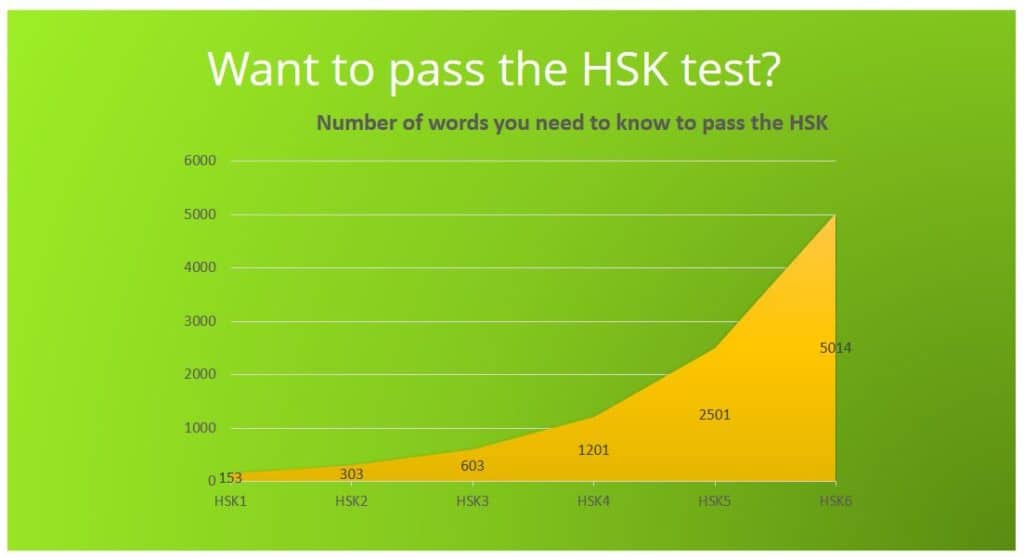
- HSK 1-2: ~300 characters
- HSK 3-4: ~600-1,200 characters
- HSK 5-6: ~2,500-2,600 characters
Passing HSK 6 indicates advanced proficiency, but it still falls short of native-level literacy.
How Many Characters Do Native Chinese Speakers Know?
Native speakers typically recognize 5,000-7,000 characters, though daily usage involves 3,000-4,000. Educated adults may know up to 8,000-10,000, but only 2,500-3,500 are commonly used in modern texts.
See AlsoHow to survive and thrive in a difficult Chinese courseDoes Learning More Characters Guarantee Fluency?
No. Fluency also depends on:
- Vocabulary (words, not just characters)
- Grammar and sentence structure
- Listening and speaking skills
Knowing 3,000 characters without context won’t make you fluent.
What Are the Most Efficient Ways to Learn Chinese Characters?
Effective methods include:
- Spaced repetition (e.g., Anki)
- Radical recognition (breaking down characters)
- Contextual learning (reading books, articles)
- Writing practice (stroke order drills)
Focus on high-frequency characters first to maximize efficiency.
How to write 1, 2, 3, 4, 5, 6, 7, 8, 9, 10 in Chinese?

How to Write Numbers 1 to 10 in Chinese Characters
Writing numbers in Chinese characters involves learning the basic symbols for each digit. Below is the list of numbers from 1 to 10:
See AlsoHow to learn Chinese characters as a beginner- 1 - 一 (yī)
- 2 - 二 (èr)
- 3 - 三 (sān)
- 4 - 四 (sì)
- 5 - 五 (wǔ)
- 6 - 六 (liù)
- 7 - 七 (qī)
- 8 - 八 (bā)
- 9 - 九 (jiǔ)
- 10 - 十 (shí)
Pronunciation Guide for Chinese Numbers 1-10
Correct pronunciation is essential when learning Chinese numbers. Here’s how to pronounce each number accurately:
- 一 (yī) - Sounds like ee with a high flat tone.
- 二 (èr) - Pronounced like are but with a falling tone.
- 三 (sān) - Similar to sahn with a high flat tone.
- 四 (sì) - Sounds like suh with a sharp falling tone.
- 五 (wǔ) - Pronounced as woo with a dipping tone.
Stroke Order for Writing Chinese Numbers
Proper stroke order ensures legibility and correctness in Chinese writing. Follow these steps:
- 一 (yī) - A single horizontal stroke from left to right.
- 二 (èr) - Top stroke first, then the longer bottom stroke.
- 三 (sān) - Three horizontal strokes, top to bottom.
- 四 (sì) - Starts with the outer frame, then inner strokes.
- 五 (wǔ) - Begins with the top horizontal, followed by the vertical and hook.
Common Uses of Numbers 1-10 in Chinese
Numbers in Chinese are used in various contexts, such as counting, dates, and prices. Examples include:
See AlsoMy Top 12 Benefits Of Learning A Second Language- Counting objects - 一个苹果 (yī gè píngguǒ) - one apple.
- Telling time - 三点 (sān diǎn) - three o'clock.
- Phone numbers - 五五五 (wǔ wǔ wǔ) - 555.
- Age - 我十岁 (wǒ shí suì) - I am ten years old.
- Prices - 八元 (bā yuán) - eight yuan.
Differences Between Simplified and Traditional Chinese Numbers
While simplified and traditional Chinese differ, numbers 1-10 remain mostly the same. Key points:
- Simplified - Used in mainland China (e.g., 一, 二, 三).
- Traditional - Used in Taiwan/Hong Kong (e.g., 壹, 貳, 叁 for formal contexts).
- Complex forms - Rarely used in daily life but appear in financial documents.
- Pronunciation - Identical in both systems.
- Usage - Simplified dominates globally, but traditional persists in specific regions.
Is 500 Chinese characters enough?

Is 500 Chinese Characters Enough for a Short Essay?
Whether 500 Chinese characters are sufficient for a short essay depends on the topic and depth of discussion. For simple topics, it may be adequate, but complex subjects may require more. Here are key considerations:
- Brevity vs. Detail: 500 characters allow for concise explanations but may lack depth for nuanced arguments.
- Audience Expectations: Academic or professional contexts often demand longer content, while casual writing may fit within this limit.
- Structural Needs: Introductions, body text, and conclusions may stretch beyond 500 characters if fully developed.
For social media, 500 Chinese characters can be more than enough, depending on the platform and purpose. Here’s why:
- Platform Limits: Twitter (X) restricts posts to 280 characters, while Weibo allows up to 2000—500 is a comfortable middle ground.
- Engagement: Shorter posts often perform better, but 500 characters allow for detailed captions or mini-stories.
- Visual Supplements: If paired with images or videos, 500 characters can provide ample context without overwhelming readers.
Is 500 Chinese Characters Enough for a Business Email?
In business communication, clarity and conciseness are key. Here’s how 500 characters measure up:
- Succinct Messaging: Most business emails thrive on brevity—500 characters can cover a clear request or update.
- Formality: If formalities (greetings, signatures) are included, the usable space shrinks, potentially limiting detail.
- Action-Oriented: Emails focused on calls-to-action or quick updates fit well within this limit.
Is 500 Chinese Characters Enough for Academic Writing?
Academic writing typically demands more than 500 characters, but exceptions exist. Consider these points:
- Abstracts/Summaries: Short research abstracts or summaries may fit within 500 characters if tightly written.
- Annotations: Bibliographic entries or brief annotations can work within this constraint.
- Limitations: In-depth analysis, citations, and arguments usually require far more space.
Is 500 Chinese Characters Enough for a Product Description?
For e-commerce or marketing, 500 Chinese characters can strike a balance between detail and readability:
- Key Features: Highlighting product benefits and specifications fits well within this range.
- SEO Optimization: Concise yet keyword-rich descriptions improve search visibility without overwhelming shoppers.
- Mobile-Friendly: Shorter descriptions load faster and are easier to scan on mobile devices.
How many Chinese characters are needed to be considered literate?
Basic Literacy in Chinese Characters
To achieve basic literacy in Chinese, one typically needs to know around 1,000 to 2,000 characters. This range allows comprehension of approximately 90% of everyday written material, such as newspapers, simple books, and general communication. Here’s a breakdown:
- 1,000 characters: Covers basic communication and simple texts.
- 1,500 characters: Enables reading most daily content with minimal difficulty.
- 2,000 characters: Provides a solid foundation for understanding more complex texts.
Advanced Literacy in Chinese Characters
For advanced literacy, knowledge of 3,000 to 4,000 characters is necessary. This level allows reading specialized literature, academic papers, and classical texts. Key points include:
- 3,000 characters: Sufficient for most professional and academic contexts.
- 3,500 characters: Covers nearly all modern publications, including technical material.
- 4,000 characters: Required for understanding classical Chinese and rare characters.
Official Standards for Chinese Literacy
Official standards vary by region. In Mainland China, the government defines literacy as knowing:
- 1,500 characters for rural residents.
- 2,000 characters for urban residents.
- 3,000 characters for higher education and professional roles.
Chinese Characters in Education
The Chinese education system structures character learning as follows:
- Primary school: Students learn 2,500 characters by graduation.
- Middle school: Expands to 3,500 characters.
- High school: Aims for 4,500+ characters, including classical forms.
Challenges in Measuring Literacy
Determining literacy isn’t just about character count. Factors include:
- Character recognition vs. writing ability (the latter is harder).
- Contextual understanding (idioms, grammar, and usage).
- Regional variations (simplified vs. traditional characters).
Frequently Asked Questions (FAQ)
How many Chinese characters are needed for basic fluency?
Basic fluency in Mandarin Chinese typically requires knowledge of around 1,000 to 1,500 characters. This range allows learners to recognize and understand approximately 90% of everyday written content, such as newspapers, simple books, and social media posts. While this may not cover specialized or literary texts, it provides a strong foundation for daily communication. Additionally, mastering these characters often includes learning their common combinations into words and phrases, which further enhances comprehension.
How many characters do native Chinese speakers know?
On average, native Chinese speakers recognize between 3,000 to 5,000 characters, depending on their education level and exposure to written materials. A well-educated adult may know up to 6,000 to 8,000 characters, but only around 2,500 to 3,500 are frequently used in modern texts. It's important to note that literacy in Chinese doesn't solely rely on character count but also on understanding context, idioms, and cultural references.
Is learning 2,000 Chinese characters enough for fluency?
Yes, knowing 2,000 characters is often considered a benchmark for functional fluency. This number covers roughly 98% of characters found in everyday writing, including news articles and informal texts. However, true fluency also depends on vocabulary depth, grammar proficiency, and listening/speaking skills. While 2,000 characters provide a solid base, learners aiming for advanced fluency or professional use should expand their knowledge further.
What’s the fastest way to learn Chinese characters effectively?
The most effective method combines spaced repetition systems (SRS) like Anki, mnemonic techniques for memorization, and consistent practice through reading and writing. Focusing on high-frequency characters first ensures practical utility, while learning radicals (character components) aids in deciphering new characters. Additionally, immersive exposure—such as watching Chinese media or engaging with native speakers—reinforces retention and contextual understanding. Balancing quantity with active usage is key to long-term success.
Leave a Reply
Related Posts