
11 Best Resources for Chinese Listening Practice On-The-Go

Improving your Chinese listening skills doesn’t have to be confined to a classroom or study session. With the right resources, you can practice anytime, anywhere—whether commuting, exercising, or relaxing at home. This article highlights the 11 best tools for Chinese listening practice on-the-go, from podcasts and apps to audiobooks and YouTube channels. Each resource is selected for its accessibility, engaging content, and effectiveness in helping learners sharpen their comprehension. Whether you're a beginner or advanced learner, these options will keep you immersed in Mandarin while fitting seamlessly into your daily routine. Start listening and take your Chinese skills to the next level!
11 Best Resources for Chinese Listening Practice On-The-Go
1. Podcasts for Immersive Chinese Listening
Podcasts are an excellent way to improve your Chinese listening skills while commuting or relaxing. They offer real-life conversations, cultural insights, and varying difficulty levels. Some top choices include Slow Chinese for beginners and ChinesePod for intermediate learners.
| Podcast | Level | Key Feature |
|---|---|---|
| Slow Chinese | Beginner | Clear pronunciation |
| ChinesePod | Intermediate | Daily life dialogues |
2. Mobile Apps for Convenient Practice
Mobile apps provide flexible learning with interactive exercises. HelloChinese and Pleco are great for on-the-go listening practice, offering speech recognition and graded content.
See AlsoMy best advice on how to learn Chinese characters| App | Focus | Unique Feature |
|---|---|---|
| HelloChinese | Listening & Speaking | Gamified lessons |
| Pleco | Vocabulary & Listening | Flashcards with audio |
3. YouTube Channels for Visual Learning
YouTube offers engaging video content with subtitles to reinforce listening skills. Channels like Yoyo Chinese and Mandarin Corner provide structured lessons and real-world dialogues.
| Channel | Content Type | Best For |
|---|---|---|
| Yoyo Chinese | Structured lessons | Beginners |
| Mandarin Corner | Conversational practice | Intermediate learners |
4. Audiobooks for Advanced Learners
Audiobooks help advanced learners refine their listening with native-paced speech. Platforms like Audible and Ximalaya offer Chinese audiobooks across genres.
| Platform | Genre | Difficulty |
|---|---|---|
| Audible | Fiction & Non-fiction | Advanced |
| Ximalaya | Diverse topics | Intermediate-Advanced |
5. Language Exchange Platforms
Practicing with native speakers through platforms like Tandem and HelloTalk improves real-time listening comprehension while building conversational confidence.
See AlsoTop 8 Ways Chinese Teachers Can Use ChatGPT to Create Lesson Plans| Platform | Interaction Type | Benefit |
|---|---|---|
| Tandem | Voice & Text Chat | Live corrections |
| HelloTalk | Audio Messages | Cultural exchange |
How do I prepare for Chinese listening test?

Understand the Test Format
To prepare effectively for a Chinese listening test, you must first understand its structure. Most tests include dialogues, monologues, and questions based on audio clips. Familiarize yourself with the question types, such as multiple-choice, fill-in-the-blank, or true/false.
- Identify the sections of the test (e.g., short conversations, long passages).
- Note the time limits for each section to manage your pace.
- Practice with past papers to recognize recurring patterns.
Build Vocabulary and Grammar Knowledge
A strong foundation in vocabulary and grammar is crucial for understanding spoken Chinese. Focus on high-frequency words and phrases commonly used in listening tests.
See AlsoDuolingo User Count: Global Language Learning Statistics- Learn topic-specific terms (e.g., travel, education, daily life).
- Study sentence structures to predict meaning from context.
- Use flashcards or apps to reinforce retention.
Practice Active Listening Daily
Regular exposure to native Chinese speech improves comprehension. Incorporate listening practice into your daily routine using diverse materials.
- Listen to podcasts or radio shows in Chinese.
- Watch Chinese movies or TV series with subtitles.
- Repeat phrases aloud to improve pronunciation and recall.
Use Mock Tests and Timed Exercises
Simulating test conditions helps build confidence and time management skills. Take full-length mock tests to assess your progress.
- Set a timer to mimic real test pressure.
- Review incorrect answers to identify weak areas.
- Track improvements over time to stay motivated.
Develop Note-Taking Strategies
Effective note-taking can help capture key details during the test. Practice abbreviating words and focusing on main ideas.
See AlsoHow to Apologize in Chinese- Use symbols or shorthand to write faster.
- Focus on keywords like names, numbers, and verbs.
- Summarize audio clips after listening to reinforce understanding.
Can you learn Chinese just by listening?

The Role of Listening in Learning Chinese
Listening is a fundamental part of acquiring any language, including Chinese. While it helps with pronunciation, intonation, and comprehension, relying solely on listening has limitations. Here’s why:
- Passive exposure improves recognition of sounds and tones but doesn’t teach grammar or writing.
- Chinese relies heavily on characters, which cannot be learned through listening alone.
- Without practice in speaking or writing, fluency remains incomplete.
Can You Achieve Fluency Only by Listening?
Fluency requires more than just listening. While it aids in understanding spoken Chinese, other skills are essential:
See Also13 more songs to learn Chinese and expand your horizons- Speaking practice is necessary to reproduce sounds and tones accurately.
- Reading and writing are critical for literacy, as Chinese uses logographic characters.
- Grammar rules and sentence structure are harder to internalize without formal study.
The Importance of Tones in Chinese Listening
Chinese is a tonal language, meaning listening is crucial for distinguishing meanings. However, listening alone may not be enough:
- Misinterpretation of tones can lead to misunderstandings without corrective feedback.
- Active repetition and speaking practice reinforce tonal accuracy.
- Contextual learning (e.g., conversations) is more effective than passive listening.
Limitations of Learning Chinese Only by Listening
While listening builds auditory skills, it has significant drawbacks:
- No exposure to Chinese characters, which are essential for reading and writing.
- Lack of interactive feedback to correct mistakes in pronunciation or grammar.
- Difficulty in expressing thoughts without speaking or writing practice.
Supplementing Listening with Other Learning Methods
To learn Chinese effectively, combine listening with other strategies:
- Speaking practice with native speakers or language partners.
- Reading materials (books, subtitles) to understand characters and context.
- Writing exercises to reinforce character recognition and grammar.
What is the best podcast for Chinese learners?

Best Podcasts for Beginner Chinese Learners
For beginners, ChinesePod and Slow Chinese are excellent choices. These podcasts focus on foundational vocabulary, pronunciation, and practical phrases.
- ChinesePod: Offers structured lessons with clear explanations and real-life dialogues.
- Slow Chinese: Features slower speech and cultural insights to aid comprehension.
- Learn Chinese | ChineseClass101: Provides bite-sized lessons with grammar tips and quizzes.
Intermediate Chinese Learning Podcasts
Intermediate learners benefit from podcasts like Mandarin Corner and TeaTime Chinese, which introduce more complex topics.
- Mandarin Corner: Covers real-world conversations and HSK exam preparation.
- TeaTime Chinese: Discusses culture, idioms, and intermediate-level vocabulary.
- Popup Chinese: Uses storytelling and humor to reinforce learning.
Advanced Chinese Podcasts for Fluency
Advanced learners should explore Blowfish or The Chairman's Bao for in-depth discussions and native-level content.
- Blowfish: Focuses on news, history, and philosophy in Mandarin.
- The Chairman's Bao: Delivers current events with adjustable difficulty levels.
- Chinese Voices: Interviews native speakers on diverse topics.
Podcasts for Learning Chinese Pronunciation
To refine pronunciation, Yabla Chinese and Pinyin Podcast are highly recommended.
- Yabla Chinese: Uses video clips with subtitles and slow playback.
- Pinyin Podcast: Breaks down tones and pinyin systematically.
- HelloChinese: Includes interactive exercises for speaking practice.
Free vs. Paid Chinese Learning Podcasts
While many podcasts are free, premium options like ChinesePod Pro offer added benefits.
- Free: Slow Chinese, Mandarin Corner (basic episodes).
- Paid: ChinesePod Pro (ad-free, bonus materials).
- Freemium: Learn Chinese | ChineseClass101 (limited free content).
How to revise for Mandarin listening?
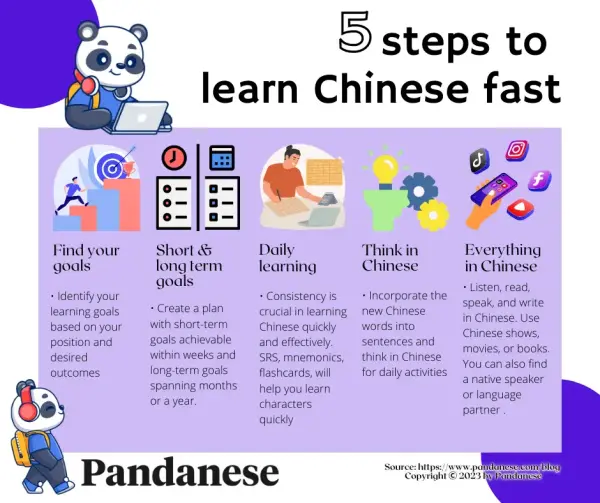
1. Listen to Authentic Mandarin Audio Daily
To improve your Mandarin listening skills, expose yourself to authentic audio materials regularly. This helps you get accustomed to natural speech patterns, tones, and pronunciation.
- Podcasts: Choose podcasts designed for learners or native content like news or storytelling.
- TV Shows/Movies: Watch with subtitles first, then gradually without them.
- Music: Listen to Mandarin songs and try to identify words or phrases.
2. Practice with Listening Exercises
Structured listening exercises are essential for targeted improvement. Use resources that match your proficiency level.
- Textbook audio: Many language books include dialogues for practice.
- Online platforms: Websites like HSK Online or YouTube offer graded listening practice.
- Dictation: Write down what you hear to improve accuracy.
3. Focus on Tone Recognition
Tones are critical in Mandarin. Mishearing them can change meanings entirely, so dedicate time to tone training.
- Minimal pairs: Practice distinguishing words that differ only by tone (e.g., mā vs. mà).
- Shadowing: Repeat sentences immediately after hearing them to mimic tones.
- Tone drills: Use apps like Pleco or Anki for tone-specific exercises.
4. Build Vocabulary in Context
Expanding your vocabulary helps you recognize more words during listening practice.
- Flashcards: Review words with audio to connect sounds with meanings.
- Sentence mining: Learn new words within full sentences for better retention.
- HSK lists: Focus on vocabulary from your current HSK level.
5. Simulate Real-Life Listening Scenarios
Prepare for real-world conversations by practicing in realistic contexts.
- Role-playing: Mimic scenarios like ordering food or asking for directions.
- Language exchange: Talk with native speakers on platforms like Tandem or HelloTalk.
- News broadcasts: Listen to Mandarin news for formal speech and speed.
Frequently Asked Questions (FAQ)
What are the best mobile apps for Chinese listening practice?
Mobile apps are one of the most convenient ways to practice Chinese listening on-the-go. Some top recommendations include HelloChinese, which offers interactive lessons with native speaker audio, and Pleco, a powerful dictionary app with audio pronunciations. DuChinese provides graded readings with audio, while ChineseSkill focuses on listening exercises in a gamified format. These apps allow learners to practice anytime, anywhere, making them ideal for busy schedules.
How can podcasts improve my Chinese listening skills?
Podcasts are an excellent resource for immersive Chinese listening practice. Shows like Slow Chinese and ChinesePod cater to different proficiency levels, offering clear pronunciation and natural dialogue. By listening regularly, you train your ear to recognize tones, vocabulary, and sentence structures in real-world contexts. Many podcasts also include transcripts or learning notes, helping you reinforce comprehension and pick up new phrases effortlessly.
Are YouTube channels effective for learning Chinese listening?
YouTube channels provide dynamic and engaging content for Chinese listening practice. Channels like Yoyo Chinese and Mandarin Corner offer structured lessons with subtitles, while Learn Chinese with Emma focuses on everyday conversations. The visual context in videos aids understanding, and learners can adjust playback speed to match their level. Additionally, channels featuring native content, like vlogs or news, expose you to authentic speech patterns and cultural insights.
What role do audiobooks play in Chinese listening practice?
Audiobooks are a powerful tool for advanced Chinese listening development. Platforms like Audible and Ximalaya offer audiobooks ranging from children’s stories to classic literature. Listening to longer narratives improves endurance, comprehension, and contextual understanding. For beginners, bilingual audiobooks or graded readers with audio support can bridge the gap between learning and real-world application, helping you absorb natural pacing and intonation.
Leave a Reply
Related Posts