
Best Apps to Learn Chinese – an Honest Review

Learning Chinese can be a rewarding yet challenging journey, and having the right tools makes all the difference. With countless language apps available, finding the most effective one can be overwhelming. This honest review breaks down the best apps to learn Chinese, evaluating their features, teaching methods, and real-world usability. Whether you're a beginner mastering tones or an advanced learner refining fluency, we’ve tested and compared top platforms to help you choose wisely. From gamified lessons to structured courses, discover which apps deliver on their promises—and which fall short. Save time and effort by focusing on the tools that truly accelerate your Mandarin progress.
Best Apps to Learn Chinese – an Honest Review
Learning Chinese can be challenging, but with the right tools, it becomes much more manageable. In this review, we’ll explore the best apps available to help you master Mandarin or Cantonese, analyzing their features, effectiveness, and value for money. Whether you're a beginner or looking to refine your skills, these apps offer structured lessons, interactive exercises, and real-world practice.
1. Duolingo – Gamified Learning for Beginners
Duolingo is one of the most popular language-learning apps, known for its gamified approach. It offers bite-sized lessons that focus on vocabulary, grammar, and pronunciation. While great for beginners, advanced learners might find it lacking in depth.
See AlsoBest App to Learn Chinese: The Ultimate Top 6| Feature | Details |
|---|---|
| Free Version | Yes, with ads |
| Premium Cost | $6.99/month |
| Strengths | Fun, easy to use, great for basics |
| Weaknesses | Limited advanced content |
2. HelloChinese – Structured Mandarin Lessons
HelloChinese is designed specifically for Mandarin learners, offering a structured curriculum that covers speaking, listening, reading, and writing. It includes handwriting recognition and voice exercises for better retention.
| Feature | Details |
|---|---|
| Free Version | Limited lessons |
| Premium Cost | $8.99/month |
| Strengths | Comprehensive, good pronunciation practice |
| Weaknesses | Less focus on Cantonese |
3. Pleco – The Ultimate Dictionary & Flashcard Tool
Pleco is a must-have dictionary app for Chinese learners. It includes OCR scanning, flashcards, and audio pronunciations. While not a full course, it’s an excellent supplemental tool for expanding vocabulary.
| Feature | Details |
|---|---|
| Free Version | Basic dictionary |
| Add-on Cost | Varies (flashcards, OCR) |
| Strengths | Extensive dictionary, great for reference |
| Weaknesses | No structured lessons |
4. Anki – Customizable Flashcards for Memorization
Anki is a powerful spaced repetition system (SRS) that helps with long-term retention. Users can download pre-made Chinese decks or create their own. Ideal for serious learners who want control over their study material.
See AlsoThe benefits of using 语文/國文 textbooks to learn Chinese| Feature | Details |
|---|---|
| Free Version | Yes (except iOS) |
| Premium Cost | $24.99 (iOS only) |
| Strengths | Highly customizable, effective for memorization |
| Weaknesses | Steep learning curve |
5. ChineseSkill – Interactive & Fun Lessons
ChineseSkill offers interactive lessons with a focus on practical conversations. It includes games, quizzes, and offline mode, making it a solid choice for beginners to intermediate learners.
| Feature | Details |
|---|---|
| Free Version | Yes, with limitations |
| Premium Cost | $14.99/month |
| Strengths | Engaging, good for conversational skills |
| Weaknesses | Not ideal for advanced learners |
Which app is the best for learning Chinese?
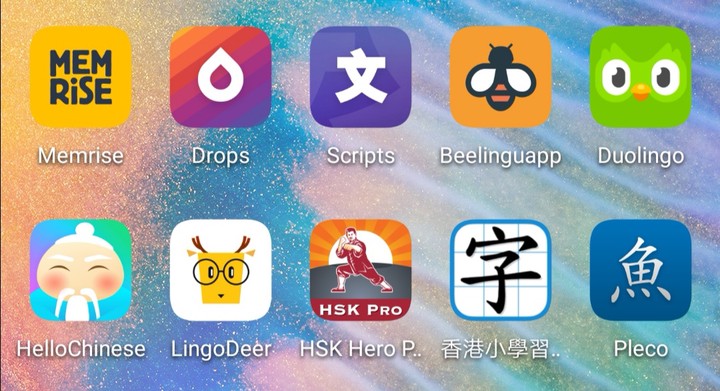
Best Overall App for Learning Chinese
When it comes to the best overall app for learning Chinese, HelloChinese stands out due to its structured lessons and interactive exercises. Here’s why:
See AlsoA Guide to All Dialects of Chinese- Gamified learning: Makes memorizing characters and tones engaging.
- Speech recognition: Helps improve pronunciation accuracy.
- Offline mode: Allows practice without an internet connection.
Best App for Beginners in Chinese
For beginners, Duolingo offers a user-friendly introduction to Mandarin with bite-sized lessons. Key features include:
- Simple interface: Easy to navigate for new learners.
- Daily goals: Encourages consistent practice.
- Free access: No upfront cost for basic content.
Best App for Advanced Chinese Learners
Advanced learners benefit from Pleco, a powerful dictionary and flashcard tool. Its strengths are:
- Comprehensive database: Includes idioms, slang, and technical terms.
- OCR feature: Scans and translates text from images.
- Custom flashcards: Tailor study sessions to personal needs.
Best App for Learning Chinese Characters
If mastering Chinese characters is your goal, Skritter excels with its writing-focused approach. Highlights include:
- Stroke-by-stroke guidance: Teaches proper character formation.
- Spaced repetition: Optimizes memorization.
- HSK-aligned content: Prepares for proficiency tests.
Best Free App for Learning Chinese
For those on a budget, Anki is a versatile flashcard app with free community-created decks. Advantages are:
- Customizable decks: Adapt to specific learning goals.
- Spaced repetition algorithm: Enhances long-term retention.
- Cross-platform sync: Study on any device.
What is the best version of Chinese to learn?

Mandarin vs. Cantonese: Which Should You Learn?
The choice between Mandarin and Cantonese depends on your goals. Mandarin is the most widely spoken Chinese dialect, with over 1 billion speakers globally, while Cantonese is dominant in regions like Hong Kong and Guangdong. Here’s a breakdown:
- Mandarin is China’s official language, used in education, media, and business nationwide.
- Cantonese is valuable for cultural connections, especially if you plan to live in Hong Kong or Macau.
- Mandarin uses simplified characters, while Cantonese often uses traditional characters.
Simplified vs. Traditional Chinese Characters
Deciding between simplified and traditional characters depends on where you intend to use the language. Here’s what to consider:
- Simplified characters are used in mainland China and Singapore, making them practical for business and travel.
- Traditional characters are prevalent in Taiwan, Hong Kong, and Macau, often preferred for cultural or historical studies.
- Learning one system first doesn’t exclude the other—many learners transition later.
Usefulness of Learning Mandarin for Business
Mandarin is the top choice for professionals due to China’s economic influence. Key reasons include:
- China’s global trade dominance makes Mandarin a high-demand language in industries like finance and tech.
- Most Chinese companies and government bodies operate in Mandarin, not regional dialects.
- Networking opportunities expand significantly with Mandarin proficiency.
Cultural Reasons to Learn Cantonese
If you’re drawn to Cantonese culture, here’s why it might be the right choice:
- Hong Kong’s film, music, and cuisine are deeply tied to Cantonese language.
- Overseas Chinese communities in the U.S., Canada, and Australia often speak Cantonese.
- Understanding Cantonese offers access to untranslated media and literature.
Which Chinese Dialect Is Easier to Learn?
While Mandarin is often considered simpler for beginners, here’s a comparison:
- Mandarin has fewer tones (4 main tones) compared to Cantonese (6–9 tones).
- Simplified characters (Mandarin) have fewer strokes than traditional ones (Cantonese).
- Mandarin’s widespread resources (apps, courses) make it more accessible.
What is the 1 best language learning app?

What Makes Duolingo the Top Language Learning App?
Duolingo is widely regarded as the 1 best language learning app due to its user-friendly interface, gamified learning approach, and extensive language options. Here’s why it stands out:
- Interactive lessons: Combines listening, speaking, and writing exercises for comprehensive learning.
- Adaptive learning: Adjusts difficulty based on user performance to ensure steady progress.
- Free accessibility: Offers a robust free version with optional premium upgrades.
How Does Babbel Compare to Other Language Apps?
Babbel is a strong competitor, focusing on conversational skills and grammar mastery. Key features include:
- Structured courses: Designed by linguists for real-life conversations.
- Speech recognition: Helps improve pronunciation accuracy.
- Offline mode: Allows learning without an internet connection.
Why Is Rosetta Stone Still a Popular Choice?
Rosetta Stone remains a trusted app for its immersion-based methodology and high-quality content. Highlights include:
- No translations: Teaches through context and visuals for deeper understanding.
- TruAccent technology: Fine-tunes pronunciation in real time.
- Live tutoring: Optional sessions with native speakers for practice.
What Are the Unique Features of Memrise?
Memrise excels with its video-based learning and focus on real-world usage. Notable aspects:
- Native speaker clips: Teaches colloquial phrases and accents.
- Spaced repetition: Enhances long-term memory retention.
- User-generated content: Offers diverse learning materials.
How Does Busuu Stand Out Among Language Apps?
Busuu differentiates itself with social learning and personalized study plans. Key benefits:
- Community feedback: Users can submit exercises for correction by natives.
- Official certifications: Partners with McGraw-Hill for recognized credentials.
- Grammar review: In-depth explanations and exercises.
What is the best site to learn Chinese?

Top Websites for Learning Chinese Online
Several platforms stand out for learning Mandarin or Cantonese effectively. Here are the best options:
- Duolingo – A free, gamified app ideal for beginners, focusing on vocabulary and basic sentences.
- HelloChinese – Designed specifically for Mandarin learners, with interactive exercises and speech recognition.
- ChineseClass101 – Offers structured audio and video lessons for different proficiency levels.
Best Free Resources to Learn Chinese
If you prefer free learning tools, these platforms provide excellent content without cost:
- Memrise – Uses spaced repetition and real-life video clips to teach vocabulary.
- Coursera – Hosts university courses on Chinese language and culture for free (certificates require payment).
- YouTube channels like Yoyo Chinese – Offer free lessons from basic to advanced levels.
Best Paid Platforms for Learning Chinese
For those willing to invest in premium learning, these sites provide in-depth courses:
- Pimsleur – Focuses on audio-based learning, perfect for improving pronunciation and listening.
- FluentU – Uses real-world videos with interactive subtitles to teach Chinese naturally.
- italki – Connects learners with professional tutors for personalized 1-on-1 lessons.
Best Sites for Learning Chinese Characters
Mastering Chinese characters is challenging, but these tools simplify the process:
- Skritter – Specializes in character writing practice with stroke-order guidance.
- Pleco – A powerful dictionary app with flashcards and OCR for real-time translation.
- Anki – Customizable flashcards for memorizing characters using spaced repetition.
Best Interactive Platforms for Practicing Chinese
To improve speaking and listening, interactive platforms are essential:
- Tandem – A language exchange app to practice with native speakers via text, voice, or video.
- HelloTalk – Connects learners with Chinese speakers for real-time corrections and conversations.
- Speechling – Provides feedback on pronunciation from professional coaches.
Frequently Asked Questions (FAQ)
What are the best apps to learn Chinese for beginners?
For beginners, apps like Duolingo, HelloChinese, and Pimsleur are highly recommended. Duolingo offers a gamified approach with bite-sized lessons, making it engaging for new learners. HelloChinese focuses on pinyin and tones, which are crucial for mastering pronunciation early on. Pimsleur, on the other hand, emphasizes audio-based learning, helping beginners develop listening and speaking skills quickly. These apps provide structured courses that gradually introduce vocabulary and grammar, ensuring a solid foundation in Mandarin.
Are paid Chinese learning apps worth the investment?
While many free apps offer great value, paid apps like Pleco (with add-ons), Skritter, and Yabla often provide superior features. Pleco is a must-have for its comprehensive dictionary and flashcard system, while Skritter excels in teaching character writing through spaced repetition. Yabla offers authentic video content with interactive subtitles, which is invaluable for immersion. If you're serious about learning Chinese, investing in these tools can significantly accelerate your progress.
Which app is best for learning Chinese characters?
For mastering Chinese characters, Skritter and Anki are top choices. Skritter specializes in stroke order and character retention, using a combination of quizzes and writing practice. Anki, while not exclusively for Chinese, allows users to create custom flashcard decks with characters, pinyin, and meanings. Another excellent option is Hanping Chinese, which provides detailed character breakdowns and etymology. Consistent practice with these apps will help you recognize and write characters more effectively.
Can I become fluent in Chinese using only apps?
While apps are a fantastic supplementary tool, achieving fluency in Chinese typically requires additional resources. Apps like italki or Tandem can connect you with native speakers for conversation practice, which is essential for fluency. However, apps alone may lack the depth needed for advanced grammar, cultural context, or real-world communication. Combining apps with formal classes, immersion experiences, or language exchanges will yield the best results. Apps can build a strong foundation, but fluency demands diverse learning methods.
Leave a Reply
Related Posts