
How to Write a Formal Letter in Chinese

Writing a formal letter in Chinese requires attention to cultural nuances, proper structure, and respectful language. Unlike Western formats, Chinese letters emphasize hierarchy, politeness, and traditional conventions. Whether for business, official correspondence, or academic purposes, mastering this skill demonstrates professionalism and cultural awareness. Key elements include the correct placement of the sender’s and recipient’s details, appropriate greetings, and a clear yet courteous tone. Understanding the use of honorifics and formal phrases is essential to convey respect. This guide will walk you through each step, from formatting to closing, ensuring your letter meets Chinese standards while effectively communicating your message in a polished and culturally appropriate manner.
How to Write a Formal Letter in Chinese: A Step-by-Step Guide
Writing a formal letter in Chinese requires attention to structure, politeness, and cultural nuances. Unlike Western letters, Chinese formal correspondence follows specific conventions, including proper salutations, hierarchical language, and a respectful tone. Below, we break down the key components to ensure your letter is both professional and culturally appropriate.
1. Understanding the Structure of a Formal Chinese Letter
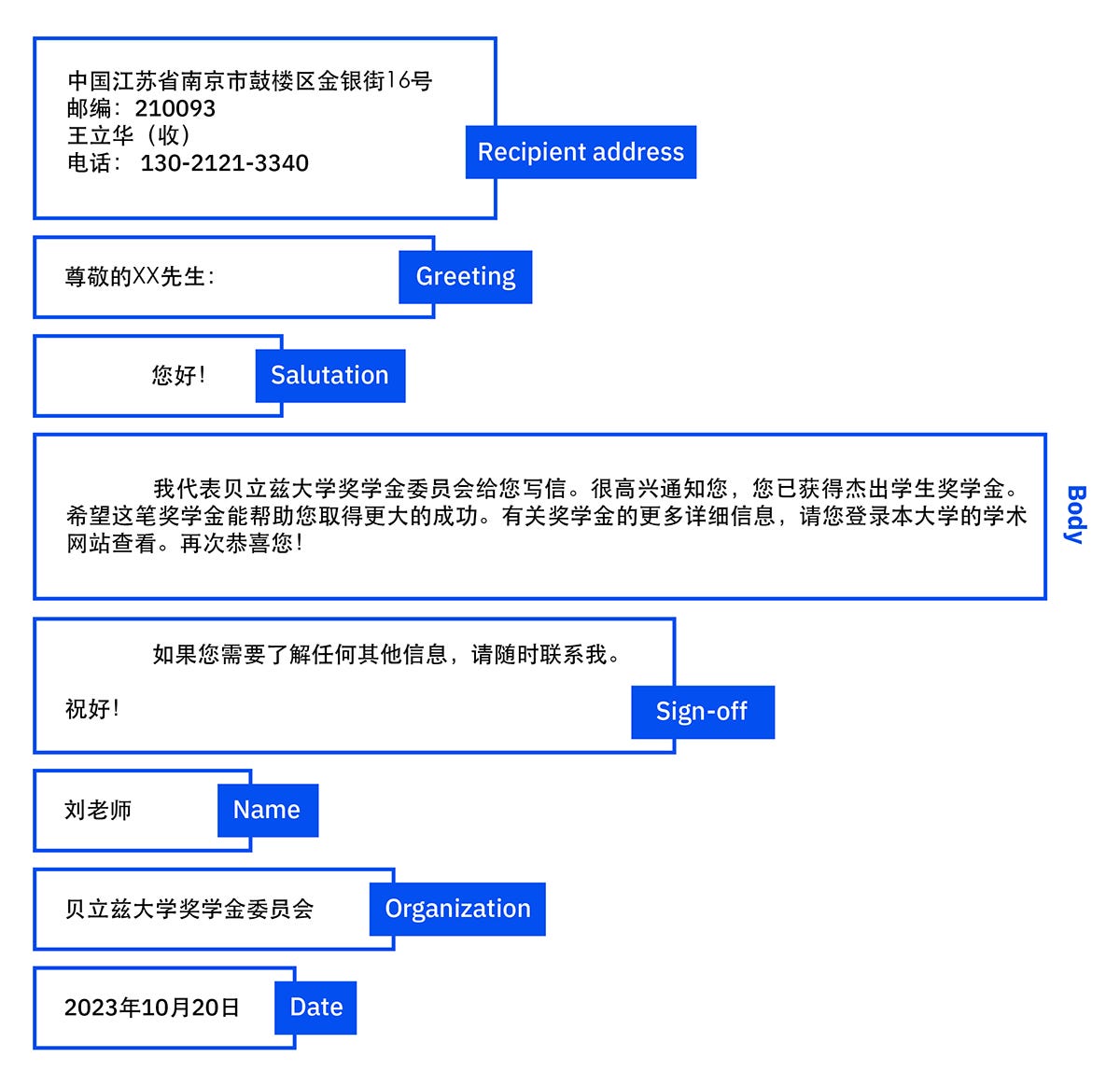
A formal Chinese letter follows a strict format, which includes:
- Sender’s information (top-right corner)
- Date (below sender’s details)
- Recipient’s information (left side, below date)
- Salutation (formal and respectful)
- Body (clear and concise)
- Closing phrases (polite and humble)
- Signature (handwritten for authenticity)
| Section | Description |
|---|---|
| Sender’s Info | Name, title, company, and address |
| Date | Written in YYYY/MM/DD format |
| Recipient’s Info | Full name, title, and company |
2. Choosing the Right Salutation
The salutation sets the tone for your letter. Use 尊敬的 (zūn jìng de) meaning Respected followed by the recipient’s title and last name. For example:
- 尊敬的张经理 (Zūn jìng de Zhāng jīnglǐ) – Respected Manager Zhang
Avoid using first names unless you have a close relationship.
3. Writing the Body of the Letter
The body should be concise and well-structured. Start with a polite introduction, state the purpose clearly, and provide necessary details. Use formal vocabulary and avoid slang.
4. Using Proper Closing Phrases
End with a humble closing, such as:
- 此致敬礼 (Cǐ zhì jìng lǐ) – With best regards
- 祝工作顺利 (Zhù gōngzuò shùnlì) – Wishing you success in your work
5. Formatting and Etiquette Tips
- Use black ink for handwritten letters.
- Avoid red ink, as it symbolizes bad luck.
- Print on high-quality paper for business letters.
- Proofread for tone and grammar errors.
| Do’s | Don’ts |
|---|---|
| Use formal titles | Avoid casual language |
| Keep it concise | Don’t use red ink |
What is the structure of a formal letter in China?

Heading and Sender's Information
The heading of a formal letter in China typically includes the sender's information at the top-right corner. This section should be concise and professional.
See Also7 ways of learning to write Chinese characters- Company name (if applicable) and sender's full name.
- Address with postal code, city, and province.
- Contact details, including phone number and email.
Date and Recipient's Details
The date is written below the sender's information, followed by the recipient's details aligned to the left.
- Recipient's full name and title (e.g., Mr., Ms., Dr.).
- Company name (if applicable) and department.
- Complete address, including postal code and city.
Salutation and Subject Line
The salutation in a Chinese formal letter is respectful and often includes the recipient's title.
- Use 尊敬的 (Zūnjìng de) followed by the recipient's name and title.
- Include a subject line summarizing the letter's purpose.
- Keep the tone polite and formal.
Body of the Letter
The body should be clear, concise, and structured into paragraphs.
See AlsoHow To Get Duolingo Music On Android: Installation Guide & Setup- Opening paragraph: State the purpose briefly.
- Middle paragraphs: Provide details, explanations, or arguments.
- Closing paragraph: Summarize and express goodwill.
Closing and Signature
The closing follows a formal tone, and the signature includes handwritten and typed elements.
- Use phrases like 此致 (Cǐ zhì) or 敬礼 (Jìnglǐ).
- Sender's full name (typed) and handwritten signature.
- Job title and company name (if applicable).
How to end a letter in Chinese formal?
Common Formal Closings in Chinese Letters
In formal Chinese correspondence, the closing phrase should reflect respect and politeness. Here are some widely used options:
- 此致敬礼 (Cǐ zhì jìnglǐ) – Literally With this, I salute you, this is the most standard formal closing.
- 谨上 (Jǐn shàng) – Meaning Respectfully submitted, often used in business or official letters.
- 敬祝安康 (Jìng zhù ānkāng) – Translates to Wishing you good health and safety, suitable for professional or personal formal letters.
Structure of a Formal Chinese Letter Closing
The closing in a Chinese formal letter follows a specific format to maintain professionalism:
- Closing phrase: Place the respectful phrase (e.g., 此致敬礼) at the end of the main text.
- Sender’s name: Write your full name below the closing phrase, often preceded by 敬上 (Jìng shàng, Respectfully).
- Date: Include the date in the format YYYY年MM月DD日, aligned to the right or below the name.
When to Use Specific Closings
Choosing the right closing depends on the context and recipient:
- Business letters: Use 此致敬礼 or 谨上 for general formality.
- Superiors or elders: Opt for 敬祝安康 or 恭请福安 (Gōng qǐng fú ān, Humbly wishing you happiness and safety).
- Official/government letters: 谨启 (Jǐn qǐ, Respectfully written) is appropriate.
Cultural Nuances in Chinese Letter Closings
Understanding cultural etiquette is crucial for formal Chinese letters:
- Avoid overly casual phrases like 再见 (Zàijiàn, Goodbye), which are inappropriate in formal settings.
- Hierarchy matters: Use more deferential closings (e.g., 恭请钧安, Gōng qǐng jūn ān) for high-ranking officials.
- Seasonal greetings: In festive periods, closings like 恭贺新禧 (Gōng hè xīn xǐ, Happy New Year) may be added.
Formatting Tips for Formal Chinese Letters
Proper layout enhances the letter’s professionalism:
- Alignment: Place the closing phrase flush left or centered, followed by the sender’s name and date.
- Handwritten letters: Use black or blue ink, and avoid corrections to maintain neatness.
- Electronic letters: Use a clear font like SimSun or KaiTi, and avoid emojis or informal symbols.
How to start a formal email in Chinese?

1. Using Proper Salutations in a Formal Chinese Email
To start a formal email in Chinese, the salutation is crucial. It sets the tone and shows respect to the recipient.
- 尊敬的 (Zūnjìng de) - This means Respected and is commonly used for superiors, clients, or formal contacts.
- 亲爱的 (Qīn'ài de) - Translates to Dear and is slightly less formal but still polite for known contacts.
- 您好 (Nín hǎo) - A polite way to say Hello, suitable for professional settings.
2. Including the Recipient’s Title and Name
Addressing the recipient correctly is essential in Chinese business culture.
- Use their full name if you know it, e.g., 尊敬的王先生 (Zūnjìng de Wáng xiānsheng) for Respected Mr. Wang.
- Add their job title if relevant, e.g., 尊敬的李经理 (Zūnjìng de Lǐ jīnglǐ) for Respected Manager Li.
- Avoid informal nicknames unless you have a close relationship.
3. Stating the Purpose of the Email Clearly
After the salutation, clearly introduce the email’s purpose.
- Use phrases like 我写信是为了... (Wǒ xiěxìn shì wèile...) - I am writing to...
- Mention the context briefly, e.g., 关于合同的事宜 (Guānyú hétóng de shìyí) - Regarding the contract matters.
- Keep it concise to maintain professionalism.
4. Adding Polite Opening Phrases
Politeness is key in Chinese formal emails.
- Hope the recipient is well: 希望您一切顺利 (Xīwàng nín yīqiè shùnlì) - I hope everything is going well for you.
- Express gratitude: 感谢您的时间 (Gǎnxiè nín de shíjiān) - Thank you for your time.
- Avoid overly casual language like slang or emojis.
5. Formatting the Email Correctly
Proper structure ensures clarity and professionalism.
- Start with the salutation aligned to the left.
- Use paragraphs to separate ideas logically.
- End with a formal closing, e.g., 此致 (Cǐ zhì) - Sincerely, followed by your name.
How do you write a formal official letter?

Structure of a Formal Official Letter
A formal official letter follows a specific structure to ensure clarity and professionalism. Below is the standard format:
- Sender's Address: Place your address at the top-right corner.
- Date: Write the date below your address.
- Recipient's Address: Include the recipient's name, title, and address on the left.
- Salutation: Use a formal greeting like Dear Mr./Ms. [Last Name].
- Body: Divide into paragraphs—introduction, main content, and conclusion.
- Closing: End with Yours sincerely or Yours faithfully.
- Signature: Sign above your typed name and title.
Choosing the Right Tone and Language
The tone of a formal letter must be respectful and professional. Follow these guidelines:
- Avoid slang: Use proper vocabulary and avoid informal expressions.
- Be concise: Keep sentences clear and to the point.
- Use formal phrases: Phrases like I am writing to inquire about... maintain professionalism.
- Stay polite: Even when addressing complaints, remain courteous.
Essential Components of the Letter Body
The body of the letter should convey your message logically. Break it down as follows:
- State the purpose of the letter clearly.
- Main Content: Provide details, facts, or requests in separate paragraphs.
- Conclusion: Summarize key points and include a call to action if needed.
Formatting and Alignment Guidelines
Proper formatting ensures readability and professionalism:
- Font: Use a standard font like Times New Roman or Arial (size 12).
- Spacing: Use single or 1.5-line spacing with a blank line between paragraphs.
- Margins: Maintain 1-inch margins on all sides.
- Alignment: Left-align all text except the sender's address and date.
Common Mistakes to Avoid
When writing a formal letter, avoid these errors:
- Typos and grammar errors: Proofread carefully before sending.
- Overly complex language: Clarity is more important than sophistication.
- Missing details: Ensure all necessary information is included.
- Incorrect salutation/closing: Match the closing to the salutation (e.g., Yours sincerely for named recipients).
Frequently Asked Questions (FAQ)
What is the standard format for a formal letter in Chinese?
Writing a formal letter in Chinese follows a specific structure to ensure professionalism and respect. The letter typically begins with the sender's address and date at the top right corner. Below this, on the left side, you include the recipient's name, title, and address. The salutation, such as 尊敬的 [Recipient's Name]: (Respected [Recipient's Name]:), comes next. The body of the letter should be concise, polite, and divided into clear paragraphs. Finally, the letter closes with a formal phrase like 此致敬礼 (With sincere respect) followed by the sender's signature and printed name.
How do I address the recipient in a Chinese formal letter?
Addressing the recipient correctly is crucial in a Chinese formal letter. Use the recipient's full name preceded by an appropriate title, such as 尊敬的 [Name] 先生/女士 (Respected Mr./Ms. [Name]). If the recipient holds a professional or academic title, like 教授 (Professor) or 经理 (Manager), include it to show respect. Avoid using informal terms or nicknames, as this may be seen as disrespectful. Always double-check the spelling and titles to ensure accuracy.
What are the key differences between English and Chinese formal letters?
The main differences between English and Chinese formal letters lie in structure and tone. In Chinese letters, the sender's address and date are placed at the top right, whereas English letters often place them on the left. The salutation in Chinese is more formal, using honorifics like 尊敬的 (Respected). Additionally, Chinese letters emphasize humility and indirectness, avoiding overly direct statements. The closing phrase, such as 此致敬礼, is unique to Chinese correspondence and has no direct English equivalent. Finally, the signature block in Chinese includes the sender's name and title below the handwritten signature.
What common mistakes should I avoid when writing a formal letter in Chinese?
When writing a formal letter in Chinese, avoid these common mistakes: incorrect salutations (e.g., using informal greetings), poor structure (not following the standard format), and overly direct language (which may seem rude). Additionally, ensure the recipient's name and title are accurate, as errors can offend. Avoid slang or colloquial expressions, and always proofread for grammar and tone. Lastly, do not forget to include the closing phrase and signature, as omitting them may appear unprofessional.
Leave a Reply
Related Posts