
How to Prepare for HSK with Chinese Reading Materials

Preparing for the HSK exam requires a strategic approach, and incorporating Chinese reading materials into your study routine can significantly enhance your language skills. Reading not only improves vocabulary and grammar but also familiarizes you with sentence structures and cultural context, all essential for HSK success. Whether you're a beginner or an advanced learner, selecting the right texts—from graded readers to news articles—can make a difference. This article explores practical steps to effectively use Chinese reading materials, offering tips on comprehension, retention, and application. By integrating these methods, you’ll build confidence and proficiency, ensuring you’re well-prepared to tackle the HSK with ease.
How to Prepare for HSK with Chinese Reading Materials
Preparing for the HSK (Hanyu Shuiping Kaoshi) exam requires a strategic approach, especially when using Chinese reading materials to enhance comprehension and vocabulary. Reading helps familiarize test-takers with grammar structures, common phrases, and contextual usage, which are crucial for passing the exam. Below, we explore effective methods to incorporate reading into your HSK preparation.
1. Choosing the Right Reading Materials for Your HSK Level
Selecting appropriate reading materials is essential for effective HSK preparation. Beginners (HSK 1-2) should focus on short sentences and basic vocabulary, while intermediate learners (HSK 3-4) can tackle short articles and graded readers. Advanced students (HSK 5-6) should engage with newspapers, essays, and literary excerpts.
See AlsoTop 10 Highest Duolingo Streak: Record Holders| HSK Level | Recommended Materials |
|---|---|
| HSK 1-2 | Children's books, flashcards, simple dialogues |
| HSK 3-4 | Graded readers, short stories, news summaries |
| HSK 5-6 | Newspapers, novels, academic articles |
2. Building Vocabulary Through Contextual Learning
Reading exposes learners to new words in real-life contexts, making retention easier. Highlight unknown vocabulary, note their meanings, and review them regularly. Use flashcards or apps like Pleco to reinforce memorization.
| Method | Effectiveness |
|---|---|
| Highlighting new words | High |
| Creating flashcards | Very High |
| Using vocabulary apps | Moderate to High |
3. Improving Reading Speed and Comprehension
To succeed in the HSK reading section, practice skimming and scanning techniques. Set a timer while reading to improve speed and summarize paragraphs to test comprehension.
| Technique | Purpose |
|---|---|
| Skimming | Identify main ideas quickly |
| Scanning | Locate specific information |
| Summarizing | Ensure understanding |
4. Practicing with Past HSK Reading Papers
Solving past HSK papers helps familiarize you with the exam format and question types. Analyze mistakes and focus on weak areas.
See AlsoLearning to hear the sounds and tones in Mandarin| Resource | Benefit |
|---|---|
| Official HSK mock tests | Real exam simulation |
| Online practice platforms | Instant feedback |
5. Incorporating Reading into Daily Study Routine
Consistency is key—dedicate 15-30 minutes daily to reading. Mix different genres (news, fiction, essays) to broaden exposure.
| Activity | Frequency |
|---|---|
| Reading news articles | Daily |
| Reviewing flashcards | 3-5 times/week |
How to study for a Chinese reading test?

Understand the Test Format and Requirements
Before diving into preparation, familiarize yourself with the test structure, question types, and scoring criteria. Chinese reading tests often include comprehension passages, vocabulary questions, and contextual analysis. Here’s how to approach it:
See AlsoDuolingo Status Icons: What They Represent and How to Use- Review past papers to identify recurring question patterns.
- Note time constraints to practice pacing during the exam.
- Clarify instructions with teachers or peers to avoid misunderstandings.
Build a Strong Vocabulary Foundation
A robust vocabulary is critical for understanding texts. Focus on high-frequency words and phrases commonly found in readings:
- Use flashcards (digital or physical) to memorize characters and meanings.
- Read daily—news articles, short stories, or graded readers—to encounter new terms.
- Practice synonyms and antonyms to deepen contextual understanding.
Practice Active Reading Strategies
Passive reading won’t suffice; employ active techniques to engage with the material:
- Annotate texts by underlining key ideas or unfamiliar words.
- Summarize paragraphs in your own words to check comprehension.
- Predict content based on headings or introductory sentences.
Master Skimming and Scanning Techniques
Efficient reading saves time and improves accuracy. Train yourself to:
- Skim for main ideas by focusing on topic sentences and conclusions.
- Scan for specifics like names, dates, or answers to detail-oriented questions.
- Highlight transitions (e.g., 但是, 因此) to follow logical flow.
Simulate Test Conditions Regularly
Replicate the exam environment to build confidence and stamina:
- Time yourself while completing practice tests.
- Minimize distractions to mimic the actual testing atmosphere.
- Review mistakes thoroughly to avoid repetition.
How to prepare for an HSK test?
Understand the HSK Test Structure
Before preparing for the HSK test, familiarize yourself with its structure. The exam is divided into six levels (HSK 1–6), each assessing different language skills. The test includes sections on listening, reading, and writing (from HSK 3 onwards). Knowing the format helps you allocate study time effectively.
- HSK 1–2: Focus on basic vocabulary and simple sentences.
- HSK 3–4: Include grammar patterns and short paragraphs.
- HSK 5–6: Require advanced comprehension and essay writing.
Build a Strong Vocabulary Foundation
Vocabulary is critical for the HSK test. Each level has a specific word list (e.g., 150 words for HSK 1, 5,000+ for HSK 6). Use flashcards, apps, or word lists to memorize and review regularly.
- Use flashcards (physical or digital) for daily practice.
- Group words by themes (e.g., food, travel) for better retention.
- Practice writing sentences using new vocabulary.
Practice Listening Comprehension
The listening section tests your ability to understand spoken Mandarin. Exposure to native speech is essential. Use HSK-specific audio materials or podcasts.
- Listen to HSK sample tests to get used to the speed and accent.
- Watch Chinese shows or listen to radio for immersion.
- Repeat dialogues aloud to improve pronunciation.
Master Grammar and Sentence Patterns
Grammar rules become more complex at higher HSK levels. Focus on common structures like measure words, word order, and particles.
- Study HSK grammar books or online resources.
- Complete exercises to reinforce understanding.
- Analyze mistakes in practice tests to avoid repetition.
Take Mock Tests Under Timed Conditions
Simulating exam conditions is crucial for time management and confidence. Use official HSK mock tests to gauge your progress.
- Set a timer to match the real test duration.
- Review incorrect answers to identify weak areas.
- Adjust study focus based on mock test results.
Is HSK 4 a B2 level?
Is HSK 4 Equivalent to CEFR B2 Level?
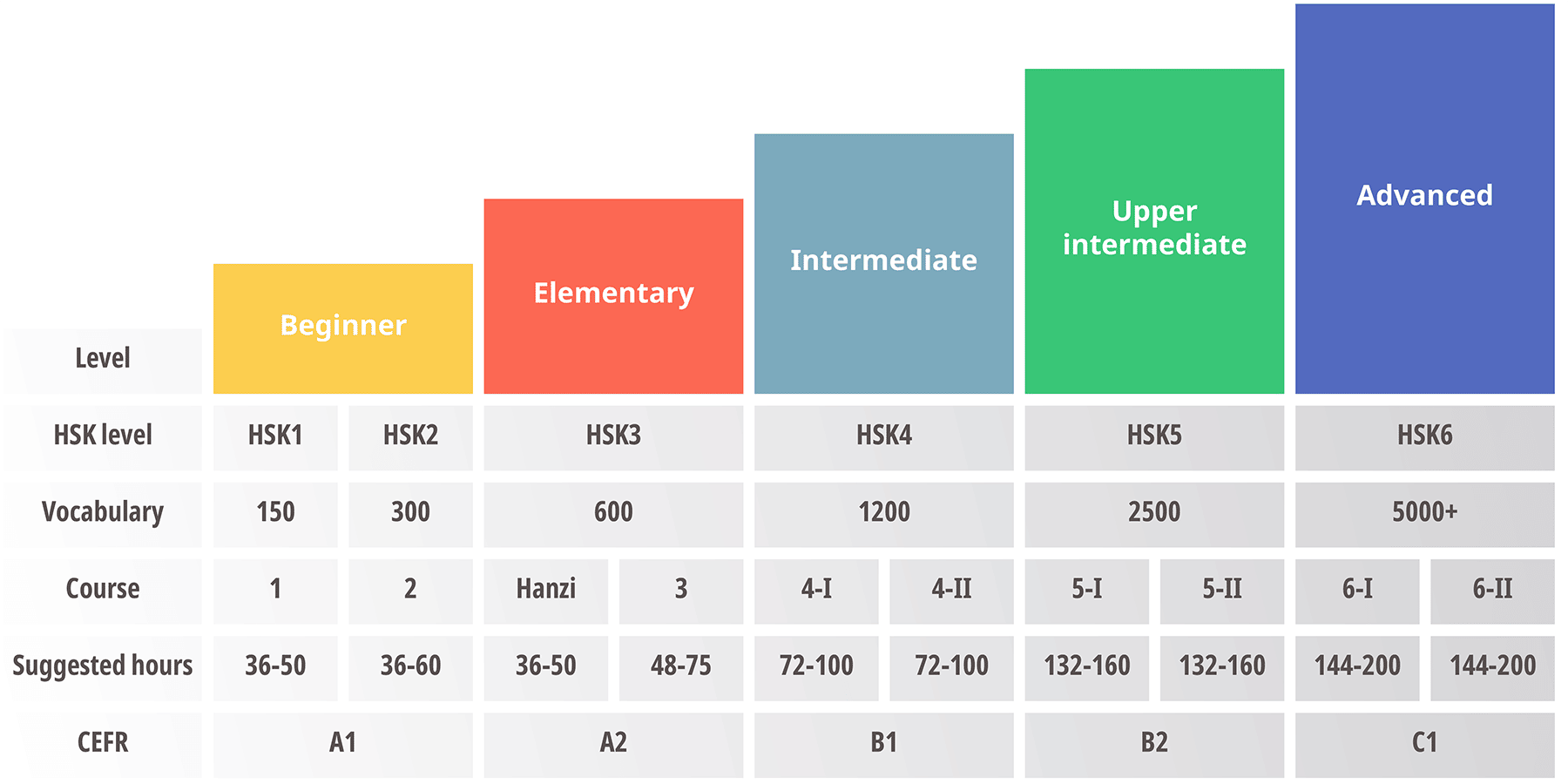
The HSK 4 exam is often compared to the CEFR B2 level, but they are not exact equivalents. While HSK 4 assesses the ability to discuss a wide range of topics in Mandarin, the CEFR B2 standard in European languages typically requires more advanced fluency. Here’s a breakdown:
- Vocabulary: HSK 4 requires ~1,200 words, whereas B2 usually demands 2,500–3,000 words.
- Complexity: B2 involves nuanced expressions, while HSK 4 focuses on everyday communication.
- Recognition: Some institutions may accept HSK 4 as B2, but others consider it closer to B1.
How Does HSK 4 Compare to B2 in Language Proficiency?
The comparison depends on the language skills being evaluated. HSK 4 emphasizes practical Mandarin, while B2 measures broader linguistic competence. Key differences include:
- Speaking: B2 expects debate skills; HSK 4 tests basic discussions.
- Writing: B2 requires essays; HSK 4 focuses on short paragraphs.
- Listening: HSK 4 uses clear audio; B2 includes varied accents and speeds.
Can HSK 4 Certification Be Used as Proof of B2 Proficiency?
While HSK 4 is a recognized Mandarin credential, its acceptance as B2 proof varies. Consider these points:
- Institutions: Universities may classify HSK 4 as B1 or B2 based on their criteria.
- Employers: Some companies value HSK 4 for business Mandarin, not general B2 equivalence.
- Limitations: HSK 4 lacks the cultural depth often expected at B2.
What Are the Key Differences Between HSK 4 and B2 Exams?
The exam structures and evaluation methods differ significantly:
- Format: HSK 4 is multiple-choice heavy; B2 includes open-ended tasks.
- Content: HSK 4 topics are daily-life oriented; B2 covers abstract ideas.
- Scoring: HSK 4 has a pass/fail system; B2 uses graded proficiency bands.
Should You Aim for HSK 4 or B2 in Mandarin Learning?
Your goal depends on purpose and context. Here’s how to decide:
- Academic needs: HSK 4 suffices for some programs; B2 may be required for others.
- Career goals: HSK 4 is practical for China-focused roles; B2 suits multilingual environments.
- Personal growth: B2 represents higher fluency, but HSK 4 is a solid intermediate milestone.
Is HSK 4 enough to get a job?

What Job Opportunities Are Available with HSK 4?
HSK 4 is considered an intermediate level of Mandarin proficiency, which can open doors to certain job opportunities, especially in roles where basic to moderate Chinese communication is required. However, the availability of jobs depends on the industry and specific job requirements.
- Customer service roles in multinational companies serving Chinese clients.
- Tourism and hospitality jobs, such as tour guides or hotel staff in areas with Chinese tourists.
- Entry-level positions in trade or logistics where Mandarin is beneficial but not the primary skill.
How Does HSK 4 Compare to Higher HSK Levels for Employment?
While HSK 4 demonstrates a solid foundation in Mandarin, higher levels like HSK 5 or 6 are often preferred for professional or specialized roles. Employers may prioritize candidates with advanced fluency for competitive positions.
- HSK 5/6 holders are more likely to secure roles in translation, teaching, or business negotiations.
- Technical or managerial jobs often require higher proficiency to handle complex discussions.
- Competitive industries like finance or law may demand near-native fluency.
Can HSK 4 Help in Non-Chinese Speaking Countries?
Yes, HSK 4 can still be valuable in countries where Mandarin is not the primary language, particularly in businesses with Chinese connections or international trade.
- Import/export firms may seek employees who can communicate with Chinese suppliers.
- Cultural exchange programs or language schools might hire HSK 4 holders as assistants.
- Diplomatic or NGO roles involving cross-cultural communication.
What Industries Value HSK 4 the Most?
Certain industries prioritize practical communication skills over advanced fluency, making HSK 4 a useful qualification.
- Retail and e-commerce for roles dealing with Chinese-speaking customers.
- Education as a language tutor or teaching assistant.
- Freelance work like content moderation or basic translation tasks.
Should You Pursue HSK 5 or 6 for Better Job Prospects?
If your goal is to secure higher-paying or more specialized roles, advancing to HSK 5 or 6 is highly recommended.
- Career growth in China or Mandarin-dependent fields often requires advanced certification.
- Salary negotiations can be more favorable with higher HSK levels.
- Academic or research positions typically demand superior language skills.
Frequently Asked Questions (FAQ)
What are the best Chinese reading materials to prepare for the HSK exam?
Preparing for the HSK exam requires exposure to a variety of Chinese reading materials that match your proficiency level. Graded readers designed for HSK levels (HSK 1-6) are highly recommended, as they align with the vocabulary and grammar tested. Additionally, news articles from platforms like BBC Chinese or The Chairman’s Bao offer real-world context. For beginners, children’s books or simplified stories can build foundational skills, while advanced learners may benefit from Chinese literature or academic papers. Consistency is key—choose materials that challenge you without being overwhelming.
How can reading improve my HSK test performance?
Reading extensively in Chinese enhances multiple skills crucial for the HSK exam. It expands your vocabulary by exposing you to words in context, making retention easier. Regular reading also improves grammar comprehension, as you see sentence structures repeatedly. Additionally, it boosts reading speed and comprehension, which are vital for the timed sections of the test. To maximize benefits, pair reading with active note-taking—highlight new characters, idioms, and patterns, and review them regularly.
How often should I practice reading to prepare for the HSK?
For effective HSK preparation, aim to practice Chinese reading daily, even if only for 15–30 minutes. Consistency matters more than duration—regular exposure reinforces learning. If you’re at a beginner level (HSK 1-2), focus on shorter texts daily. Intermediate learners (HSK 3-4) should read for 30–45 minutes, mixing graded readers and simpler news articles. Advanced students (HSK 5-6) need at least an hour daily, tackling complex materials like essays or novels. Adjust based on your schedule, but prioritize active engagement—annotate and summarize what you read.
Should I use bilingual or monolingual Chinese reading materials for HSK prep?
The choice depends on your HSK level and confidence. Bilingual materials (Chinese with translations) are helpful for beginners (HSK 1-3), as they provide immediate clarification. However, relying too much on translations can slow progress. As you advance (HSK 4+), switch to monolingual materials to immerse yourself fully. Use tools like Pleco or Hanping for quick lookups instead. This trains your brain to think in Chinese, a skill critical for the exam’s reading section. Balance is key—start bilingual, then gradually reduce reliance on translations.
Leave a Reply
Related Posts