
HSK vs HSKK - What’s The Deal?

The HSK (Hanyu Shuiping Kaoshi) and HSKK (Hanyu Shuiping Kouyu Kaoshi) are two standardized tests designed to assess Chinese language proficiency, but they serve different purposes. While the HSK evaluates reading, writing, and listening skills, the HSKK focuses exclusively on speaking ability. Understanding the differences between these exams is crucial for learners aiming to certify their Mandarin skills for academic, professional, or personal reasons. This article breaks down the structure, content, and use cases of each test, helping you decide which one aligns with your goals. Whether you're preparing for university admissions or career advancement, knowing the deal with HSK vs. HSKK is essential.
HSK vs HSKK: Understanding the Key Differences
1. What is HSK and HSKK?
The HSK (Hanyu Shuiping Kaoshi) is a standardized test for non-native Chinese speakers to assess their proficiency in Mandarin Chinese, focusing on reading, writing, and listening. On the other hand, the HSKK (Hanyu Shuiping Kouyu Kaoshi) evaluates only spoken Chinese, testing conversational and pronunciation skills.
| Test | Focus | Skills Assessed |
|---|---|---|
| HSK | Comprehensive | Reading, Writing, Listening |
| HSKK | Speaking Only | Conversation, Pronunciation |
2. Who Should Take HSK vs HSKK?
The HSK is ideal for those who need proof of general Chinese proficiency, such as for academic or professional purposes. The HSKK is best for individuals who specifically want to validate their speaking abilities, such as interpreters or public speakers.
See AlsoSpaced repetition is not limited to flashcards| Test | Best For |
|---|---|
| HSK | Students, Job Applicants |
| HSKK | Interpreters, Public Speakers |
3. Exam Structure and Levels
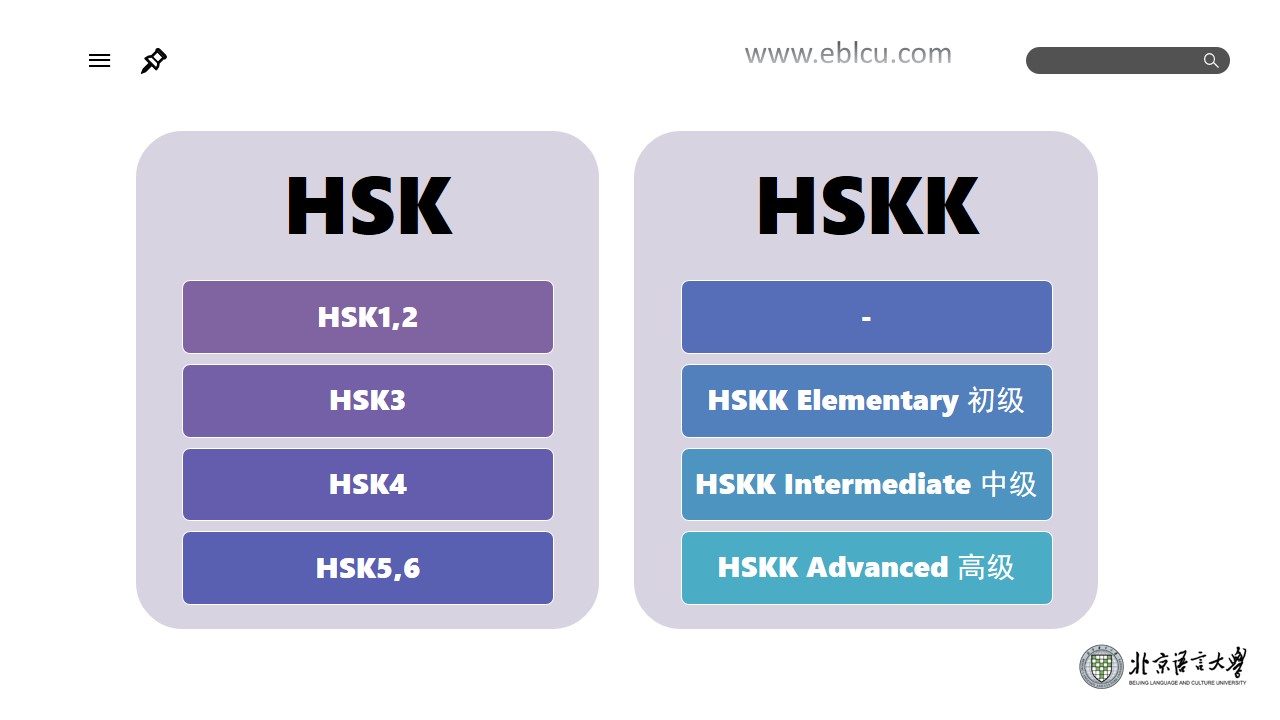
The HSK has six levels (1-6), with each level increasing in difficulty. The HSKK has three levels: Beginner, Intermediate, and Advanced, aligning with HSK levels 1-2, 3-4, and 5-6 respectively.
| Test | Levels |
|---|---|
| HSK | 1-6 (Basic to Proficient) |
| HSKK | Beginner, Intermediate, Advanced |
4. Scoring and Certification
Both tests provide official certificates upon passing. The HSK requires a minimum score of 120/200 to pass, while the HSKK uses a 100-point scale, with different passing thresholds per level.
| Test | Passing Score |
|---|---|
| HSK | 120/200 |
| HSKK | Varies by Level |
5. Which One Should You Choose?
If your goal is comprehensive language validation, the HSK is essential. However, if speaking fluency is your priority, the HSKK is more suitable. Some candidates take both to showcase full proficiency.
See AlsoLearning Chinese through social media| Test | Recommended For |
|---|---|
| HSK | Academic/Professional Needs |
| HSKK | Speaking-Focused Roles |
What is the difference between HSK and Hskk?
What is HSK?
The HSK (Hanyu Shuiping Kaoshi) is a standardized test designed to assess the Chinese language proficiency of non-native speakers. It evaluates skills in listening, reading, and writing, and is divided into six levels, from HSK 1 (beginner) to HSK 6 (advanced).
- Focuses on written and comprehension skills, including vocabulary and grammar.
- No speaking component—only listening, reading, and writing.
- Widely recognized for academic and professional purposes.
What is HSKK?
The HSKK (Hanyu Shuiping Kouyu Kaoshi) is a separate test that specifically measures spoken Chinese proficiency. Unlike the HSK, it does not include reading or writing sections and is divided into three levels: beginner, intermediate, and advanced.
See AlsoChinese TV Shows || 14 Great Shows for Practicing Chinese- Focuses exclusively on speaking abilities, such as pronunciation and fluency.
- No written component—only oral responses and repetitions.
- Often taken alongside HSK to demonstrate full language competency.
Key Differences Between HSK and HSKK
The primary difference lies in the skills assessed: HSK evaluates written and comprehension abilities, while HSKK tests oral proficiency. Additionally, their structures and purposes differ significantly.
- HSK includes listening, reading, and writing; HSKK is only speaking.
- HSK has six levels; HSKK has three.
- HSK is mandatory for academic admissions; HSKK may be optional or supplementary.
Purpose of HSK vs. HSKK
While both tests assess Chinese proficiency, they serve different purposes. HSK is often required for university admissions or job applications, whereas HSKK validates real-life conversational skills.
- HSK proves academic or professional readiness in written Chinese.
- HSKK demonstrates practical speaking ability for daily communication.
- Some institutions require both tests for comprehensive evaluation.
Which Test Should You Take?
The choice depends on your goals. If you need formal certification for studies or work, prioritize HSK. If improving spoken fluency is your focus, take HSKK.
See AlsoA Guide to Baidu : the First Chinese Search Engine- Take HSK for university applications or jobs requiring written Chinese.
- Take HSKK if you want to prove conversational skills.
- Consider taking both for a well-rounded certification.
What is the difference between the old HSK and the new HSK?
Structure and Levels
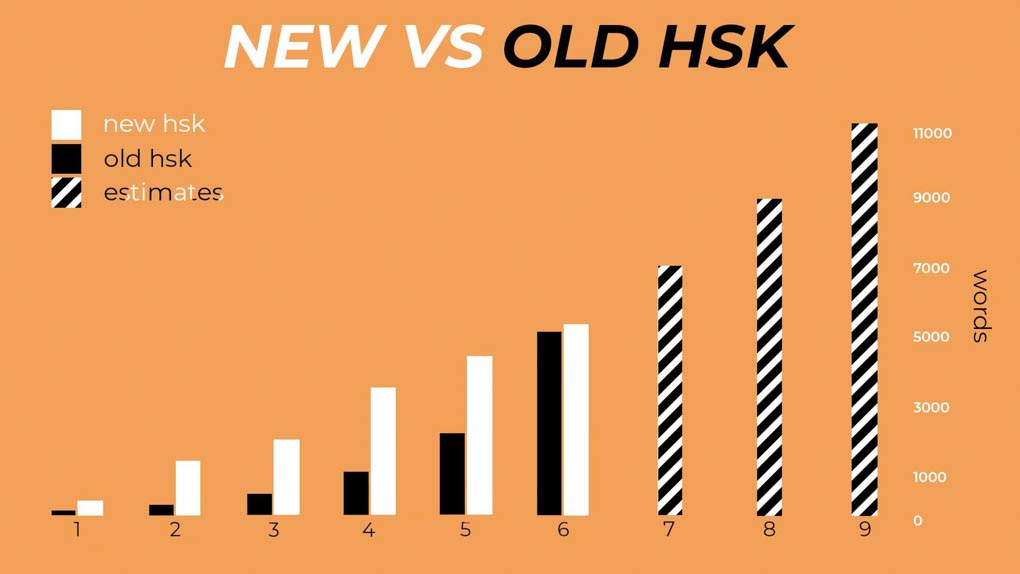
The old HSK had 6 levels, while the new HSK expands to 9 levels, including an advanced tier (7-9). This change aims to better assess higher proficiency and align with the CEFR framework.
- Old HSK: 6 levels (1-6), with Level 6 as the highest.
- New HSK: 9 levels (1-9), introducing Advanced (7-9) for near-native fluency.
- Alignment: New HSK levels correspond more closely to CEFR standards (A1-C2).
Vocabulary Requirements
The vocabulary demands differ significantly, with the new HSK requiring nearly double the words at higher levels compared to the old system.
See AlsoReading manga in Chinese for more than just pleasure- Old HSK Level 6: ~5,000 words.
- New HSK Level 9: ~11,000 words.
- Lower levels: New HSK introduces more practical vocabulary early on.
Exam Format and Sections
The exam structure was revised to include new task types, such as interactive speaking and writing components, especially in advanced levels.
- Old HSK: Focused on listening, reading, and writing (separate speaking test).
- New HSK: Integrates speaking and writing tasks into all levels.
- Innovations: Includes real-life scenarios (e.g., summarizing audio content).
Scoring and Grading
The scoring system was adjusted to reflect the expanded levels, with stricter benchmarks for advanced tiers.
- Old HSK: Pass/fail based on fixed thresholds (e.g., 180/300 for Level 6).
- New HSK: Introduces tiered scoring (e.g., Excellent or Pass for Levels 7-9).
- Weighting: Speaking and writing carry more weight in higher levels.
Purpose and Recognition
The new HSK emphasizes practical language use, making it more relevant for academic and professional settings globally.
- Old HSK: Primarily used for university admissions in China.
- New HSK: Recognized by employers and institutions worldwide.
- Focus: New HSK tests real-world communication skills beyond textbooks.
Which HSK is hardest?
What Makes HSK 6 the Hardest Level?
The HSK 6 is widely considered the most challenging due to its advanced vocabulary, complex grammar, and demanding listening and reading sections. Here’s why:
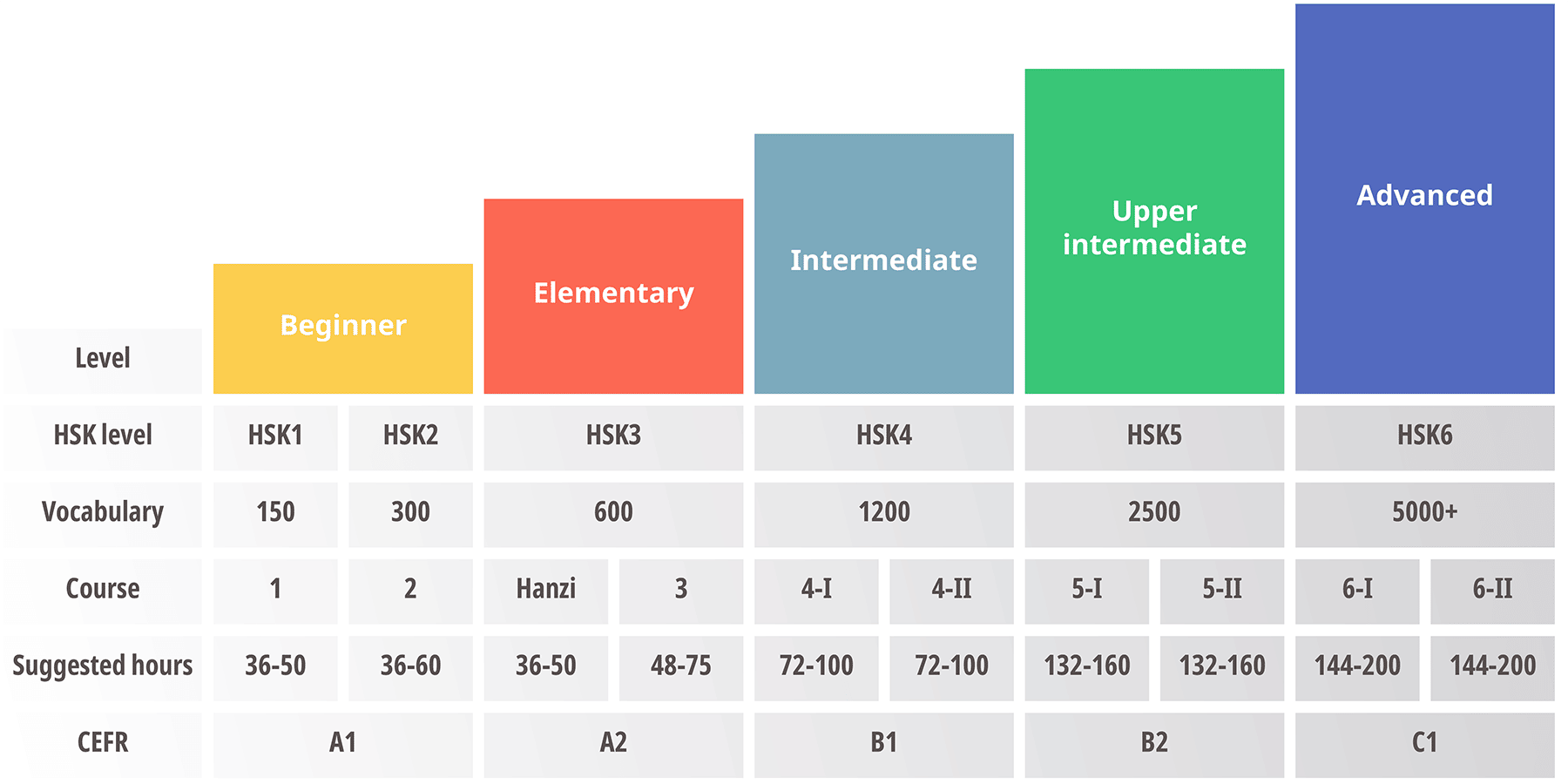
- Vocabulary: Requires mastery of 5,000+ words, including idiomatic expressions and specialized terms.
- Reading Comprehension: Involves lengthy passages with nuanced meanings and abstract topics.
- Listening: Features fast-paced dialogues and monologues with regional accents.
Comparing HSK 5 and HSK 6 Difficulty
While HSK 5 is tough, HSK 6 escalates significantly in difficulty. Key differences include:
- Word Count: HSK 5 tests 2,500 words vs. HSK 6’s 5,000+.
- Grammar Complexity: HSK 6 includes rare structures and classical Chinese influences.
- Time Pressure: Longer texts and faster audio in HSK 6 demand quicker processing.
Challenges of HSK 6 Listening Section
The listening component of HSK 6 is notoriously difficult due to:
- Speed: Native-level speaking pace with minimal pauses.
- Accents: Exposure to diverse regional pronunciations.
- Content: Abstract themes like philosophy or technical subjects.
HSK 6 Writing and Reading Hurdles
Writing and reading in HSK 6 pose unique obstacles:
- Essay Writing: Requires coherent arguments using advanced vocabulary.
- Text Length: Passages exceed 1,000 characters with dense information.
- Inference Skills: Must deduce implicit meanings and cultural references.
Why HSK 6 is Harder Than Lower Levels
HSK 6 demands near-fluency, unlike lower levels, because of:
- Proficiency Expectation: Designed for academic or professional use.
- Cultural Knowledge: Tests understanding of Chinese history and society.
- Scoring Threshold: Higher passing score (180/300) compared to HSK 5 (180/300 but with simpler content).
What is the grade of Hskk?
What is HSKK and its grading system?
The HSKK (Hanyu Shuiping Kouyu Kaoshi) is a spoken Chinese proficiency test designed to assess non-native speakers' ability to communicate verbally in Mandarin. Unlike the written HSK exam, HSKK focuses solely on speaking skills. The test is divided into three levels:
- HSKK Beginner - Evaluates basic conversational skills for daily interactions.
- HSKK Intermediate - Tests the ability to discuss familiar topics with some fluency.
- HSKK Advanced - Measures proficiency in expressing complex ideas and arguments.
How does HSKK differ from HSK?
The HSK (Hanyu Shuiping Kaoshi) evaluates written and listening skills, while the HSKK focuses exclusively on oral proficiency. Key differences include:
- Format: HSK includes reading and writing sections; HSKK is entirely spoken.
- Levels: HSK has six levels, whereas HSKK has three.
- Purpose: HSKK is ideal for those prioritizing verbal communication, like business or travel.
What are the requirements for each HSKK grade?
Each HSKK grade has specific expectations for vocabulary, fluency, and comprehension:
- Beginner - Requires knowledge of ~200 words and simple sentence structures.
- Intermediate - Demands ~900 words and the ability to narrate experiences.
- Advanced - Needs mastery of ~3000 words and nuanced expression.
How is the HSKK test structured?
The HSKK exam consists of three sections per level, testing different speaking skills:
- Repeating sentences - Evaluates pronunciation and memory.
- Answering questions - Assesses quick thinking and vocabulary.
- Speaking freely - Measures coherence and fluency on given topics.
Who should take the HSKK exam?
The HSKK is tailored for individuals who need to prove spoken Mandarin proficiency, such as:
- Students applying to Chinese-speaking universities.
- Professionals working in Mandarin-dominated environments.
- Language enthusiasts seeking formal validation of their skills.
Frequently Asked Questions (FAQ)
What is the difference between HSK and HSKK?
The HSK (Hanyu Shuiping Kaoshi) is a standardized test designed to assess non-native speakers' proficiency in Mandarin Chinese, focusing primarily on reading, writing, and listening skills. On the other hand, the HSKK (Hanyu Shuiping Kouyu Kaoshi) evaluates spoken Chinese exclusively, testing candidates' ability to communicate verbally. While the HSK measures overall language competency, the HSKK is specifically tailored to assess oral expression and pronunciation.
Can I take the HSKK without taking the HSK?
Yes, you can take the HSKK independently without needing to complete the HSK. The two tests are separate, and your performance in one does not affect the other. However, some institutions or employers may require both tests to evaluate comprehensive language skills. If your goal is to demonstrate spoken proficiency, the HSKK alone may suffice, but always check the specific requirements of your intended use.
Which test is more important for studying in China?
For academic purposes, such as applying to a Chinese university, the HSK is generally more critical because it assesses the reading and writing skills needed for coursework. However, some programs may also require the HSKK, especially if the field involves verbal communication, like language studies or international relations. Always verify the admission criteria of your target institution to determine if both tests are necessary.
How do the HSK and HSKK levels correspond?
The HSK has six levels (1-6), while the HSKK has three (Beginner, Intermediate, Advanced). Roughly, HSKK Beginner aligns with HSK 1-2, Intermediate with HSK 3-4, and Advanced with HSK 5-6. However, this is only an approximation, as the HSKK focuses solely on speaking. A high HSK level doesn’t guarantee strong oral skills, so taking the HSKK can provide a more accurate measure of your spoken fluency.
Leave a Reply
Related Posts