
Oh My Gaokao! Could You Pass China’s University Entrance Examination?

Every year, millions of Chinese students face the gaokao, China’s notoriously rigorous university entrance exam. Spanning multiple subjects over two to three days, this high-stakes test determines not just academic futures but career trajectories and family expectations. Covering everything from mathematics and literature to English and science, the gaokao demands years of intense preparation, often pushing students to their limits. But how would someone unfamiliar with China’s education system fare? Could you solve its complex problems or analyze its dense essay prompts? This article explores the structure, challenges, and cultural significance of the gaokao—and asks whether you could pass this ultimate academic trial.
Oh My Gaokao! Could You Pass China’s University Entrance Examination?
What Is the Gaokao Exam?
The Gaokao, or National Higher Education Entrance Examination, is China's standardized university entrance exam. It is one of the most rigorous and high-stakes tests in the world, determining students' eligibility for higher education institutions. The exam covers Chinese, Mathematics, English, and either Science (Physics, Chemistry, Biology) or Humanities (History, Geography, Political Science). Performance on the Gaokao can shape a student's entire future, making it a life-defining event.
| Subject | Duration | Weightage |
|---|---|---|
| Chinese | 150 minutes | 150 points |
| Mathematics | 120 minutes | 150 points |
| English | 120 minutes | 150 points |
| Science/Humanities | 150-180 minutes | 300 points |
How Competitive Is the Gaokao?
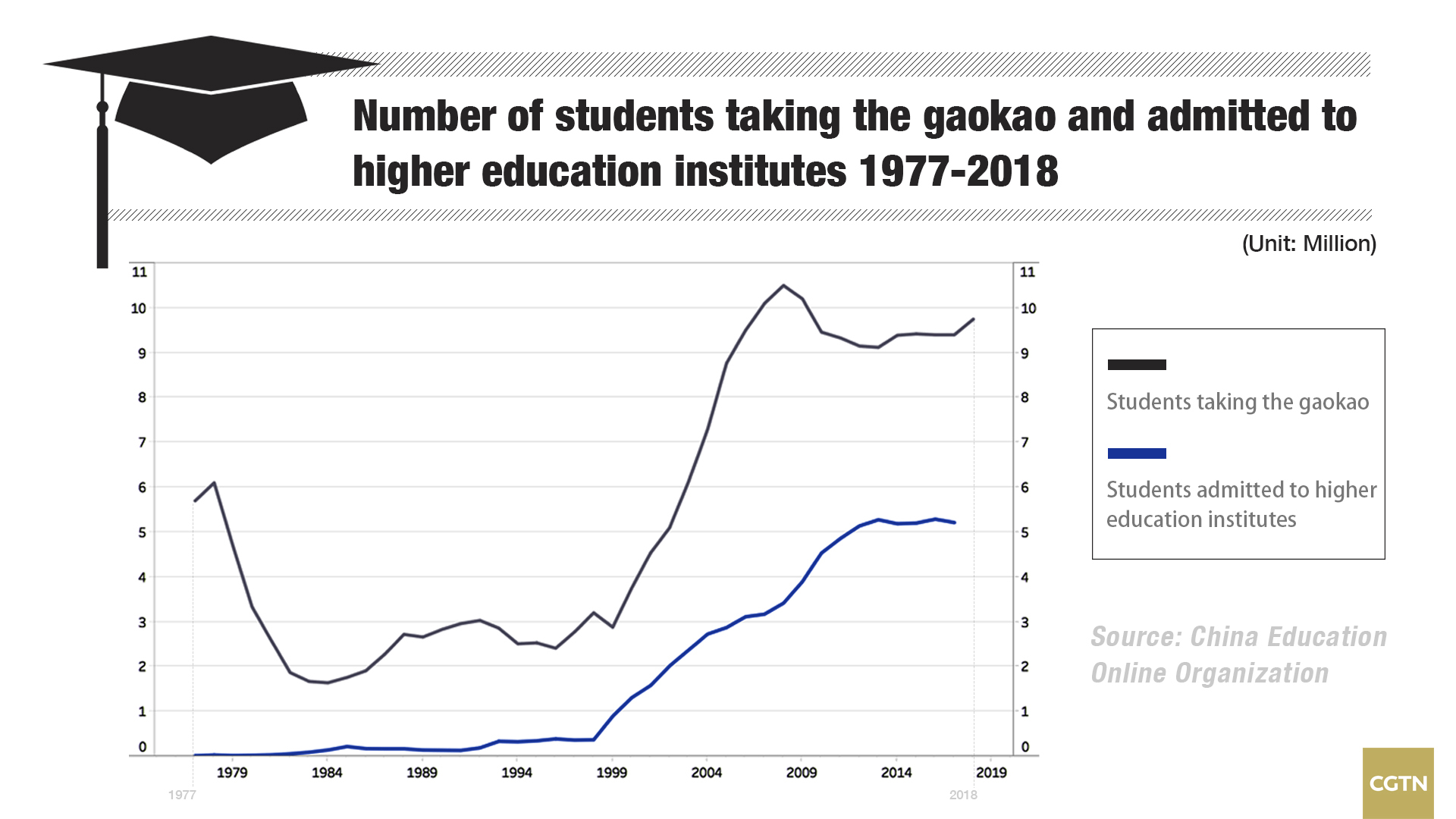
The competition in the Gaokao is extremely intense, with over 10 million students taking the exam annually. Only a small percentage gain admission to top-tier universities like Peking University or Tsinghua University. The pressure to perform well is immense, leading to long study hours, private tutoring, and high stress levels among students. The exam's difficulty and low acceptance rates make it one of the toughest academic challenges globally.
See AlsoAn Introduction to Chinese Dialects| Year | Total Test-Takers | Admission Rate (%) |
|---|---|---|
| 2023 | 12.91 million | ~40% (4-year universities) |
| 2022 | 11.93 million | ~38% |
What Are the Key Challenges of the Gaokao?
The biggest challenges include the vast syllabus, time constraints, and high difficulty level of questions. Students must memorize extensive content and apply critical thinking under pressure. Additionally, regional disparities in education quality can affect performance, as students from rural areas often have fewer resources compared to those in urban centers. The mental toll of preparing for the Gaokao is also significant, with many students experiencing anxiety and burnout.
| Challenge | Impact |
|---|---|
| Extensive Syllabus | Requires years of preparation |
| Time Pressure | Difficult to complete all sections |
| Regional Inequality | Rural students at a disadvantage |
How Do Students Prepare for the Gaokao?
Preparation for the Gaokao often begins years in advance, with students attending specialized high schools or cram schools (known as Buxibans). A typical study schedule involves 12-16 hours daily, including weekends and holidays. Many students rely on past exam papers, mock tests, and private tutors to improve their scores. Parental expectations and societal pressure further drive students to prioritize Gaokao preparation over other activities.
| Preparation Method | Usage Rate (%) |
|---|---|
| School Classes | 95% |
| Private Tutoring | 60% |
| Mock Exams | 85% |
What Are the Consequences of Gaokao Results?
The outcome of the Gaokao can determine a student's career path, university options, and even social mobility. High scorers gain access to prestigious universities and better job prospects, while low scorers may face limited opportunities or need to retake the exam. The pressure to succeed has led to controversies, including cheating scandals and mental health crises among students.
See AlsoIs Duolingo Accessible: Features for All Users| Score Range | University Tier |
|---|---|
| 600+ | Top-tier (e.g., Peking, Tsinghua) |
| 500-599 | Mid-tier (provincial universities) |
| Below 500 | Vocational colleges or retakes |
How hard is the Chinese college entrance exam?
What is the Chinese College Entrance Exam (Gaokao)?
The Chinese College Entrance Exam, known as the Gaokao, is a standardized test taken by millions of students annually to determine admission into Chinese universities. It is one of the most competitive and high-stakes exams globally, covering subjects like:
- Chinese language and literature
- Mathematics
- English
- Science (Physics, Chemistry, Biology) or Humanities (History, Geography, Political Science), depending on the student's track.
How Difficult is the Gaokao Compared to Other Exams?
The Gaokao is widely regarded as more challenging than many Western standardized tests like the SAT or A-levels due to its:
See AlsoDuolingo Max Price: The Comprehensive Guide for 2025- Extensive syllabus covering years of material in depth.
- Time pressure, with some sections requiring rapid problem-solving.
- High competition, as top-tier universities accept only the highest scorers.
What Makes the Gaokao So Stressful for Students?
The pressure surrounding the Gaokao stems from several factors, including:
- Family expectations, as many parents view the exam as the sole path to success.
- Limited university slots, especially at prestigious institutions like Peking or Tsinghua University.
- Intense preparation, often involving years of tutoring and grueling study schedules.
How Do Students Prepare for the Gaokao?
Preparation for the Gaokao is a years-long process, with students typically:
- Attending extra classes or cram schools after regular school hours.
- Completing countless practice exams to master time management.
- Sacrificing leisure activities to focus solely on studying.
What Are the Consequences of Failing the Gaokao?
While failing the Gaokao doesn’t mean the end of opportunities, it can lead to:
- Limited university options, often relegating students to lower-tier institutions.
- Social stigma, as high scores are seen as a measure of intelligence and diligence.
- Alternative paths, such as vocational schools or retaking the exam the following year.
What score do you need to pass gaokao?
What is the Gaokao Passing Score?
The Gaokao passing score varies by province and year, as each region sets its own minimum requirements. Generally, the passing score is determined by the cutoff marks for admission into higher education institutions. Below are key points:
- Provincial differences: Some provinces may require a score as low as 150 out of 750, while others demand higher thresholds.
- Tier classification: Scores are categorized into tiers (e.g., Tier 1, Tier 2), with Tier 1 being the most competitive.
- Subject weightage: Certain subjects, like Chinese and Mathematics, heavily influence the passing criteria.
How is the Gaokao Passing Score Determined?
The Gaokao passing score is influenced by multiple factors, including regional education policies and university quotas. Here’s how it works:
- Provincial education bureaus set the minimum scores based on annual exam difficulty and student performance.
- University admission quotas play a role, as competitive regions may raise passing thresholds.
- Historical data is analyzed to maintain consistency in scoring standards.
What is the Minimum Gaokao Score for University Admission?
The minimum Gaokao score for university admission depends on the institution's tier and location. Key details include:
- Tier 1 universities often require scores above 600 out of 750.
- Tier 2 universities may accept scores between 450 and 550.
- Vocational colleges typically admit students with scores as low as 150-200.
Does the Gaokao Passing Score Change Every Year?
Yes, the Gaokao passing score fluctuates annually due to varying factors. Here’s why:
- Exam difficulty: Harder exams may result in lower passing scores.
- Student performance: Higher average scores can lead to increased cutoff marks.
- Policy adjustments: Changes in education policies may impact scoring standards.
How to Check the Gaokao Passing Score for Your Province?
To find the Gaokao passing score for your province, follow these steps:
- Visit the provincial education bureau’s official website for the latest announcements.
- Check with your school, as they often receive updates directly from authorities.
- Review past years’ data to estimate trends and expectations.
Who got the highest gaokao score ever?

Who Achieved the Highest Gaokao Score in History?
The highest Gaokao score ever recorded was achieved by Wang Danyang from Shandong Province in 2004, with a near-perfect score of 749 out of 750. Her exceptional performance in all subjects, particularly in Mathematics and Science, set a national benchmark.
- Wang Danyang scored 749/750, missing just one point in Chinese language.
- Her achievement remains unmatched, making her a legend in Gaokao history.
- The Gaokao is notoriously difficult, with average scores far below her record.
What Subjects Did the Highest Scorer Excel In?
Wang Danyang demonstrated extraordinary proficiency in STEM subjects, particularly Mathematics, where she scored full marks. Her balanced mastery of Chinese, English, and Science contributed to her historic result.
- Mathematics: Perfect score (150/150).
- Science: Near-perfect performance.
- Languages: Minor deduction in Chinese (149/150).
How Does the Gaokao Scoring System Work?
The Gaokao evaluates students on a 750-point scale, covering core subjects like Chinese, Mathematics, English, and either Science or Humanities. Each subject has a maximum score, and cumulative performance determines rankings.
- Chinese, Math, and English are mandatory (150 points each).
- Science/Humanities adds 300 points (combined subjects).
- Bonus points are rare, making perfect scores extremely difficult.
Why Is Wang Danyang's Record Still Unbroken?
Her score remains unbeaten due to the Gaokao's extreme difficulty and the intense competition among millions of students annually. Even minor errors can prevent perfect or near-perfect results.
- The exam's complexity and time constraints limit high scores.
- Psychological pressure affects many top-performing students.
- Wang’s consistent precision across all subjects is unparalleled.
What Impact Did Wang Danyang's Achievement Have?
Her record elevated educational standards in China, inspiring students to strive for excellence. Universities and media celebrated her as a model of academic dedication.
- She gained admission to Peking University, China’s top institution.
- Her story motivated reforms in Gaokao preparation strategies.
- Media coverage highlighted the importance of holistic learning.
Frequently Asked Questions (FAQ)
What is the Gaokao exam in China?
The Gaokao, or National Higher Education Entrance Examination, is China's standardized university entrance exam. It is one of the most challenging and high-stakes tests in the world, taken by millions of students annually. The exam covers subjects like Chinese, Mathematics, English, and either Sciences or Humanities, depending on the student's chosen track. Performance on the Gaokao largely determines university admission and future career prospects, making it a pivotal moment in a Chinese student's life.
How difficult is the Gaokao compared to other exams?
The Gaokao is widely regarded as one of the most rigorous exams globally due to its length, complexity, and competitiveness. Unlike standardized tests in other countries, such as the SAT or A-Levels, the Gaokao requires years of intense preparation and covers a broader range of subjects in greater depth. The pressure to perform well is immense, as top scores are often required for admission into China's elite universities, like Peking or Tsinghua University.
What are the consequences of failing the Gaokao?
While failing the Gaokao doesn't mean the end of a student's academic journey, it significantly limits their options. Those who perform poorly may only qualify for lower-tier universities or vocational schools, which can affect their career opportunities. Some students choose to retake the exam the following year, enduring another year of preparation. The societal and familial pressure to succeed can also lead to emotional stress, making the Gaokao a deeply consequential event.
How do Chinese students prepare for the Gaokao?
Preparation for the Gaokao often begins years in advance, with students dedicating countless hours to studying and attending extra tutoring sessions. Many schools implement a strict schedule, including early-morning classes and late-night study sessions. Students frequently practice with past exam papers and memorize vast amounts of material. The process is highly competitive and exhausting, with families often investing heavily in education resources to give their children an edge.
Leave a Reply
Related Posts