
Chinese Social Media: WeChat – An Introduction

WeChat, developed by Tencent, is China’s most influential social media platform, blending messaging, social networking, and mobile payments into a single app. Launched in 2011, it has grown into an indispensable tool for over a billion users, reshaping daily communication, business, and even government services. Unlike Western platforms, WeChat integrates features like Moments, Mini Programs, and WeChat Pay, creating a seamless digital ecosystem. Its super app model sets it apart, offering everything from ride-hailing to online shopping. As China’s digital landscape evolves, WeChat remains at the forefront, reflecting the country’s tech innovation and societal shifts. This introduction explores its key features, impact, and unique role in modern Chinese life.
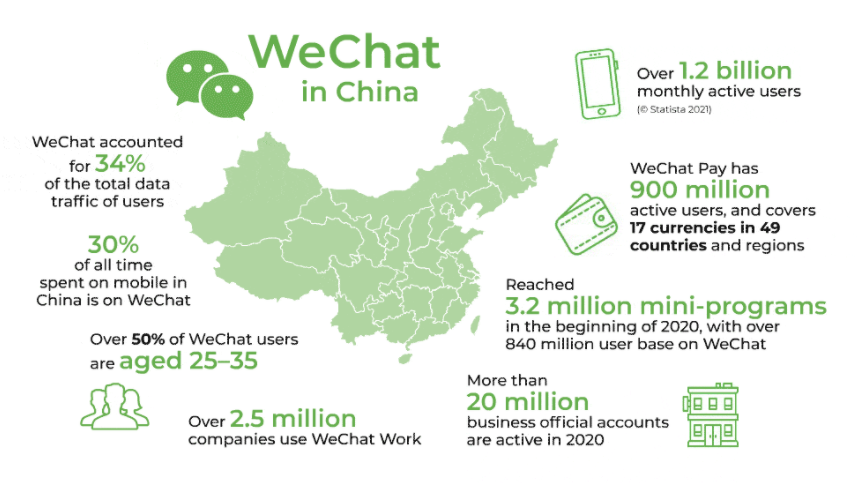
WeChat, known as Weixin (微信) in China, is a multi-purpose messaging, social media, and mobile payment app developed by Tencent. Launched in 2011, it has grown into one of the world's largest standalone mobile apps, with over 1.2 billion monthly active users. Unlike Western platforms like Facebook or WhatsApp, WeChat integrates social networking, e-commerce, payments, and government services into a single ecosystem. Its super app model makes it indispensable in daily Chinese life, offering features like Moments (social feed), Mini Programs (light apps), and WeChat Pay.
---
See AlsoHSK vs TOCFL - Which Chinese Language Test Should I Take?1. The Evolution of WeChat: From Messaging to a Super App
WeChat started as a simple messaging app but rapidly expanded into a super app by adding features like voice messaging, video calls, and Moments (a social feed). Tencent leveraged its QQ user base to grow WeChat, and by 2013, it introduced WeChat Pay, revolutionizing mobile payments in China. Today, it hosts Mini Programs (lightweight apps within WeChat), official accounts for businesses, and even government services, making it a one-stop platform for communication, commerce, and public services.
| Year | Milestone |
|---|---|
| 2011 | Launch of WeChat as a messaging app |
| 2012 | Introduction of Moments (social feed) |
| 2013 | WeChat Pay launched |
| 2017 | Mini Programs introduced |
| 2020s | Integration of government and health services |
---
2. Key Features of WeChat
WeChat's success lies in its all-in-one functionality. Key features include:
- Messaging: Text, voice, and video calls.
- Moments: A Facebook-like social feed for sharing updates.
- WeChat Pay: A digital wallet for peer-to-peer transfers, online/offline payments, and bill splitting.
- Mini Programs: Light apps (e.g., Didi, Meituan) without downloads.
- Official Accounts: For brands, media, and services to engage users.
| Feature | Use Case |
|---|---|
| WeChat Pay | Mobile payments, QR code transactions |
| Mini Programs | E-commerce, ride-hailing, food delivery |
| Official Accounts | Brand marketing, customer service |
---
3. WeChat's Role in Chinese Society
WeChat is deeply embedded in Chinese daily life. It’s used for:
- Communication: Replacing SMS and calls.
- Commerce: From street vendors to luxury brands via QR codes.
- Social Credit: Linked to government ID systems for public services.
- Work: WeChat Work (Enterprise WeChat) for corporate communication.
Its closed ecosystem aligns with China’s internet regulations, enabling censorship and data surveillance.
| Aspect | Impact |
|---|---|
| Social | Primary platform for networking |
| Economic | Drives cashless society |
| Political | Tool for government control |
---
See AlsoHow and why to learn and teach Chinese through gamesUnlike Facebook or WhatsApp, WeChat combines social media, payments, and services in one app. Key differences:
- Integration: No need for separate apps (e.g., Uber, Venmo).
- Regulation: Operates under China’s Great Firewall, with heavy censorship.
- Monetization: Brands use Mini Programs/Official Accounts for sales, not ads.
| Platform | Primary Use |
|---|---|
| All-in-one (social, payments, services) | |
| Social networking + ads | |
| Messaging only |
---
5. Privacy and Security Concerns
WeChat faces criticism for:
- Data collection: Tracks user behavior for AI-driven services.
- Censorship: Blocks sensitive topics (e.g., Tiananmen, Tibet).
- Surveillance: Linked to China’s Social Credit System.
While convenient, users trade privacy for functionality, as Tencent complies with government data requests.
| Issue | Detail |
|---|---|
| Censorship | Automated keyword filtering |
| Data Sharing | User data accessible to authorities |
Is WeChat blocked in the USA?
Is WeChat Currently Blocked in the USA?
As of now, WeChat is not completely blocked in the USA, but it has faced restrictions. In 2020, the U.S. government attempted to ban the app due to national security concerns, but court rulings prevented a full ban. Users can still download and use WeChat, though certain functionalities may be limited.
- 2020 Executive Order: The Trump administration sought to ban WeChat over data privacy fears.
- Court Injunctions: Federal judges blocked the ban, allowing the app to remain available.
- Current Status: WeChat remains downloadable but under scrutiny for potential risks.
Why Was WeChat Almost Banned in the USA?
The U.S. government raised concerns about data security and censorship linked to WeChat's parent company, Tencent. Officials feared user data could be accessed by the Chinese government, posing a threat to national security.
- Data Privacy: Allegations of data being shared with Chinese authorities.
- Censorship: Concerns over content moderation favoring Chinese policies.
- Geopolitical Tensions: Part of broader U.S.-China tech disputes.
How Does the WeChat Ban Affect Users in the USA?
While the app remains accessible, the uncertainty has impacted both individual users and businesses relying on WeChat for communication and commerce.
- Personal Use: Chinese-Americans and expats use it to stay connected with family.
- Business Operations: Companies engaging with Chinese partners depend on WeChat.
- Future Risks: Potential disruptions if stricter bans are enforced.
What Are the Alternatives to WeChat in the USA?
Due to the controversy, some users have explored alternatives for messaging and payments.
- Messaging: WhatsApp, Signal, and Telegram offer secure communication.
- Payments: Venmo, PayPal, and Zelle serve as substitutes for WeChat Pay.
- Social Media: Facebook and Instagram provide similar networking features.
Could WeChat Face a Full Ban in the Future?
The possibility remains if U.S.-China relations worsen or if new evidence of security risks emerges.
- Political Factors: Changes in administration could influence decisions.
- Legal Battles: Ongoing court cases may shape the app's future.
- User Backlash: Public and corporate pressure could sway policies.
Why do so many Chinese people use WeChat?
Why is WeChat the Dominant Messaging App in China?
WeChat's dominance in China stems from its multifunctional ecosystem, which integrates messaging, social media, and financial services. Unlike Western apps, WeChat combines essential daily functions into one platform, reducing the need for multiple apps. Key reasons include:
- Government support: Local regulations favor domestic apps, limiting competition from foreign platforms like WhatsApp or Facebook.
- Seamless integration: Users can chat, pay bills, book appointments, and shop without leaving the app.
- Cultural adaptation: Features like red packets (hongbao) align with Chinese traditions, boosting engagement.
How Does WeChat Pay Influence Its Popularity?
WeChat Pay revolutionized digital transactions in China, making cashless payments ubiquitous. Its convenience and security have made it indispensable:
- Widespread acceptance: From street vendors to luxury stores, nearly every business accepts WeChat Pay.
- Peer-to-peer transfers: Splitting bills or sending money is instant and fee-free.
- Mini-programs: In-app services like ride-hailing or food delivery streamline payments within the ecosystem.
WeChat’s social features foster deep connections, blending personal and professional networks:
- Moments: A timeline for sharing updates, photos, and articles, similar to Facebook but with privacy controls.
- Group chats: Used for family, work, and hobby communities, often replacing SMS or email.
- QR code networking: Scanning codes to add contacts or join groups simplifies real-world interactions.
Why Do Businesses Rely on WeChat?
Companies leverage WeChat for marketing, sales, and customer service, thanks to its all-in-one infrastructure:
- Official Accounts: Brands publish content, offer support, and process orders directly within WeChat.
- Mini-apps: Lightweight apps for e-commerce or loyalty programs reduce development costs.
- Targeted advertising: Data analytics enable precise ad placement based on user behavior.
How Does WeChat Cater to Chinese User Preferences?
The app’s design prioritizes localized experiences, aligning with Chinese digital habits:
- Language and UI: Fully Mandarin-centric interface with minimal reliance on globalized designs.
- High-context communication: Features like voice messaging and stickers suit fast-paced, expressive interactions.
- Offline-to-online (O2O) services: Integration with local merchants bridges physical and digital worlds.
WeChat is a multifunctional social media and messaging app developed by Tencent, primarily used in China but with a global user base. It combines features like messaging, social networking, mobile payments, and mini-programs into a single platform. Unlike traditional social media apps, WeChat serves as an all-in-one digital ecosystem for communication, commerce, and content sharing.
- Messaging: Supports text, voice, video calls, and group chats.
- Moments: A timeline feature for sharing updates, photos, and videos.
- WeChat Pay: Integrated mobile payment system for transactions.
WeChat functions as a hybrid social media platform, blending communication tools with content-sharing features. Users can post on Moments, follow official accounts (brands or influencers), and interact via stickers and reactions. Its closed-network approach prioritizes privacy, as strangers can't view posts unless connected as friends.
- Moments: Similar to Facebook's News Feed but limited to friends.
- Official Accounts: Brands and media outlets share news or promotions.
- Discover Tab: Includes features like Channels for short videos.
WeChat's unique features set it apart from other social networks. Beyond messaging, it offers mini-programs (light apps within WeChat), WeChat Pay, and location-based services. Its super-app model eliminates the need for multiple standalone apps.
- Mini-Programs: Enable in-app services like shopping or ride-hailing.
- WeChat Pay: Facilitates peer-to-peer and merchant payments.
- QR Code Integration: Used for adding friends, payments, and promotions.
WeChat's user base spans individuals, businesses, and government entities, primarily in China but also among overseas Chinese communities. Its versatility makes it essential for daily life, from chatting to paying bills.
- Consumers: For messaging, shopping, and financial services.
- Businesses: Leverage official accounts and mini-programs for marketing.
- Expatriates: Use it to stay connected with contacts in China.
Unlike Facebook or Twitter, WeChat emphasizes privacy and utility over public content virality. It lacks ads in Moments (unlike Facebook's News Feed) and focuses on integrated services rather than pure social networking.
- Privacy: No public hashtags or trending topics.
- Functionality: Combines WhatsApp, PayPal, and Instagram-like features.
- Monetization: Businesses rely on mini-programs vs. traditional ads.
Frequently Asked Questions (FAQ)
What is WeChat and how does it work?
WeChat is a multifunctional social media platform developed by Tencent, primarily used in China but with a global user base. It combines features like messaging, social networking, mobile payments, and even mini-programs for services ranging from food delivery to banking. Users can send texts, voice messages, make video calls, share moments (similar to Facebook posts), and use WeChat Pay for transactions. Its all-in-one ecosystem makes it indispensable for daily life in China.
Why is WeChat so popular in China?
WeChat's popularity stems from its versatility and deep integration into Chinese society. Unlike Western apps that specialize in one function, WeChat consolidates communication, social media, e-commerce, and financial services into a single platform. Its localized features, such as QR code scanning for payments and official accounts for businesses, cater perfectly to Chinese users. Additionally, government support and the lack of competition from global platforms like Facebook or WhatsApp have solidified its dominance.
Can WeChat be used outside of China?
Yes, WeChat can be used outside China, but its functionality may be limited compared to within the country. While core features like messaging and voice calls remain available, services tied to Chinese infrastructure—such as WeChat Pay or certain mini-programs—may not work seamlessly without a Chinese bank account or phone number. However, it remains a vital tool for connecting with Chinese contacts or businesses, especially for expats or international companies.
Is WeChat safe to use for privacy and data security?
WeChat's safety is a topic of debate. While it employs end-to-end encryption for personal chats, the app is subject to Chinese data laws, meaning user data may be accessible to authorities. Censorship is also enforced, with keywords or content deemed sensitive being blocked. For users outside China, privacy concerns revolve around data storage and compliance with local regulations. It’s advisable to review privacy settings and avoid sharing sensitive information on the platform.
Leave a Reply
Related Posts