
Best Chinese Movies to Learn Chinese

Learning Chinese can be an exciting journey, especially when paired with the immersive experience of watching films. Chinese movies offer a rich blend of cultural insights, authentic dialogue, and engaging storytelling, making them ideal tools for language learners. From classic martial arts epics to modern dramas, these films expose viewers to diverse accents, slang, and everyday expressions. By watching subtitled movies, learners can improve listening skills, expand vocabulary, and grasp nuances of tone and context. This article highlights the best Chinese movies to aid your language learning, whether you're a beginner or advanced student. Discover how cinema can make mastering Chinese both enjoyable and effective.
Best Chinese Movies to Learn Chinese
1. Why Watch Chinese Movies to Learn the Language?
Watching Chinese movies is an excellent way to immerse yourself in the language. Films provide authentic dialogue, cultural context, and exposure to different accents and slang. By listening to native speakers, you improve your listening comprehension and pick up natural speech patterns. Additionally, subtitles can help you connect spoken words with their written forms, reinforcing vocabulary and grammar.
| Benefit | Description |
|---|---|
| Authentic Language | Hear real-life conversations and slang. |
| Cultural Insight | Understand traditions and societal norms. |
| Improved Listening | Enhance comprehension of spoken Chinese. |
2. Top Mandarin-Learning Movies for Beginners
For beginners, it's best to start with films that have clear pronunciation and simple dialogue. Movies like The Farewell (2019) and Eat Drink Man Woman (1994) are great choices. These films use everyday vocabulary and relatable scenarios, making them easier to follow. Animated films like Big Fish & Begonia (2016) also provide slower speech and expressive visuals.
See Also10 Ways to Use RedNote (Xiaohongshu) to Learn Chinese Like a Pro| Movie | Why It's Good for Beginners |
|---|---|
| The Farewell | Simple dialogue, emotional storytelling. |
| Eat Drink Man Woman | Family themes, daily life vocabulary. |
| Big Fish & Begonia | Slower speech, visual storytelling. |
3. Advanced Chinese Movies for Language Mastery
Advanced learners should challenge themselves with films featuring complex dialogue and regional dialects. Movies like Crouching Tiger, Hidden Dragon (2000) and In the Mood for Love (2000) offer poetic language and deeper cultural themes. Historical dramas like The Last Emperor (1987) introduce formal speech and historical terminology.
| Movie | Why It's Good for Advanced Learners |
|---|---|
| Crouching Tiger, Hidden Dragon | Poetic dialogue, classical references. |
| In the Mood for Love | Nuanced conversations, emotional depth. |
| The Last Emperor | Historical context, formal language. |
4. How to Maximize Learning While Watching
To get the most out of watching Chinese movies, use active learning techniques. Watch with Chinese subtitles first, then without subtitles to test comprehension. Pause and repeat difficult phrases, and keep a vocabulary notebook. Discussing the film in Chinese with a language partner can also reinforce learning.
| Technique | How It Helps |
|---|---|
| Chinese Subtitles | Connects spoken and written language. |
| Pause & Repeat | Improves pronunciation and retention. |
| Vocabulary Notes | Builds a personal word bank. |
5. Popular Chinese Movie Genres for Language Learning
Different genres offer unique learning opportunities. Romantic dramas like Our Times (2015) focus on interpersonal communication, while crime thrillers like Infernal Affairs (2002) introduce fast-paced dialogue. Comedies like Kung Fu Hustle (2004) help learners understand humor and colloquial speech.
See AlsoLearn Chinese implicitly through exposure with a seasoning of explicit instruction| Genre | Learning Benefit |
|---|---|
| Romantic Drama | Emotional, conversational language. |
| Crime Thriller | Fast dialogue, slang, and idioms. |
| Comedy | Colloquial expressions and humor. |
Does watching Chinese movies help you learn Chinese?
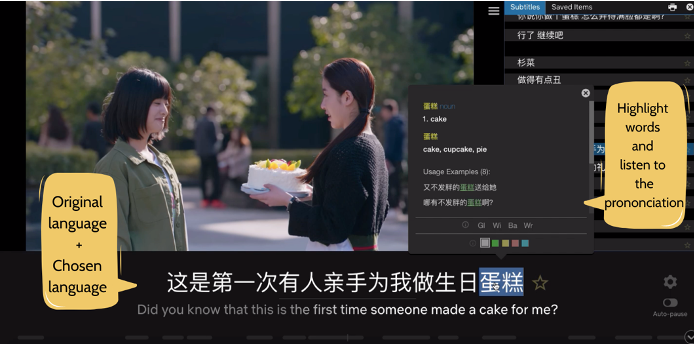
How Does Watching Chinese Movies Improve Language Skills?
Watching Chinese movies can significantly enhance language learning by exposing learners to authentic dialogue, pronunciation, and cultural context. Here’s how:
- Listening comprehension: Regular exposure to native speakers helps train the ear to recognize tones and speech patterns.
- Vocabulary expansion: Movies introduce colloquial phrases and slang not found in textbooks.
- Cultural immersion: Understanding gestures, humor, and social norms deepens language retention.
What Types of Chinese Movies Are Best for Learning?
Choosing the right genre can maximize learning efficiency. Focus on films with:
See AlsoCan a 13 Year Old Learn Chinese in China?- Clear dialogue: Romantic comedies or family dramas often use everyday language.
- Subtitles: Dual subtitles (Chinese and English) help bridge comprehension gaps.
- Modern settings: Contemporary films reflect current slang and societal trends.
Can Beginners Learn Chinese Just by Watching Movies?
While movies are a supplementary tool, beginners should combine them with structured study:
- Basic foundation: Learn pinyin and common phrases first to avoid overwhelm.
- Repetition: Rewatch scenes with subtitles to reinforce understanding.
- Active practice: Pause to mimic pronunciation or note unfamiliar words.
How to Actively Learn While Watching Chinese Films?
Transform passive viewing into an active learning session with these strategies:
- Shadowing: Repeat lines aloud to practice intonation and fluency.
- Vocabulary lists: Jot down new words and review them later.
- Discussion: Join forums or language groups to analyze plots and dialogue.
What Are the Limitations of Learning Chinese Through Movies?
Despite benefits, relying solely on films has drawbacks:
See AlsoFriends in Chinese - Complete Guide To The Famous Sitcom- Regional accents: Dialects (e.g., Cantonese) may confuse Mandarin learners.
- Fast speech: Informal conversations can be hard to decipher without pauses.
- Lack of structure: Movies don’t teach grammar rules systematically.
What should I watch to practice Chinese?

Chinese TV Shows for Language Practice
Watching Chinese TV shows is an excellent way to immerse yourself in the language. These shows often use everyday vocabulary and natural speech patterns, making them ideal for learners. Here are some top recommendations:
- Ode to Joy (欢乐颂) – A drama about modern urban life, great for learning conversational Mandarin.
- The Untamed (陈情令) – A fantasy series with clear dialogue and cultural references.
- Meteor Garden (流星花园) – A popular romance drama with simple language for beginners.
Chinese Movies to Improve Listening Skills
Chinese films expose you to different accents and dialects while keeping you engaged. Here are three must-watch movies:
- Crouching Tiger, Hidden Dragon (卧虎藏龙) – A classic with poetic dialogue and cultural depth.
- The Wandering Earth (流浪地球) – A sci-fi blockbuster with clear Mandarin pronunciation.
- Hi, Mom (你好,李焕英) – A heartfelt comedy with relatable, everyday language.
Chinese Cartoons and Animations for Beginners
Animated content is perfect for beginners due to its slower pacing and simpler vocabulary. Try these:
- Pleasant Goat and Big Big Wolf (喜羊羊与灰太狼) – A fun, easy-to-follow children’s series.
- Nezha (哪吒之魔童降世) – A visually stunning film with engaging dialogue.
- Boonie Bears (熊出没) – A lighthearted show with repetitive phrases for memorization.
Chinese YouTube Channels for Daily Practice
YouTube channels offer bite-sized lessons and real-life language usage. Here are three top picks:
- Learn Chinese with Yangyang – Short, clear lessons on grammar and vocabulary.
- Mandarin Corner – Real-life conversations with subtitles.
- ChinesePod – Structured lessons for all proficiency levels.
Chinese News and Documentaries for Advanced Learners
For advanced learners, news and documentaries provide formal language and specialized vocabulary. Consider these:
- CCTV News (中国中央电视台) – Official news broadcasts with standard Mandarin.
- A Bite of China (舌尖上的中国) – A documentary series about Chinese cuisine.
- The Story of China (中国通史) – A historical series with rich vocabulary.
How to learn Chinese from movies?

Choosing the Right Chinese Movies for Learning
Selecting the appropriate movies is crucial for effective learning. Focus on films with clear pronunciation, modern vocabulary, and subtitles to enhance comprehension. Here’s how to pick the best ones:
- Genre matters: Romantic comedies and dramas often use everyday language, while action films may rely less on dialogue.
- Subtitles availability: Opt for movies with dual subtitles (Chinese and your native language) to compare translations.
- Cultural relevance: Contemporary films reflect current slang and societal trends, making them more practical.
Using Subtitles Strategically
Subtitles are a powerful tool if used correctly. They bridge the gap between listening and understanding. Follow these steps:
- First watch: Use native-language subtitles to grasp the plot.
- Second watch: Switch to Chinese subtitles to connect spoken words with written characters.
- Third watch: Disable subtitles entirely to test your listening skills.
Active Listening and Repetition Techniques
Passive watching won’t yield results. Engage actively with the content to reinforce learning:
- Pause and repeat: Mimic characters’ lines to practice pronunciation and intonation.
- Shadowing: Speak along with the dialogue in real-time to improve fluency.
- Note-taking: Jot down unfamiliar words or phrases for later review.
Expanding Vocabulary Through Context
Movies provide contextual learning, helping you remember words naturally. Here’s how to maximize vocabulary acquisition:
- Identify key phrases: Highlight recurring terms related to emotions, greetings, or daily life.
- Use flashcards: Create digital or physical cards for new words, including example sentences from the film.
- Contextual guessing: Infer meanings from scenes before checking subtitles or dictionaries.
Incorporating Cultural Nuances
Understanding culture deepens language proficiency. Movies expose you to idioms, gestures, and social norms. Apply these tips:
- Observe interactions: Note how characters address different people (formal vs. informal).
- Research cultural references: Look up historical or pop culture mentions to avoid misunderstandings.
- Practice scenarios: Reenact dialogues to internalize cultural context alongside language.
What is the best version of Chinese to learn?
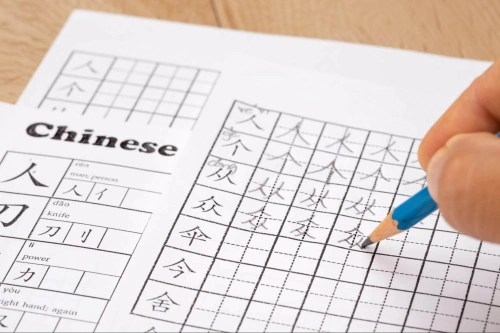
Mandarin vs. Cantonese: Which One Should You Learn?
The choice between Mandarin and Cantonese depends on your goals. Mandarin is the most widely spoken Chinese dialect, with over 1 billion speakers, and is the official language of China, Taiwan, and Singapore. Cantonese, spoken mainly in Guangdong, Hong Kong, and Macau, is valuable for business and cultural connections in those regions.
- Mandarin is easier to learn due to simpler tones and widespread resources.
- Cantonese has more tones (6–9) and is harder for beginners.
- Mandarin is more useful for travel, business, and government work in China.
Simplified vs. Traditional Chinese Characters
Another key decision is whether to learn Simplified or Traditional Chinese characters. Simplified characters are used in mainland China and Singapore, while Traditional characters are standard in Taiwan, Hong Kong, and Macau.
- Simplified characters have fewer strokes and are easier to write.
- Traditional characters retain historical and cultural depth.
- Your choice should align with where you plan to use the language.
Usefulness of Learning Mandarin for Business
Mandarin is the dominant language in global business, especially in China's booming economy. Learning it opens doors to career opportunities in trade, finance, and diplomacy.
- China is the world's second-largest economy, making Mandarin highly valuable.
- Many multinational companies seek Mandarin speakers.
- Government and international organizations often require Mandarin proficiency.
Cultural Reasons to Learn Cantonese
If you're interested in Hong Kong cinema, music, or cuisine, Cantonese might be more rewarding. It’s the primary language in Hong Kong's vibrant cultural scene.
- Many classic kung fu films and Cantopop songs are in Cantonese.
- Hong Kong remains a major hub for entertainment and media.
- Learning Cantonese helps connect with diaspora communities worldwide.
Which Chinese Dialect Is Easier for English Speakers?
Mandarin is generally considered easier for English speakers due to its straightforward grammar and abundant learning resources.
- Mandarin has only four main tones, while Cantonese has six to nine.
- Pinyin (Mandarin romanization) is more standardized than Cantonese romanization.
- Mandarin courses and apps are more widely available.
Frequently Asked Questions (FAQ)
What are the best Chinese movies for beginners learning Mandarin?
For beginners, it's essential to choose movies with clear pronunciation, simple dialogue, and engaging stories. Some excellent options include Crouching Tiger, Hidden Dragon (2000) for its poetic yet straightforward language, or The Road Home (1999), which features slow-paced, emotional storytelling. Animated films like Big Fish & Begonia (2016) are also great, as they often use basic vocabulary and expressive visuals to aid comprehension.
How can watching Chinese movies improve my language skills?
Watching Chinese movies exposes you to authentic pronunciation, cultural context, and everyday expressions that textbooks often miss. By listening to native speakers, you'll improve your listening comprehension and pick up on natural intonation. Subtitles can help bridge gaps, but try switching between English and Chinese subtitles to reinforce learning. Repetition is key—rewatch scenes to catch nuances and practice shadowing (repeating lines aloud).
Are there any modern Chinese movies suitable for intermediate learners?
Yes! Intermediate learners should explore contemporary films like Dying to Survive (2018), which blends drama with colloquial Mandarin, or Hi, Mom (2021), a comedy-drama with relatable dialogue. For thrillers, The Wandering Earth (2019) offers technical vocabulary and fast-paced speech. These movies strike a balance between challenge and accessibility, helping learners expand their vocabulary and grasp cultural references.
What should I avoid when using movies to learn Chinese?
Avoid films with heavy dialects or slang-heavy scripts, as they can confuse beginners. Historical dramas like The Empress of China may use archaic language, while gangster movies often feature uncommon jargon. Also, don’t rely solely on subtitles—over time, try watching without them to test comprehension. Lastly, skip passively watching; instead, take notes on new words and pause to mimic pronunciation for active learning.
Leave a Reply
Related Posts