
Why Does Duolingo Stop At B2 Level: A Closer Look in 2025


Duolingo, one of the most popular language-learning platforms, has long been praised for its accessibility and gamified approach to education. However, many users have noticed that the app typically caps its courses at the B2 level, leaving advanced learners seeking more. As we move into 2025, this limitation raises important questions about the platform’s goals, its target audience, and the challenges of teaching higher proficiency levels. This article delves into the reasons behind Duolingo’s B2 ceiling, exploring the technical, pedagogical, and market-driven factors that shape its curriculum. By examining these elements, we aim to understand whether this boundary is a limitation or a strategic choice.
Why Does Duolingo Stop At B2 Level: A Closer Look in 2025
Duolingo, one of the most popular language-learning platforms, has long been praised for its accessibility and gamified approach to education. However, many users have questioned why the platform stops at the B2 level of language proficiency. In 2025, this topic has gained even more attention as learners seek to understand the limitations and future potential of the app. This article delves into the reasons behind Duolingo's decision to cap its courses at the B2 level, exploring the challenges, user expectations, and the platform's evolving strategies.
The Definition of B2 Level in Language Learning
The B2 level, as defined by the Common European Framework of Reference for Languages (CEFR), represents an upper-intermediate proficiency. At this stage, learners can understand complex texts, engage in fluent conversations, and express ideas on a variety of topics. However, achieving C1 or C2 levels requires a deeper understanding of nuanced language, advanced grammar, and specialized vocabulary. Duolingo's decision to stop at B2 reflects the platform's focus on general language skills rather than advanced academic or professional proficiency.
See AlsoFocus on initials and finals, not Pinyin spelling| CEFR Level | Description |
|---|---|
| B2 | Upper-intermediate: Can interact with fluency and spontaneity. |
| C1 | Advanced: Can understand a wide range of demanding texts. |
| C2 | Proficient: Can express themselves with precision and subtlety. |
Duolingo's Target Audience and Learning Goals
Duolingo primarily caters to casual learners and those seeking to build a foundational understanding of a language. The platform's gamified approach is designed to make learning fun and engaging, which aligns well with beginners and intermediate learners. However, advanced learners often require specialized content, such as academic writing or industry-specific terminology, which goes beyond Duolingo's current scope. By focusing on the B2 level, Duolingo ensures that its content remains accessible and manageable for the majority of its users.
Technical and Content Challenges in Advancing Beyond B2
Creating content for C1 and C2 levels presents significant challenges. Advanced language learning involves complex sentence structures, cultural nuances, and context-specific vocabulary. Developing such content requires extensive resources, including native speakers, linguistic experts, and advanced AI algorithms. Additionally, maintaining the gamified structure while addressing advanced topics is a difficult balance to achieve. These challenges explain why Duolingo has yet to expand beyond the B2 level.
User Feedback and Demand for Advanced Content
In 2025, user feedback has highlighted a growing demand for advanced language courses. Many learners who have reached the B2 level on Duolingo express frustration at the lack of progression options. While the platform has introduced features like Duolingo Max and AI-driven conversations, these are still limited in scope. The demand for C1 and C2 content suggests that Duolingo may need to reconsider its strategy to retain advanced learners.
See AlsoShould you learn to speak Chinese before you learn Chinese characters?Duolingo's Future Plans and Potential Expansion
As of 2025, Duolingo has hinted at potential expansions to include advanced levels. The platform is investing in AI technology and partnerships with educational institutions to enhance its offerings. However, such expansions require careful planning to ensure that the quality and accessibility of the content are maintained. While the B2 level remains the current cap, future updates may bring C1 and C2 courses to meet the evolving needs of its user base.
| Year | Development |
|---|---|
| 2023 | Introduction of Duolingo Max with AI-driven features. |
| 2024 | Partnerships with universities for specialized content. |
| 2025 | Exploration of advanced C1 and C2 level courses. |
Can Duolingo actually get you to B2?
What is the B2 Level in Language Proficiency?
The B2 level is an upper-intermediate stage in the Common European Framework of Reference for Languages (CEFR). At this level, learners can:
See Also20 tips and tricks to improve your Chinese writing ability- Understand the main ideas of complex texts on both concrete and abstract topics.
- Interact with a degree of fluency and spontaneity that makes regular interaction with native speakers possible without strain.
- Produce clear, detailed text on a wide range of subjects and explain a viewpoint on a topical issue.
How Does Duolingo Structure Its Learning Path?
Duolingo uses a gamified approach to language learning, which includes:
- Short, interactive lessons that focus on vocabulary, grammar, and pronunciation.
- A progression system that unlocks more advanced content as you complete lessons.
- Personalized practice sessions to reinforce previously learned material.
Can Duolingo Teach Advanced Grammar and Vocabulary?
While Duolingo covers a wide range of topics, its ability to teach advanced grammar and vocabulary is limited. Here’s why:
- The platform focuses on foundational and intermediate concepts, often lacking depth for B2-level complexity.
- Advanced grammar structures, such as nuanced subjunctive moods or idiomatic expressions, are rarely covered.
- Vocabulary is often restricted to common words, missing the specialized terms needed for B2 proficiency.
Does Duolingo Provide Enough Speaking and Listening Practice?
Duolingo offers some speaking and listening exercises, but these may not be sufficient for B2 proficiency:
See AlsoWhy manually adding and editing flashcards is good for you- Speaking exercises rely on voice recognition, which may not accurately assess fluency or pronunciation.
- Listening exercises are often short and lack the complexity of real-world conversations.
- There is limited exposure to native speakers or authentic accents, which are crucial for B2-level comprehension.
What Are the Limitations of Duolingo for Reaching B2?
Duolingo has several limitations when it comes to achieving B2 proficiency:
- It lacks in-depth cultural context, which is essential for understanding advanced language use.
- The platform does not provide opportunities for extended writing or speaking practice.
- It is primarily designed for casual learners, not those aiming for advanced proficiency.
What Duolingo score is B2?
What is the Duolingo English Test?
The Duolingo English Test is an online proficiency exam designed to assess a person's English language skills. It is widely accepted by universities, institutions, and organizations as proof of English proficiency. The test evaluates reading, writing, listening, and speaking abilities through adaptive questions and provides a score ranging from 10 to 160.
See AlsoDuolingo Language Challenges: complete guide- The test is adaptive, meaning the difficulty adjusts based on the test-taker's performance.
- It is convenient as it can be taken online from anywhere with a stable internet connection.
- The results are available within 48 hours, making it a quick option for applicants.
What Does the Duolingo Score Represent?
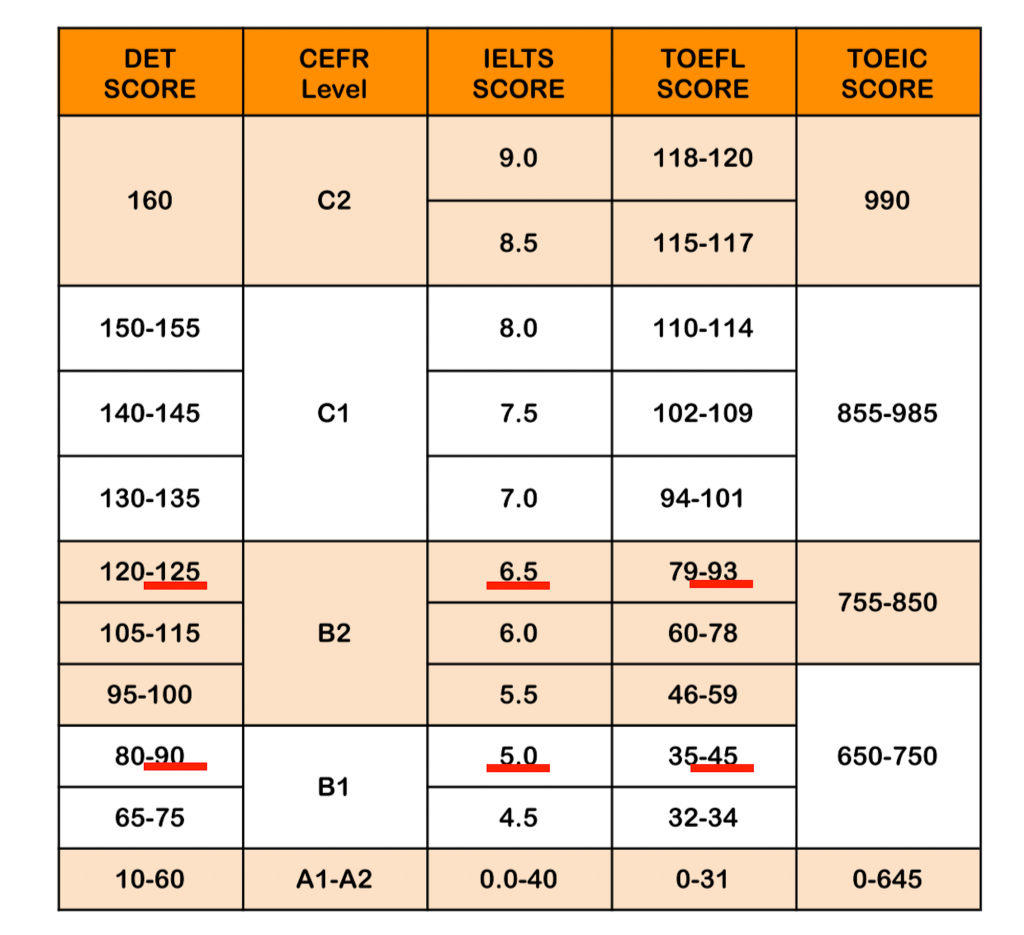
The Duolingo score is a reflection of a test-taker's English proficiency level. It aligns with the Common European Framework of Reference for Languages (CEFR), which is an international standard for language ability. The score is divided into different ranges, each corresponding to a specific CEFR level, such as A1, A2, B1, B2, C1, and C2.
- A score of 10-55 corresponds to A1-A2 (beginner to elementary).
- A score of 60-85 corresponds to B1 (intermediate).
- A score of 90-115 corresponds to B2 (upper-intermediate).
What is the B2 Level in English Proficiency?
The B2 level represents an upper-intermediate level of English proficiency. At this stage, individuals can understand complex texts, engage in detailed conversations, and express ideas clearly. They can also write coherent essays and interact fluently in professional or academic settings.
- B2 level users can understand the main ideas of complex texts.
- They can communicate with native speakers with a degree of fluency.
- They can produce detailed texts on a wide range of topics.
What Duolingo Score is Considered B2?
A Duolingo score between 90 and 115 is considered equivalent to the B2 level on the CEFR scale. This score indicates that the test-taker has a solid grasp of English and can handle most situations that require the language, such as studying in an English-speaking environment or working in an international setting.
- A score of 90-100 indicates a lower B2 level.
- A score of 101-115 indicates a higher B2 level.
- This range is often required for university admissions or professional certifications.
How Does the B2 Level Compare to Other Proficiency Levels?
The B2 level is higher than B1 (intermediate) but lower than C1 (advanced). While B1 users can handle everyday situations, B2 users can engage in more complex tasks, such as debating or writing formal reports. C1 users, on the other hand, can use English fluently and spontaneously in almost any context.
- B1 users can manage routine tasks and simple conversations.
- B2 users can handle complex tasks and detailed discussions.
- C1 users can use English fluently in professional and academic environments.
What is the top 1% of learners on Duolingo?

Who Are the Top 1% of Learners on Duolingo?
The top 1% of learners on Duolingo are the most dedicated and consistent users who achieve exceptional progress in their language learning journey. These individuals stand out due to their:
- High XP scores: They consistently earn a significant amount of XP daily or weekly, often surpassing the average user.
- Streak maintenance: They maintain long streaks, sometimes exceeding hundreds or even thousands of days.
- Advanced proficiency: They complete multiple levels, courses, or even entire language trees, demonstrating mastery.
How Do the Top 1% of Learners Achieve Their Status?
The top 1% of Duolingo learners achieve their status through a combination of strategies and habits:
- Daily practice: They dedicate time every day to learning, even if it's just a few minutes.
- Goal setting: They set clear, achievable goals, such as completing a specific number of lessons or earning a certain amount of XP.
- Utilizing all features: They make use of Duolingo's features like Stories, Leaderboards, and XP boosts to maximize their progress.
What Motivates the Top 1% of Duolingo Learners?
The top 1% of learners are driven by a variety of motivations, including:
- Personal growth: They are passionate about learning new languages and expanding their cultural understanding.
- Competition: Many enjoy the competitive aspect of Duolingo, striving to top Leaderboards and earn badges.
- Career or travel goals: Some are motivated by practical reasons, such as improving job prospects or preparing for travel.
What Challenges Do the Top 1% of Learners Face?
Even the top 1% of Duolingo learners encounter challenges, such as:
- Plateaus: They may experience periods where progress feels slow or stagnant.
- Time management: Balancing daily practice with other responsibilities can be difficult.
- Maintaining motivation: Staying consistent over long periods requires discipline and resilience.
How Can You Join the Top 1% of Duolingo Learners?
To join the top 1% of Duolingo learners, consider the following steps:
- Set a routine: Dedicate a specific time each day to practice.
- Engage with the community: Participate in Duolingo forums or events to stay motivated.
- Track your progress: Use Duolingo's progress tracking tools to monitor your improvement and adjust your strategy as needed.
Frequently Asked Questions From our Community
Why does Duolingo stop at the B2 level?
Duolingo stops at the B2 level because it aligns with the Common European Framework of Reference for Languages (CEFR), which defines B2 as an upper-intermediate level where users can communicate effectively in most situations. At this stage, learners are expected to have a solid grasp of grammar, vocabulary, and conversational skills. Duolingo focuses on building a strong foundation for practical, everyday language use, and progressing beyond B2 would require more specialized, advanced content that may not fit its gamified, user-friendly approach.
What are the limitations of Duolingo at the B2 level?
At the B2 level, Duolingo's limitations become more apparent as learners need more complex and nuanced language skills. The platform excels at teaching vocabulary, basic grammar, and sentence structure, but it struggles to provide advanced conversational practice, cultural context, and specialized vocabulary required for higher proficiency levels. Additionally, Duolingo's automated feedback system may not adequately address the subtleties of advanced language use, such as idiomatic expressions or formal writing.
Can Duolingo help me achieve fluency beyond B2?
While Duolingo is an excellent tool for reaching the B2 level, achieving fluency beyond this point typically requires additional resources. Fluency at higher levels (C1 and C2) demands immersive experiences, such as conversations with native speakers, advanced reading materials, and exposure to real-world language use. Duolingo can serve as a supplementary tool, but learners should consider combining it with other methods like language exchanges, advanced courses, or immersion programs to bridge the gap to full fluency.
Will Duolingo expand beyond the B2 level in the future?
As of 2025, Duolingo has not announced plans to expand beyond the B2 level. The platform continues to focus on improving its existing courses and adding new languages rather than developing advanced-level content. However, Duolingo frequently updates its features and curriculum, so it’s possible that future updates could include higher proficiency levels. For now, learners aiming for C1 or C2 proficiency should explore other resources tailored to advanced language acquisition.
Leave a Reply
Related Posts