
Focus on initials and finals, not Pinyin spelling

When learning Mandarin Chinese, many students focus heavily on Pinyin spelling, often overlooking the crucial elements of initials and finals. While Pinyin provides a helpful romanization system, mastering the distinct sounds of initials (consonants) and finals (vowel combinations) is essential for accurate pronunciation. Mispronunciations often stem from neglecting these foundational components, leading to misunderstandings. By shifting attention to the precise articulation of initials and finals, learners can develop clearer speech and better listening comprehension. This article explores why prioritizing these phonetic building blocks over Pinyin spelling improves fluency and ensures more authentic communication in Mandarin. Understanding these basics lays the groundwork for advanced language proficiency.
Mastering Chinese Pronunciation: Focus on Initials and Finals, Not Pinyin Spelling
Understanding the Role of Initials in Chinese Pronunciation
Initials are the consonant sounds at the beginning of a syllable in Mandarin Chinese. Unlike Pinyin spelling, which is a Romanization system, initials represent the actual phonetic sounds. For example, the initial b in Pinyin is not pronounced like the English b but rather as an unaspirated voiceless bilabial plosive. Mastering these sounds is crucial for accurate pronunciation.
| Initial | Sound Description |
|---|---|
| b | Unaspirated p sound (like spy in English) |
| zh | Retroflex j sound (tongue curled back) |
The Importance of Finals in Accurate Pronunciation
Finals are the vowel and ending sounds in a Mandarin syllable. Unlike Pinyin, which may use familiar letters like a or ou, the actual pronunciation differs. For example, the final ian is pronounced closer to yen rather than ee-an. Focusing on finals ensures clarity and avoids miscommunication.
See AlsoWhy flashcards are great for learning Chinese| Final | Sound Description |
|---|---|
| ai | Pronounced like eye in English |
| ü | Rounded ee sound (like German ü) |
Common Mistakes When Relying Solely on Pinyin
Many learners mispronounce words by following Pinyin spelling too literally. For example, q is not pronounced like English k but as a palatal affricate (similar to ch in cheese). Similarly, x sounds like sh but with the tongue flat. Ignoring initials and finals leads to heavy accents.
| Pinyin Letter | Actual Sound |
|---|---|
| c | Like ts in cats |
| r | Retroflex r (tongue curled) |
How to Practice Initials and Finals Effectively
To improve, isolate initials and finals in drills. For example, practice the initial j (like jee but with tongue pressed down) followed by finals like -ia (sounds like yah). Use audio resources to mimic native speakers, as written Pinyin can be misleading.
| Practice Method | Example |
|---|---|
| Minimal Pairs | Compare shi (诗) vs. si (丝) |
| Tone Pairing | Combine initials/finals with tones (mā, má, mǎ, mà) |
The Connection Between Initials, Finals, and Tones
While tones are essential, they rely on correct initials and finals. Mispronouncing these distorts tones. For instance, the syllable ma can mean mother (妈, mā) or horse (马, mǎ), but only if the initial m and final a are pronounced accurately first.
See AlsoLearning the neutral tone in Mandarin| Component | Impact on Tones |
|---|---|
| Initials | Affects tone clarity (e.g., aspirated vs. unaspirated) |
| Finals | Determines vowel length and tone contour |
What are initials and finals in pinyin?
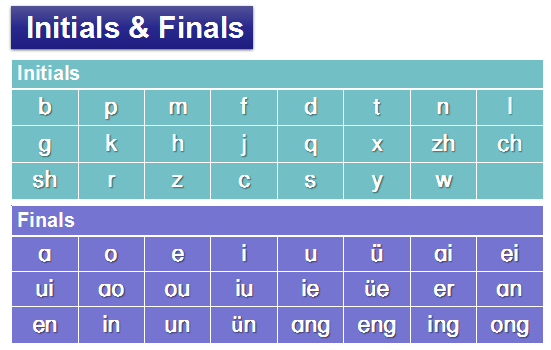
What Are Initials in Pinyin?
In Pinyin, initials refer to the consonant sounds that begin a syllable. They are the first part of a syllable and are always followed by a final. There are 21 initials in Mandarin Chinese, and they can be categorized as follows:
- Plosives: b, p, d, t, g, k
- Affricates: z, c, zh, ch, j, q
- Fricatives: f, s, sh, x, h, r
- Nasals: m, n, l
What Are Finals in Pinyin?
Finals in Pinyin are the vowel or vowel-consonant combinations that follow the initial in a syllable. They form the core of the syllable's pronunciation. Finals can be simple or compound and include:
See AlsoDuolingo Account Setup, Recovery & Management Guide- Simple vowels: a, o, e, i, u, ü
- Compound vowels: ai, ei, ao, ou, etc.
- Nasal endings: an, en, ang, eng, etc.
How Do Initials and Finals Combine in Pinyin?
In Pinyin, initials and finals combine to form complete syllables. Some syllables consist only of a final (no initial), like a or ou. The combination rules include:
- Mandarin syllables always have a final, but not always an initial.
- Certain initials pair only with specific finals (e.g., j only pairs with i or ü-related finals).
- Tones are applied to the entire syllable, not just the initial or final.
Common Examples of Initials and Finals in Pinyin
Here are some common examples of initials and finals in Pinyin:
- Initial b + final a → ba (爸, father)
- Initial m + final a → ma (妈, mother)
- No initial + final ou → ou (藕, lotus root)
Why Are Initials and Finals Important in Learning Mandarin?
Understanding initials and finals is crucial for mastering Pinyin and Mandarin pronunciation because:
See AlsoLanguage is communication, not only an abstract subject to study- They help learners break down syllables into manageable parts.
- They clarify pronunciation rules and exceptions.
- They serve as the foundation for correct tone application.
What is pinyin spelling?
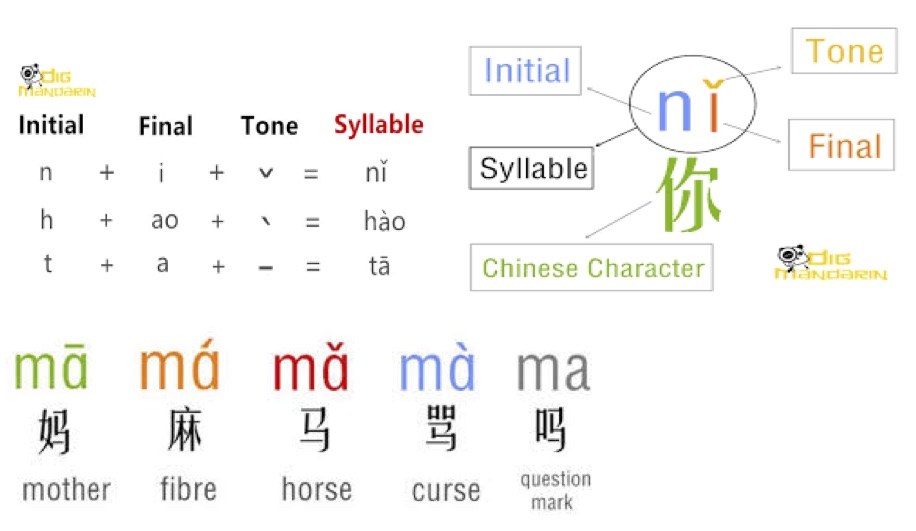
The Definition of Pinyin Spelling
Pinyin spelling is the Romanization system used to represent the pronunciation of Mandarin Chinese characters using the Latin alphabet. Developed in the 1950s by the Chinese government, it serves as a phonetic guide for learners and a typing input method. Key features include:
- Tonal markers to indicate the four Mandarin tones.
- Initials and finals that combine to form syllables.
- Standardization for education and technology.
How Pinyin Spelling Works
The system breaks down Chinese characters into phonetic components. Each syllable consists of:
See Also7 things Chinese students should do during the winter vacation- An initial (consonant sound at the start).
- A final (vowel or vowel-consonant combination).
- A tone mark (e.g., ā, á, ǎ, à for the four tones).
The Importance of Pinyin Spelling
Pinyin is essential for:
- Language learners to pronounce words correctly.
- Typing Chinese on digital devices.
- Standardizing pronunciation across dialects.
Pinyin vs. Other Romanization Systems
Unlike older systems like Wade-Giles, Pinyin:
- Uses simplified spellings (e.g., xi instead of hsī).
- Is officially adopted by China and the UN.
- Reflects modern Mandarin more accurately.
Common Challenges with Pinyin Spelling
Learners often struggle with:
- Tonal distinctions (e.g., mā vs. mà).
- Unfamiliar letter sounds (e.g., q pronounced as ch).
- Ambiguities in multi-character words.
Which English letter is not used in pinyin?
The English letter V is not used in Pinyin, the official romanization system for Standard Mandarin Chinese. While Pinyin incorporates most letters from the English alphabet, V is excluded because there is no corresponding sound in Mandarin Chinese that requires it.
Why Is the Letter V Not Used in Pinyin?
The absence of the letter V in Pinyin is due to the phonological structure of Mandarin Chinese.
- Mandarin lacks the voiced labiodental fricative sound (/v/), which is represented by V in English.
- Instead, similar sounds are approximated using U or Ü in Pinyin, such as in lǜ (green).
- Historical and linguistic standardization efforts deliberately excluded V to maintain consistency.
Which Letters in Pinyin Replace the Sound of V?
Since V is absent, Pinyin uses alternative letters or combinations to approximate foreign words or sounds.
- The W sound sometimes substitutes for V in loanwords, though inconsistently.
- In some cases, F may be used, as in Fó for Buddha (though not a direct replacement).
- Modern adaptations, like texting, may use V informally, but it remains excluded from official Pinyin.
Are There Exceptions Where V Appears in Chinese Writing?
While V is absent in Pinyin, it can appear in other contexts related to Chinese.
- In loanwords or foreign names, V may be retained but pronounced as W or F.
- Some non-standard romanization systems, like Wade-Giles, use V sparingly for specific dialects.
- Informal digital communication (e.g., VS in gaming) may include V, but it doesn’t reflect Pinyin rules.
How Does Pinyin Handle Foreign Words with V?
When incorporating foreign terms containing V, Pinyin follows specific adaptation rules.
- Names like Victoria may be written as Wēiduōlìyà, replacing V with W.
- Technical terms (e.g., virus) are transliterated as bìngdú, avoiding V entirely.
- Some brands retain V in writing but adjust pronunciation (e.g., Volvo becomes Wò'ěrwò).
What Are the Implications of Excluding V in Pinyin?
The omission of V affects language learning and transliteration practices.
- Learners of Mandarin must adjust to the absence of V in pronunciation drills.
- Transliterating foreign words requires creative substitutions, sometimes leading to inconsistencies.
- The standardization reinforces Mandarin’s phonetic boundaries, distinguishing it from other languages.
How many initials are in pinyin?
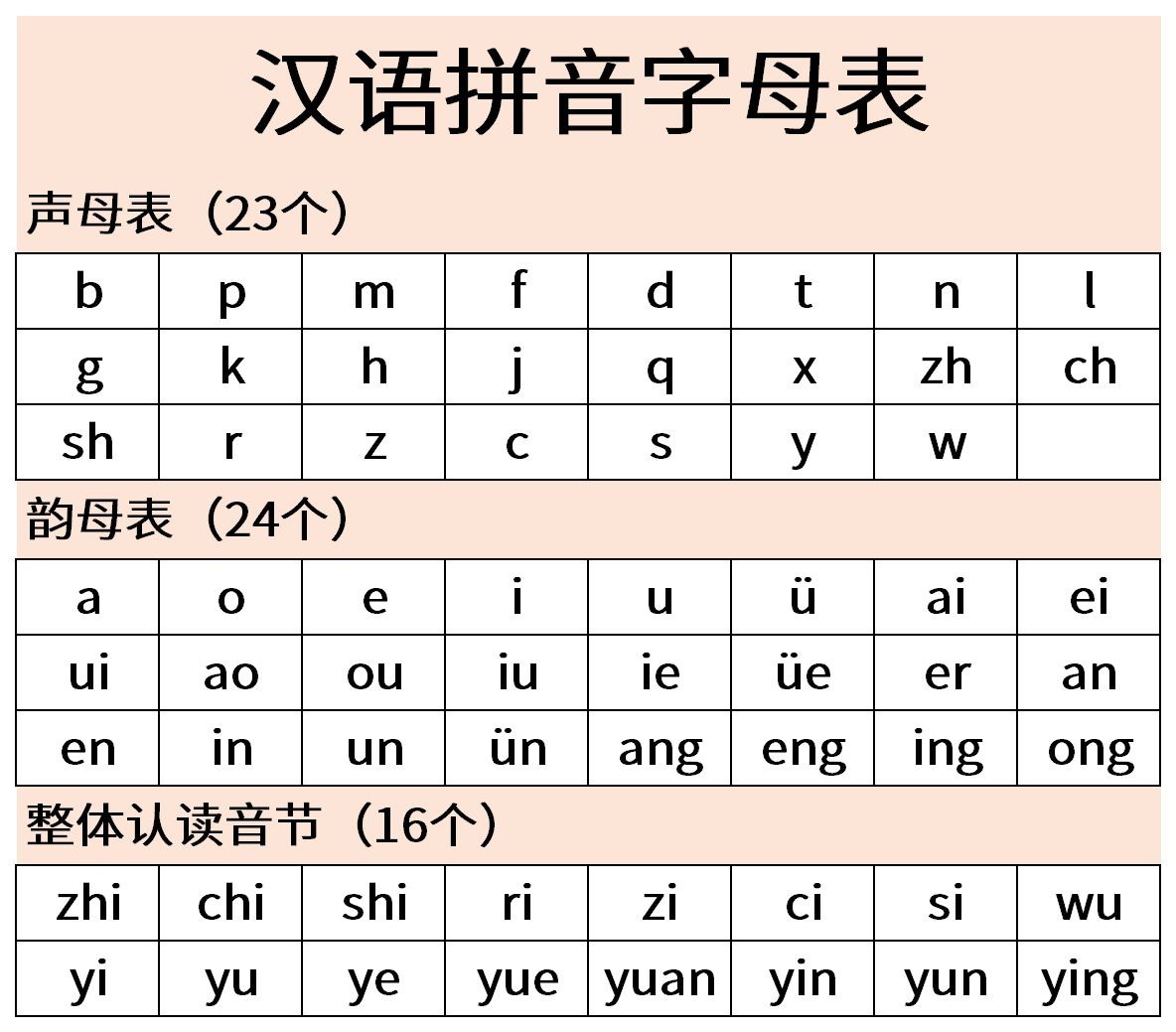
What Are Pinyin Initials?
In Pinyin, the official romanization system for Mandarin Chinese, initials are the consonant sounds that begin a syllable. They are crucial for proper pronunciation and are combined with finals (vowels or vowel-consonant combinations) to form complete syllables. Here’s a breakdown:
- Initials are always consonants or semivowels.
- They appear at the start of a syllable.
- Not all syllables have initials; some begin directly with a final.
How Many Initials Are in Pinyin?
The standard Pinyin system includes 21 initials. These cover the basic consonant sounds used in Mandarin Chinese. Below is a categorized list:
- Plosives: b, p, d, t, g, k
- Affricates: z, c, zh, ch, j, q
- Fricatives: f, s, sh, x, h
- Nasals: m, n
- Liquids: l, r
Are There Any Exceptions or Special Cases?
While there are 21 standard initials, some variations or special cases exist in pronunciation:
- The initials y and w are sometimes considered semivowels or glides.
- In some dialects or informal speech, certain initials may merge (e.g., n and l).
- The retroflex initials (zh, ch, sh, r) can be challenging for non-native speakers.
How Do Pinyin Initials Compare to English Consonants?
While some Pinyin initials resemble English consonants, others differ significantly:
- Similar sounds: b, p, m, f, d, t, n, l, g, k, h.
- Unique to Pinyin: q, x, zh, ch, sh, r, z, c.
- Different pronunciation: j (like jee), q (aspirated chee), x (like shee).
Why Is Learning Pinyin Initials Important?
Mastering Pinyin initials is essential for accurate Mandarin pronunciation and communication:
- Helps distinguish between minimal pairs (e.g., bà vs. pà).
- Forms the foundation for typing Chinese characters using Pinyin input.
- Improves listening comprehension by recognizing sound differences.
Frequently Asked Questions (FAQ)
What does Focus on initials and finals, not Pinyin spelling mean?
This phrase emphasizes the importance of mastering the initial and final sounds in Mandarin Chinese rather than relying solely on Pinyin spelling. Pinyin is a Romanization system used to represent Chinese characters, but it doesn't always capture the exact pronunciation. By focusing on the distinct sounds of initials (consonants at the start of syllables) and finals (the remaining part, including vowels and endings), learners can achieve more accurate pronunciation and better understand the phonetic structure of Mandarin.
Why is it important to prioritize initials and finals over Pinyin spelling?
Pinyin is a helpful tool for beginners, but it can sometimes mislead learners due to differences between English and Mandarin sound systems. For example, the Pinyin xi doesn't sound like the English see. By concentrating on initials (like x) and finals (like -i), learners avoid mispronunciations and develop a stronger foundation for speaking and listening. This approach also helps with tonal accuracy, as tones are tied to the entire syllable, not just the Pinyin letters.
How can I practice identifying initials and finals effectively?
Start by isolating the initial consonant (e.g., zh in zhōng) and the final (e.g., -ōng) in common syllables. Listen to native speakers and repeat the sounds without relying on Pinyin. Use tools like minimal pairs (e.g., ma vs. ba) to train your ear. Recording yourself and comparing it to native pronunciation can also highlight areas for improvement. Over time, this method builds muscle memory and auditory recognition for Mandarin's unique sounds.
Are there any exceptions where Pinyin spelling aligns perfectly with initials and finals?
While Pinyin is generally consistent, some spellings can be deceptive. For instance, the initial q sounds like a soft ch, not an English q. However, in simpler syllables like ma (where the initial is m and the final is a), Pinyin closely matches the actual sounds. The key is to treat Pinyin as a guide, not a rule, and always verify pronunciation through audio resources or native speakers to avoid developing incorrect habits.
Leave a Reply
Related Posts