
Why Isn’t There a Chinese Alphabet? Master The Basics Fast

Chinese writing stands out as one of the world’s oldest and most unique systems, relying on characters rather than an alphabet. Unlike languages that use letters to form words, Chinese employs thousands of intricate symbols, each representing meaning and sound. This logographic system has deep historical roots, evolving over millennia without shifting to a phonetic alphabet. For learners, this can seem daunting, but understanding why Chinese lacks an alphabet reveals fascinating insights into its culture and linguistic structure. By mastering the basics of characters and their components, you can unlock the logic behind this elegant writing system and gain a solid foundation for learning Mandarin efficiently.
Why Isn’t There a Chinese Alphabet? Master The Basics Fast
Detailed Explanation:
Unlike languages that use alphabets, Chinese relies on characters (汉字 - hànzì), which are logograms representing meanings rather than sounds. The writing system evolved from pictographs and ideographs over thousands of years, making it fundamentally different from phonetic systems like the Latin alphabet. While alphabets represent sounds (phonemes), Chinese characters convey meaning (semantics) and sometimes hint at pronunciation. This structure reflects China’s historical and cultural continuity, but it also makes learning more complex for beginners.
---
See AlsoHow to Write a Formal Letter in Chinese1. How Do Chinese Characters Work Without an Alphabet?
Answer:
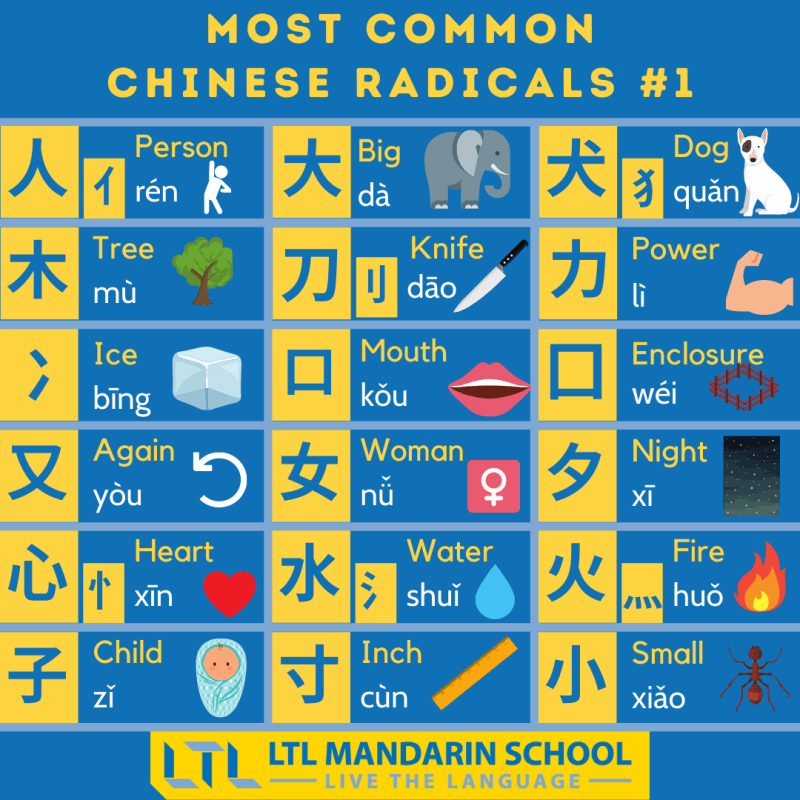
Chinese characters are built from radicals (building blocks) and strokes, not letters. Each character represents a syllable and a meaning, and some include phonetic components that suggest pronunciation. For example:
| Character | Pinyin | Meaning |
|---|---|---|
| 妈 (mā) | mā | mother |
| 马 (mǎ) | mǎ | horse |
The shared phonetic mǎ shows a connection, but meanings differ entirely.
---
See AlsoHow I Almost Forgot Chinese and Then Relearned It All Over Again2. Why Did China Never Develop an Alphabet?
Answer:
China’s unified writing system prioritized cultural cohesion over phonetic simplicity. Even with regional pronunciation differences (dialects), characters ensured mutual understanding. Historical attempts (e.g., Zhuyin Fuhao) introduced phonetic aids, but replacing characters was impractical due to:
| Factor | Impact |
|---|---|
| Historical depth | 3,000+ years of character use |
| Dialect diversity | Alphabet would favor one pronunciation |
---
3. How Does Pinyin Help Learners Without an Alphabet?
Answer:
Pinyin (拼音) uses the Latin alphabet to transcribe Mandarin sounds, acting as a pronunciation guide. For example:
| Character | Pinyin | English |
|---|---|---|
| 你好 | nǐ hǎo | hello |
However, Pinyin isn’t a replacement for characters—it’s a learning tool.
---
4. Are Chinese Characters Harder to Learn Than an Alphabet?
Answer:
Characters require memorization of shapes, strokes, and meanings, unlike alphabetic sound-based systems. Key challenges:
| Aspect | Alphabet | Chinese |
|---|---|---|
| Learning curve | 26 letters | 3,000+ characters for fluency |
| Visual recognition | Linear | 2D structures |
---
5. Could Chinese Ever Switch to an Alphabet?
Answer:
Unlikely, due to:
| Reason | Explanation |
|---|---|
| Cultural identity | Characters are deeply tied to heritage |
| Homophone issues | Many words sound alike (e.g., shì = 是/事/市) |
Reforms focus on simplifying characters, not replacing them.
See Also8 tips for learning Chinese as an introverted studentWhy did Chinese never develop an alphabet?
The Logographic Nature of Chinese Writing
The Chinese writing system is logographic, meaning each character represents a word or a meaningful part of a word. This system evolved over millennia, deeply rooted in the culture and communication needs of ancient China. Unlike alphabetic systems, which rely on a small set of symbols to represent sounds, Chinese characters convey meaning directly. Key reasons for this development include:
- Historical continuity: The system dates back to oracle bone script (around 1200 BCE), making it one of the oldest continuously used writing systems.
- Cultural unity: Characters bridged diverse spoken dialects, allowing mutual understanding despite phonetic differences.
- Visual expressiveness: Characters often incorporate pictorial or symbolic elements, enriching their meaning beyond sound.
Lack of Phonetic Necessity
Chinese languages, particularly Mandarin, are tonal and monosyllabic, reducing the need for an alphabet. Since meaning often depends on tone, a purely phonetic system could create ambiguity. Instead, characters efficiently distinguish homophones. Key factors include:
- Tonal distinctions: Alphabets might struggle to represent tone changes critical for meaning.
- Homophone density: Thousands of syllables share the same pronunciation, requiring characters for clarity.
- Minimal inflection: Chinese lacks verb conjugations or noun declensions, reducing the need for phonetic flexibility.
Cultural and Administrative Priorities
The Chinese imperial bureaucracy favored a uniform writing system to maintain control across vast regions. Characters served this purpose better than alphabets, which might fragment with dialectal variations. Important aspects include:
- Standardization: The Qin dynasty (221–206 BCE) unified script variants, reinforcing logographic use.
- Literary tradition: Classical texts and civil service exams prioritized character mastery, discouraging phonetic alternatives.
- Elite preservation: Scholars and officials upheld characters as a cultural hallmark, resisting simplification.
Technological and Practical Constraints
Early writing materials like bamboo slips and bronze inscriptions influenced character complexity. Dense logographs conveyed more information per unit space than alphabetic scripts. Considerations include:
- Material limitations: Carving or brushing characters on bamboo or silk favored compact forms.
- Printing compatibility: Movable type (invented in China) worked efficiently with reusable character blocks.
- Calligraphic art: Aesthetic traditions valued stroke order and balance, further embedding characters in culture.
Comparative Isolation from Alphabetic Systems
China’s geographic and cultural separation from alphabet-inventing civilizations (e.g., Phoenicians) limited exposure to phonetic alternatives. Contributing factors:
- Geographic barriers: Mountains and deserts insulated China from Middle Eastern and Mediterranean influences.
- Self-sufficiency: A robust indigenous writing system reduced incentive to adopt foreign scripts.
- Late contact: Sustained interaction with alphabetic systems came only after Chinese writing was firmly established.
How fast can you learn basic Chinese?

Factors Affecting the Speed of Learning Basic Chinese
The time it takes to learn basic Chinese depends on several factors, including:
- Prior language experience: Knowing other tonal languages like Vietnamese or Thai can accelerate learning.
- Study intensity: Daily practice speeds up progress compared to sporadic study sessions.
- Learning methods: Immersion programs or tutoring yield faster results than self-study alone.
Estimated Time Frame for Basic Proficiency
With consistent effort, learners can achieve basic Chinese proficiency in:
- 3–6 months: For those studying 1–2 hours daily with structured lessons.
- 6–12 months: For casual learners dedicating a few hours weekly.
- Faster timelines: Possible with immersive environments like living in a Chinese-speaking region.
Essential Components to Focus On
To learn basic Chinese efficiently, prioritize these elements:
- Pinyin: Mastering pronunciation using the Romanized system.
- Common phrases: Greetings, numbers, and daily expressions.
- Basic characters: Start with 100–300 frequently used Hanzi.
Challenges That May Slow Progress
Several obstacles can hinder the speed of learning basic Chinese:
- Tones: Mandarin’s four tones are difficult for non-native speakers.
- Character memorization: Requires repetition and active recall techniques.
- Grammar differences: Sentence structure varies significantly from English.
Tips to Accelerate Learning
To learn basic Chinese faster, apply these strategies:
- Use flashcards: Apps like Anki help reinforce vocabulary and characters.
- Practice speaking: Engage with native speakers via language exchange platforms.
- Consume media: Watch Chinese shows or listen to podcasts for passive learning.
Why is the Chinese Alphabet so complex?

Why Does Chinese Use Characters Instead of an Alphabet?
The Chinese writing system uses logograms (characters) rather than an alphabet because it evolved from pictographs and ideographs over thousands of years. Unlike alphabetic systems, which represent sounds, Chinese characters convey meaning and sound simultaneously.
- Historical roots: Ancient Chinese scripts began as drawings of objects, evolving into abstract symbols.
- Linguistic diversity: China's many dialects made a phonetic alphabet impractical, as characters are understood across spoken variations.
- Cultural continuity: Characters unify written communication despite pronunciation differences.
How Many Characters Exist in the Chinese Writing System?
The Chinese writing system contains over 50,000 characters, though most are archaic. Modern literacy requires knowing around 3,000–5,000.
- Common usage: ~3,000 characters cover 99% of written material.
- Specialized terms: Technical fields (e.g., medicine) use rare characters.
- Historical texts: Classical literature includes obsolete characters.
What Makes Chinese Characters Difficult to Learn?
Chinese characters are challenging due to their complex structure, lack of phonetic consistency, and memorization demands.
- Strokes and radicals: Characters combine strokes (1–30+) and radicals (semantic clues).
- Tonal language: Pronunciation depends on context and tones, not spelling rules.
- Homophones: Many characters share the same sound but differ in meaning.
Are There Any Simplifications to the Chinese Writing System?
Yes, Simplified Chinese (introduced in the 1950s) reduced stroke counts for ~2,000 characters, but complexity persists.
- Regional differences: Mainland China uses simplified; Taiwan/Hong Kong retain traditional.
- Limited simplification: Many characters remain intricate despite reforms.
- Debates: Critics argue simplification sacrifices cultural heritage.
How Do Chinese Characters Compare to Alphabetic Systems?
Unlike alphabets (e.g., English’s 26 letters), Chinese characters require visual memorization and contextual understanding.
- Efficiency: Alphabets are faster to learn but convey less meaning per unit.
- Adaptability: Characters absorb new concepts without new letters.
- Cognitive load: Reading Chinese activates brain regions tied to visual processing.
What is the hardest letter to write in Chinese?
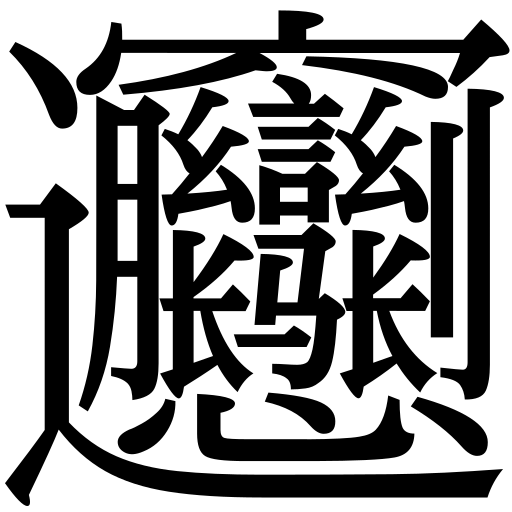
What Makes a Chinese Character Difficult to Write?
The difficulty of writing a Chinese character depends on factors like stroke count, stroke order, and complexity of structure. Some characters require precise execution, making them harder to master.
- Stroke count: Characters with many strokes (e.g., 鬱 yù meaning depression) are challenging.
- Stroke order: Incorrect order can make characters look unbalanced or unrecognizable.
- Structural complexity: Characters with intricate components (e.g., 龜 guī meaning turtle) are tougher.
Which Chinese Character Has the Most Strokes?
The character 齉 (nàng), meaning stuffy nose, has 36 strokes, making it one of the hardest to write due to its density and detail.
- Stroke density: Fitting all strokes neatly is difficult.
- Rare usage: Less practice opportunities increase difficulty.
- Memory challenge: Remembering the sequence is complex.
Why Is the Character Biáng Considered Extremely Hard?
The character biáng (used in biángbiáng noodles) is notoriously complex, with 56+ strokes in some versions, though it's not officially recognized in modern dictionaries.
- Non-standard structure: Its composition is unconventional.
- Regional rarity: Mostly used in a specific dialect.
- Visual complexity: Multiple repeated and intertwined strokes.
Are Simplified Characters Easier to Write Than Traditional Ones?
Simplified characters (e.g., 国 guó for country) are generally easier due to reduced stroke counts, while traditional characters (e.g., 國) retain more complexity.
- Stroke reduction: Simplifications often merge strokes.
- Common usage: Simplified forms are taught more widely.
- Legibility: Fewer strokes can improve readability for learners.
What Techniques Help in Writing Difficult Chinese Characters?
Mastering tough characters requires consistent practice, mnemonic devices, and breaking down components.
- Grid practice: Using squared paper for proportion.
- Component analysis: Learning radicals first (e.g., 氵 for water-related characters).
- Repetition: Writing characters repeatedly to build muscle memory.
Frequently Asked Questions (FAQ)
Why doesn't Chinese use an alphabet like English?
Chinese does not use an alphabet because its writing system is logographic, meaning each character represents a word or a meaningful part of a word rather than a single sound. Unlike English, which relies on a small set of letters to form words phonetically, Chinese characters convey meaning directly through their shapes. This system evolved over thousands of years and reflects the language's tonal nature and historical development, making an alphabet impractical for capturing its complexity.
How do Chinese characters work if there’s no alphabet?
Chinese characters function through a combination of radicals (components that hint at meaning) and phonetic elements (components that suggest pronunciation). While there’s no alphabet, characters are built systematically. For example, the radical 氵 (water) often appears in characters related to liquids, like 河 (hé, river). This structure helps learners deduce meaning and pronunciation, though mastery requires memorization due to the sheer number of characters.
Is it harder to learn Chinese without an alphabet?
Learning Chinese without an alphabet can be challenging for speakers of phonetic languages, as it requires memorizing thousands of unique characters. However, the absence of an alphabet doesn’t make it inherently harder—just different. Pinyin, a Romanization system, helps beginners pronounce characters using the Latin alphabet, bridging the gap. Over time, learners recognize patterns in radicals and phonetic components, making the process more intuitive.
Could Chinese ever adopt an alphabet in the future?
While some argue that a Chinese alphabet could simplify learning, the writing system is deeply tied to cultural identity and history. Replacing characters with an alphabet would erase nuances in meaning and disconnect modern users from classical texts. However, tools like Pinyin and digital input methods have made characters more accessible without abandoning the system entirely. A full transition to an alphabet is unlikely, but technology continues to reshape how Chinese is learned and used.
Leave a Reply
Related Posts