
Asking the experts: How to learn Chinese grammar

Learning Chinese grammar can seem daunting, but with the right approach, it becomes manageable and even enjoyable. To uncover the most effective strategies, we turned to language experts for their insights. Whether you're a beginner or an advanced learner, understanding the structure and patterns of Chinese is crucial for fluency. Experts emphasize the importance of context, consistent practice, and leveraging resources like textbooks, apps, and native materials. This article compiles their top tips, from mastering measure words to grasping sentence order, to help you navigate the complexities of Chinese grammar with confidence. Discover how to build a solid foundation and avoid common pitfalls along the way.
Asking the Experts: How to Master Chinese Grammar Effectively
1. Why Is Chinese Grammar Challenging for Learners?
Chinese grammar differs significantly from Western languages due to its lack of verb conjugations, tonal nature, and reliance on word order. Unlike English, Chinese does not use tenses in the same way, making concepts like past or future actions dependent on contextual markers (e.g., 了 (le) or 会 (huì)). Additionally, measure words (量词 liàngcí) and sentence particles (e.g., 吗 (ma) for questions) add layers of complexity.
| Challenge | Example |
|---|---|
| No verb conjugation | I eat (我吃 wǒ chī) vs. He eats (他吃 tā chī) |
| Tonal pronunciation | 妈妈 (māma – mom) vs. 马 (mǎ – horse) |
| Measure words | 一本书 (yī běn shū – one book) |
---
See AlsoTake responsibility for your Chinese learning now2. What Are the Core Principles of Chinese Grammar?
Chinese grammar revolves around subject-verb-object (SVO) order, particles, and context. Key principles include:
- Topic-comment structure: The topic is introduced first (e.g., 这本书,我很喜欢 (Zhè běn shū, wǒ hěn xǐhuān – This book, I like it)).
- Aspect markers: 了 (le) indicates completed actions, while 着 (zhe) shows ongoing states.
- Omitting pronouns: When context is clear, pronouns are often dropped.
| Principle | Function |
|---|---|
| SVO order | 我爱你 (Wǒ ài nǐ – I love you) |
| Aspect markers | 我吃了 (Wǒ chī le – I ate) |
| Topic prominence | 咖啡,我不喝 (Kāfēi, wǒ bù hē – Coffee, I don’t drink) |
---
3. How Can Immersion Improve Grammar Understanding?
Immersion accelerates learning by exposing learners to natural sentence structures, colloquial phrases, and cultural context. Methods include:
- Watching Chinese media: Dramas or news with subtitles highlight grammar in action.
- Language exchange: Practicing with native speakers corrects mistakes in real-time.
- Reading children’s books: Simple texts reinforce measure words and basic syntax.
| Method | Benefit |
|---|---|
| TV shows/movies | Hear tones and word order |
| Conversation practice | Learn omission rules |
| Graded readers | Grasp measure words |
---
4. Which Tools Help Practice Chinese Grammar?
Effective tools combine structured lessons, spaced repetition, and interactive exercises:
- Apps: Duolingo (basics), HelloChinese (grammar drills).
- Textbooks: Integrated Chinese (explains particles and sentence patterns).
- Anki decks: Custom flashcards for measure words or syntax rules.
| Tool | Focus Area |
|---|---|
| HelloChinese | Sentence construction |
| Pleco (dictionary) | Example sentences |
| Anki | Grammar patterns |
---
See AlsoYou can’t learn Chinese characters by rote5. What Common Mistakes Should Beginners Avoid?
Learners often struggle with overusing 是 (shì), ignoring tones, or misplacing time phrases. Examples:
- Incorrect: 我是吃 (Wǒ shì chī – I am eat).
Correct: 我吃 (Wǒ chī – I eat).
- Time phrases: Place them at the start (e.g., 昨天我去了公园 (Zuótiān wǒ qùle gōngyuán – Yesterday I went to the park)).
| Mistake | Correction |
|---|---|
| Overusing 是 (shì) | Use for nouns only: 我是学生 (Wǒ shì xuéshēng – I am a student) |
| Neglecting tones | 买 (mǎi – buy) vs. 卖 (mài – sell) |
| Wrong time placement | 明天我去北京 (Míngtiān wǒ qù Běijīng – Tomorrow I go to Beijing) |
How long does it take to learn Chinese grammar?
Factors Affecting the Time to Learn Chinese Grammar
The time it takes to learn Chinese grammar depends on several factors:
See Also10 of the Best Chinese Graded Readers and Where to Find Them- Prior language experience: Learners familiar with tonal languages or analytic languages may progress faster.
- Study intensity: Daily practice accelerates learning compared to occasional study.
- Learning methods: Structured courses or immersion programs yield quicker results than self-study alone.
Basic Chinese Grammar Proficiency Timeline
For basic proficiency in Chinese grammar, learners typically need:
- 3-6 months to grasp simple sentence structures like subject-verb-object order.
- 6-12 months to understand measure words and basic question forms.
- 1 year to use common grammatical particles like 了 (le) and 的 (de) correctly.
Intermediate Chinese Grammar Learning Duration
Reaching an intermediate level usually requires:
- 1-2 years of consistent study to master complex sentences and conjunctions.
- Exposure to authentic materials like news or TV shows to internalize patterns.
- Regular practice with native speakers to refine usage of grammatical constructions.
Advanced Chinese Grammar Mastery
Achieving advanced mastery of Chinese grammar often takes:
- 3-5 years to fluently use literary structures and formal expressions.
- Deep cultural understanding to grasp context-dependent grammar rules.
- Specialized training for domain-specific grammar, such as business or academic Chinese.
Accelerating Chinese Grammar Learning
To speed up the learning process:
- Focus on high-frequency patterns first, like time phrases and negations.
- Use spaced repetition tools to reinforce grammar rules efficiently.
- Practice output early through writing or speaking to solidify understanding.
Is 2 years enough to learn Chinese?
Can You Become Fluent in Chinese in 2 Years?
Becoming fluent in Chinese in two years depends on several factors, including your learning intensity, prior experience, and exposure to the language. While achieving native-like fluency is unlikely, reaching an intermediate or advanced level is possible with dedication. Here are key considerations:
- Daily practice: Consistent study (1-2 hours daily) accelerates progress.
- Immersion: Living in a Chinese-speaking environment speeds up learning.
- Learning methods: Structured courses, tutors, and language apps improve efficiency.
What Level of Chinese Can You Reach in 2 Years?
In two years, a dedicated learner can reach HSK 4 or 5, allowing for conversational fluency and comprehension of complex texts. However, mastery of characters and tones may still require refinement. Key milestones include:
- Basic communication: Handling daily conversations and simple topics.
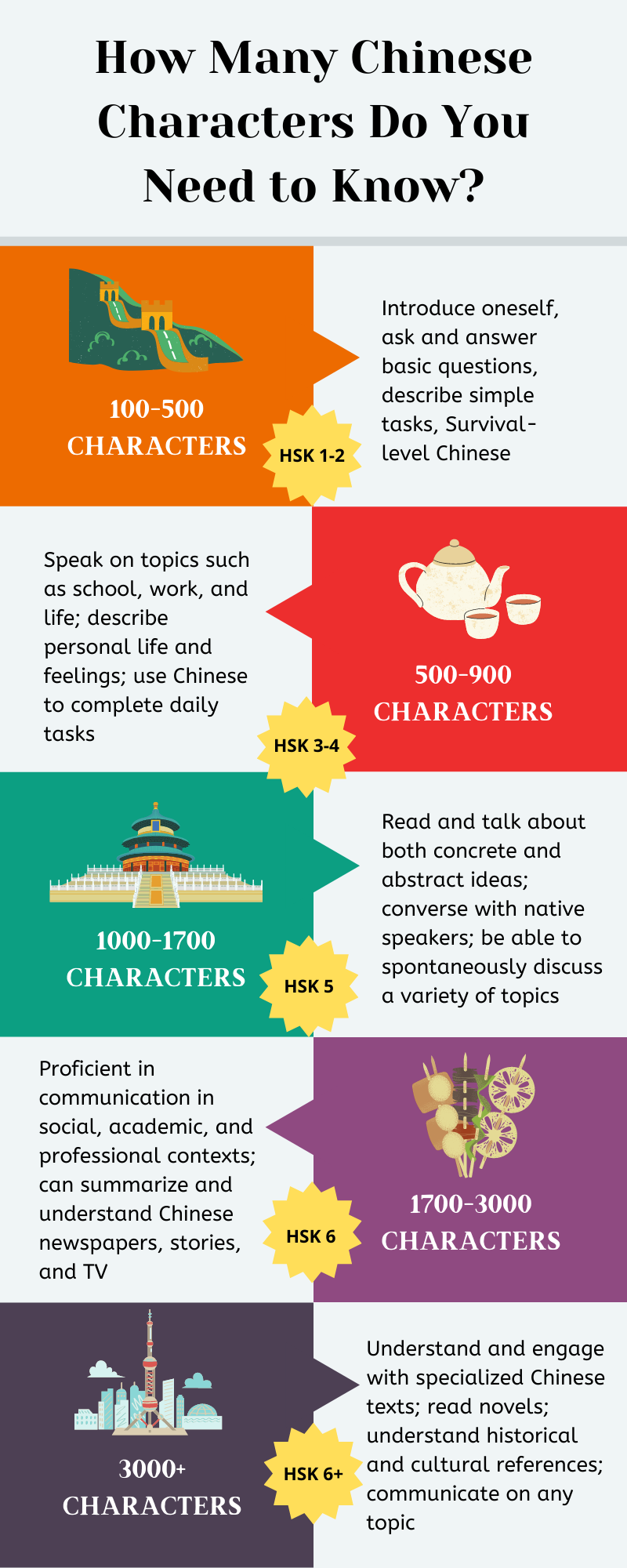
- Reading ability: Recognizing 1,000-2,500 characters.
- Listening skills: Understanding native speakers at a moderate pace.
How Many Hours Should You Study Chinese Daily to Succeed?
To make significant progress in two years, 1-2 hours of daily study is recommended. Combining different learning methods maximizes efficiency. Important aspects include:
- Vocabulary building: Memorizing 10-20 new words daily.
- Grammar practice: Drilling sentence structures and patterns.
- Speaking exercises: Engaging in conversations with native speakers.
What Are the Biggest Challenges When Learning Chinese in 2 Years?
Chinese presents unique difficulties, such as tones, characters, and cultural context, which can slow progress. Common challenges include:
- Tonal accuracy: Mispronunciations can change meanings entirely.
- Character memorization: Thousands of symbols require repetitive practice.
- Idiomatic expressions: Slang and proverbs are hard to master quickly.
Is Immersion Necessary to Learn Chinese in 2 Years?
While not strictly necessary, immersion significantly boosts learning speed. Alternatives include:
- Language partners: Regular practice with native speakers online.
- Media consumption: Watching Chinese TV, movies, and listening to podcasts.
- Virtual immersion: Using apps and platforms that simulate real-life interactions.
What is the hardest part of Chinese grammar?

Tonal System and Pronunciation
The tonal system is one of the most challenging aspects of Chinese grammar for learners. Mandarin Chinese has four main tones and a neutral tone, each of which can change the meaning of a word entirely. Mispronouncing a tone can lead to misunderstandings.
- Tones are mandatory: Each syllable must be pronounced with the correct tone.
- Tone pairs: When words are combined, tones may change (e.g., third-tone sandhi).
- Listening comprehension: Distinguishing tones in fast speech is difficult for beginners.
Measure Words (Classifiers)
Measure words are required when counting nouns, and choosing the correct one can be confusing. Unlike English, where a or an is often sufficient, Chinese uses specific classifiers for different categories of objects.
- Variety: There are dozens of measure words (e.g., 个, 只, 张).
- Noun-specific rules: Each noun pairs with a particular measure word.
- No direct equivalents: English speakers struggle because measure words don’t exist in the same way.
Word Order and Sentence Structure
Chinese sentence structure differs significantly from English, particularly in the placement of time expressions, adverbs, and objects. The rigid word order can be hard to master.
- Time phrases: Usually placed at the beginning or before the verb.
- No verb conjugation: Tense is indicated by context or particles (e.g., 了, 过).
- Topic-comment structure: Sentences often start with the topic rather than the subject.
Particles and Aspect Markers
Chinese uses particles like 了 (le), 着 (zhe), and 过 (guo) to indicate grammatical aspects, which don’t have direct equivalents in English.
- 了 (le): Indicates completed actions or changes of state.
- 着 (zhe): Shows ongoing actions or states.
- 过 (guo): Denotes past experiences.
Lack of Inflections and Plurality
Unlike English, Chinese does not use inflections for tense, number, or gender, which can be both a simplification and a challenge.
- No verb conjugation: Verbs remain the same regardless of tense.
- Context-dependent plurality: Nouns don’t change form for plural (e.g., 猫 can mean cat or cats).
- No gendered pronouns: 他 (he), 她 (she), and 它 (it) are pronounced the same.
Is Chinese grammar easy to learn?
Is Chinese Grammar Simpler Than English?
Chinese grammar is often considered simpler than English in certain aspects due to its lack of verb conjugations, tenses, and grammatical gender. However, it has unique features that can be challenging:
- No verb conjugation: Verbs remain the same regardless of subject or tense.
- Tense markers: Instead of conjugations, time is indicated with words like yesterday or will.
- Word order importance: Sentence structure follows strict patterns (e.g., Subject-Verb-Object).
What Are the Biggest Challenges in Chinese Grammar?
While some rules are straightforward, learners often struggle with:
- Measure words: Every noun requires a specific counter (e.g., 一本书 for books).
- Tonal particles: Words like 了 or 的 change meaning based on context.
- Topic-comment structure: Sentences often emphasize the topic before the action.
How Does Chinese Grammar Handle Tenses?
Chinese uses time indicators rather than verb changes to express tenses:
- Past: Add 了 or phrases like 昨天 (yesterday).
- Present: No marker needed for general statements.
- Future: Use 会 or 要 before the verb.
Why Is Word Order Critical in Chinese?
Chinese relies heavily on word order to convey meaning, with key rules:
- Subject-Verb-Object (SVO): Standard structure (我吃饭 = I eat rice).
- Adjectives before nouns: 红色的花 (red flower), not 花的红色.
- Time phrases first: 昨天我去了学校 (Yesterday I went to school).
Are Chinese Measure Words Difficult to Master?
Measure words (量词) are a unique hurdle because:
- Specificity: Each noun category has its own counter (e.g., 张 for flat objects).
- No direct equivalents: English often uses a or an, but Chinese requires precision.
- Memorization: Learners must practice common pairs like 一个人 (one person).
Frequently Asked Questions (FAQ)
What are the most effective strategies for learning Chinese grammar?
Learning Chinese grammar effectively requires a combination of structured study and immersive practice. Experts recommend starting with basic sentence patterns and gradually building complexity. Using spaced repetition tools like Anki can help reinforce grammar rules, while consistent practice through writing and speaking ensures retention. Additionally, engaging with native content, such as books, podcasts, or TV shows, helps internalize grammatical structures naturally.
How long does it take to master Chinese grammar?
The time it takes to master Chinese grammar varies depending on factors like prior language experience, study intensity, and exposure to the language. Beginners may grasp basic structures within a few months, but achieving advanced proficiency can take years. Consistent daily practice and immersion significantly accelerate progress. Experts suggest setting realistic milestones and tracking improvement to stay motivated.
What are the biggest challenges when learning Chinese grammar?
One of the biggest challenges in learning Chinese grammar is the lack of verb conjugation and tenses, which can confuse learners accustomed to Indo-European languages. Another hurdle is mastering measure words and sentence particles, which are essential for accuracy. Additionally, word order and contextual meaning play a critical role, requiring learners to develop a keen sense of nuance. Overcoming these challenges demands patience and targeted practice.
Are there any shortcuts to understanding Chinese grammar quickly?
While there are no true shortcuts to mastering Chinese grammar, certain techniques can speed up the process. Focusing on high-frequency sentence patterns and common grammatical structures first can provide a solid foundation. Using mnemonics and visual aids helps memorize rules more efficiently. However, long-term success relies on regular practice and applying grammar in real-life conversations. Experts caution against relying solely on shortcuts, as depth of understanding comes from sustained effort.
Leave a Reply
Related Posts