
Tone errors in Mandarin that actually can cause misunderstandings

Mandarin Chinese is a tonal language, where the meaning of a word can change entirely based on its tone. While some tone errors may simply sound unnatural, others can lead to significant misunderstandings, especially in conversations with native speakers. Mispronouncing tones can transform common words into entirely different—and sometimes awkward or offensive—terms. For example, confusing the first and third tones in mā (mother) and mǎ (horse) can create confusion or even humor in the wrong context. This article explores common tone mistakes in Mandarin that go beyond mere pronunciation issues, highlighting how subtle errors can alter meaning and lead to unintended consequences in communication.
Common Tone Errors in Mandarin That Lead to Real Misunderstandings
1. The Critical Role of Tones in Mandarin Pronunciation
Mandarin Chinese is a tonal language, meaning that the pitch or intonation used when pronouncing a word can change its meaning entirely. There are four main tones (plus a neutral tone), and mispronouncing them can lead to confusion. For example, saying mā (mother) with a third tone instead of the first tone turns it into mǎ (horse), creating a completely different—and often awkward—meaning.
| Tone Number | Tone Mark | Example (Pinyin) | Meaning |
|---|---|---|---|
| 1st Tone | ˉ (flat) | mā | mother |
| 3rd Tone | ˇ (fall-rise) | mǎ | horse |
2. Common Tone Mix-Ups Between First and Fourth Tones
The first tone (high and flat) and the fourth tone (sharp and falling) are often confused by learners. For instance, shū (book, 1st tone) versus shù (tree, 4th tone) can lead to misunderstandings if pronounced incorrectly. A misplaced tone might make someone think you're talking about a tree when you meant book.
See AlsoReading aloud in Chinese is really hard| Word (Pinyin) | Tone | Meaning |
|---|---|---|
| shū | 1st | book |
| shù | 4th | tree |
3. How Second and Third Tone Errors Cause Confusion
The second tone (rising) and third tone (falling then rising) are frequently mixed up. For example, mái (to bury, 2nd tone) versus mǎi (to buy, 3rd tone) can create awkward situations if mispronounced. Saying I want to bury a shirt instead of I want to buy a shirt could lead to strange reactions.
| Word (Pinyin) | Tone | Meaning |
|---|---|---|
| mái | 2nd | to bury |
| mǎi | 3rd | to buy |
4. Neutral Tone Mistakes That Change Meanings
The neutral tone (light and short) is often overlooked but can alter meanings. For example, ma (question particle, neutral tone) versus mā (mother, 1st tone) changes the function of a sentence. Misplacing the neutral tone can turn a question into an unrelated statement.
| Word (Pinyin) | Tone | Usage |
|---|---|---|
| ma | neutral | question particle |
| mā | 1st | mother |
5. Real-Life Examples of Tone-Induced Misunderstandings
In daily conversations, tone errors can lead to humorous or embarrassing situations. For example, saying wǒ yào shuìjiào (I want to sleep, 4th tone) as wǒ yào shuǐjiǎo (I want dumplings, 3rd tone) changes the meaning drastically. Such mistakes highlight why mastering tones is essential for clear communication.
See AlsoLearning to hear the sounds and tones in Mandarin| Phrase (Pinyin) | Tone Error | Misinterpretation |
|---|---|---|
| wǒ yào shuìjiào | Correct (4th tone) | I want to sleep |
| wǒ yào shuǐjiǎo | Incorrect (3rd tone) | I want dumplings |
What is the 3-3-3 rule in Mandarin?

What is the 3-3-3 Rule in Mandarin?
The 3-3-3 rule in Mandarin refers to a memory technique used to learn Chinese characters more effectively. It suggests breaking down the learning process into three key components:
- 3 Characters: Focus on learning three characters at a time to avoid overload.
- 3 Meanings: Understand the three primary meanings or uses of each character.
- 3 Pronunciations: Master the three most common pronunciations or tones for each character.
Why Use the 3-3-3 Rule for Learning Mandarin?
This method is designed to simplify the complexity of Mandarin by structuring the learning process. Benefits include:
See AlsoA minimum-effort approach to writing Chinese characters by hand- Reduced overwhelm: Breaking down characters into manageable chunks.
- Improved retention: Reinforcing multiple aspects (meaning, pronunciation) simultaneously.
- Efficiency: Focusing on high-frequency characters first.
How to Apply the 3-3-3 Rule in Practice
To implement this rule effectively, follow these steps:
- Select 3 characters: Choose characters that are commonly used or related in theme.
- Study meanings: Learn their core meanings and contextual uses.
- Practice pronunciations: Drill the tones and pinyin for each character.
Common Mistakes When Using the 3-3-3 Rule
Avoid these pitfalls to maximize the rule’s effectiveness:
- Overloading: Trying to learn more than three characters at once.
- Ignoring context: Memorizing characters without understanding their usage.
- Neglecting tones: Focusing only on meaning and neglecting pronunciation.
Alternatives to the 3-3-3 Rule for Mandarin Learning
While effective, other methods can complement or replace this rule:
See AlsoAn Introduction to Chinese Dialects- Spaced repetition: Using apps like Anki for long-term retention.
- Immersion: Practicing through conversations or media.
- Radical-focused learning: Studying character components first.
Can Chinese be understood without tones?

The Importance of Tones in Chinese
Tones are a fundamental aspect of the Chinese language, as they differentiate words that otherwise share the same pronunciation. Without tones, many words would sound identical, leading to confusion. For example:
- Mā (妈) means mother, while mà (骂) means scold.
- Shī (师) means teacher, but shǐ (屎) means excrement.
- Misusing tones can completely change the meaning of a sentence, making communication unclear.
Contextual Understanding Without Tones
While context can sometimes help decipher meaning, relying on it alone is unreliable. Native speakers use tones instinctively, and omitting them disrupts natural comprehension. Key points include:
- In simple sentences, context might clarify intent, but ambiguity remains.
- Homophones (words with the same sound but different tones) are abundant in Chinese.
- Written Chinese relies on characters, but spoken language depends heavily on tonal accuracy.
Challenges for Non-Native Speakers
Learners often struggle with tones, but ignoring them hinders effective communication. Major difficulties include:
- Listening comprehension suffers without tonal recognition.
- Speaking without tones makes it hard for natives to understand.
- Regional accents may alter tones, but they don’t eliminate their necessity.
Exceptions and Dialects
Some Chinese dialects, like Shanghainese, have fewer tones, but Mandarin strictly requires them. Notable exceptions:
- Cantonese uses six to nine tones, showing tonal complexity across dialects.
- In informal speech, tones might be slurred, but they’re never entirely absent.
- Loanwords or foreign names sometimes ignore tones, but this is rare.
Technology and Tone Recognition
Modern tools like Pinyin input or speech software rely on tones for accuracy. Key observations:
- Voice assistants often fail without correct tonal input.
- Text-to-speech systems use tones to generate natural-sounding speech.
- Machine translation struggles with toneless Chinese, producing errors.
Why is Mandarin the toughest language in the world?
The Complexity of Mandarin Tones
Mandarin is a tonal language, meaning the pitch or intonation used when pronouncing a word can change its meaning entirely. Unlike English, where tone conveys emotion rather than meaning, Mandarin relies on four main tones and a neutral tone, making pronunciation extremely challenging for learners.
- First tone: High and level (e.g., mā – mother).
- Second tone: Rising, like a question (e.g., má – hemp).
- Third tone: Falling then rising (e.g., mǎ – horse).
- Fourth tone: Sharp and falling (e.g., mà – scold).
- Neutral tone: Light and quick, often for grammatical particles.
The Intricacy of Chinese Characters
Mandarin uses a logographic writing system, where each character represents a word or morpheme rather than a sound. With thousands of characters to memorize, many of which share similar strokes but differ in meaning, reading and writing become daunting tasks.
- Stroke order: Characters must be written in a specific sequence.
- Radicals: Components hint at meaning or pronunciation but aren’t always reliable.
- Homophones: Many characters sound identical but mean different things.
Lack of Cognates with Western Languages
Unlike Romance languages, which share Latin roots with English, Mandarin has no linguistic overlap with Indo-European languages. This means learners must build vocabulary and grammar from scratch without familiar reference points.
- Vocabulary: Few loanwords or recognizable terms.
- Grammar: No verb conjugations, but relies on particles and context.
- Sentence structure: Subject-Verb-Object like English, but modifiers work differently.
Context-Dependent Meaning
Mandarin relies heavily on context to convey precise meaning, making it difficult for learners to grasp nuances. Words can have multiple interpretations depending on surrounding phrases or cultural cues.
- Polysemy: Single words with multiple meanings (e.g., 打 can mean hit or open).
- Idioms (成语): Four-character phrases with historical or metaphorical meanings.
- Formality levels: Different terms for polite, casual, or written contexts.
Regional Variations and Dialects
While Standard Mandarin (Putonghua) is official, China has numerous dialects, some mutually unintelligible. Even within Mandarin, regional accents and slang add layers of difficulty.
- Major dialects: Cantonese, Shanghainese, Hokkien, etc., differ drastically.
- Accents: Northern vs. Southern Mandarin pronunciation variations.
- Slang/colloquialisms: Local expressions not taught in textbooks.
How to distinguish tones in Chinese?
Understanding the Basics of Chinese Tones
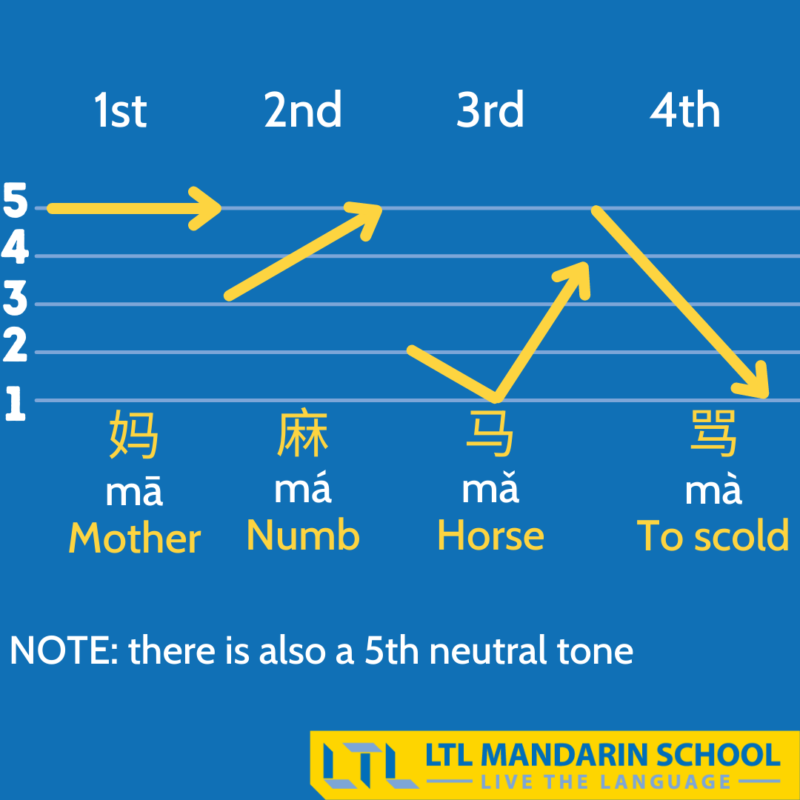
Chinese is a tonal language, meaning the pitch or intonation of a word affects its meaning. There are four main tones in Mandarin Chinese, plus a neutral tone. Each tone has a distinct pitch contour:
- First tone (高平调): A high, flat pitch (e.g., mā 妈 - mother).
- Second tone (高升调): A rising pitch, like asking a question (e.g., má 麻 - hemp).
- Third tone (降升调): A dipping pitch that falls then rises (e.g., mǎ 马 - horse).
- Fourth tone (高降调): A sharp, falling pitch (e.g., mà 骂 - scold).
- Neutral tone (轻声): A light, unstressed tone (e.g., ma 吗 - question particle).
Listening and Repetition Practice
To distinguish tones, active listening and repetition are essential. Use audio resources or native speakers to train your ear:
- Listen to minimal pairs (words that differ only by tone) like shī (诗 - poem) vs. shí (十 - ten).
- Repeat aloud to mimic the pitch contours and muscle memory.
- Use apps or language tools with tone drills to reinforce recognition.
Visualizing Tone Marks and Pinyin
Pinyin uses diacritics to represent tones visually. Memorizing these marks helps in reading and pronunciation:
- First tone: ā (flat line).
- Second tone: á (rising line).
- Third tone: ǎ (dipping curve).
- Fourth tone: à (falling line).
- Neutral tone: No mark (e.g., a).
Using Hand Gestures or Body Movements
Physical gestures can reinforce tone learning by associating pitch with motion:
- First tone: Draw a straight horizontal line in the air.
- Second tone: Raise your hand upward diagonally.
- Third tone: Lower then raise your hand in a V shape.
- Fourth tone: Make a sharp downward motion.
Practicing in Context with Sentences
Tones become clearer when practiced in full sentences rather than isolation:
- Read aloud dialogues to hear how tones flow naturally.
- Record yourself and compare to native speakers.
- Focus on tone changes, like third-tone sandhi (e.g., nǐ hǎo → ní hǎo).
Frequently Asked Questions (FAQ)
What are tone errors in Mandarin, and why do they matter?
Tone errors occur when a speaker mispronounces the tones in Mandarin, which is a tonal language where pitch contours change word meanings. Mandarin has four main tones and a neutral tone, and confusing them can lead to misunderstandings. For example, saying mā (mother) instead of mǎ (horse) completely alters the meaning. Since tones are integral to comprehension, errors can cause confusion in conversations, business settings, or even daily interactions.
Can tone errors in Mandarin be offensive or embarrassing?
Yes, some tone mistakes can lead to awkward or even offensive situations. For instance, mispronouncing wèn (to ask) as wěn (to kiss) could create an inappropriate implication. Similarly, saying shūfu (comfortable) with the wrong tone might sound like shùfù (uncle). While native speakers often contextually infer meanings, tone errors can still cause embarrassment, especially in formal or unfamiliar settings.
Which Mandarin words are most commonly misunderstood due to tone errors?
Some commonly confused Mandarin words due to tone errors include: mài (to sell) vs. mǎi (to buy), yīshēng (doctor) vs. yìshēng (sound), and jīntiān (today) vs. jǐntiān (tight day). These pairs differ only in tone but convey entirely different meanings. Beginners often mix them up, leading to misunderstandings. Practicing these distinctions is crucial for clear communication.
How can learners avoid tone errors in Mandarin?
To minimize tone errors, learners should practice listening and repetition with native speakers or audio resources. Using tools like pinyin charts with tone marks or language apps can help reinforce correct pronunciation. Additionally, recording oneself and comparing it to native speech can highlight mistakes. Consistent exposure and mimicking natural speech patterns are key to mastering Mandarin tones.
Leave a Reply
Related Posts