
Why flashcards are terrible for learning Chinese

Flashcards are often praised as a go-to tool for language learning, but when it comes to mastering Chinese, they fall short in several critical ways. While they may help with rote memorization of characters or vocabulary, flashcards fail to address the complexities of tones, context, and sentence structure—key elements of Mandarin. Many learners find themselves recognizing characters in isolation yet struggling to use them in real conversations. Additionally, the passive nature of flashcards discourages active engagement, leading to superficial retention. For those serious about fluency, relying solely on flashcards can create an illusion of progress while hindering deeper understanding. Let’s explore why this popular method may be doing more harm than good.
Why Flashcards Are an Ineffective Tool for Learning Chinese
While flashcards are a popular study tool for language learners, they fall short when it comes to mastering Chinese. The complexity of Chinese characters, tones, and contextual usage makes flashcards a suboptimal choice. Below, we explore the key reasons why flashcards hinder rather than help in learning Chinese effectively.
1. Flashcards Ignore the Importance of Context
Chinese is a highly context-dependent language. Flashcards often present words or characters in isolation, stripping away the necessary context needed for proper understanding. Without sentences or real-life usage examples, learners struggle to grasp how words function in conversation.
See AlsoDuolingo Education: Language Learning Made Simple| Issue | Impact on Learning |
|---|---|
| Lack of sentence structure | Difficulty forming coherent sentences |
| No cultural or situational context | Misuse of words in real conversations |
2. Tones Are Poorly Represented in Flashcards
Chinese is a tonal language, meaning the meaning of a word changes based on its tone. Flashcards rarely emphasize tones effectively, leading to incorrect pronunciation and misunderstandings. Visual cues alone cannot replicate the auditory practice needed for mastery.
| Problem | Consequence |
|---|---|
| No auditory reinforcement | Inconsistent tone recognition |
| Over-reliance on pinyin | Weak character-to-sound association |
3. Flashcards Promote Short-Term Memorization Over Retention
Flashcards encourage rote memorization, which is ineffective for long-term retention of Chinese characters. The brain tends to forget isolated information quickly, whereas deeper learning methods like reading and writing reinforce memory.
| Limitation | Result |
|---|---|
| Focus on recognition, not recall | Inability to write characters from memory |
| Passive learning | Lack of active engagement with the language |
4. Chinese Characters Require Active Writing Practice
Unlike alphabetic languages, Chinese characters demand stroke-order mastery and muscle memory. Flashcards often neglect writing practice, leading to poor handwriting and an inability to reproduce characters without visual aids.
See AlsoHow Much Can Duolingo Teach Us? Reviews In 2025| Deficiency | Outcome |
|---|---|
| No stroke-order guidance | Incorrect character formation |
| Lack of writing repetition | Weak motor memory for characters |
5. Flashcards Fail to Teach Grammar and Sentence Patterns
Chinese grammar relies heavily on sentence patterns and particles, which flashcards rarely address. Without exposure to proper grammatical structures, learners develop fragmented knowledge that impedes fluency.
| Shortcoming | Effect |
|---|---|
| No grammar explanations | Confusion in sentence construction |
| Missing function words (e.g., 的, 了) | Unnatural or incorrect phrasing |
Are flashcards bad for language learning?
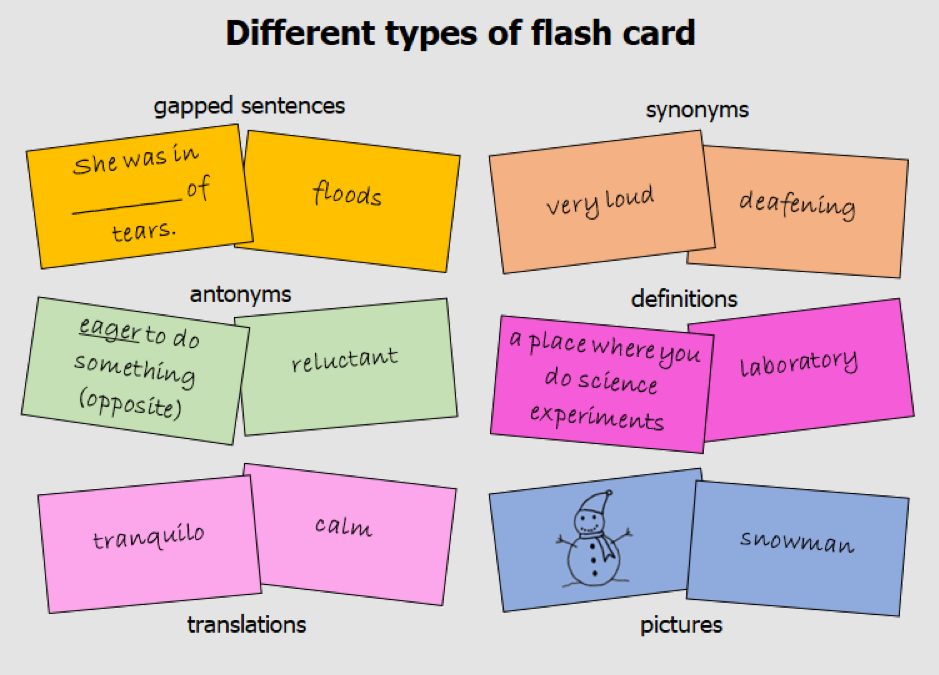
Are Flashcards Effective for Vocabulary Building?
Flashcards can be highly effective for vocabulary building in language learning, especially when used correctly. They leverage spaced repetition, a technique proven to enhance memory retention. Here’s why they work:
See AlsoWhat Is A Friends Clash On Duolingo: A complete guide- Active recall: Flashcards force the brain to retrieve information, strengthening memory.
- Portability: They can be used anywhere, making practice convenient.
- Customization: Learners can focus on specific words or phrases they struggle with.
Do Flashcards Encourage Rote Memorization?
One criticism of flashcards is that they may promote rote memorization without deeper understanding. However, this depends on how they’re used:
- Contextual learning: Adding example sentences can prevent mindless repetition.
- Visual aids: Images or mnemonics can help create meaningful connections.
- Combination with other methods: Pairing flashcards with conversation practice avoids over-reliance on memorization.
Can Flashcards Improve Pronunciation?
Flashcards alone may not be sufficient for pronunciation improvement, but they can play a supportive role:
- Audio integration: Digital flashcards with native speaker audio enhance pronunciation.
- Phonetic spelling: Adding phonetic transcriptions aids correct pronunciation.
- Repetition: Repeated exposure to words helps internalize their sounds.
Are Digital Flashcards Better Than Physical Ones?
The choice between digital and physical flashcards depends on personal preference and learning style:
See AlsoLearning Chinese as a beginner- Accessibility: Digital flashcards are available on multiple devices.
- Spaced repetition algorithms: Apps like Anki optimize review timing.
- Tactile learning: Some learners benefit from physically writing and handling cards.
Do Flashcards Work for Advanced Language Learners?
Flashcards can still be useful for advanced learners, but their application may differ:
- Complex phrases: Focus shifts from single words to idiomatic expressions.
- Grammar rules: Advanced learners can use flashcards for nuanced grammar points.
- Specialized vocabulary: Tailored flashcards help with technical or niche language.
What are the downsides of flashcards?

Limited Contextual Learning
Flashcards often focus on isolated facts rather than providing a broader understanding of concepts. This can lead to superficial learning, where the user memorizes information without grasping its real-world application or deeper meaning.
See AlsoDuolingo French: A Comprehensive Guide to Learning with the Popular App- They may neglect connections between ideas, making it harder to apply knowledge in complex scenarios.
- Over-reliance on flashcards can result in rote memorization instead of critical thinking.
- Some subjects, like literature or philosophy, require nuanced understanding, which flashcards struggle to deliver.
Passive Learning Tendency
Flashcards can encourage passive consumption of information rather than active engagement. Users might flip through cards without deeply processing the material, reducing long-term retention.
- They often lack interactive elements that stimulate deeper cognitive processing.
- Without additional exercises, flashcards may fail to reinforce problem-solving skills.
- Users might mistake recognition for true recall, leading to overconfidence.
Time-Consuming Creation Process
Designing effective flashcards demands significant time and effort, especially for comprehensive subjects. Poorly made cards can hinder learning rather than help.
- Writing detailed questions and answers can be labor-intensive.
- Updating or expanding flashcard sets requires ongoing maintenance.
- Digital flashcard tools may have a steep learning curve for some users.
Risk of Overwhelm or Burnout
Large flashcard decks can create cognitive overload, making it difficult to prioritize key information. This may lead to frustration or disengagement.
- Users might struggle to identify high-yield material amid excessive cards.
- Repetitive review sessions can become monotonous, reducing motivation.
- Without proper spacing, flashcard practice may feel unmanageable.
Dependence on Correct Usage
Flashcards only work well when used strategically. Poor techniques, like cramming or neglecting spaced repetition, can diminish their effectiveness.
- Inefficient review schedules may waste time on already-mastered content.
- Misformatted cards (e.g., overly complex questions) can hinder comprehension.
- Users might ignore active recall principles, reducing the method's benefits.
Why is learning Chinese so hard?

The Complexity of Chinese Characters
One of the biggest challenges in learning Chinese is mastering its writing system, which relies on thousands of characters rather than an alphabet. Unlike phonetic languages, each character represents a unique meaning and sound, requiring memorization of strokes, radicals, and combinations.
- Thousands of characters: Learners must memorize around 3,000–5,000 characters for basic literacy.
- No phonetic clues: Characters often don’t indicate pronunciation, making reading and writing harder.
- Stroke order rules: Writing requires precise stroke sequences, adding another layer of difficulty.
Tonal Pronunciation Challenges
Chinese is a tonal language, meaning the pitch or intonation of a word changes its meaning. Mispronouncing tones can lead to misunderstandings, as the same syllable can have multiple meanings based on tone.
- Four main tones: Mandarin has four tones (plus a neutral tone), each altering word meaning.
- Tone sensitivity: Subtle pitch changes are hard for non-native speakers to distinguish and reproduce.
- Context reliance: Without proper tones, sentences become ambiguous or incorrect.
Lack of Cognates and Grammar Differences
Chinese shares few cognates with English or other Indo-European languages, and its grammar structure differs significantly, making it harder for learners to find familiar reference points.
- No verb conjugations: Verbs don’t change for tense, number, or gender, but time is indicated with particles.
- Word order importance: Sentence structure is rigid, and mistakes can change meaning entirely.
- Limited loanwords: Few words are borrowed from English, reducing vocabulary shortcuts.
Cultural and Contextual Nuances
Chinese language is deeply tied to its culture, and understanding idioms, proverbs, and historical references is essential for fluency, adding another layer of complexity.
- Chengyu (idioms): Four-character phrases often reference ancient stories or philosophy.
- Politeness hierarchies: Speech varies based on social status, age, and relationships.
- Context-heavy communication: Much meaning is implied rather than stated explicitly.
Limited Exposure and Practice Opportunities
Unlike widely spoken languages like Spanish or French, learners often have fewer opportunities to practice Chinese in daily life, slowing progress.
- Scarce immersion environments: Fewer communities or media outlets use Chinese outside native regions.
- Media barriers: Chinese films, books, and news are less accessible to beginners.
- Dialect variations: Regional dialects (e.g., Cantonese) differ significantly from Mandarin.
How to use flashcards to learn Chinese?

Choosing the Right Flashcards for Learning Chinese
To effectively learn Chinese, selecting the right flashcards is crucial. Opt for cards that include characters, Pinyin, and English translations to reinforce comprehension. Digital flashcard apps like Anki or Pleco are highly recommended for their spaced repetition systems.
- Prioritize quality over quantity—focus on cards with clear visuals and accurate information.
- Use cards with audio pronunciations to improve listening and speaking skills.
- Include example sentences to understand context and usage.
Organizing Flashcards by Topic or Difficulty
Categorizing flashcards helps streamline learning. Group them by themes (e.g., food, travel) or difficulty levels (beginner, intermediate) to target specific areas of improvement.
- Start with basic vocabulary before advancing to complex characters.
- Separate HSK-level words if preparing for proficiency tests.
- Mix old and new cards to reinforce memory retention.
Incorporating Spaced Repetition for Better Retention
Spaced repetition is a proven method to enhance long-term memory. Apps like Anki automate this process by scheduling reviews based on your performance.
- Review cards at increasing intervals to strengthen recall.
- Focus more on challenging words and less on mastered ones.
- Adjust repetition frequency based on personal progress.
Practicing Writing with Flashcards
Flashcards can also improve writing skills. Use blank cards to practice writing Chinese characters from memory.
- Trace characters first, then write them without references.
- Include stroke order diagrams to ensure accuracy.
- Test yourself by covering the character and writing it from Pinyin or English prompts.
Using Flashcards for Speaking and Listening Practice
Flashcards with audio features are invaluable for improving pronunciation and listening comprehension.
- Repeat aloud after hearing the audio to practice speaking.
- Use cards with minimal context to test listening comprehension.
- Record yourself and compare with native pronunciations for self-correction.
Frequently Asked Questions (FAQ)
Why are flashcards ineffective for learning Chinese characters?
Flashcards often promote rote memorization without context, which is particularly problematic for Chinese characters. Unlike alphabetic languages, Chinese relies on radicals, strokes, and contextual meanings, which flashcards fail to convey holistically. Without understanding how characters function in sentences or their cultural nuances, learners struggle with retention and practical application. Additionally, flashcards isolate characters, ignoring the importance of tones, grammar, and syntax in Mandarin.
Do flashcards hinder long-term retention of Chinese vocabulary?
Yes, because they prioritize short-term recall over deep learning. Studies show that learners using flashcards often remember characters temporarily but forget them quickly due to lack of spaced repetition in meaningful contexts. Chinese requires active engagement, such as reading texts or writing sentences, to reinforce memory. Flashcards also neglect auditory and kinesthetic learning, which are critical for mastering tones and handwriting.
Can flashcards teach the nuances of Chinese tones and pronunciation?
No. Flashcards are visually focused and rarely incorporate audio or tonal practice. Mandarin’s four tones are essential for meaning, yet flashcards treat characters as static symbols. Mispronouncing a tone can change a word’s meaning entirely (e.g., mā vs. mà), but flashcards don’t correct or reinforce proper pronunciation. Tools like language apps or tutors are better for tonal training.
Are there better alternatives to flashcards for learning Chinese?
Absolutely. Immersive methods, such as reading books, watching Chinese media, or conversing with native speakers, provide contextual learning. Apps like Pleco or Skritter combine SRS (spaced repetition systems) with writing and audio. Additionally, mnemonics and storytelling help encode characters more deeply than flashcards. For tones, shadowing exercises or language exchange partners are far more effective.
Leave a Reply
Related Posts