
The tones in Mandarin are more important than you think

Mastering Mandarin tones is often underestimated by learners, yet they are the backbone of effective communication in Chinese. Unlike many languages where pitch is flexible, Mandarin relies on four distinct tones (plus a neutral tone) to differentiate meaning. A single mispronounced tone can turn mother (mā) into horse (mǎ), leading to confusion or unintended humor. While vocabulary and grammar are essential, neglecting tones can render even well-structured sentences incomprehensible. Native speakers instinctively rely on tonal accuracy, making it a critical component of fluency. For anyone serious about Mandarin, prioritizing tones isn’t just helpful—it’s non-negotiable for clear and accurate expression.
Why Mandarin Tones Are More Crucial Than You Realize
The Role of Tones in Differentiating Meanings
In Mandarin, tones are essential because they change the meaning of words entirely. For example, the syllable ma can mean mother (mā, first tone), hemp (má, second tone), horse (mǎ, third tone), or scold (mà, fourth tone). Mispronouncing a tone can lead to confusion or even offense, as the intended word may be completely different.
| Tone | Example (ma) | Meaning |
|---|---|---|
| First Tone (mā) | 妈 | Mother |
| Second Tone (má) | 麻 | Hemp |
| Third Tone (mǎ) | 马 | Horse |
| Fourth Tone (mà) | 骂 | Scold |
How Tones Affect Communication Clarity
Mandarin relies heavily on intonation for clear communication. Without proper tones, sentences can become ambiguous or nonsensical. For instance, saying wǒ xiǎng mǎi mǐ (我想买米, I want to buy rice) with the wrong tone on mǎi (买, buy) could sound like wǒ xiǎng mái mǐ (我想卖米, I want to sell rice), altering the message entirely.
See AlsoThe Ten Most Common Names in ChinaCommon Mistakes Learners Make with Tones
Many learners underestimate tones early on, focusing only on vocabulary and grammar. Common errors include mixing up the third and fourth tones or neglecting the neutral tone. For example, hěn (很, very) requires a third tone, but learners often pronounce it flatly, making it sound unnatural.
Tones in Context: Real-Life Examples
In daily conversations, tones help distinguish between homophones (words that sound alike but have different meanings). For example, shū could mean book (书, first tone) or uncle (叔, first tone), but context and tones clarify the meaning. Mispronouncing tones can lead to humorous or awkward situations.
Tips for Mastering Mandarin Tones
To improve tone accuracy, practice listening and repeating native speakers, use mnemonics, and record yourself to compare. Tone pairs (two-syllable combinations) are especially helpful. For example, practice mǎi cài (买菜, buy vegetables) to master the third-fourth tone transition.
See AlsoTone errors in Mandarin that actually can cause misunderstandings| Tip | Description |
|---|---|
| Listen & Repeat | Imitate native speakers' tone patterns. |
| Use Mnemonics | Associate tones with visual or auditory cues. |
| Record Yourself | Compare your pronunciation with natives. |
| Practice Tone Pairs | Drill common two-syllable tone combinations. |
How important are tones in Mandarin?
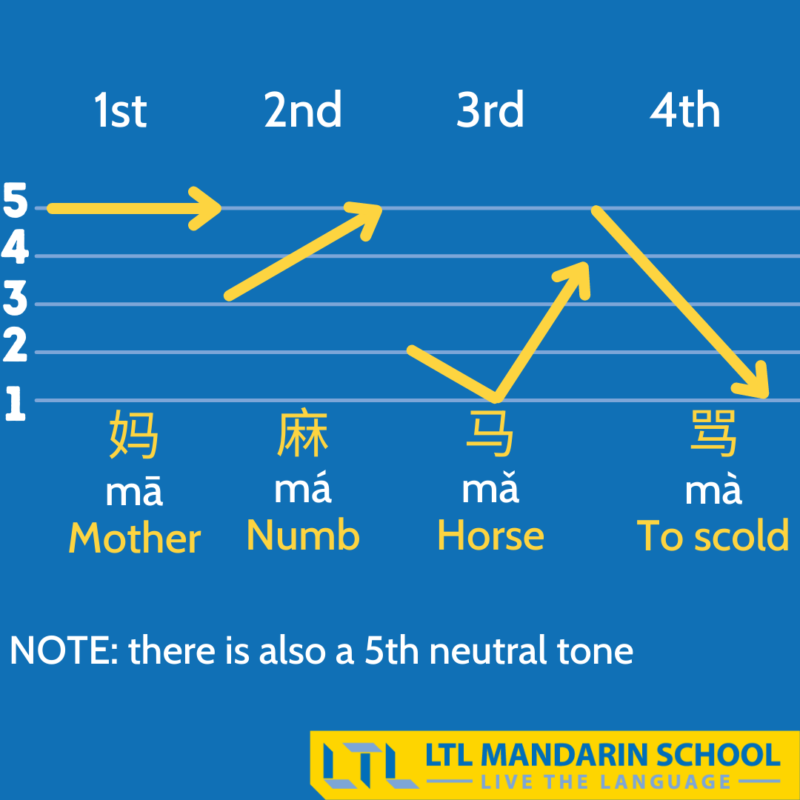
The Role of Tones in Mandarin Pronunciation
Tones are a fundamental aspect of Mandarin pronunciation because they distinguish the meanings of words that otherwise sound identical. Mandarin has four main tones and a neutral tone, each altering the pitch contour of a syllable. Mispronouncing a tone can lead to misunderstandings, as the same syllable with different tones can mean entirely different things.
- First tone (high-level): A steady high pitch, like singing a note.
- Second tone (rising): Starts mid and rises, similar to asking a question in English.
- Third tone (falling-rising): Dips low before rising, often shortened in speech.
- Fourth tone (falling): Sharp and abrupt, like a command.
- Neutral tone: Light and quick, often used in unstressed syllables.
How Tones Affect Meaning in Mandarin
Tones are crucial because they change the meaning of words even if the phonetic sounds are identical. For example, mā (妈, mother) and mà (骂, scold) differ only in tone but have completely unrelated meanings. Without proper tones, communication becomes ambiguous or incorrect.
See AlsoPimsleur vs Duolingo: Choosing Your Language Learning Path- Mā (妈): First tone means mother.
- Má (麻): Second tone means hemp or numb.
- Mǎ (马): Third tone means horse.
- Mà (骂): Fourth tone means scold.
Common Challenges for Learners with Mandarin Tones
Non-native speakers often struggle with tones because many languages do not use pitch to distinguish meaning. This can lead to persistent errors, especially with the third tone (falling-rising), which is frequently mispronounced or simplified in fast speech.
- Confusing tones: Mixing up rising (second) and falling-rising (third) tones.
- Overlooking neutral tones: Forgetting to lighten unstressed syllables.
- Inconsistent pitch control: Difficulty maintaining the correct pitch contour.
Strategies for Mastering Mandarin Tones
Improving tone accuracy requires targeted practice, such as listening exercises, tone pairs, and mimicking native speakers. Tools like pinyin charts and language apps can reinforce correct pronunciation.
- Use tone pairs: Practice two-syllable combinations to hear tone changes.
- Shadow native speakers: Repeat after recordings to internalize pitch patterns.
- Record and compare: Analyze your pronunciation against native audio.
The Impact of Tones on Mandarin Fluency
Tones are not just a pronunciation detail—they are essential for fluency. Even advanced learners may face comprehension issues if tones are neglected, as native speakers rely heavily on pitch to interpret meaning quickly.
See AlsoBabbel vs Duolingo Spanish: Learning App Comparison (2025)- Listening comprehension: Recognizing tones speeds up understanding.
- Speaking clarity: Correct tones prevent miscommunication.
- Natural rhythm: Tones contribute to the musicality of Mandarin speech.
What is the tone rule in Mandarin?

What Are the Basic Tones in Mandarin?
Mandarin Chinese has four primary tones and one neutral tone, each altering the meaning of a syllable. Here’s a breakdown:
- First Tone (High-Level Tone): A steady high pitch, represented by a flat line (e.g., mā 妈 - mother).
- Second Tone (Rising Tone): Starts mid and rises to high, like a question (e.g., má 麻 - hemp).
- Third Tone (Low-Dipping Tone): Starts mid, dips low, then rises (e.g., mǎ 马 - horse).
- Fourth Tone (Falling Tone): Starts high and drops sharply (e.g., mà 骂 - scold).
- Neutral Tone: Light and short, often used in unstressed syllables (e.g., ma 吗 - question particle).
How Do Tones Change Meaning in Mandarin?
Tones are phonemic, meaning they distinguish word meanings. For example:
- Shī (诗): First tone means poem.
- Shí (十): Second tone means ten.
- Shǐ (史): Third tone means history.
- Shì (是): Fourth tone means yes or to be.
What Is Tone Sandhi in Mandarin?
Tone sandhi refers to tone changes in specific contexts. Key rules include:
- Third-Tone Sandhi: Two third tones in a row change the first to a second tone (e.g., nǐ hǎo → ní hǎo).
- 一 (yī) and 不 (bù) Sandhi: 一 changes to second tone before fourth tones and fourth tone before others. 不 becomes second tone before fourth tones.
How Are Tones Marked in Pinyin?
Pinyin uses diacritics to indicate tones:
- First Tone: ā (flat line).
- Second Tone: á (rising mark).
- Third Tone: ǎ (dipping mark).
- Fourth Tone: à (falling mark).
- Neutral Tone: No mark (e.g., ma).
Why Are Tones Challenging for Learners?
Mastering tones is difficult due to:
- Minimal Pairs: Small tone differences change meanings entirely (e.g., mā vs. mà).
- Contextual Changes: Rules like sandhi add complexity.
- Listening Discrimination: Non-native speakers often struggle to distinguish tones initially.
Do tones matter when singing in Mandarin?
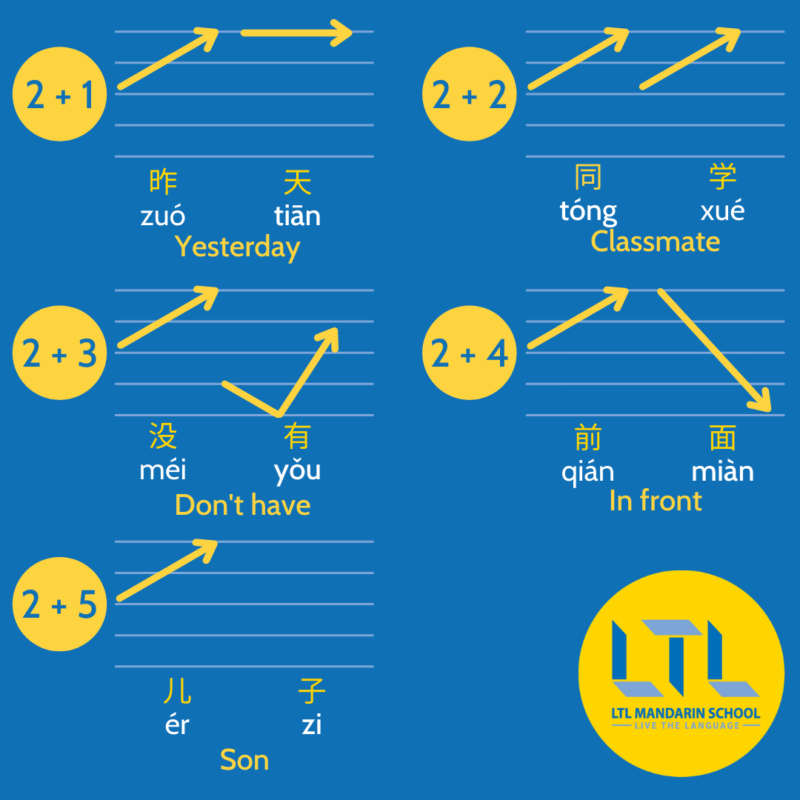
The Importance of Tones in Mandarin Singing
Tones are crucial in Mandarin because they define the meaning of words. When singing, however, the melody often takes precedence, which can alter or neutralize tones.
- Mandarin relies on four tones (plus a neutral tone), each changing a word's meaning.
- Singing prioritizes musical pitch, sometimes conflicting with spoken tones.
- Skilled singers balance tones and melody to maintain clarity.
How Singers Adapt Tones to Music
Singers often adjust tones to fit the melodic contour of a song while preserving intelligibility.
- Modifying tone contours to align with notes.
- Emphasizing context to compensate for lost tonal clarity.
- Using vocal techniques like vibrato to imply tones.
Cases Where Tones Are Less Critical
In some musical styles, tones become secondary to emotional expression or rhythm.
- Fast-paced songs may blur tones without losing meaning.
- Repetitive lyrics rely on context rather than precise tones.
- Non-native listeners may not notice tonal inaccuracies.
The Role of Context in Understanding Lyrics
Contextual clues help listeners interpret words even if tones are unclear.
- Surrounding lyrics provide meaning.
- Song themes guide interpretation.
- Visual and cultural cues in performances aid comprehension.
Training Techniques for Mandarin Singers
Professional singers practice tone-melody integration to enhance clarity.
- Tone drills alongside scales.
- Lyric recitation before singing.
- Collaboration with linguists to refine pronunciation.
Is it difficult to follow the Mandarin tones?
Why Are Mandarin Tones Challenging for Learners?
Mandarin tones are difficult because they require precise pitch variations to distinguish meaning. Unlike many languages where tone is optional, Mandarin relies on it entirely. Here’s why:
- Pitch sensitivity: A slight change in tone can alter a word’s meaning completely (e.g., mā (mother) vs. mà (scold)).
- Lack of equivalents: Most Indo-European languages don’t use tones lexically, making it unfamiliar.
- Musicality: Some learners struggle with perceiving or reproducing the required pitch contours.
How Many Tones Does Mandarin Have?
Mandarin has four primary tones and a neutral tone, each with distinct pitch patterns:
- First tone: High and flat (e.g., mā 妈/mother).
- Second tone: Rising (e.g., má 麻/hemp).
- Third tone: Dipping (e.g., mǎ 马/horse).
- Fourth tone: Falling (e.g., mà 骂/scold).
- Neutral tone: Light and short (e.g., ma 吗/question particle).
Common Mistakes When Learning Mandarin Tones
Learners often make these errors when tackling Mandarin tones:
- Confusing tones 2 and 3: The rising vs. dipping distinction is subtle but critical.
- Overlooking tone pairs: Tones change in context (e.g., two third tones become second + third).
- Ignoring the neutral tone: It’s shorter and lighter but still affects meaning.
Tips to Master Mandarin Tones Effectively
Improving tone accuracy requires targeted practice:
- Use pinyin with tone marks: Visual aids reinforce memorization.
- Mimic native speakers: Shadowing recordings helps internalize pitch patterns.
- Practice tone pairs: Drill combinations (e.g., hǎo + rén) to handle real speech.
Do Native Speakers Always Use Tones Perfectly?
Even native speakers occasionally deviate, but context usually clarifies meaning:
- Fast speech: Tones may shorten or merge in casual conversation.
- Regional accents: Some dialects modify standard Mandarin tones.
- Emphasis: Emotional stress can alter pitch temporarily.
Frequently Asked Questions (FAQ)
Why are tones so important in Mandarin?
Tones are a fundamental aspect of Mandarin because they change the meaning of words entirely. Unlike in English, where intonation conveys emotion or emphasis, Mandarin relies on four distinct tones (plus a neutral tone) to differentiate between otherwise identical syllables. For example, the syllable ma can mean mother (第一声, mā), hemp (第二声, má), horse (第三声, mǎ), or scold (第四声, mà) depending on the tone. Mispronouncing a tone can lead to confusion or even unintended offense, making mastery of tones essential for clear communication.
Can I still be understood if I don’t use tones correctly?
While native speakers may sometimes understand you through context, relying on this is risky. Mandarin has many homophones—words that sound the same but have different tones and meanings. Without proper tones, sentences can become ambiguous or nonsensical. For instance, saying wǒ xiǎng mǎi mǎ (I want to buy a horse) instead of wǒ xiǎng mǎi má (I want to buy hemp) due to a tone error could lead to miscommunication. Consistent tone mistakes may also make conversations frustrating for listeners, hindering fluency.
How can I improve my Mandarin tone pronunciation?
Improving tone pronunciation requires consistent practice and active listening. Start by drilling the four tones individually, using tools like pinyin charts or language apps that provide audio examples. Mimicking native speakers through shadowing exercises—repeating phrases immediately after hearing them—can help train your ear and mouth. Recording yourself and comparing it to native speech is another effective method. Additionally, practicing with a language partner or tutor who can provide immediate feedback will accelerate your progress and correct errors early.
Are tones equally important in all Chinese dialects?
While tones are crucial in all Chinese dialects, their number and complexity vary. Mandarin has four main tones, but other dialects like Cantonese can have six to nine tones, making them even more tonally intricate. However, Mandarin’s tones are particularly vital because of its widespread use as the official language of China and Taiwan. Even within Mandarin, regional accents may slightly alter tone contours, but the core tonal distinctions remain non-negotiable for clarity. If you’re learning Mandarin, focusing on tones early will provide a strong foundation for understanding other dialects later.
Leave a Reply
Related Posts