
The Ten Most Common Names in China

China, with its vast population and rich cultural heritage, boasts a diverse array of names that reflect its history, traditions, and societal values. Among the billions of people, certain names stand out as the most frequently used, often passed down through generations or inspired by contemporary trends. These names carry deep meanings, drawing from nature, virtues, or familial hopes. Understanding the most common names in China offers a glimpse into the country's linguistic preferences and cultural identity. This article explores the top ten names, their origins, and the significance behind their enduring popularity, shedding light on what makes them so widely cherished across the nation.
The Ten Most Common Names in China
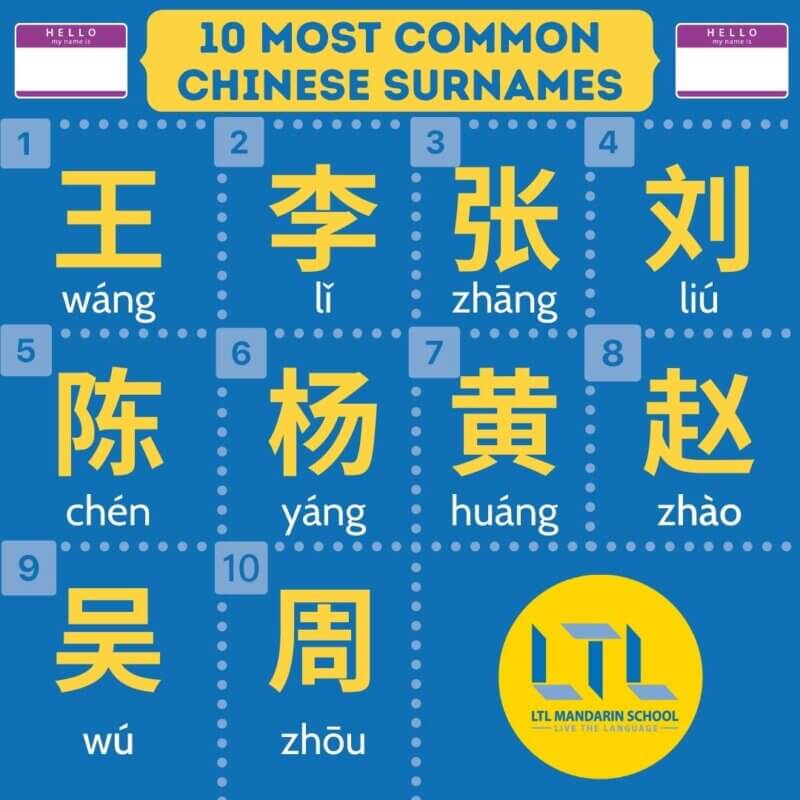
1. The Prevalence of the Name Wang
The name Wang is the most common surname in China, with over 92 million people sharing it. Originating from ancient dynasties, it signifies king or monarch, reflecting its historical importance. The name is widely distributed across all regions of China.
| Name | Meaning | Estimated Population |
|---|---|---|
| Wang | King/Monarch | 92 million+ |
2. The Significance of Li in Chinese Culture
Li is the second most common surname in China, with approximately 91 million bearers. It has roots in the Tang Dynasty and is associated with the plum tree, symbolizing resilience and perseverance. Many influential historical figures, including poets and scholars, carried this name.
See AlsoReview: Learning Chinese by video immersion with FluentU| Name | Meaning | Estimated Population |
|---|---|---|
| Li | Plum Tree | 91 million+ |
3. The Popularity of Zhang Across Generations
The surname Zhang ranks third, with around 87 million people. It means stretch or extend, often linked to archery in ancient times. This name is prevalent in northern China and has maintained its popularity for centuries.
| Name | Meaning | Estimated Population |
|---|---|---|
| Zhang | Stretch/Extend | 87 million+ |
4. The Historical Roots of Liu
Liu, the fourth most common name, is borne by roughly 70 million people. It was the surname of several Chinese emperors, particularly during the Han Dynasty. The name conveys a sense of nobility and legacy.
| Name | Meaning | Estimated Population |
|---|---|---|
| Liu | Willow Tree | 70 million+ |
5. The Cultural Impact of Chen
With about 60 million bearers, Chen is the fifth most common surname. It means to exhibit or ancient and is deeply tied to southern China, especially Fujian and Guangdong provinces.
See AlsoHow To Improve Chinese Vocabulary Using Fast and Effective Methods| Name | Meaning | Estimated Population |
|---|---|---|
| Chen | Exhibit/Ancient | 60 million+ |
What is ten name in Chinese?
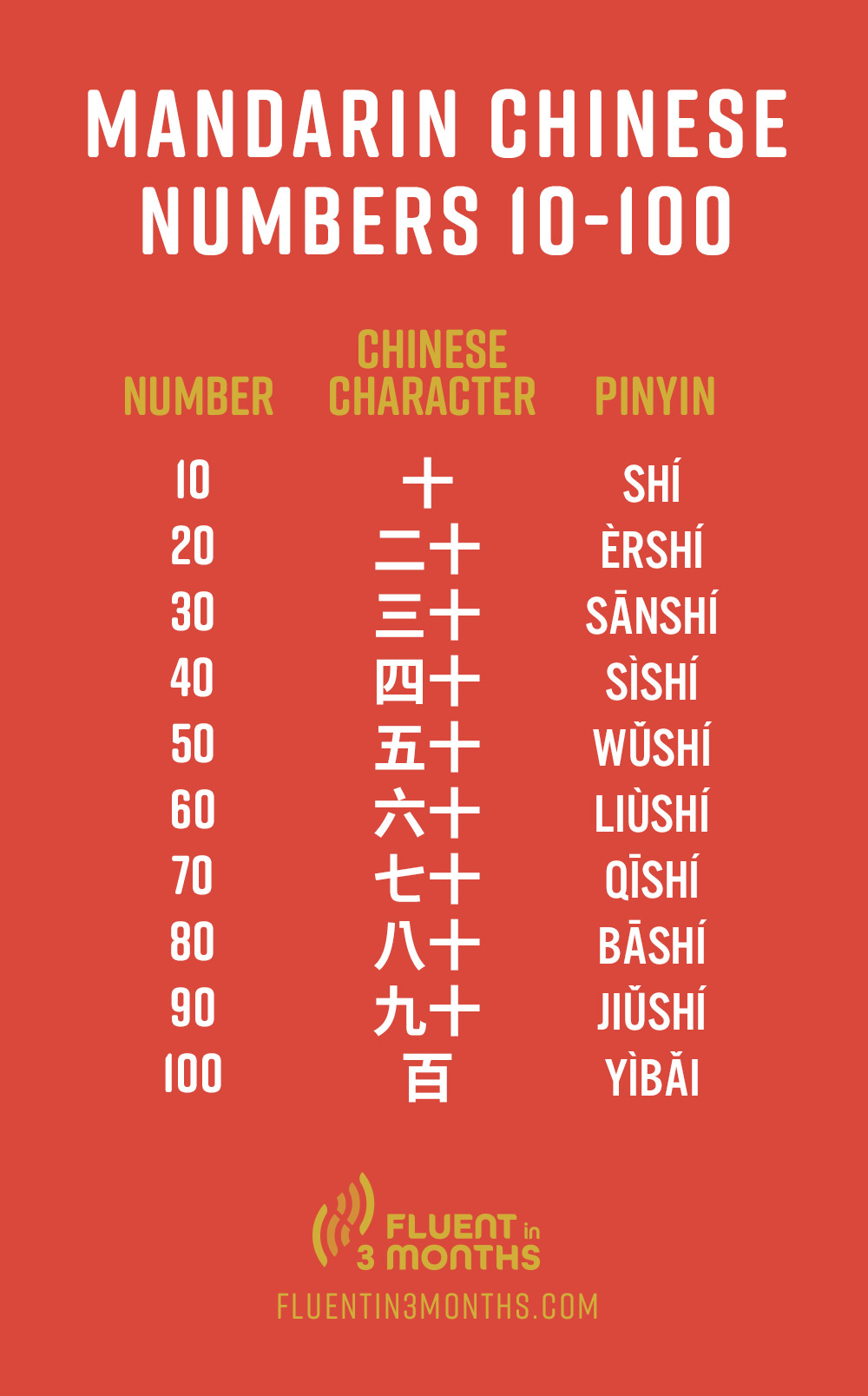
What Does Ten Mean in Chinese?
The word ten in Chinese is written as 十 and pronounced as shí. It is a fundamental numeral in Mandarin and is used in counting, dates, and other numerical contexts. Here are some key details:
- Character: The Chinese character for ten is 十, a simple horizontal stroke followed by a vertical one.
- Pronunciation: It is pronounced as shí in Mandarin, with a high, flat tone.
- Usage: 十 is used in numbers like 十一 (shí yī, eleven) or 二十 (èr shí, twenty).
How to Write Ten in Chinese Characters
Writing 十 in Chinese involves two basic strokes. Here’s how it’s formed:
See AlsoReading is a lot like spaced repetition, only better- First Stroke: A horizontal line from left to right.
- Second Stroke: A vertical line from top to bottom, intersecting the middle of the first stroke.
- Stroke Order: Always write the horizontal stroke before the vertical one.
Common Phrases Using Ten in Chinese
The numeral 十 appears in many common phrases and expressions. Here are a few examples:
- 十一 (shí yī): Means eleven (10 + 1).
- 二十 (èr shí): Means twenty (2 × 10).
- 十分 (shí fēn): Means very or extremely, literally ten parts.
Cultural Significance of the Number Ten in China
The number ten holds cultural importance in Chinese traditions. Here’s why:
- Completeness: It symbolizes wholeness, as in the Ten Heavenly Stems (天干) used in the Chinese calendar.
- Perfection: Often associated with ideals, like the Ten Perfections in Buddhism.
- Idioms: Phrases like 十全十美 (shí quán shí měi) mean perfect in every way.
Differences Between Ten in Mandarin and Other Chinese Dialects
While 十 is universal in written Chinese, pronunciation varies across dialects:
See AlsoDo People in China Celebrate Christmas?- Cantonese: Pronounced as sap6 in Jyutping.
- Hokkien: Pronounced as cha̍p in Southern Min.
- Shanghainese: Pronounced as zeq in Wu Chinese.
Which is the top 1 Chinese family name?
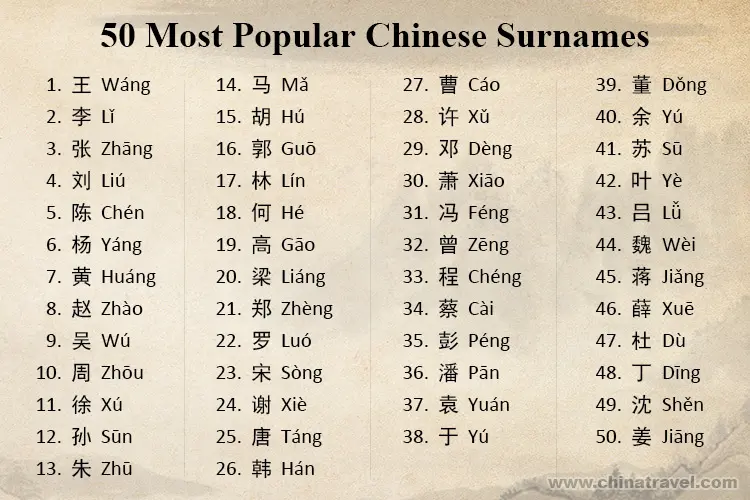
The top 1 Chinese family name is Wang (王), which is the most common surname in China, held by over 101.5 million people as of recent data. It has held this position for centuries due to its historical significance and widespread adoption across different regions.
What Does the Surname Wang Mean?
The surname Wang (王) translates to king or monarch in English, reflecting its royal connotations. Historically, it was associated with nobility and leadership.
- Derived from ancient Chinese rulers and aristocratic families.
- Symbolizes authority and power in Chinese culture.
- Commonly used in historical dynasties, reinforcing its prestige.
Why Is Wang the Most Popular Chinese Surname?
Wang's dominance stems from its long history and widespread adoption across different Chinese dynasties.
- Emerged during the Zhou Dynasty (1046–256 BCE) as a royal surname.
- Expanded due to population growth and migration.
- Retained popularity due to its simplicity and cultural significance.
How Does Wang Compare to Other Common Chinese Surnames?
Wang surpasses other major surnames like Li (李) and Zhang (张) by a small but significant margin.
- Li (李) ranks second with around 100 million bearers.
- Zhang (张) follows closely in third place.
- All three surnames have deep historical roots but differ in regional distribution.
Regional Distribution of the Wang Surname
The Wang surname is most concentrated in Northern China, particularly in provinces like Shandong and Hebei.
- High prevalence in urban areas due to historical migration patterns.
- Also common in Taiwan and overseas Chinese communities.
- Less dominant in Southern China compared to surnames like Chen (陈).
Famous Historical Figures with the Wang Surname
Many influential Chinese leaders and scholars have carried the Wang surname, reinforcing its legacy.
- Wang Anshi – A renowned reformist of the Song Dynasty.
- Wang Yangming – A famous philosopher in Ming Dynasty.
- Wang Zhenyi – A pioneering female astronomer and mathematician.
What is the common name for China?
The common name for China is The People's Republic of China (PRC) in official contexts, but it is often simply referred to as China in everyday language.
What is the Official Name of China?
The official name of China is The People's Republic of China, adopted in 1949 after the establishment of the communist government.
- It distinguishes the country from the Republic of China (Taiwan).
- The name reflects its political system as a socialist state.
- It is used in diplomatic and formal documents.
How is China Commonly Referred To?
In everyday conversation, China is most commonly called by its short form, China.
- This term is widely recognized in global media and trade.
- It avoids the political connotations of the full official name.
- Mainland China is sometimes used to exclude Hong Kong and Macau.
What Are the Historical Names for China?
Throughout history, China has been known by various names.
- Zhongguo (中国): Means Middle Kingdom in Mandarin.
- Cathay: An old European term derived from Khitan.
- Serica: Used in ancient Roman texts, referring to the Silk Road.
Why is China Called the Middle Kingdom?
The name Zhongguo (Middle Kingdom) reflects China's historical worldview.
- It signifies China's belief in being the cultural and political center of the world.
- Originated during the Zhou Dynasty (1046–256 BCE).
- Still used today as a nationalistic symbol.
What Are the Regional Names for China?
Different languages and regions have their own names for China.
- Chūgoku (中国): Japanese term, meaning Middle Country.
- Kitay (Китай): Russian name, derived from the Khitan people.
- Sin: Used in some Middle Eastern languages.
Frequently Asked Questions (FAQ)
What are the ten most common names in China?
The ten most common names in China include Zhang Wei, Li Na, Wang Fang, Liu Yong, Chen Jing, Yang Guang, Zhao Min, Huang Hui, Zhou Tao, and Xu Jie. These names are widely used due to their simplicity, cultural significance, and historical prevalence. Zhang, Li, and Wang are among the most frequent surnames, while the given names often reflect virtues, natural elements, or aspirations. The popularity of these names varies by region and generation, but they remain dominant across the country.
Why are certain names so common in China?
Certain names are extremely common in China due to a combination of cultural traditions, linguistic simplicity, and historical influence. Surnames like Li, Wang, and Zhang have been passed down for centuries and are shared by millions. Given names often incorporate positive meanings, such as strength (Yong), brightness (Guang), or beauty (Jing). Additionally, the limited number of Chinese characters used in names contributes to repetition, making some combinations ubiquitous.
How do Chinese parents choose names for their children?
Chinese parents typically select names based on meaning, sound, and family traditions. Many opt for names that convey virtues, aspirations, or natural elements, such as Hui (intelligence) or Tao (waves). Some consult fortune-tellers or name dictionaries to ensure the characters harmonize with the child's birth date and astrological signs. Additionally, parents may avoid names associated with negative historical figures or events, prioritizing positive connotations and ease of pronunciation.
Are there regional differences in popular names across China?
Yes, regional differences influence name popularity in China. For example, names in southern provinces might feature softer sounds or dialect-specific characters, while northern regions may favor stronger, more traditional names. Urban areas often see trends toward modern or Western-influenced names, whereas rural areas retain classic choices. Despite these variations, surnames like Li and Wang remain dominant nationwide, reflecting China's shared cultural heritage.
Leave a Reply
Related Posts