
Listen before you read: Improve your listening ability

Improving your listening skills is a crucial step in mastering any language, yet it’s often overlooked in favor of reading or speaking. Listen before you read is a powerful technique that can enhance comprehension, pronunciation, and overall fluency. By engaging with audio content first, you train your ear to recognize sounds, intonation, and natural speech patterns before relying on written text. This method helps bridge the gap between passive understanding and active communication. Whether you're a beginner or an advanced learner, prioritizing listening can accelerate your progress and build confidence in real-life conversations. Discover how this simple shift in approach can transform your language learning journey.
Listen Before You Read: How to Enhance Your Listening Skills
Why Listening Comes Before Reading in Language Learning
Improving your listening skills before diving into reading helps you internalize pronunciation, intonation, and rhythm. Many language learners make the mistake of focusing solely on reading, but auditory input strengthens comprehension and retention. By listening first, you train your brain to recognize sounds naturally, making reading easier later.
| Benefit | Explanation |
|---|---|
| Better Pronunciation | Hearing words first helps mimic correct sounds. |
| Improved Comprehension | Recognizing spoken words aids in understanding written text. |
| Natural Flow | Listening helps grasp sentence rhythm and pacing. |
Effective Techniques to Improve Listening Skills
To enhance your listening ability, use methods like active listening, repetition, and varied audio sources. Start with slower, clear speech and gradually move to faster, natural conversations. Tools like podcasts, audiobooks, and language apps provide structured practice.
See AlsoNew Reading and Listening Quizzes to Study Chinese| Technique | How It Helps |
|---|---|
| Active Listening | Focusing intently to understand context and details. |
| Shadowing | Repeating spoken phrases to improve pronunciation. |
| Diverse Audio Sources | Exposure to different accents and speaking styles. |
The Role of Repetition in Listening Practice
Repetition is key to mastering listening skills. Replaying audio segments helps reinforce vocabulary and sentence structures. Studies show that repeated exposure to the same material increases retention and fluency over time.
| Repetition Strategy | Outcome |
|---|---|
| Spaced Repetition | Long-term memory retention of heard phrases. |
| Daily Listening | Consistent exposure sharpens auditory recognition. |
How Listening Enhances Vocabulary Acquisition
Listening exposes you to new words in context, making them easier to remember. Unlike isolated word lists, hearing vocabulary in conversations or stories provides real-life usage examples, improving recall and application.
| Listening-Based Learning | Vocabulary Benefit |
|---|---|
| Contextual Learning | Words are learned with their natural usage. |
| Collocation Awareness | Understanding common word pairings in speech. |
Common Mistakes to Avoid When Practicing Listening
Many learners hinder progress by using overly complex materials too soon or multitasking while listening. Avoid these pitfalls by selecting level-appropriate content and dedicating focused time without distractions.
See AlsoCan English learning materials help you learn Chinese?| Mistake | Solution |
|---|---|
| Starting with Fast Speech | Begin with slower, clearer audio and progress gradually. |
| Passive Listening | Engage actively by taking notes or summarizing. |
How can I improve my listening skills?
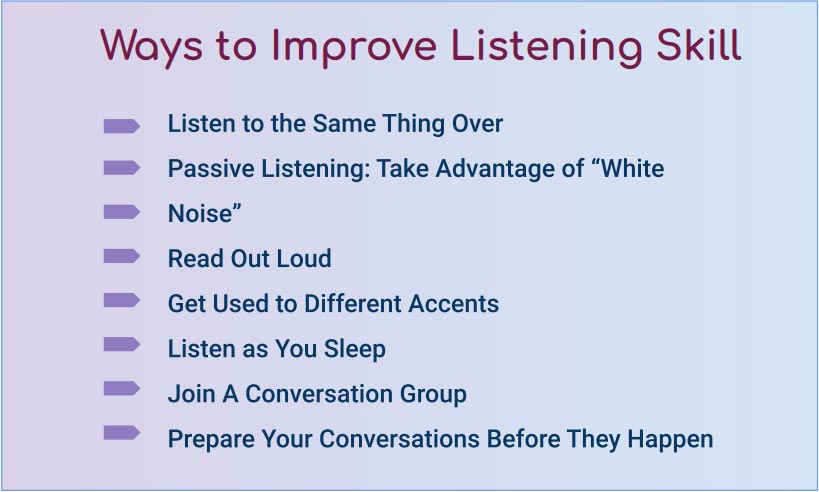
Active Listening Techniques
To improve your listening skills, practice active listening, which involves fully concentrating on the speaker. Here are key techniques:
- Maintain eye contact to show engagement and focus.
- Avoid interrupting the speaker; let them finish their thoughts.
- Summarize or paraphrase what you heard to confirm understanding.
Expand Your Exposure to Different Accents
Listening to various accents and dialects enhances comprehension. Follow these steps:
See AlsoChengyu, a magic key to Chinese language and culture, or a waste of time?- Watch movies or TV shows in different English accents (e.g., British, American, Australian).
- Listen to podcasts or audiobooks featuring diverse speakers.
- Practice with language exchange partners from different regions.
Use Listening Exercises and Tools
Structured exercises can sharpen your listening abilities. Try these methods:
- Transcribe audio clips to train your ear for details.
- Use language apps like Duolingo or Rosetta Stone for targeted practice.
- Take online quizzes with listening comprehension questions.
Improve Vocabulary and Context Understanding
A strong vocabulary aids in better listening. Implement these strategies:
- Learn common phrases and idioms to grasp implied meanings.
- Read while listening (e.g., subtitles or transcripts) to connect words with sounds.
- Note unfamiliar words and review them later.
Practice Regularly in Real-Life Situations
Consistent real-world practice is crucial. Apply these tips:
- Engage in conversations with native speakers whenever possible.
- Attend events or meetings where English is spoken.
- Record and review your own listening progress over time.
What are the 5 steps of listening skills?
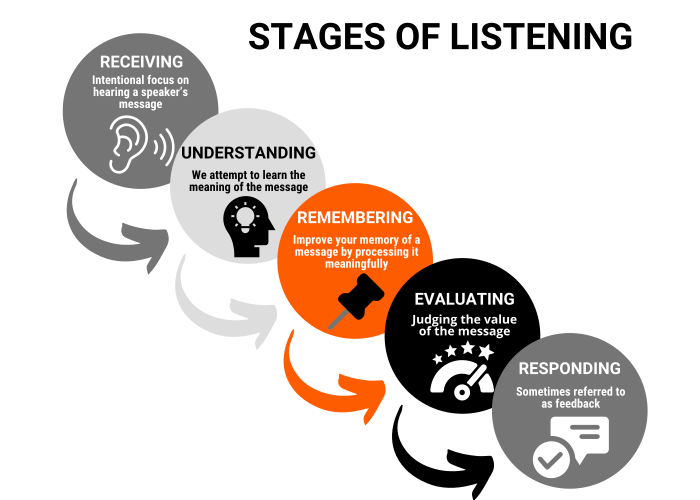
1. Receiving the Message
The first step in effective listening skills involves physically hearing and receiving the speaker's message. This requires focus and minimizing distractions to ensure the information is accurately captured.
- Pay attention to the speaker without interrupting.
- Avoid external distractions like background noise or devices.
- Maintain eye contact and open body language.
2. Understanding the Message
After receiving the message, the listener must comprehend its meaning. This involves processing the words, tone, and context to grasp the speaker's intent.
- Interpret the speaker's words and nonverbal cues.
- Clarify any ambiguities by asking questions.
- Summarize the message in your own words to confirm understanding.
3. Remembering the Information
Retention is crucial for effective listening. This step involves storing key points for future reference or action.
- Take notes if necessary to reinforce memory.
- Use mnemonics or repetition to retain details.
- Focus on the main ideas rather than every word.
4. Evaluating the Message
This step requires critical thinking to assess the validity, relevance, and importance of the message before responding.
- Analyze the speaker's arguments for logic and evidence.
- Identify any biases or assumptions in the message.
- Determine the credibility of the source.
5. Responding Appropriately
The final step involves providing feedback to the speaker, demonstrating engagement and understanding.
- Acknowledge the message verbally or nonverbally (e.g., nodding).
- Ask follow-up questions to deepen the discussion.
- Offer a thoughtful response that reflects active listening.
Why do I learn better by listening than reading?
The Role of Auditory Processing in Learning
Some individuals learn better by listening because their auditory processing is more developed than their visual processing. The brain processes spoken information differently, often making it easier to retain and recall. Key factors include:
- Auditory learners naturally absorb information more efficiently through sound.
- Listening engages the brain's temporal lobe, which specializes in processing speech and sounds.
- Spoken language can include intonation and emphasis, helping clarify meaning.
Memory Retention and Listening
Listening can improve memory retention because it often involves repetition and active engagement. Unlike reading, which relies on visual decoding, auditory learning leverages:
- Echoic memory, which briefly retains sounds for processing.
- The ability to replay spoken information mentally.
- Multisensory reinforcement when combined with voice modulation.
Cognitive Load and Comprehension
Reading requires decoding symbols, which can increase cognitive load, whereas listening may feel more natural. Reasons include:
- Reduced effort in language processing when hearing vs. reading.
- Listening allows for real-time interpretation without visual distractions.
- Some brains are wired for auditory input as a primary learning method.
Listening often creates a stronger emotional connection, enhancing learning. This is due to:
- The human voice conveying emotion and emphasis.
- Social interaction elements, like tone and pacing, aiding understanding.
- Storytelling techniques making information more relatable.
Neurological Preferences in Learning Styles
Your brain may simply prefer auditory stimuli due to neurological wiring. Contributing factors are:
- Dominant auditory pathways in the brain for some individuals.
- Faster neural activation when processing sounds vs. text.
- Evolutionary advantages of oral tradition in human learning.
Frequently Asked Questions (FAQ)
Why is listening important before reading to improve my English skills?
Listening before reading helps train your brain to recognize sounds, intonation, and pronunciation in natural speech. By exposing yourself to spoken language first, you develop a better understanding of how words and phrases flow in real conversations. This method strengthens your comprehension skills and makes it easier to connect written words with their spoken forms, improving both your listening and reading abilities simultaneously.
How can I effectively practice listening before reading?
Start by selecting audio materials that match your proficiency level, such as podcasts, audiobooks, or dialogues. Listen carefully without reading the text first, focusing on key words and phrases. Afterward, read the transcript to compare what you heard with the written words. This reinforces vocabulary retention and helps identify areas where your listening needs improvement. Repeating this process regularly will enhance your auditory recognition and overall language skills.
What types of content are best for this listening-first approach?
Choose materials that are engaging and relevant to your interests, such as TED Talks, news clips, or language-learning podcasts. Content with clear pronunciation and moderate pacing is ideal for beginners, while advanced learners can challenge themselves with faster speech or accents. Using subtitles or transcripts afterward ensures you can verify your understanding and learn new vocabulary in context.
How long should I spend on listening practice before reading?
Dedicate at least 10-15 minutes per session to focused listening before reviewing the text. Consistency is key—practicing daily, even for short periods, yields better results than occasional long sessions. Over time, you’ll notice improved listening accuracy and faster comprehension. Adjust the duration based on your progress, gradually increasing difficulty as your ear for the language becomes more attuned.
Leave a Reply
Related Posts