
How to Memorize Chinese Characters Faster with 3 of the Best Apps to Learn Chinese

Learning Chinese characters can seem daunting, but with the right tools, the process becomes much faster and more enjoyable. Memorizing these intricate symbols requires effective strategies, and modern language apps offer innovative solutions to simplify the task. This article explores three of the best apps designed to help you master Chinese characters efficiently. Whether you're a beginner or looking to refine your skills, these apps leverage spaced repetition, mnemonics, and interactive exercises to accelerate your learning. Discover how to optimize your study routine and retain characters longer with these powerful digital resources. Start your journey to fluency today with the right tools at your fingertips.
How to Memorize Chinese Characters Faster with 3 of the Best Apps to Learn Chinese
1. Why Is Memorizing Chinese Characters Challenging?
Memorizing Chinese characters can be difficult due to their complex strokes, lack of phonetic clues, and sheer quantity (over 50,000 characters, though only about 3,500 are commonly used). Unlike alphabetic languages, each character represents a unique meaning and sound, requiring visual memorization and repetition.
| Challenge | Solution |
|---|---|
| Complex strokes | Break characters into radicals/components |
| No phonetic clues | Use apps with pinyin and audio |
| Large quantity | Focus on high-frequency characters first |
2. What Are the Best Apps to Learn Chinese Characters?
The top 3 apps for memorizing Chinese characters efficiently are:
1. Anki – Uses spaced repetition (SRS) for long-term retention.
2. Pleco – Combines a dictionary, flashcards, and OCR for real-world practice.
3. Skritter – Focuses on writing practice with stroke-order feedback.
| App | Key Feature |
|---|---|
| Anki | Customizable SRS flashcards |
| Pleco | OCR scan + example sentences |
| Skritter | Stroke-order writing practice |
3. How Does Spaced Repetition Help with Memorization?
Spaced repetition systems (SRS) like Anki schedule reviews at optimal intervals to combat forgetting. By reviewing characters just before you’re likely to forget them, SRS boosts long-term retention. Apps like Anki adjust intervals based on your performance, making study sessions more efficient.
| Benefit | How It Works |
|---|---|
| Long-term retention | Reviews timed to memory decay |
| Efficiency | Focuses on harder characters |
4. Can Writing Characters Improve Memorization?
Yes! Writing characters by hand reinforces muscle memory and visual recognition. Apps like Skritter guide you through correct stroke order, which is crucial for recall. Studies show that writing engages multiple cognitive processes, deepening memory.
| Advantage | App Support |
|---|---|
| Muscle memory | Skritter’s stroke feedback |
| Visual reinforcement | Grid writing practice |
5. How to Combine Apps for Faster Learning?
Maximize efficiency by combining apps:
- Use Anki for SRS review.
- Check Pleco for contextual examples.
- Practice writing with Skritter.
This multi-method approach covers reading, writing, and recall.
| App | Role in Learning |
|---|---|
| Anki | Memorization |
| Pleco | Context/usage |
| Skritter | Writing mastery |
What is the fastest way to memorize Chinese characters?
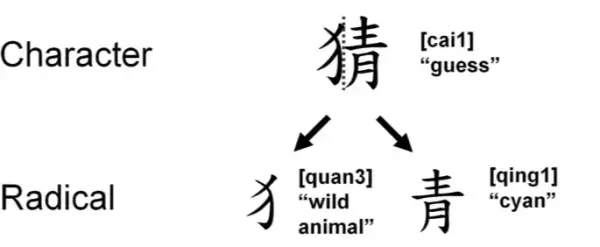
Understanding the Structure of Chinese Characters
To memorize Chinese characters quickly, it's essential to understand their structure. Most characters are composed of radicals and phonetic components. Breaking them down into smaller parts makes them easier to recall. For example:
- Radicals: These are the building blocks that often hint at the character's meaning (e.g., 水 for water-related characters).
- Phonetic components: These suggest pronunciation (e.g., 青 in 清 sounds like qīng).
- Strokes and stroke order: Learning the correct sequence improves writing speed and recognition.
Using Mnemonics and Visualization Techniques
Mnemonics and visualization can significantly speed up memorization by creating mental associations. Here’s how:
See AlsoDuolingo Languages Available: Full Course List 2025- Storytelling: Link characters to vivid stories (e.g., 休 rest depicts a person 亻 leaning against a tree 木).
- Imagery: Turn characters into pictures (e.g., 山 mountain resembles peaks).
- Exaggeration: Amplify features to make them memorable (e.g., 大 big looks like a person stretching arms wide).
Spaced Repetition Systems (SRS)
Spaced repetition leverages timing to reinforce memory. Tools like Anki or Pleco use this method:
- Flashcards: Review characters at increasing intervals to combat forgetting.
- Custom decks: Focus on high-frequency or personally relevant characters first.
- Consistency: Daily practice ensures long-term retention.
Practicing Writing and Reading Simultaneously
Combining writing and reading reinforces memory through multiple senses:
- Handwriting: Writing characters by hand engages motor memory.
- Contextual reading: Encounter characters in sentences or texts to grasp usage.
- Dictation: Listen and write to connect sound, meaning, and form.
Leveraging Technology and Apps
Modern tools can accelerate learning with interactive features:
- Apps like Skritter: Combine SRS with stroke-order practice.
- Pleco: Offers dictionaries, flashcards, and OCR for real-world practice.
- Language exchange platforms: Use characters in conversations with native speakers.
How long does it take to learn 300 Chinese characters?

Factors Affecting the Time to Learn 300 Chinese Characters
The time required to learn 300 Chinese characters depends on several factors, including:
- Prior experience: Learners with background in Mandarin or other logographic languages may progress faster.
- Study frequency: Daily practice accelerates retention compared to sporadic sessions.
- Learning methods: Techniques like flashcards, writing drills, or apps (e.g., Anki, Skritter) impact efficiency.
- Character complexity: Simple characters (e.g., 一, one) take minutes, while complex ones (e.g., 愛, love) require repetition.
- Goals: Recognizing characters vs. writing them affects timelines.
Average Time Estimates for Learning 300 Characters
Based on common learning curves:
- Beginner: 3–6 months (1–2 hours daily).
- Intermediate: 2–4 months (reinforcing existing knowledge).
- Intensive study: 1–2 months (4+ hours daily with immersion).
Effective Strategies to Speed Up Learning
To master 300 characters efficiently:
- Spaced repetition: Use apps like Pleco or Memrise to optimize review intervals.
- Radical breakdown: Learn components (e.g., 氵for water-related characters) to decode meanings.
- Contextual learning: Study characters in phrases or sentences (e.g., 你好, hello).
Common Challenges When Learning 300 Characters
Obstacles learners face include:
- Stroke order: Incorrect writing habits slow progress.
- Homophones: Characters like 是 (shì, to be) and 事 (shì, matter) sound identical but differ in meaning.
- Retention: Without consistent review, characters are easily forgotten.
Tools and Resources for Mastering 300 Characters
Recommended aids:
- Textbooks: Integrated Chinese or HSK Standard Course provide structured lessons.
- Apps: Duolingo, HelloChinese, or Hanping for interactive practice.
- Writing practice: Grid paper or digital tools like Skritter for stroke accuracy.
How can I speed up my Chinese learning?

Immerse Yourself in the Language Daily
To speed up your Chinese learning, immerse yourself in the language as much as possible. Surround yourself with Chinese media, conversations, and materials to train your brain to think in the language.
- Listen to Chinese podcasts, music, or radio daily.
- Watch Chinese TV shows or movies with subtitles.
- Label objects around your home with their Chinese names.
Practice Speaking with Native Speakers
Regular conversation practice is crucial for fluency. Engaging with native speakers helps improve pronunciation and builds confidence.
- Use language exchange apps like Tandem or HelloTalk.
- Join local or online Chinese-speaking communities.
- Record yourself speaking and compare it to native speakers.
Master High-Frequency Vocabulary First
Focusing on high-frequency words ensures you learn the most useful terms quickly, allowing you to communicate faster.
- Prioritize learning common phrases and sentences.
- Use flashcards (Anki or Pleco) for spaced repetition.
- Review vocabulary in context, not just in isolation.
Leverage Structured Learning Resources
A structured approach prevents wasted time and keeps your progress consistent.
- Follow a textbook or online course (e.g., HSK materials).
- Set clear weekly and monthly learning goals.
- Track your progress with quizzes and self-assessments.
Incorporate Writing and Character Recognition
Learning Chinese characters can be challenging, but consistent writing practice accelerates memorization.
- Write characters daily using grid paper.
- Break down characters into radicals for easier recall.
- Use apps like Skritter for stroke-order practice.
Frequently Asked Questions (FAQ)
What are the best apps to learn Chinese characters faster?
Memorizing Chinese characters can be challenging, but using the right apps can make the process much easier. Pleco, Anki, and Skritter are among the top apps for this purpose. Pleco offers a comprehensive dictionary with stroke order animations, Anki uses spaced repetition for long-term retention, and Skritter combines writing practice with flashcards. These apps focus on visual recognition, writing practice, and active recall, helping learners master characters more efficiently.
How does spaced repetition help with memorizing Chinese characters?
Spaced repetition is a scientifically proven method that enhances memory by reviewing information at increasing intervals. Apps like Anki use this technique to ensure characters stay fresh in your mind. By systematically repeating characters just before you forget them, the method strengthens long-term retention. This approach is especially useful for Chinese characters, as their complexity requires frequent reinforcement to avoid forgetting.
Why is writing practice important when learning Chinese characters?
Writing practice is crucial because it engages motor memory, reinforcing how characters are formed. Apps like Skritter allow learners to trace characters on their devices, mimicking traditional pen-and-paper methods. This hands-on approach helps users remember stroke order and character structure, making recognition and recall faster. Without writing practice, learners may struggle to distinguish similar-looking characters or recall them accurately.
Can visual aids improve Chinese character memorization?
Yes, visual aids play a significant role in learning Chinese characters. Apps like Pleco provide stroke order animations and radical breakdowns, helping learners understand how characters are constructed. Associating characters with images or mnemonics—common in apps like Anki—also enhances memory by creating mental connections. Visual learning is particularly effective for logographic scripts like Chinese, where each character represents meaning and sound.
Leave a Reply
Related Posts