
All the resources you need to learn and teach Chinese stroke order

Mastering Chinese stroke order is essential for both learners and teachers, as it forms the foundation of writing Chinese characters correctly and efficiently. Whether you're a beginner or an educator, having the right resources can make the process smoother and more effective. This article compiles a comprehensive list of tools, guides, and practice materials to help you understand and teach stroke order with confidence. From textbooks and online tutorials to interactive apps and worksheets, these resources cater to different learning styles and levels. Dive in to discover everything you need to master this fundamental aspect of Chinese writing.
All the Resources You Need to Learn and Teach Chinese Stroke Order
1. Online Tools for Practicing Chinese Stroke Order
Learning Chinese stroke order is essential for proper character writing, and several online tools make this process easier. Websites like Arch Chinese, Hanzi Grids, and Skritter provide interactive stroke order animations, quizzes, and writing practice. These platforms often include audio pronunciations and example sentences to reinforce learning.
| Tool | Features |
|---|---|
| Arch Chinese | Stroke order animations, printable worksheets |
| Hanzi Grids | Customizable practice sheets, stroke order diagrams |
| Skritter | Interactive writing, spaced repetition |
2. Mobile Apps for Learning Stroke Order
For learners who prefer studying on the go, mobile apps like Pleco, HelloChinese, and Chinese Writer offer stroke order practice with touch-screen writing recognition. These apps often include gamified learning and progress tracking to keep users motivated.
See AlsoThe Basics of Chinese Stroke Order, Explained| App | Key Benefits |
|---|---|
| Pleco | Flashcards with stroke order, dictionary integration |
| HelloChinese | Step-by-step writing exercises, pronunciation help |
| Chinese Writer | Timed challenges, character breakdowns |
3. Books and Workbooks for Stroke Order Mastery
Traditional books and workbooks remain valuable for mastering Chinese stroke order. Publications like The First 100 Chinese Characters and Learning Chinese Characters provide structured exercises, stroke diagrams, and practice grids. These resources are ideal for classroom teaching or self-study.
| Book | Focus |
|---|---|
| The First 100 Chinese Characters | Basic characters with stroke order rules |
| Learning Chinese Characters | Mnemonics and writing practice |
| Chinese Character Writing Workbook | Grid-based repetition exercises |
4. Video Tutorials and YouTube Channels
Visual learners can benefit from video tutorials that demonstrate Chinese stroke order in real time. YouTube channels like Yoyo Chinese, ChineseFor.Us, and FluentU Mandarin offer free lessons with clear, slow-motion writing demonstrations. These videos often explain stroke direction and common mistakes.
| Channel | Content Style |
|---|---|
| Yoyo Chinese | Beginner-friendly, step-by-step guides |
| ChineseFor.Us | Structured courses with quizzes |
| FluentU Mandarin | Real-life context, interactive subtitles |
5. Printable Worksheets and PDF Guides
For those who prefer offline practice, printable worksheets and PDF guides are excellent resources. Websites like MandarinSpot and ChineseConverter offer free downloadable sheets with stroke order diagrams and blank grids for repetition. Teachers can also customize these for classroom use.
See AlsoLearn Chinese implicitly through exposure with a seasoning of explicit instruction| Resource | Format |
|---|---|
| MandarinSpot | Printable grids, stroke order charts |
| ChineseConverter | Customizable PDFs, practice templates |
| YellowBridge | Character worksheets with radicals |
How to learn Chinese stroke order?
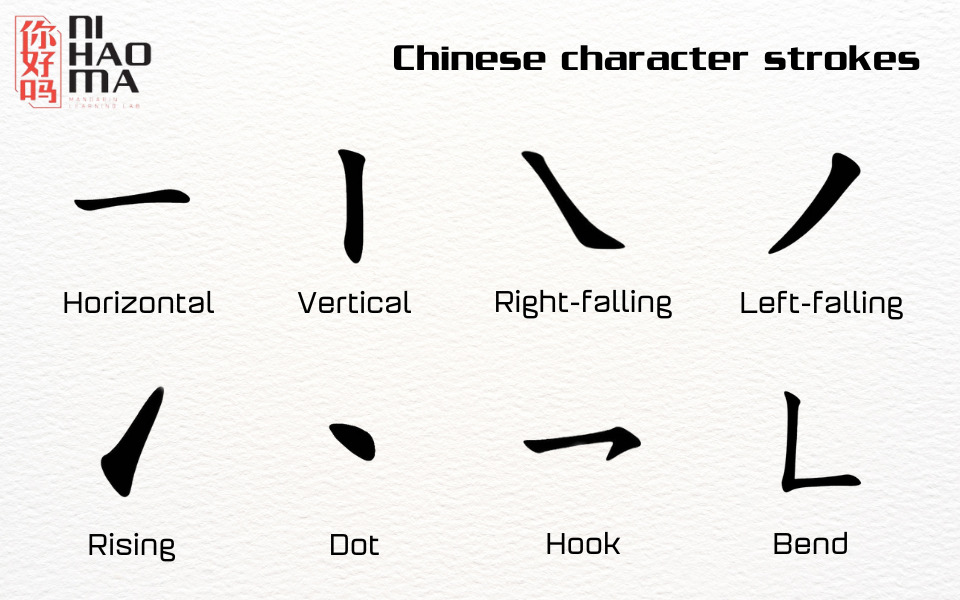
Understanding the Basics of Chinese Stroke Order
Learning Chinese stroke order begins with understanding the fundamental rules that govern how characters are written. These rules ensure consistency and legibility. Here are the key principles:
- Top to bottom: Start with strokes at the top of the character before moving downward.
- Left to right: Horizontal strokes are written from left to right.
- Horizontal before vertical: When strokes cross, horizontal ones are written first.
Practicing with Basic Strokes
Mastering basic strokes is essential before tackling full characters. Focus on these core strokes:
See AlsoFriends in Chinese - Complete Guide To The Famous Sitcom- Héng (横): A horizontal line written left to right.
- Shù (竖): A vertical line written top to bottom.
- Piě (撇): A left-falling diagonal stroke.
Using Grid Paper for Precision
Grid paper helps maintain proportion and alignment while practicing stroke order. Follow these steps:
- Divide the grid: Use squares to balance character components.
- Trace guidelines: Lightly mark stroke starting and ending points.
- Repeat consistently: Practice each character multiple times for muscle memory.
Leveraging Digital Tools and Apps
Digital resources like apps and websites can accelerate learning. Consider these options:
- Anki: Flashcards with stroke order animations.
- Skritter: Interactive writing practice with feedback.
- Pleco: A dictionary with stroke order diagrams.
Studying Common Radicals First
Radicals are building blocks of Chinese characters. Start with these frequently used ones:
See AlsoCan a 13 Year Old Learn Chinese in China?- 人 (rén): The person radical, written with two strokes.
- 口 (kǒu): The mouth radical, written in three strokes.
- 心 (xīn): The heart radical, written in four strokes.
What are the 8 basic strokes in Chinese?
:max_bytes(150000):strip_icc()/625px-8_Strokes_of_Han_Characters.svg-56a5e0065f9b58b7d0dedaa0.png)
The 8 Basic Strokes in Chinese Calligraphy
The 8 basic strokes in Chinese calligraphy form the foundation for writing all Chinese characters. These strokes are essential for mastering both handwriting and artistic calligraphy. Below is a detailed breakdown:
- Dot (点, Diǎn) – A small, downward or rightward press of the brush.
- Horizontal (横, Héng) – A straight, left-to-right line.
- Vertical (竖, Shù) – A straight, downward line.
- Hook (钩, Gōu) – A small upward flick at the end of another stroke.
- Rising (提, Tí) – A short, upward diagonal stroke.
- Downward Left (撇, Piě) – A sweeping curve from top-right to bottom-left.
- Downward Right (捺, Nà) – A longer, heavier stroke from top-left to bottom-right.
- Turning (折, Zhé) – A change in direction, combining two strokes into one.
1. The Dot (点, Diǎn) Stroke
The Dot stroke is the simplest yet crucial for characters like 永 (yǒng). It requires precision in pressure and direction.
- Used in characters like 心 (xīn) meaning heart.
- Can vary in shape: round, triangular, or elongated.
- Often the starting point for more complex strokes.
2. The Horizontal (横, Héng) Stroke
The Horizontal stroke is foundational, appearing in characters like 一 (yī, meaning one).
- Written from left to right with even pressure.
- Often the first stroke in many characters.
- Must be straight but can slightly tilt upward.
3. The Vertical (竖, Shù) Stroke
The Vertical stroke runs downward, as in 十 (shí, meaning ten).
- Written from top to bottom with steady pressure.
- Can end sharply or with a hook.
- Often the central axis of a character.
4. The Hook (钩, Gōu) Stroke
The Hook stroke adds flair, appearing in characters like 小 (xiǎo, meaning small).
- Always attached to another stroke.
- Can point upward, left, or right.
- Requires a quick flick of the brush.
5. The Turning (折, Zhé) Stroke
The Turning stroke combines two strokes, like in 口 (kǒu, meaning mouth).
- Changes direction without lifting the brush.
- Common in box-shaped characters.
- Can be horizontal-to-vertical or vice versa.
How many strokes are there in Chinese language?
The Chinese language consists of strokes that form its characters. There are 8 basic strokes, but when considering variations and compound strokes, the total number can reach over 30. These strokes are the building blocks of Chinese characters, and mastering them is essential for writing.
What Are the Basic Strokes in Chinese Characters?
The basic strokes are the simplest forms used to write Chinese characters. Here are the most common ones:
- Horizontal Stroke (横 héng): A straight line drawn from left to right.
- Vertical Stroke (竖 shù): A straight line drawn from top to bottom.
- Dot Stroke (点 diǎn): A small, downward or rightward dot.
- Hook Stroke (钩 gōu): A small hook added to other strokes.
- Upward Stroke (提 tí): A short, upward flick.
How Are Compound Strokes Formed?
Compound strokes are combinations of basic strokes to create more complex forms. Examples include:
- Horizontal Hook (横钩 héng gōu): A horizontal stroke ending with a hook.
- Vertical Hook (竖钩 shù gōu): A vertical stroke ending with a hook.
- Slant Stroke (撇 piě): A diagonal stroke falling from right to left.
- Press Stroke (捺 nà): A diagonal stroke falling from left to right.
- Turning Stroke (折 zhé): A stroke that changes direction sharply.
Why Are Strokes Important in Chinese Writing?
Strokes are fundamental to Chinese calligraphy and character recognition. Key reasons include:
- Character Structure: Strokes define the shape and balance of characters.
- Writing Order: Proper stroke order ensures legibility and speed.
- Calligraphy Aesthetics: Mastery of strokes enhances artistic expression.
How Many Variations of Strokes Exist?
Beyond the basic strokes, there are numerous variations, such as:
- Curved Hook (弯钩 wān gōu): A gently curved hook.
- Broken Stroke (断笔 duàn bǐ): A stroke with intentional breaks.
- Combination Strokes: Merging multiple strokes into one fluid motion.
What Is the Role of Strokes in Chinese Calligraphy?
In calligraphy, strokes are the foundation of style and technique:
- Precision: Each stroke must be executed with control.
- Flow: Strokes connect seamlessly to form characters.
- Expression: Variations in thickness and pressure convey emotion.
Do I need to learn stroke order?

Why is stroke order important in writing characters?
Learning stroke order is crucial because it ensures consistency and legibility when writing characters. Following the correct sequence helps in:
- Memorization: Proper stroke order reinforces muscle memory, making it easier to recall characters.
- Speed: Writing becomes faster and more fluid when strokes follow a logical pattern.
- Recognition: Others can read your handwriting more easily if strokes are correctly ordered.
Does stroke order affect handwriting quality?
Yes, stroke order directly impacts the aesthetics and balance of handwritten characters. Key reasons include:
- Proportion: Correct strokes ensure characters are well-proportioned and symmetrical.
- Flow: Natural stroke progression prevents awkward or disjointed writing.
- Tradition: Adhering to stroke order maintains cultural and historical accuracy.
Can I ignore stroke order and still write correctly?
While it’s possible to write characters without perfect stroke order, doing so may lead to:
- Errors: Higher chances of mistakes, especially in complex characters.
- Confusion: Difficulty distinguishing similar-looking characters.
- Inefficiency: Slower writing and harder-to-read handwriting.
How does stroke order help in learning new characters?
Mastering stroke order simplifies learning by providing a structured approach. Benefits include:
- Pattern recognition: Identifying common stroke sequences across characters.
- Decomposition: Breaking down complex characters into manageable strokes.
- Retention: Reinforcing memory through repetitive, ordered practice.
Are there exceptions to stroke order rules?
While most characters follow standard stroke order, exceptions exist due to:
- Variants: Some regional or stylistic variations alter stroke sequences.
- Simplifications: Simplified characters may have modified stroke orders.
- Calligraphy: Artistic writing sometimes prioritizes aesthetics over strict rules.
Frequently Asked Questions (FAQ)
What is Chinese stroke order and why is it important?
Chinese stroke order refers to the specific sequence and direction in which the strokes of a Chinese character are written. It is a fundamental aspect of learning Chinese calligraphy and handwriting. Following the correct stroke order ensures that characters are written efficiently, legibly, and consistently. It also aids in memorization, as the logical progression of strokes helps learners internalize the structure of characters. Additionally, proper stroke order is essential for using digital input methods, as many systems rely on stroke sequence to predict characters.
Where can I find reliable resources to learn Chinese stroke order?
There are numerous reliable resources available for learning Chinese stroke order, including online platforms, mobile apps, and textbooks. Websites like Arch Chinese and YellowBridge offer interactive tools that display stroke order animations for thousands of characters. Mobile apps such as Pleco and Skritter provide stroke order diagrams and practice exercises. For traditional learners, textbooks like The First 100 Chinese Characters include stroke order guides. Many of these resources also cater to teachers, offering printable worksheets and lesson plans.
How can I teach Chinese stroke order effectively to beginners?
Teaching Chinese stroke order effectively requires a combination of visual aids, repetition, and hands-on practice. Start by introducing the basic stroke types (e.g., horizontal, vertical, and diagonal strokes) before moving on to full characters. Use animated demonstrations or videos to show the correct sequence, and encourage students to trace characters in the air or on paper. Incorporate games or flashcards to make learning engaging. For classroom settings, provide grid paper to help students maintain proportion and spacing. Consistent feedback and correction are key to reinforcing proper habits.
Are there any common mistakes to avoid when learning Chinese stroke order?
Yes, learners often make common mistakes when studying Chinese stroke order. One frequent error is writing strokes in the wrong direction, such as drawing a horizontal line from right to left instead of left to right. Another mistake is skipping or combining strokes, which can alter the character's meaning or appearance. Beginners may also struggle with the order of complex characters, mistakenly writing components out of sequence. To avoid these pitfalls, it's crucial to practice with guided resources and seek feedback from teachers or native speakers. Patience and repetition are essential for mastering stroke order.
Leave a Reply
Related Posts