
Remembering is a skill you can learn

Memory is often seen as a fixed trait, but it’s actually a skill that can be developed with practice. Just like learning to play an instrument or mastering a sport, improving your memory requires the right techniques and consistent effort. From ancient mnemonic devices to modern cognitive strategies, humans have long explored ways to enhance recall. Whether you struggle with names, dates, or everyday tasks, understanding how memory works can unlock your potential. This article explores practical methods to train your brain, retain information more effectively, and turn forgetfulness into sharp, reliable recall. Discover how remembering is not just innate—it’s a skill you can learn.
How to Improve Your Memory: Remembering is a Skill You Can Learn
1. The Science Behind Memory and How It Works
Memory is a complex cognitive function that involves encoding, storing, and retrieving information. The brain uses different regions, such as the hippocampus and prefrontal cortex, to process memories. Understanding how memory works can help you develop better techniques to enhance recall.
| Memory Type | Function |
|---|---|
| Short-term Memory | Holds information temporarily (seconds to minutes) |
| Long-term Memory | Stores information for extended periods (days to years) |
| Working Memory | Manipulates information for cognitive tasks |
2. Effective Techniques to Boost Memory Retention
Improving memory requires practice and the right strategies. Some proven methods include spaced repetition, chunking, and mnemonics. These techniques help reinforce neural pathways, making information easier to recall.
See AlsoLearning Chinese is more like walking a thousand miles than running 100-metre dash| Technique | Description |
|---|---|
| Spaced Repetition | Reviewing material at increasing intervals |
| Chunking | Breaking information into smaller, manageable parts |
| Mnemonics | Using associations to remember facts (e.g., acronyms) |
3. The Role of Sleep and Nutrition in Memory
Sleep and nutrition play crucial roles in memory consolidation. Lack of sleep impairs cognitive function, while a balanced diet rich in omega-3 fatty acids and antioxidants supports brain health.
| Factor | Impact on Memory |
|---|---|
| Sleep | Enhances memory consolidation and learning |
| Omega-3 Fatty Acids | Supports brain cell structure and function |
| Antioxidants | Protects brain cells from oxidative stress |
4. How Mindfulness and Focus Enhance Memory
Mindfulness and focus improve memory by reducing distractions and increasing attention span. Techniques like meditation and deep breathing help train the brain to retain information more effectively.
| Practice | Memory Benefit |
|---|---|
| Meditation | Improves focus and working memory |
| Deep Breathing | Reduces stress, enhancing cognitive function |
| Mindful Learning | Encourages deeper encoding of information |
5. Common Memory Myths Debunked
Many misconceptions surround memory, such as the idea that some people are just born with a good memory. In reality, memory is a trainable skill. Another myth is that forgetting is always bad, but it actually helps the brain prioritize important information.
See AlsoWinter Dish: Simmered Lamb With Mooli| Myth | Fact |
|---|---|
| Photographic memory is common | Exceptional memory is rare and often trained |
| Older adults can't improve memory | Neuroplasticity allows memory improvement at any age |
| Multitasking boosts learning | Focusing on one task enhances memory retention |
Is remembering things a skill?

The Nature of Memory as a Skill
Remembering things can indeed be considered a skill because it involves the ability to encode, store, and retrieve information efficiently. Like any skill, memory can be improved with practice and the right techniques. Here’s why:
- Neuroplasticity allows the brain to adapt and strengthen memory pathways through repetition.
- Techniques like mnemonics or chunking demonstrate that memory can be trained systematically.
- Individuals with strong memory skills often use active recall and spaced repetition to enhance retention.
How Memory Differs From Innate Abilities
Unlike innate traits, memory is a learnable and improvable skill. While some people may have a natural predisposition, everyone can enhance their memory through deliberate practice. Key distinctions include:
See AlsoWhat you intend to write is more important than the character you actually write- Innate abilities are hardwired, whereas memory relies on strategies and habits.
- Memory performance varies based on effort and technique, not just genetics.
- Skills like memory can degrade without use, unlike fixed traits such as eye color.
Techniques to Improve Memory as a Skill
Enhancing memory involves adopting proven methods that leverage cognitive science. Here are some effective strategies:
- Spaced repetition: Reviewing information at increasing intervals to reinforce retention.
- Visualization: Creating mental images to make abstract information more memorable.
- Association: Linking new data to existing knowledge for easier recall.
The Role of Practice in Memory Development
Like mastering an instrument, improving memory requires consistent practice and refinement. Key aspects include:
- Regularly challenging the brain with new information strengthens neural connections.
- Using memory exercises, such as puzzles or flashcards, sharpens recall ability.
- Tracking progress helps identify which techniques work best for an individual.
Memory in Professional and Academic Settings
In competitive environments, a strong memory is a valuable asset. Here’s how it applies:
- Students use memory techniques to retain large volumes of information for exams.
- Professionals rely on recall for presentations, decision-making, and problem-solving.
- Fields like medicine and law demand precise memory for details and procedures.
Is remembering a cognitive skill?

What Is a Cognitive Skill?
Cognitive skills are the mental abilities that enable us to process information, reason, remember, and solve problems. These skills are essential for learning, decision-making, and performing daily tasks. Memory, in particular, is a fundamental cognitive skill because it allows us to retain and recall information.
- Memory is a core cognitive function that involves encoding, storing, and retrieving information.
- Attention and perception are other cognitive skills that work alongside memory.
- Problem-solving and critical thinking rely on cognitive abilities, including memory.
How Does Memory Function as a Cognitive Skill?
Memory operates through three key stages: encoding, storage, and retrieval. As a cognitive skill, it helps individuals retain experiences, knowledge, and skills over time. Without memory, learning and adaptation would be impossible.
- Encoding converts sensory input into a form the brain can process.
- Storage maintains the encoded information over time.
- Retrieval allows access to stored information when needed.
Types of Memory in Cognitive Psychology
In cognitive psychology, memory is categorized into different types, each serving a unique function. These distinctions highlight how memory operates as a multifaceted cognitive skill.
- Sensory memory briefly holds sensory information.
- Short-term memory retains information for a limited duration.
- Long-term memory stores information indefinitely.
Why Is Memory Essential for Learning?
Memory is crucial for learning because it allows individuals to build upon previous knowledge. Without the ability to remember, acquiring new skills or information would be inefficient and repetitive.
- Retention of facts and concepts supports academic learning.
- Procedural memory enables skill mastery through practice.
- Recall helps apply learned information in new contexts.
Can Memory Be Improved as a Cognitive Skill?
Yes, memory can be enhanced through various techniques and practices. Strengthening this cognitive skill involves consistent mental exercise and healthy habits.
- Mnemonic devices improve information retention.
- Regular practice reinforces neural connections.
- Healthy lifestyle choices, like sleep and nutrition, support memory function.
Why is memory an important skill?
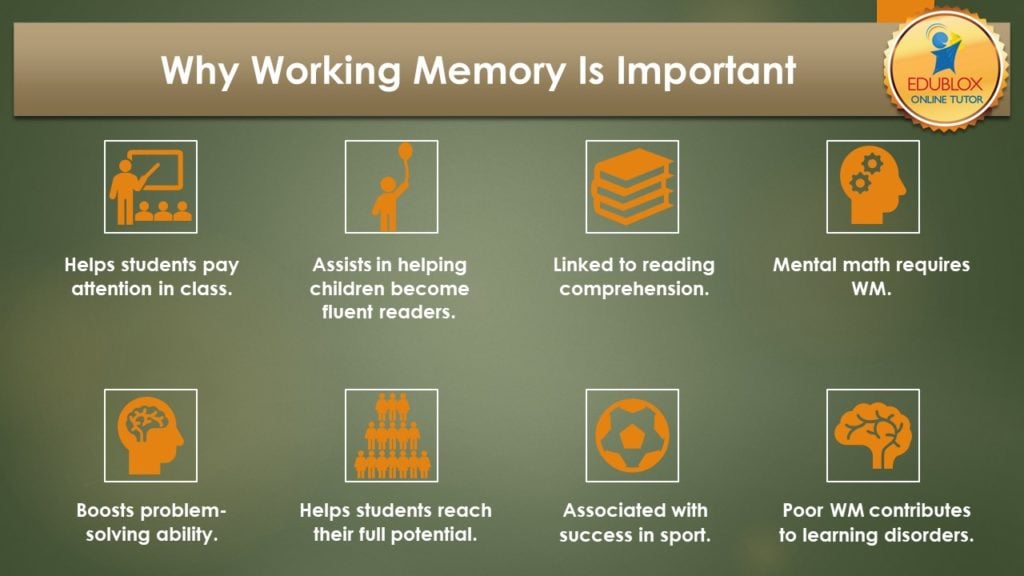
Why Is Memory Essential for Learning?
Memory is the foundation of learning because it allows individuals to retain and recall information. Without memory, acquiring new knowledge or skills would be impossible. Here are three key reasons why memory is vital for learning:
- Retention of information: Memory helps store facts, concepts, and experiences, enabling continuous learning.
- Application of knowledge: Recalling past lessons allows individuals to solve problems and make informed decisions.
- Skill development: Repeated practice and memorization strengthen abilities, such as language acquisition or mathematical reasoning.
How Does Memory Improve Problem-Solving?
A strong memory enhances problem-solving by providing quick access to relevant information. It enables individuals to draw from past experiences and apply learned strategies. Consider these points:
- Pattern recognition: Memory helps identify similarities between current and past challenges.
- Decision-making: Stored knowledge guides better choices by recalling previous outcomes.
- Creativity: Connecting memorized ideas fosters innovative solutions.
Why Is Memory Critical for Daily Functioning?
Memory is indispensable for daily life, as it supports routine tasks and social interactions. Without it, even simple activities would require constant relearning. Key aspects include:
- Navigation: Remembering locations and directions ensures efficient movement.
- Time management: Recalling schedules and deadlines improves productivity.
- Social bonds: Retaining names, faces, and conversations strengthens relationships.
How Does Memory Influence Professional Success?
In the workplace, a sharp memory boosts efficiency, credibility, and career growth. Professionals rely on memory to perform tasks accurately and build expertise. Important factors are:
- Task execution: Memorizing procedures reduces errors and speeds up work.
- Client relations: Remembering details about clients fosters trust and rapport.
- Continuous improvement: Retaining feedback and lessons enhances performance over time.
What Role Does Memory Play in Emotional Well-Being?
Memory significantly impacts emotional health by preserving personal experiences and shaping identity. It helps individuals process emotions and maintain mental balance. Notable points include:
- Positive reinforcement: Recalling joyful moments boosts happiness and resilience.
- Learning from mistakes: Remembering past failures prevents repeated errors.
- Identity formation: Personal memories contribute to self-awareness and growth.
Is learning and remembering the same thing?
What Is the Difference Between Learning and Remembering?
Learning and remembering are related but distinct cognitive processes. Learning involves acquiring new information, skills, or behaviors, while remembering refers to the ability to recall or retain that information over time. For example:
- Learning is the process of understanding a new concept, such as memorizing vocabulary in a foreign language.
- Remembering is the ability to retrieve that vocabulary later when needed, like during a conversation.
- While learning requires attention and comprehension, remembering depends on memory consolidation and retrieval mechanisms.
How Does Memory Play a Role in Learning?
Memory is essential for learning because it allows the brain to store and access information. Without memory, learning would be ineffective since knowledge couldn't be retained. Key aspects include:
- Short-term memory holds information temporarily, such as remembering a phone number briefly.
- Long-term memory stores learned information for extended periods, like recalling historical facts years later.
- Effective learning strategies, such as repetition and association, strengthen memory retention.
Can You Learn Without Remembering?
It is possible to learn something temporarily without remembering it long-term. For instance:
- Cramming for an exam may help in short-term recall but often leads to quick forgetting.
- Shallow learning methods, like passive reading, may not create strong memory traces.
- Deep learning techniques, such as active recall and application, improve retention.
Why Do We Sometimes Forget What We Learn?
Forgetting is a natural part of the memory process and can occur due to several reasons:
- Decay theory suggests unused memories fade over time.
- Interference happens when new information disrupts old memories, or vice versa.
- Lack of reinforcement or practice reduces the strength of memory traces.
How Can You Improve Both Learning and Remembering?
Enhancing learning and memory requires deliberate strategies, such as:
- Spaced repetition reinforces learning over intervals, improving retention.
- Active engagement, like teaching others, deepens understanding and recall.
- Using mnemonics or visualization techniques aids memory formation.
Frequently Asked Questions (FAQ)
How can I improve my memory as a skill?
Memory improvement is a skill that can be developed through consistent practice and the right techniques. Active recall, where you test yourself on information instead of passively reviewing it, is one of the most effective methods. Another powerful strategy is spaced repetition, which involves reviewing material at increasing intervals to strengthen retention. Additionally, associating new information with visual imagery or emotional connections can make it more memorable. Over time, these practices train your brain to retain and retrieve information more efficiently.
Why is remembering considered a skill and not just an innate ability?
While some people may have a natural predisposition for strong memory, research shows that memory is highly trainable. Techniques like chunking (breaking information into smaller parts) and mnemonics (memory aids) demonstrate that structured methods can enhance recall. Just like learning a language or playing an instrument, memory relies on practice, strategy, and repetition. This means anyone can improve their memory by adopting the right habits and tools.
What are the best daily habits to strengthen memory?
Building a strong memory requires daily habits that support cognitive function. Regular sleep is crucial, as it helps consolidate memories. Physical exercise boosts brain health by increasing blood flow and oxygen. A balanced diet rich in omega-3s and antioxidants also supports memory. Additionally, engaging in mental challenges, such as puzzles or learning new skills, keeps the brain active. Lastly, mindfulness and meditation can reduce stress, which is known to impair memory.
Can memory techniques help with long-term retention?
Absolutely. Techniques like elaborative encoding, where you connect new information to existing knowledge, enhance long-term retention. Another proven method is the method of loci, which involves visualizing information in familiar spatial contexts. Studies show that these strategies create stronger neural pathways, making memories more durable. By consistently applying these techniques, you can transform short-term memorization into lifelong learning.
Leave a Reply
Related Posts