
Can native speakers be wrong about Chinese grammar and pronunciation?

Native speakers are often considered the ultimate authority on their language, but can they be wrong about Chinese grammar and pronunciation? While their intuition is invaluable, linguistic accuracy isn’t always guaranteed. Dialectal variations, informal usage, and regional differences can lead even native speakers to overlook standard rules or mispronounce words. Additionally, prescriptive grammar rules taught in textbooks may differ from colloquial speech, creating confusion. This raises an important question: how reliable are native speakers when it comes to mastering the nuances of Chinese? Exploring this topic sheds light on the complexities of language learning and the role of expertise in linguistic correctness.
Can Native Speakers Be Wrong About Chinese Grammar and Pronunciation?
1. Do Native Speakers Make Mistakes in Chinese Grammar?
Native speakers, despite their fluency, can sometimes make grammatical errors in Chinese, especially in complex sentence structures or regional dialects. While they intuitively grasp most rules, exceptions and formal writing can trip them up.
| Scenario | Common Error |
|---|---|
| Colloquial speech | Omitting particles like 了 or 的 |
| Regional dialects | Mixing dialect-specific grammar into Mandarin |
2. Can Pronunciation Errors Occur Among Native Chinese Speakers?
Yes, mispronunciations happen due to regional accents, slang, or rapid speech. For example, southern speakers may confuse n and l sounds, while northerners might flatten tones in casual conversation.
See AlsoIntroducing TCB Talks: The Perfect Chinese Learning Podcast| Region | Pronunciation Quirk |
|---|---|
| Southern China | Merging zh/ch/sh with z/c/s |
| Beijing | Overusing erhua (儿化音) |
3. How Does Education Level Affect Grammar Accuracy?
Higher education correlates with better grammar awareness, but even educated natives may struggle with classical Chinese or technical terms. Informal speech often prioritizes ease over precision.
| Education Level | Typical Weakness |
|---|---|
| Basic | Confusing 再 and 又 |
| Advanced | Overcomplicating sentence structures |
4. Are There Generational Differences in Chinese Usage?
Younger generations often adopt internet slang or loanwords, while older speakers may cling to outdated phrases. This creates generational gaps in vocabulary and tone usage.
| Age Group | Trend |
|---|---|
| Teens | Abbreviated words like yyds (永远的神) |
| Elders | Using classical idioms excessively |
5. How Do Native Speakers React to Their Own Mistakes?
Most dismiss minor errors as colloquialism, but formal settings (e.g., exams, news broadcasts) demand correction. Self-awareness varies by individual and context.
See AlsoA language learner’s guide to reading comics in Chinese| Context | Attitude Toward Errors |
|---|---|
| Casual talk | Ignored or laughed off |
| Professional | Criticized or corrected |
What are the common pronunciation mistakes in English for Chinese speakers?
Mispronunciation of English Vowel Sounds
Chinese speakers often struggle with English vowel sounds due to differences in phonetic systems. For example:
- /iː/ vs. /ɪ/: Words like sheep and ship may sound similar because Mandarin lacks this distinction.
- /æ/ vs. /ɑː/: Confusing cat (/æ/) with cart (/ɑː/) is common, as Chinese doesn’t differentiate these sounds.
- Diphthongs: English diphthongs like /eɪ/ (face) may be shortened to a single vowel sound.
Difficulty with English Consonant Clusters
Chinese languages often avoid consonant clusters, leading to pronunciation errors such as:
See AlsoDoes Duolingo Actually Work? Real Results & Effectiveness- Adding vowels: Street might become su-treet to break up the /str/ cluster.
- Omitting consonants: Friends may sound like frens by dropping the /d/.
- Mispronouncing /θ/ and /ð/: These sounds (e.g., think, this) are often replaced with /s/ or /z/.
Confusing L and R Sounds
Some Chinese dialects merge /l/ and /r/, causing mistakes like:
- Swapping sounds: Light might sound like right, and vice versa.
- Overemphasis: Exaggerating the /r/ sound in words like very.
- Omitting /l/ at word endings: Mail could sound like may.
Stress and Intonation Patterns
Chinese is a tonal language, whereas English uses stress and intonation, leading to:
- Flat speech: Sentences may lack rising/falling tones, sounding monotone.
- Incorrect word stress: Misplacing emphasis (e.g., PHOtograph vs. phoTOgrapher).
- Ignoring sentence rhythm: Stressing every syllable equally instead of emphasizing key words.
Silent Letters and Unfamiliar Spellings
English spelling rules can be confusing, resulting in:
See AlsoWhat is Duolingo? The Complete Guide to the Popular Language Learning App- Pronouncing silent letters: Saying the k in knight or the b in comb.
- Misreading vowel combinations: Though and through may be pronounced similarly.
- Over-relying on pinyin: Applying Mandarin romanization rules to English words.
Do native English speakers know grammar?

Do native English speakers consciously study grammar rules?
While native English speakers acquire language naturally through immersion, many do not consciously study grammar rules unless formally educated. Their understanding often comes from intuition rather than memorization. Key points include:
- Informal learning: Most absorb grammar through listening and speaking from childhood.
- Formal education: Schools teach structured grammar, but retention varies.
- Regional differences: Dialects may influence perceived correctness of grammar usage.
Can native speakers identify grammatical errors easily?
Native speakers often recognize errors instinctively due to familiarity, even if they can’t explain the rules. For example:
- Subject-verb agreement: Mistakes like he go sound unnatural.
- Preposition misuse: Phrases like on accident vs. by accident stand out.
- Tense inconsistencies: Mixing past/present forms (e.g., I seen) is noticeable.
How does slang or informal speech affect grammar knowledge?
Slang and informal speech often bend or break formal grammar rules, but natives distinguish between contexts. Consider:
- Colloquial shortcuts: Gonna instead of going to is widely accepted verbally.
- Double negatives: Common in dialects (e.g., I don’t know nothing) despite being grammatically incorrect.
- Code-switching: Natives adjust grammar based on audience (e.g., professional vs. casual settings).
Do native speakers struggle with advanced grammar concepts?
Even fluent natives may falter with complex grammar, such as:
- Subjunctive mood: Correct use of If I were vs. If I was is often confused.
- Dangling modifiers: Errors like Running late, the bus was missed go unnoticed.
- Who/whom distinction: Many default to who regardless of case.
Is grammar knowledge uniform among native English speakers?
Grammar proficiency varies based on factors like education, exposure, and region. Notable differences include:
- Educational background: Those with higher education tend to master formal rules better.
- Geographical dialects: Some regions accept non-standard constructions (e.g., y’all as plural you).
- Professional needs: Writers/editors prioritize precision, while others may not.
Is Chinese grammar easy for English speakers?
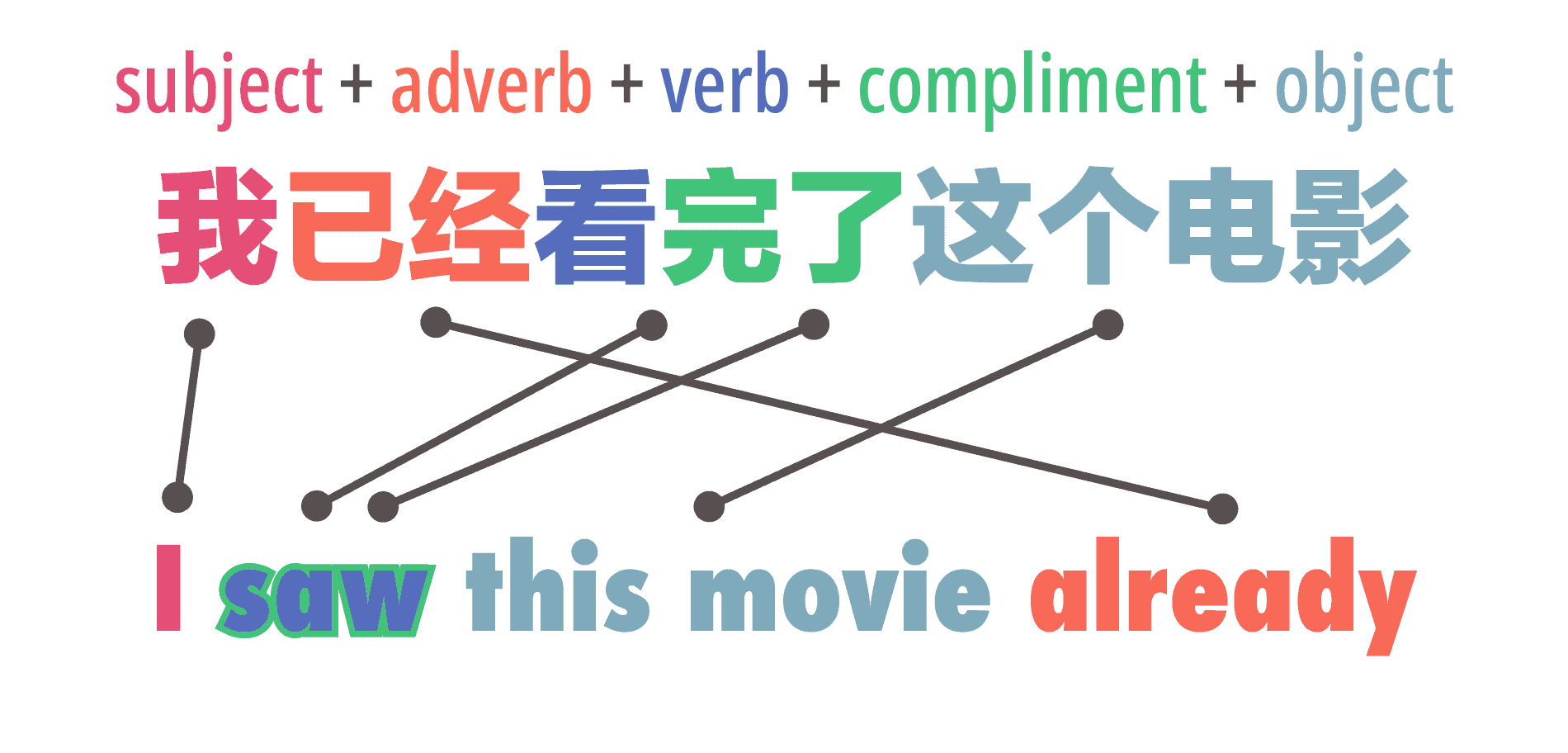
Basic Sentence Structure in Chinese vs. English
Chinese grammar follows a Subject-Verb-Object (SVO) structure, similar to English, which makes it easier for English speakers to grasp initially. However, Chinese lacks verb conjugations, tenses, and plural forms, simplifying some aspects but introducing new challenges.
- No verb conjugation: Verbs remain the same regardless of person or number.
- Time-indicating words: Instead of tenses, Chinese uses adverbs like yesterday or tomorrow.
- No articles: Words like a or the don’t exist in Chinese.
Tonal Language and Grammar Nuances
While tones are a pronunciation feature, they influence grammar by distinguishing word meanings. English speakers may struggle with tones affecting sentence clarity, but grammar remains relatively straightforward.
- Tonal changes: The same word can have different meanings based on tone.
- Context reliance: Grammar relies heavily on context due to minimal inflection.
- Particles: Words like 了 (le) indicate completed actions without complex tense rules.
Lack of Verb Tenses and Conjugations
Chinese grammar simplifies verb usage by eliminating past, present, and future conjugations. Instead, time markers or particles clarify when an action occurs.
- Time words: Yesterday, now, or will specify tense.
- Aspect particles: 过 (guo) indicates experience, while 着 (zhe) shows ongoing actions.
- No irregular verbs: Unlike English, Chinese verbs don’t change form.
Measure Words and Their Role
English speakers often find measure words (classifiers) challenging, as they are required when counting nouns, a feature absent in English.
- Mandatory usage: Every noun paired with a number needs a measure word (e.g., three 个 apples).
- Variety: Different nouns use different measure words, requiring memorization.
- No plural forms: Measure words replace the need for pluralization.
Word Order Flexibility and Exceptions
While Chinese generally follows SVO order, some structures differ from English, such as topic-comment sentences or placement of time phrases.
- Time phrases first: Time expressions often appear at the start of sentences.
- Adjectives before nouns: Similar to English, but without linking verbs like is.
- Prepositions: Some Chinese prepositions follow verbs, unlike English.
Frequently Asked Questions (FAQ)
Can native Chinese speakers make mistakes in grammar?
Yes, native Chinese speakers can sometimes make grammatical errors, especially in complex or less common sentence structures. While they intuitively grasp most rules due to their upbringing, certain nuances—like the proper use of particles (e.g., 了, 着, 过) or word order in formal writing—can trip them up. Regional dialects and informal speech habits may also influence their grammar, leading to occasional deviations from standard Mandarin.
Do native speakers mispronounce words in Chinese?
Absolutely. Pronunciation errors can occur due to regional accents, colloquialisms, or even lack of exposure to standardized Mandarin. For example, speakers from southern China might struggle with retroflex sounds (like zh, ch, sh), while others may mix up tones in rapid speech. Even educated natives may misread rare characters or loanwords from other languages.
Why might a native speaker be wrong about Chinese grammar rules?
Native speakers often rely on intuition rather than formal study, which can lead to oversights. For instance, they might use colloquial shortcuts or dialect influences that don’t align with textbook grammar. Additionally, language evolution and generational differences can create gaps between correct rules and everyday usage, making even fluent speakers occasionally uncertain.
How reliable are native speakers for learning correct Chinese?
While natives are an excellent resource for natural fluency and cultural context, they aren’t infallible. Learners should cross-reference with textbooks, teachers, or standardized materials to confirm rules. Natives excel at teaching idiomatic expressions and real-world usage but may overlook explanations for why certain structures are correct or formal.
Leave a Reply
Related Posts