
Do you have to learn to write Chinese characters by hand?

In today’s digital age, the necessity of learning to write Chinese characters by hand is a topic of debate. With the widespread use of pinyin input methods and voice recognition technology, many learners question whether mastering handwriting remains essential. While typing offers convenience, writing characters by hand fosters a deeper understanding of their structure, history, and meaning. It also enhances memory retention and cognitive connections, which are crucial for fluency. However, the time-intensive nature of handwriting practice raises valid concerns about efficiency. This article explores the pros and cons of handwritten character learning, helping you decide whether it’s a skill worth prioritizing in your language journey.
- Do You Have to Learn to Write Chinese Characters by Hand?
- How do Chinese people learn to write?
- Is Chinese handwriting hard?
- Can you learn Chinese without learning the characters?
-
Frequently Asked Questions (FAQ)
- Is it necessary to learn to write Chinese characters by hand in the digital age?
- How does handwriting Chinese characters improve language learning?
- Can you become fluent in Chinese without learning to write characters by hand?
- What are the biggest challenges when learning to write Chinese characters by hand?
Do You Have to Learn to Write Chinese Characters by Hand?
Learning to write Chinese characters by hand is a topic of debate among language learners. While modern technology allows for typing and digital communication, handwriting remains an essential skill for deeper understanding, memory retention, and cultural appreciation. Below, we explore key aspects of this question.
1. The Importance of Handwriting Chinese Characters
Handwriting Chinese characters reinforces memory and improves recognition. Studies show that writing by hand engages the brain differently than typing, leading to better retention of character structures and meanings. Additionally, it helps learners understand stroke order and radicals, which are fundamental to mastering the language.
See AlsoChinese Writing Practice Online - Top 3 Free Sites| Benefit | Explanation |
|---|---|
| Memory Retention | Writing by hand strengthens neural connections. |
| Stroke Order | Proper stroke order is crucial for readability. |
| Cultural Insight | Handwriting connects learners to Chinese calligraphy traditions. |
2. Can You Rely Only on Typing Chinese Characters?
While typing in Chinese using Pinyin or other input methods is convenient, it does not replace handwriting. Typing relies on pronunciation rather than character structure, which may lead to weaker character recognition. However, for casual learners or those focused on speaking, typing may suffice.
| Pros of Typing | Cons of Typing |
|---|---|
| Speed | Faster than handwriting. |
| Accessibility | Easier for beginners. |
| Dependency | May weaken handwriting skills. |
3. How Handwriting Affects Reading Skills
Practicing handwriting improves reading comprehension. Recognizing characters becomes easier when learners understand stroke patterns and radicals. Handwriting also helps distinguish similar-looking characters, reducing confusion in reading.
| Aspect | Impact |
|---|---|
| Character Recognition | Better recall of complex characters. |
| Contextual Understanding | Helps grasp meanings of unfamiliar characters. |
4. The Role of Handwriting in Formal Education
In formal Chinese education, handwriting is often mandatory. Schools emphasize writing drills to ensure students master characters. Standardized tests may include handwriting sections, making it a necessary skill for academic success.
See AlsoHow to not fail with your New Year resolution to learn Chinese| Requirement | Reason |
|---|---|
| Exams | Handwriting is tested in HSK and school assessments. |
| Discipline | Builds patience and attention to detail. |
5. Practical Situations Where Handwriting is Necessary
Despite digital advancements, handwriting remains useful in daily life. Filling out forms, writing notes, or reading handwritten signs often requires this skill. Travelers or professionals in China may encounter situations where typing isn't an option.
| Situation | Handwriting Need |
|---|---|
| Official Documents | Some forms require handwritten responses. |
| Personal Notes | Handwriting is common in informal communication. |
How do Chinese people learn to write?

How Do Chinese Children Start Learning to Write?
Chinese children typically begin learning to write by mastering basic strokes and radicals, which are the building blocks of Chinese characters. They start with simple characters and gradually progress to more complex ones. Here’s how the process usually works:
See AlsoHow Much Can Duolingo Teach Us? Reviews In 2025- Stroke order: Children learn the correct sequence for writing each stroke, which is crucial for readability and speed.
- Repetition: They practice writing characters repeatedly using grid paper to ensure proper proportions.
- Pinyin: Before diving into characters, many learn Pinyin, a Romanization system, to understand pronunciation.
What Role Do Schools Play in Teaching Chinese Writing?
Schools in China follow a structured curriculum to teach writing, emphasizing memorization and practice. The process involves:
- Textbooks: Students use workbooks with traceable characters to learn proper form.
- Dictation tests: Regular quizzes reinforce memory and accuracy.
- Calligraphy classes: Some schools include brush writing to cultivate appreciation for traditional art.
How Do Adults Improve Their Chinese Writing Skills?
Adults often refine their writing through self-study and technology. Common methods include:
- Mobile apps: Tools like Skritter or Pleco help with stroke practice.
- Writing journals: Regularly composing texts reinforces character retention.
- Online courses: Platforms like Coursera offer specialized writing classes.
What Are the Challenges of Learning to Write Chinese?
Learning Chinese writing presents unique difficulties, such as:
See AlsoCan You Actually Learn a Language with Duolingo?- Character complexity: Thousands of characters require extensive memorization.
- Homophones: Many characters sound alike but have different meanings.
- Regional variations: Simplified (Mainland China) and Traditional (Taiwan/Hong Kong) scripts add complexity.
How Does Technology Assist in Learning Chinese Writing?
Modern tools have revolutionized Chinese writing education by offering:
- Digital handwriting input: Devices recognize handwritten characters in real time.
- AI tutors: Apps provide instant feedback on stroke accuracy.
- Flashcard systems: Spaced repetition software (SRS) like Anki aids retention.
Is Chinese handwriting hard?
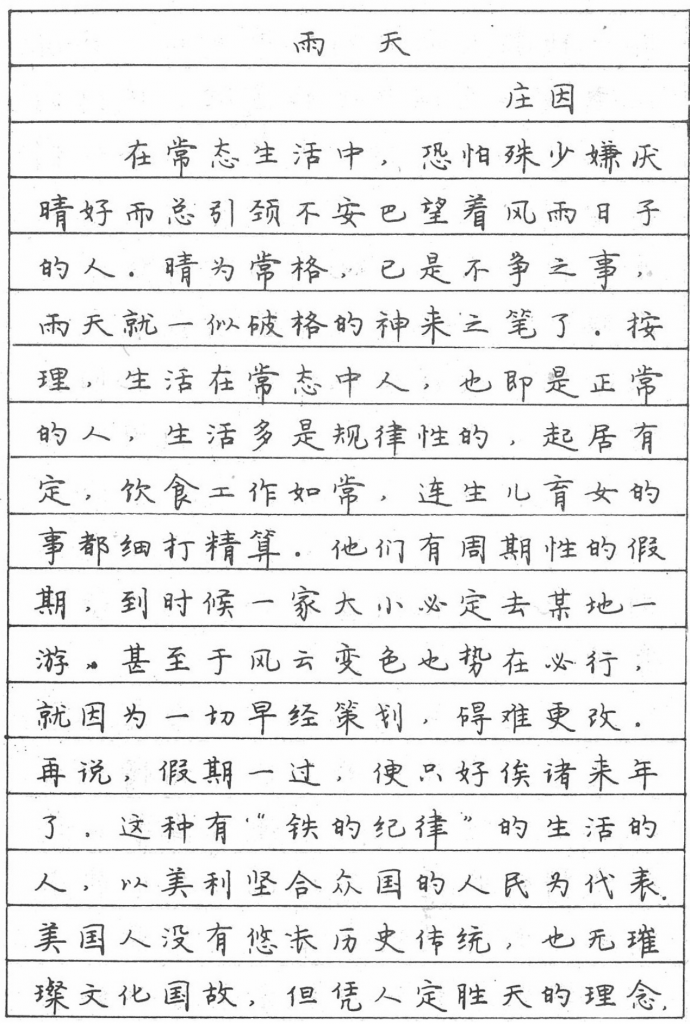
Why is Chinese handwriting considered difficult?
Chinese handwriting is often perceived as difficult due to its complex characters, which require memorization of thousands of unique symbols. Unlike alphabetic systems, each character represents a word or concept, and mastering them involves understanding stroke order, radicals, and composition.
See AlsoIs your flashcard deck too big for your own good?- Thousands of characters: Learners must memorize around 3,000-5,000 characters for basic literacy.
- Stroke order rules: Incorrect stroke order can make characters unrecognizable or aesthetically unpleasing.
- Lack of phonetic clues: Characters often don't directly indicate pronunciation, unlike alphabetic systems.
What are the key challenges in learning Chinese handwriting?
The primary challenges include mastering the intricate strokes, maintaining proper proportions, and distinguishing between similar-looking characters. Additionally, the cursive script used in informal writing adds another layer of complexity.
- Stroke variations: Tiny differences in strokes can change a character's meaning entirely.
- Balance and symmetry: Characters must be written with precise spacing and alignment.
- Homophones and homographs: Many characters sound or look alike but have different meanings.
How does stroke order affect Chinese handwriting?
Stroke order is crucial in Chinese handwriting because it ensures legibility, speed, and aesthetic consistency. Following the correct sequence also helps in memorizing characters and writing them fluently.
- Top to bottom, left to right: The general rule for most characters.
- Horizontal before vertical: Important for characters like 十 (ten).
- Enclosures before contents: Frames or boxes are drawn first, followed by inner strokes.
Are there shortcuts or techniques to make Chinese handwriting easier?
Yes, learners can use techniques like breaking down radicals, practicing with grid paper, and focusing on common character components to simplify the process.
- Radical-based learning: Many characters share common radicals, which can be learned first.
- Repetition and muscle memory: Regular practice helps internalize stroke patterns.
- Digital tools: Apps like Skritter or Pleco offer interactive handwriting practice.
How long does it take to master Chinese handwriting?
The time required varies based on dedication, practice frequency, and prior language experience. Achieving fluency in handwriting can take years, but basic proficiency is possible within months.
- Beginner level: 6-12 months to write simple characters correctly.
- Intermediate level: 2-3 years to handle most everyday characters.
- Advanced level: 5+ years for mastery, including cursive and calligraphy.
Can you learn Chinese without learning the characters?
Is It Possible to Learn Chinese Without Characters?
Yes, it is possible to learn spoken Chinese without studying characters, especially if your goal is conversational fluency. Many learners focus solely on Pinyin (the romanization system) and oral practice. However, this approach has limitations:
- Limited comprehension: Without characters, you won't be able to read signs, menus, or written materials.
- Homophone confusion: Chinese has many words with the same pronunciation but different meanings, which characters distinguish.
- Reduced depth: Understanding cultural context and advanced vocabulary often requires character knowledge.
What Are the Pros of Learning Chinese Without Characters?
Focusing only on spoken Chinese can be beneficial for certain learners:
- Faster progress: Skipping characters allows quicker mastery of pronunciation and basic conversations.
- Lower difficulty: Avoiding the memorization of complex characters reduces initial learning stress.
- Practical for short-term goals: Ideal for travelers or those needing basic communication quickly.
What Are the Cons of Avoiding Chinese Characters?
Ignoring characters has significant drawbacks for long-term learners:
- Barriers to fluency: Advanced learners will struggle with native content like books or news.
- Missed cultural insights: Characters often carry historical and contextual meaning.
- Limited self-study: Most intermediate/advanced resources assume character knowledge.
Can You Achieve Fluency in Chinese Without Characters?
Fluency without characters is possible but restrictive:
- Oral fluency: You can speak and understand spoken Chinese well.
- Functional illiteracy: You’ll remain unable to read or write formally.
- Career limitations: Professional opportunities often require literacy in characters.
What Are the Best Methods to Learn Chinese Without Characters?
If you choose to skip characters, these strategies help maximize learning:
- Focus on Pinyin: Use audio courses and Pinyin-based apps like Pimsleur or Glossika.
- Prioritize listening/speaking: Engage with podcasts, TV shows, and language partners.
- Learn radicals later: If transitioning to characters, start with common radicals for easier adaptation.
Frequently Asked Questions (FAQ)
Is it necessary to learn to write Chinese characters by hand in the digital age?
Handwriting Chinese characters remains an essential skill, even in today's digital world. While typing on devices has become more common, writing by hand helps reinforce memory and understanding of the characters' structure. Stroke order and radical recognition are critical components that handwriting practice solidifies, making it easier to recognize and recall characters later. Additionally, some situations, like filling out forms or writing notes, still require manual writing.
How does handwriting Chinese characters improve language learning?
Writing Chinese characters by hand engages multiple cognitive processes, enhancing retention and comprehension. The act of physically drawing each stroke reinforces the connection between the character's shape, meaning, and pronunciation. Studies show that motor memory plays a significant role in language acquisition, making handwriting a powerful tool for mastering Mandarin. It also helps learners distinguish between similar-looking characters, reducing confusion.
Can you become fluent in Chinese without learning to write characters by hand?
While it's possible to achieve spoken fluency without handwriting, neglecting this skill limits overall proficiency. Reading and typing alone may suffice for basic communication, but understanding the intricacies of characters—such as their etymology and composition—becomes harder. Handwriting fosters a deeper connection to the language, which is especially important for advanced learners or those studying classical texts, calligraphy, or formal writing.
What are the biggest challenges when learning to write Chinese characters by hand?
The most common difficulties include mastering the correct stroke order, memorizing the vast number of characters, and distinguishing between similar-looking ones. Beginners often struggle with proportion and balance, as characters must fit within an imaginary square. Additionally, the lack of an alphabet means each character must be learned individually, requiring consistent practice. However, these challenges can be overcome with structured learning and repetition.
Leave a Reply
Related Posts