
The 10,000 hour rule – Blood, sweat and tears

The 10,000-hour rule, popularized by Malcolm Gladwell in Outliers, suggests that mastery in any field requires roughly 10,000 hours of deliberate practice. This concept, rooted in research by psychologist K. Anders Ericsson, emphasizes relentless effort over innate talent. While inspiring, it also sparks debate—does sheer time guarantee success, or are other factors at play? Behind every expert lies a grueling journey of blood, sweat, and tears, where failure and perseverance shape excellence. This article explores the reality of the 10,000-hour rule, examining its validity, the sacrifices it demands, and whether dedication alone can forge true mastery in an ever-competitive world.
The 10,000 Hour Rule: Mastering Skills Through Blood, Sweat, and Tears
What Is the 10,000 Hour Rule?
The 10,000-hour rule is a concept popularized by Malcolm Gladwell in his book Outliers, suggesting that achieving mastery in any field requires approximately 10,000 hours of deliberate practice. This idea stems from research by psychologist Anders Ericsson, who studied expert performers in various domains. The rule emphasizes that success isn’t just about talent—it’s about relentless effort, persistence, and enduring hardships (blood, sweat, and tears) to refine skills.
| Key Concept | Explanation |
|---|---|
| Deliberate Practice | Focused, structured training with feedback and improvement goals. |
| Mastery Threshold | 10,000 hours as a benchmark for world-class expertise. |
The Science Behind the 10,000 Hour Rule
Anders Ericsson’s research on violinists and chess players revealed that elite performers accumulated thousands of hours of targeted practice before reaching the top. However, critics argue that the rule oversimplifies mastery, as factors like innate ability, quality of training, and opportunity also play crucial roles. The brain’s neuroplasticity—its ability to rewire itself through repetition—supports the idea that sustained effort leads to skill refinement.
See AlsoThe Chairman’s Bao Review (2025) - Your Complete Guide| Factor | Role in Mastery |
|---|---|
| Neuroplasticity | Brain adapts through repeated practice. |
| Feedback Loops | Essential for correcting mistakes and improving. |
Examples of the 10,000 Hour Rule in Action
Legendary figures like Bill Gates, The Beatles, and Mozart exemplify the rule. Gates spent thousands of hours programming before founding Microsoft, while The Beatles honed their craft in Hamburg’s clubs. These cases highlight how consistent effort over years—often in challenging conditions—creates exceptional outcomes.
| Icon | Hours Invested |
|---|---|
| The Beatles | 1,200+ live performances before fame. |
| Tiger Woods | Started golf at age 2, practiced daily. |
Criticisms and Limitations of the Rule
While inspiring, the 10,000-hour rule isn’t universal. Studies show that practice accounts for only about 12% of performance variance across fields. Genetics, mentorship, and efficient learning methods significantly influence outcomes. Blindly logging hours without strategic improvement can lead to stagnation.
| Criticism | Counterpoint |
|---|---|
| Ignores Talent | Natural aptitude accelerates progress. |
| Context Matters | Quality of practice > quantity. |
How to Apply the 10,000 Hour Rule Effectively
To leverage the rule, focus on deliberate practice: set specific goals, seek feedback, and embrace discomfort. Break skills into sub-components, track progress, and maintain consistency. Remember, the journey involves sacrifice—early mornings, failures, and relentless refinement.
See AlsoTwo types of pronunciation problems and what to do about them| Strategy | Execution |
|---|---|
| Micro-Goals | Master small skills sequentially. |
| Feedback | Coaches or peers to identify blind spots. |
How long is 10,000 hours realistically?

How Many Days Does 10,000 Hours Represent?
10,000 hours is equivalent to approximately 416.67 days of continuous time. To put it into perspective:
- 24-hour days: 10,000 ÷ 24 = ~416.67 days.
- Non-stop activity: No breaks or sleep included.
- Realistic comparison: Over a year if done non-stop, but impractical for humans.
How Many Years Is 10,000 Hours at 8 Hours a Day?
If you dedicate 8 hours daily to an activity, reaching 10,000 hours would take:
See AlsoAnalyse and balance your Chinese learning with Paul Nation’s four strands- Daily commitment: 10,000 ÷ 8 = 1,250 days.
- Years calculation: 1,250 ÷ 365 ≈ 3.42 years.
- Workweek analogy: Similar to a full-time job’s hours over ~3.5 years.
Can You Achieve Mastery in 10,000 Hours?
The 10,000-hour rule, popularized by Malcolm Gladwell, suggests mastery requires this time, but realistically:
- Quality matters: Deliberate practice trumps passive hours.
- Field-dependent: Some skills need less (e.g., basic coding vs. violin).
- Individual factors: Talent, resources, and guidance accelerate progress.
How Does 10,000 Hours Break Down into Weeks?
Breaking 10,000 hours into weekly commitments (e.g., 20 hours/week):
- Weekly hours: 10,000 ÷ 20 = 500 weeks.
- Years estimate: 500 ÷ 52 ≈ 9.6 years.
- Flexibility: Adjusting hours/week changes the timeline significantly.
Is 10,000 Hours Realistic for Part-Time Learners?
For those investing part-time (e.g., 10 hours/week), 10,000 hours becomes:
- Total weeks: 10,000 ÷ 10 = 1,000 weeks.
- Years required: 1,000 ÷ 52 ≈ 19.2 years.
- Practicality: Often unrealistic for skill mastery due to life changes.
What is the 10000 hour mastery rule?
The Origin of the 10,000-Hour Rule
The 10,000-hour rule was popularized by Malcolm Gladwell in his book Outliers: The Story of Success. The concept suggests that achieving mastery in any field requires approximately 10,000 hours of deliberate practice. This idea was inspired by the research of psychologist Anders Ericsson, who studied expert performance in fields like music and sports.
- The rule is based on studies of elite performers, such as violinists and chess players.
- Gladwell emphasized that the hours must involve focused, intentional practice, not just repetition.
- The original research did not claim 10,000 hours as a universal threshold but highlighted the importance of sustained effort.
What Counts as Deliberate Practice?
Deliberate practice is a structured and purposeful form of training aimed at improving performance. Unlike passive repetition, it involves challenging tasks, immediate feedback, and constant refinement of techniques.
- It requires full concentration and pushing beyond one’s comfort zone.
- Feedback from coaches or mentors is crucial to identify and correct mistakes.
- The practice must be goal-oriented, targeting specific areas for improvement.
Criticisms of the 10,000-Hour Rule
While the rule has gained widespread attention, it has also faced significant criticism. Critics argue that the time requirement oversimplifies the path to mastery and ignores other key factors.
- Natural talent and genetics can influence the speed of skill acquisition.
- The quality of practice matters more than the sheer number of hours.
- Some fields may require fewer or more hours depending on complexity.
Examples of the 10,000-Hour Rule in Action
Many high achievers have followed patterns resembling the 10,000-hour rule, though their journeys often include additional variables like opportunity and mentorship.
- The Beatles performed live for thousands of hours before global fame.
- Bill Gates had early access to computers, accumulating programming hours as a teenager.
- Elite athletes like Michael Jordan combined innate talent with relentless practice.
How to Apply the 10,000-Hour Rule Effectively
To maximize the benefits of the rule, individuals should adopt a strategic approach to practice, ensuring efficiency and progress.
- Break skills into smaller components and master each one systematically.
- Seek expert guidance to avoid developing bad habits.
- Track progress and adjust methods to maintain consistent improvement.
What is the saying about blood sweat and tears?
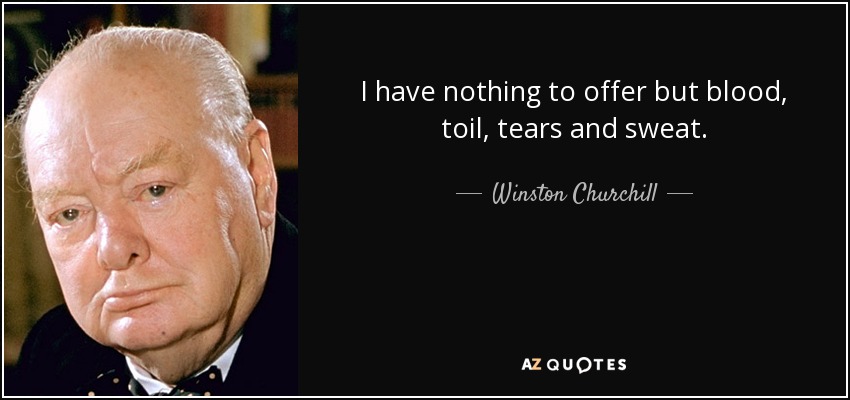
The saying blood, sweat, and tears is a well-known phrase that signifies the immense effort, hardship, and sacrifice required to achieve something difficult or meaningful. It emphasizes the idea that success often comes only after enduring physical, emotional, and mental struggles. The phrase is commonly attributed to Winston Churchill, who used it in a 1940 speech during World War II, though similar expressions have existed for centuries.
Origin of the Phrase Blood, Sweat, and Tears
The phrase blood, sweat, and tears gained prominence through Winston Churchill's famous speech in 1940, where he vowed to offer the British people nothing but these three elements to win the war. However, the concept predates Churchill:
- Biblical references: Similar ideas appear in the Bible, such as in Luke 22:44, where Jesus sweats as it were great drops of blood.
- Historical usage: Poets and writers like Lord Byron and John Donne used variations of the phrase to describe suffering and labor.
- Military context: Soldiers and warriors have long used metaphors of blood and sweat to describe the toll of battle.
Meaning Behind Blood, Sweat, and Tears
The phrase symbolizes the extreme effort and sacrifice needed to overcome challenges:
- Blood: Represents physical injury, danger, or life-threatening effort.
- Sweat: Stands for hard work, exertion, and relentless labor.
- Tears: Signifies emotional pain, grief, or frustration endured during the struggle.
Modern Interpretations of the Saying
Today, the phrase is used in various contexts beyond war, including:
- Athletics: Athletes describe their training and competitions as requiring blood, sweat, and tears.
- Entrepreneurship: Business owners often use it to describe the hardships of building a company.
- Artistic pursuits: Musicians, writers, and artists reference it to express their creative struggles.
Cultural References and Popularity
The phrase has been widely adopted in media and culture:
- Music: The band Blood, Sweat & Tears popularized the phrase in the 1960s.
- Literature: Many books and speeches use it to emphasize perseverance.
- Motivational speaking: Coaches and leaders invoke it to inspire determination.
Misconceptions About the Phrase
Some common misunderstandings include:
- Literal interpretation: It’s not about actual blood or tears but symbolic of struggle.
- Exclusive to war: While Churchill used it militarily, it applies to any difficult endeavor.
- Attribution errors: Though linked to Churchill, earlier versions existed.
Frequently Asked Questions (FAQ)
What is the 10,000-hour rule?
The 10,000-hour rule is a concept popularized by Malcolm Gladwell in his book Outliers, suggesting that achieving mastery in any field requires approximately 10,000 hours of deliberate practice. This idea is based on research by psychologist Anders Ericsson, who studied experts in various domains. The rule emphasizes that talent alone is insufficient; consistent, focused effort over time is the key to becoming exceptional. However, critics argue that the exact number of hours can vary depending on the field and individual circumstances.
Is the 10,000-hour rule scientifically proven?
While the 10,000-hour rule is rooted in studies by Anders Ericsson, it is often oversimplified. Ericsson's research focused on deliberate practice, a highly structured and purposeful form of training, rather than just accumulated hours. Some studies support the idea that extensive practice leads to expertise, but others show that factors like innate ability, quality of training, and even luck play significant roles. The rule serves as a motivational guideline rather than a strict scientific law.
Can anyone achieve mastery with 10,000 hours of practice?
The idea that anyone can achieve mastery with 10,000 hours of practice is debated. While deliberate practice is crucial, individual differences such as genetics, access to resources, and mentorship can influence outcomes. Some people may progress faster or slower than others, and certain fields may require more or fewer hours. The rule is best viewed as a general principle rather than a guarantee, highlighting the importance of persistence and effort in skill development.
How can I apply the 10,000-hour rule to my own goals?
To apply the 10,000-hour rule effectively, focus on deliberate practice—structured, goal-oriented training with continuous feedback. Break your goal into smaller, manageable skills and dedicate consistent time to improving them. Seek expert guidance to avoid plateaus and stay motivated. Track your progress and adjust your approach as needed. Remember, the rule is not just about logging hours but about quality effort and learning from mistakes. Whether in sports, music, or career skills, disciplined practice over time is the path to mastery.
Leave a Reply
Related Posts