
How to Say the Days of the Week in Chinese

Learning the days of the week in Chinese is a fundamental step for anyone studying the language. Unlike English, the Chinese system is simple and logical, with each day named after a combination of numbers and the word day (日 or 星期). This structure makes it easy to remember once you grasp the basic pattern. Whether you're planning a trip, scheduling meetings, or simply expanding your vocabulary, knowing how to say the days of the week will enhance your communication skills. In this article, we’ll break down each day, explain the pronunciation, and provide helpful tips to master them quickly and confidently.
How to Say the Days of the Week in Chinese
1. Basic Vocabulary for the Days of the Week
Learning the days of the week in Chinese is essential for everyday conversations. Here’s how to say each day:
| English | Chinese (Pinyin) | Chinese Characters |
|---|---|---|
| Monday | Xīngqīyī | 星期一 |
| Tuesday | Xīngqī'èr | 星期二 |
| Wednesday | Xīngqīsān | 星期三 |
| Thursday | Xīngqīsì | 星期四 |
| Friday | Xīngqīwǔ | 星期五 |
| Saturday | Xīngqīliù | 星期六 |
| Sunday | Xīngqīrì / Xīngqītiān | 星期日 / 星期天 |
2. The Structure of Days in Chinese
The word Xīngqī (星期) means week in Chinese, followed by numbers (1-6) for Monday to Saturday. Sunday is an exception, often called Xīngqīrì (星期日) or Xīngqītiān (星期天), where rì and tiān both mean day.
See AlsoDuolingo User Count: Global Language Learning Statistics3. Alternative Ways to Say the Days
Besides Xīngqī, another common term for days of the week is Lǐbài (礼拜), often used in informal speech. For example:
| English | Chinese (Pinyin) | Chinese Characters |
|---|---|---|
| Monday | Lǐbàiyī | 礼拜一 |
| Sunday | Lǐbàitiān | 礼拜天 |
4. Pronunciation Tips for Beginners
Correct pronunciation is key when learning Chinese days. Pay attention to tones:
- Xīngqīyī (星期一) – First tone (flat) on yī.
- Xīngqī'èr (星期二) – Falling tone on èr.
- Xīngqīsān (星期三) – High and level tone on sān.
5. Using Days of the Week in Sentences
Here are examples of how to use the days in sentences:
See AlsoWho Has The Most XP On Duolingo? Top Users Ranked In 2025| English | Chinese (Pinyin) | Chinese Characters |
|---|---|---|
| Today is Monday. | Jīntiān shì xīngqīyī. | 今天是星期一。 |
| We meet on Friday. | Wǒmen xīngqīwǔ jiànmiàn. | 我们星期五见面。 |
What are the 7 days' names of the week?
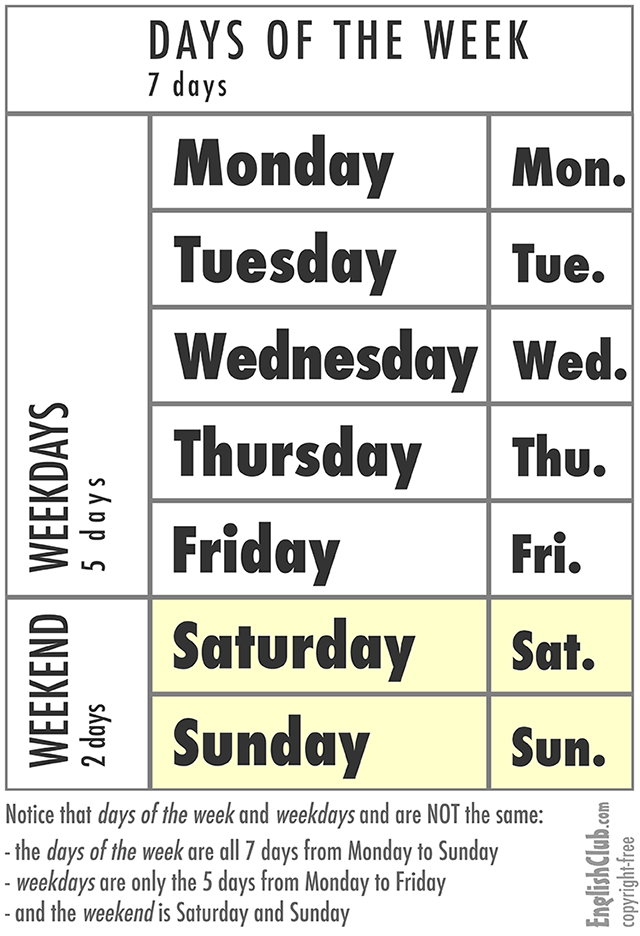
The 7 days of the week are:
Monday, Tuesday, Wednesday, Thursday, Friday, Saturday, and Sunday.
Origin of the 7-Day Week
The 7-day week has ancient origins, influenced by various cultures:
See AlsoThe new HSK 3.0: What you need to know- Babylonians first divided time into 7-day cycles based on lunar phases.
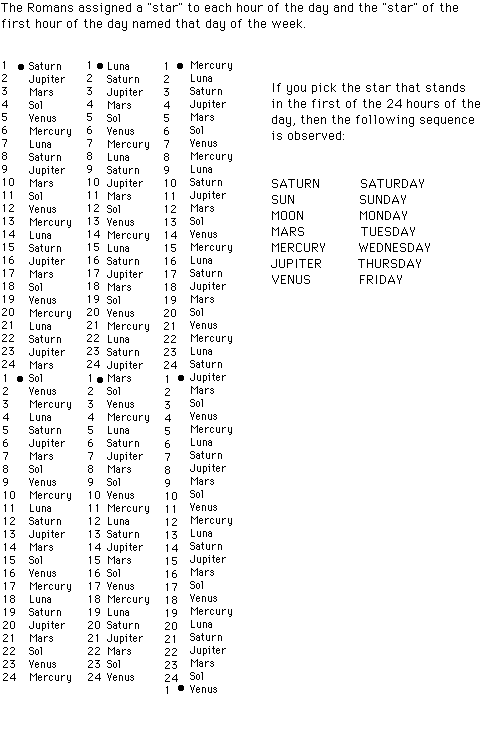
- Romans later adopted this system, naming days after celestial bodies and gods.
- Christianity and Judaism reinforced the week's structure through religious practices.
Meaning Behind Each Day's Name
Each day's name reflects mythological or astronomical influences:
- Monday: Derived from Moon's day, honoring the Moon.
- Tuesday: Named after Tyr, the Norse god of war (Mars in Latin).
- Wednesday: Honors Odin (or Mercury), from Woden's day.
Cultural Variations in Weekday Names
Different languages and cultures have unique names for weekdays:
- Spanish: Lunes (Monday) ties to the Moon (Luna).
- French: Mercredi (Wednesday) references Mercury.
- Japanese: Uses numbers (e.g., Getsuyōbi for Monday, meaning Moon day).
Weekdays vs. Weekend
The division between weekdays and weekend is societal:
See AlsoHow to Prepare for a Chinese Test- Workdays: Monday to Friday are typically for labor or school.
- Weekend: Saturday and Sunday are reserved for rest or leisure.
- Global differences: Some cultures observe weekends on Friday-Saturday.
Astrological Associations
Days are linked to planets and astrology:
- Sunday: Associated with the Sun.
- Thursday: Tied to Jupiter (Thor in Norse myth).
- Friday: Connected to Venus (Frigg's day in Norse culture).
Does China have 7 days a week?
Does China Follow the 7-Day Week System?
Yes, China follows the 7-day week system, similar to most countries worldwide. The week consists of:
- Monday to Friday as workdays.
- Saturday and Sunday as the weekend.
- This structure aligns with the international standard for timekeeping.
How Does China's Workweek Compare Globally?
China's workweek is structured comparably to other nations, with slight variations:
- The standard workweek is 40 hours, typically 8 hours per day.
- Some industries may have flexible schedules or shift work.
- Unlike some Middle Eastern countries, China does not use a different weekly cycle.
Are Weekends in China the Same as in the West?
China's weekends mirror those in Western countries, but cultural practices differ:
- Saturday and Sunday are official rest days.
- Some businesses, like malls, remain open for extended hours.
- Public holidays may adjust weekends via make-up workdays.
Do Chinese Calendars Show 7-Day Weeks?
Chinese calendars display the 7-day week alongside traditional elements:
- Gregorian dates are used alongside lunar calendar markings.
- Weekdays are labeled numerically (Monday as Day 1).
- Traditional festivals may override standard weekly schedules.
Has China Always Used a 7-Day Week?
Historically, China adopted the 7-day week in modern times:
- Ancient China used a 10-day week (旬, xún) system.
- The 7-day week was introduced in the early 20th century.
- Today, it’s fully integrated into legal and social systems.
Frequently Asked Questions (FAQ)
What are the days of the week in Chinese?
The days of the week in Chinese are as follows: Monday is 星期一 (xīngqī yī), Tuesday is 星期二 (xīngqī èr), Wednesday is 星期三 (xīngqī sān), Thursday is 星期四 (xīngqī sì), Friday is 星期五 (xīngqī wǔ), Saturday is 星期六 (xīngqī liù), and Sunday is 星期日 (xīngqī rì) or 星期天 (xīngqī tiān). The word 星期 (xīngqī) means week, and the numbers 1 to 6 follow it, while Sunday uses either 日 (rì) or 天 (tiān), both meaning day.
How do you pronounce the days of the week in Chinese?
Pronouncing the days of the week in Chinese involves understanding Pinyin, the romanization system for Mandarin. Here’s a breakdown: 星期一 (xīngqī yī) sounds like shing-chee ee, 星期二 (xīngqī èr) like shing-chee ar, 星期三 (xīngqī sān) like shing-chee sahn, 星期四 (xīngqī sì) like shing-chee sz, 星期五 (xīngqī wǔ) like shing-chee woo, 星期六 (xīngqī liù) like shing-chee lee-oh, and 星期日/天 (xīngqī rì/tiān) like shing-chee rr or shing-chee tyen. Pay attention to tones, as they change meaning—for example, 五 (wǔ) has a falling-rising tone.
Is there another way to say the days of the week in Chinese?
Yes, besides 星期 (xīngqī), Chinese also uses 周 (zhōu) to mean week. For example: 周一 (zhōu yī) for Monday, 周二 (zhōu èr) for Tuesday, and so on, up to 周六 (zhōu liù) for Saturday. Sunday can be 周日 (zhōu rì) or 周天 (zhōu tiān). This form is more casual and commonly used in spoken Mandarin. Additionally, in formal or written contexts, you might encounter 礼拜 (lǐbài), though it’s less common in modern usage.
Why does Chinese use numbers for the days of the week?
Chinese uses numbers (一 to 六) for Monday through Saturday because it follows a logical sequence tied to the word for week (星期 or 周). This system is straightforward, as it avoids memorizing unique names for each day. The exception is Sunday, which uses 日 (rì) or 天 (tiān), both meaning day, symbolizing the end of the week. This numerical approach reflects Chinese’s structured and efficient linguistic style, making it easier for learners to remember.
Leave a Reply
Related Posts