
Chinese character learning for all students

Learning Chinese characters can seem daunting, but with the right approach, it becomes an achievable goal for students of all ages and backgrounds. These characters, rich in history and meaning, form the foundation of written Chinese and offer a window into the culture. Whether you're a beginner or an advanced learner, understanding their structure and logic simplifies the process. Modern tools, interactive methods, and consistent practice make mastering characters more accessible than ever. This article explores effective strategies, resources, and tips to help all students—regardless of their starting point—embrace the challenge and enjoy the rewards of learning Chinese characters.
- Chinese Character Learning for All Students: A Comprehensive Guide
- How do people learn all the Chinese characters?
-
How many Chinese characters do students learn?
- How Many Chinese Characters Do Primary School Students Learn?
- How Many Chinese Characters Do Middle School Students Learn?
- How Many Chinese Characters Do High School Students Learn?
- How Many Chinese Characters Are Required for Fluency?
- How Does the Chinese Education System Structure Character Learning?
- What is the fastest way to memorize Chinese characters?
- How can I help my child remember Chinese characters?
- Frequently Asked Questions (FAQ)
Chinese Character Learning for All Students: A Comprehensive Guide
1. The Importance of Learning Chinese Characters
Learning Chinese characters is essential for mastering the language, as they form the foundation of written communication. Unlike alphabetic systems, characters convey both meaning and sound, making them a unique challenge. For students, understanding characters enhances reading, writing, and cultural appreciation.
| Benefit | Description |
|---|---|
| Literacy | Enables reading books, signs, and digital content. |
| Cultural Insight | Deepens understanding of Chinese history and traditions. |
2. Effective Strategies for Memorizing Characters
Memorizing Chinese characters requires consistent practice and smart techniques. Breaking characters into radicals (building blocks) and using mnemonics can simplify learning. Repetition through writing and flashcards also reinforces retention.
See AlsoTop 10 Highest Duolingo Streak: Record Holders| Strategy | How It Helps |
|---|---|
| Radical Analysis | Identifies patterns and meanings in characters. |
| Spaced Repetition | Improves long-term memory retention. |
3. Tools and Resources for Character Learning
Numerous digital tools and textbooks cater to learners of all levels. Apps like Pleco and Anki offer interactive ways to study, while workbooks provide structured practice.
| Resource | Use Case |
|---|---|
| Pleco | Dictionary and flashcard app for on-the-go learning. |
| HSK Workbooks | Structured exercises for exam preparation. |
4. Common Challenges and How to Overcome Them
Students often struggle with character complexity and homophones (same sound, different meanings). Focusing on stroke order and contextual learning can mitigate these issues.
| Challenge | Solution |
|---|---|
| Similar Characters | Compare side-by-side to spot differences. |
| Forgetting Characters | Regular review and real-world usage. |
5. Integrating Characters into Daily Practice
Incorporate Chinese characters into daily routines by labeling objects, journaling, or reading simple texts. Consistency is key to progress.
See AlsoSpaced repetition is not limited to flashcards| Activity | Benefit |
|---|---|
| Labeling | Reinforces vocabulary in context. |
| Reading News | Exposes learners to modern usage. |
How do people learn all the Chinese characters?
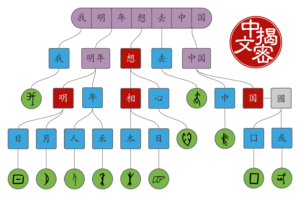
Understanding the Basics of Chinese Characters
Learning Chinese characters begins with grasping their foundational structure. Characters are composed of radicals, which are smaller components that often hint at meaning or pronunciation. For example, the radical 水 (shuǐ, meaning water) appears in characters related to liquids. Beginners start by memorizing these radicals and common stroke order rules, which dictate how to write each character correctly. Here’s how learners approach the basics:
- Radicals: Learn the 214 Kangxi radicals to recognize patterns in characters.
- Stroke Order: Practice writing characters in the correct sequence to build muscle memory.
- Pinyin: Use Romanization to associate characters with their pronunciation.
Memorization Techniques for Chinese Characters
Retaining thousands of characters requires effective memorization strategies. Many learners use mnemonics, creating stories or associations to link a character’s shape with its meaning. For instance, the character 休 (xiū, rest) depicts a person (亻) leaning against a tree (木). Spaced repetition systems (SRS) like Anki are also popular for reinforcing memory over time. Key techniques include:
See AlsoEasy Chinese News Articles for Beginners- Mnemonics: Invent vivid stories to connect form and meaning.
- Spaced Repetition: Use apps like Anki to review characters at optimal intervals.
- Flashcards: Write characters on one side and meanings/pronunciations on the other.
Practical Application Through Reading and Writing
To master characters, learners must apply them in context. Reading simple texts, such as children’s books or graded readers, helps reinforce recognition. Writing practice, whether by hand or digitally, solidifies understanding. Many also use language exchange platforms to practice with native speakers. Effective methods include:
- Graded Readers: Start with texts tailored to your proficiency level.
- Journaling: Write daily sentences using new characters.
- Language Partners: Exchange corrections with native speakers.
Leveraging Technology and Tools
Modern tools streamline the learning process. Apps like Pleco (a dictionary) and Skritter (for writing practice) offer interactive ways to study. Online courses and YouTube tutorials provide structured lessons. Key resources include:
- Dictionary Apps: Pleco and Hanping offer quick lookups and example sentences.
- Writing Apps: Skritter and HelloChinese include stroke-order drills.
- Online Courses: Platforms like Coursera or Yabla offer guided lessons.
Immersion and Cultural Exposure
Immersion accelerates learning by exposing learners to characters in real-life settings. Watching Chinese media (e.g., dramas, news) or living in a Mandarin-speaking environment reinforces retention. Labeling household items with characters or using language apps daily also helps. Strategies include:
See AlsoHow to improve your Chinese handwriting- Media Consumption: Watch shows with subtitles to associate sounds with characters.
- Travel or Study Abroad: Immerse yourself in a Chinese-speaking country.
- Daily Practice: Label objects or set phone language to Chinese.
How many Chinese characters do students learn?

How Many Chinese Characters Do Primary School Students Learn?
In primary school, Chinese students typically learn around 2,500 to 3,000 characters. This forms the foundation for literacy and daily communication. The breakdown is as follows:
- Grade 1-2: Students learn approximately 800-1,000 characters, focusing on basic vocabulary.
- Grade 3-4: Another 1,000-1,200 characters are introduced, expanding reading and writing skills.
- Grade 5-6: The remaining 700-800 characters are taught, preparing students for middle school.
How Many Chinese Characters Do Middle School Students Learn?
During middle school, students expand their knowledge to around 3,500-4,000 characters. This includes more complex and specialized terms:
- Grade 7-8: Students learn an additional 800-1,000 characters, covering literature and science.
- Grade 9: Another 500-700 characters are introduced, often for exam preparation.
- Advanced Texts: Exposure to classical Chinese adds 200-300 rare characters.
How Many Chinese Characters Do High School Students Learn?
By high school, students master roughly 4,500-5,000 characters, enabling fluency in most contexts:
- Grade 10-11: Focus on 1,000-1,200 characters for academic and technical subjects.
- Grade 12: Final 500-800 characters are learned, often for college entrance exams.
- Specialized Vocabulary: Fields like medicine or law may require extra characters.
How Many Chinese Characters Are Required for Fluency?
Fluency in Mandarin generally requires knowledge of 3,500-4,000 characters, but this varies by context:
- Daily Life: 2,500-3,000 characters suffice for newspapers and conversations.
- Academic Work: 4,000+ characters are needed for research or literature.
- Native Speakers: Most know 5,000-6,000 characters, though not all are actively used.
How Does the Chinese Education System Structure Character Learning?
The Chinese education system follows a structured approach to teaching characters:
- Spaced Repetition: Characters are revisited across grades to reinforce memory.
- Radical-Based Learning: Students start with basic radicals before complex characters.
- Contextual Usage: Characters are taught through sentences and texts, not in isolation.
What is the fastest way to memorize Chinese characters?
Understanding the Structure of Chinese Characters
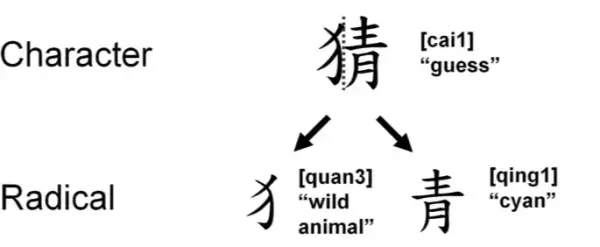
To memorize Chinese characters quickly, it's essential to understand their structure. Most characters are composed of radicals (building blocks) and phonetic components. Breaking them down into smaller parts makes them easier to recall. For example:
- Radicals: Learn common radicals like 氵(water) or 木(tree) to recognize patterns.
- Phonetic components: Some characters hint at pronunciation, like 妈 (mā), where 马 (mǎ) provides a sound clue.
- Visual decomposition: Split complex characters into recognizable parts, such as 好 (good) = 女 (woman) + 子 (child).
Using Spaced Repetition Systems (SRS)
Spaced repetition is a scientifically proven method to enhance memory retention. Tools like Anki or Pleco automate this process by scheduling reviews based on your performance. Key steps include:
- Create flashcards: Pair characters with meanings, pronunciations, and example sentences.
- Review consistently: Prioritize characters you struggle with, adjusting intervals as needed.
- Combine with mnemonics: Add stories or images to flashcards for deeper recall.
Leveraging Mnemonics and Stories
Mnemonics transform abstract characters into memorable stories or images. This technique taps into visual and associative memory. For instance:
- Create vivid associations: Link 人 (person) to a stick figure walking.
- Use humor or absurdity: The stranger the story, the easier it sticks (e.g., 猫 (cat) = 犭(beast) + 苗 (seedling) → a beast hunting seedlings like a cat).
- Write your own stories: Personalizing mnemonics boosts retention.
Practicing Writing by Hand
Writing characters by hand reinforces muscle memory and stroke order. Follow these steps:
- Master stroke order: Learn rules like top-to-bottom and left-to-right (e.g., 三 = three horizontal strokes).
- Repetition drills: Write each character 10–20 times, focusing on accuracy.
- Use grid paper: Maintain proportion and balance by practicing in squared notebooks.
Immersing in Contextual Learning
Contextual exposure accelerates memorization by linking characters to real-world usage. Strategies include:
- Read daily: Start with children’s books or graded readers.
- Watch subtitled media: Pick up characters from TV shows or movies.
- Label objects: Stick notes with characters on household items (e.g., 门 for door).
How can I help my child remember Chinese characters?
Use Visual and Storytelling Techniques
Chinese characters are often pictographic or ideographic, making visual associations a powerful tool. Encourage your child to create stories or drawings based on the characters. For example:
- Break down characters into smaller components and explain their meanings.
- Use mnemonics or imaginative stories to link the character's shape to its meaning.
- Draw the character while narrating its story to reinforce memory.
Practice Writing Regularly
Repetition is key to memorizing Chinese characters. Structured writing practice helps solidify recognition and recall. Try these methods:
- Use grid paper to practice stroke order and proportions.
- Start with basic characters before moving to complex ones.
- Incorporate daily writing drills with gradual difficulty increases.
Incorporate Games and Apps
Make learning interactive with educational games and apps designed for Chinese character retention. Examples include:
- Flashcard apps like Anki or Pleco for spaced repetition.
- Matching games pairing characters with their meanings or pronunciations.
- Interactive writing apps that provide real-time stroke feedback.
Read Simple Texts Together
Contextual learning improves retention. Start with children’s books or short stories featuring familiar characters. Tips:
- Choose graded readers with pinyin and illustrations.
- Point out recurring characters to reinforce recognition.
- Encourage reading aloud to connect pronunciation with the written form.
Leverage Songs and Rhymes
Musical memory can aid in recalling characters. Use songs or rhymes that include target vocabulary. Suggestions:
- Find Chinese nursery rhymes with repetitive character usage.
- Create simple chants for stroke order or character meanings.
- Use karaoke-style videos with lyrics to associate sounds with characters.
Frequently Asked Questions (FAQ)
What are the benefits of learning Chinese characters for students?
Learning Chinese characters offers numerous cognitive and academic advantages for students. Studies show that mastering characters enhances memory retention and improves problem-solving skills due to the visual and structural complexity of the script. Additionally, it fosters cultural awareness and opens doors to opportunities in global business, diplomacy, and academia. For non-native speakers, it also strengthens multilingual abilities, making it easier to learn other logographic languages.
How can beginners effectively memorize Chinese characters?
Beginners should adopt a structured approach to memorizing Chinese characters, starting with basic radicals and stroke order. Using mnemonic devices and spaced repetition systems (SRS) like flashcards can significantly improve retention. Incorporating writing practice and contextual learning—such as reading simple sentences—helps reinforce recognition. Digital tools like apps or online courses can also provide interactive and engaging ways to build character proficiency over time.
Are there any challenges in learning Chinese characters, and how can they be overcome?
The primary challenges include the sheer number of characters and their lack of phonetic consistency. However, focusing on high-frequency characters first (e.g., the most common 1,000) can make the task manageable. Breaking characters into radicals and components simplifies memorization, while consistent daily practice prevents overwhelm. Leveraging immersive techniques, such as watching Chinese media or labeling objects, can also accelerate learning by providing real-world context.
What resources are recommended for students learning Chinese characters?
Students should use a mix of traditional and digital resources for balanced learning. Textbooks like Integrated Chinese or HSK Standard Course provide structured lessons, while apps like Pleco or Anki offer portable review tools. Online platforms such as YouTube tutorials or language exchange sites (e.g., HelloTalk) add interactive practice. For handwriting, grid paper and stroke-order guides are essential. Teachers and tutors can also provide personalized feedback to address individual learning gaps.
Leave a Reply
Related Posts