
On accuracy, communication and comprehensibility when learning Chinese

Learning Chinese presents unique challenges, particularly in balancing accuracy, communication, and comprehensibility. Accuracy is essential for mastering tones, characters, and grammar, yet overemphasizing perfection can hinder fluency. Effective communication requires adaptability, allowing learners to convey meaning even with imperfections. Meanwhile, comprehensibility ensures that messages are understood despite linguistic limitations. Striking this balance is key to progressing in Chinese, as rigid focus on precision may slow conversational confidence, while neglecting accuracy can lead to misunderstandings. This article explores how learners can navigate these aspects, offering insights into achieving linguistic proficiency without sacrificing clarity or natural expression in real-world interactions.
- Mastering Chinese: Balancing Accuracy, Communication, and Comprehensibility
- Why is learning Mandarin important in communication?
- What is the hardest thing about learning Chinese?
- How hard is it to learn conversational Chinese?
- What is the most commonly used method for beginning language learners to read Chinese?
- Frequently Asked Questions (FAQ)
Mastering Chinese: Balancing Accuracy, Communication, and Comprehensibility
The Importance of Accuracy in Chinese Language Learning
Accuracy is crucial when learning Chinese due to its tonal nature and complex writing system. Mispronouncing a tone or using an incorrect character can completely change the meaning of a word. For example, mā (妈 - mother) and mà (骂 - scold) differ only in tone but have entirely different meanings. Similarly, using the wrong character can lead to misunderstandings. A strong foundation in Pinyin (拼音) and stroke order is essential for accuracy.
| Aspect | Challenge | Solution |
|---|---|---|
| Tones | Four main tones + neutral tone | Practice with native speakers or tone drills |
| Characters | Thousands of unique characters | Learn radicals and common components |
Effective Communication Strategies in Chinese
While accuracy is important, overemphasizing perfection can hinder communication. Fluency and the ability to convey ideas clearly are equally vital. Beginners should focus on high-frequency phrases and contextual learning rather than memorizing isolated vocabulary. Using body language and simplified sentences can help bridge gaps in knowledge.
See AlsoHow to give directions in Chinese| Strategy | Benefit |
|---|---|
| Using simple sentences | Reduces errors and increases clarity |
| Listening actively | Improves comprehension and response time |
Enhancing Comprehensibility in Spoken Chinese
Comprehensibility refers to how easily a listener understands your speech. Pronunciation and intonation play a significant role. Learners should practice shadowing (repeating after native speakers) and record themselves to identify mistakes. Slowing down speech and emphasizing tones can also improve clarity.
| Technique | Impact |
|---|---|
| Shadowing | Improves pronunciation and rhythm |
| Pausing between phrases | Helps listeners process information |
The Role of Context in Understanding Chinese
Chinese relies heavily on context due to its many homophones and flexible grammar. For example, shū can mean book (书) or uncle (叔) depending on context. Learners should immerse themselves in real-life conversations and authentic materials like movies or news to grasp contextual cues.
| Element | Importance |
|---|---|
| Cultural references | Provides deeper meaning to phrases |
| Sentence patterns | Helps predict meaning in conversations |
Balancing Learning Methods for Optimal Progress
A mix of structured study and practical application yields the best results. Flashcards (like Anki) help with character retention, while language exchange partners provide real-world practice. Consistency is key—daily exposure, even in small doses, reinforces learning.
See Also12 Top-Rated Chinese Language Immersion Programs in China| Method | Focus Area |
|---|---|
| Textbook study | Grammar and vocabulary |
| Conversation practice | Fluency and listening skills |
Why is learning Mandarin important in communication?

The Global Influence of Mandarin in Business
Learning Mandarin is crucial for global business communication due to China's economic dominance. Many multinational companies seek employees who can engage with Chinese partners, clients, and markets. Here’s why:
- China is the world's second-largest economy, making Mandarin a key language for trade and negotiations.
- Proficiency in Mandarin provides a competitive edge in industries like finance, technology, and manufacturing.
- Understanding cultural nuances in Mandarin fosters stronger business relationships.
Mandarin as the Most Spoken Language Worldwide
With over 1 billion native speakers, Mandarin is the most spoken language globally. Mastering it opens doors to vast communication opportunities:
See AlsoGreetings in Chinese- It allows direct interaction with a massive population across China, Taiwan, and diaspora communities.
- Mandarin is essential for travel and cultural exchange in Chinese-speaking regions.
- It enhances social and professional networks by breaking language barriers.
Cultural Understanding and Diplomacy
Learning Mandarin deepens cross-cultural appreciation and aids in diplomatic relations. Here’s how:
- It helps navigate Chinese traditions, history, and societal norms more effectively.
- Proficiency in Mandarin supports international diplomacy and conflict resolution.
- It encourages mutual respect in multicultural settings.
Career Opportunities and Professional Growth
Mandarin fluency unlocks diverse career paths across multiple sectors. Key advantages include:
- High demand for Mandarin speakers in translation, education, and government roles.
- Access to lucrative job markets in China and global enterprises.
- Enhanced resume appeal for employers prioritizing bilingual talent.
Technological and Academic Advancements
Mandarin is vital for staying ahead in technology and academia. Reasons include:
See Also5 insights from the first year of a master’s program in Taiwan- China leads in AI, engineering, and scientific research, with many publications in Mandarin.
- Learning Mandarin provides access to exclusive educational resources and scholarships.
- It facilitates collaboration with Chinese researchers and innovators.
What is the hardest thing about learning Chinese?

Tonal System and Pronunciation
The tonal system is one of the biggest challenges in learning Chinese. Mandarin has four main tones and a neutral tone, and mispronouncing them can change the meaning of a word entirely. For example:
- First tone (high and flat): mā (妈) means mother.
- Second tone (rising): má (麻) means hemp.
- Third tone (falling-rising): mǎ (马) means horse.
- Fourth tone (sharp falling): mà (骂) means scold.
Chinese Characters (Hanzi)
Memorizing Chinese characters is another major hurdle. Unlike alphabetic languages, each character represents a syllable and often a unique meaning. Key difficulties include:
See AlsoAn introduction to extensive reading for Chinese learners- Stroke order: Characters must be written in a specific sequence.
- Radicals: Components that hint at meaning or pronunciation.
- Homophones: Many characters sound the same but mean different things.
Grammar Structure Differences
Chinese grammar differs significantly from English, which can be confusing. Notable aspects include:
- No verb conjugations: Verbs don’t change for tense or subject.
- Measure words: Required when counting nouns (e.g., 一本书 – one book).
- Topic-comment structure: Sentences often emphasize the topic first.
Lack of Cognates
Unlike European languages, Chinese shares few cognates with English, making vocabulary acquisition harder. Examples:
- No shared roots: Words like computer (电脑 – diànnǎo) are entirely different.
- Idiomatic expressions: Phrases like 马马虎虎 (so-so) lack direct translations.
- Cultural context: Many terms rely on historical or cultural knowledge.
Listening and Speaking Speed
Native speakers often talk quickly, and listening comprehension can be tough. Challenges include:
- Connected speech: Words blend together in conversation.
- Regional accents: Pronunciations vary across dialects.
- Slang and idioms: Informal speech adds another layer of complexity.
How hard is it to learn conversational Chinese?

The Complexity of Chinese Tones
Learning Chinese tones is one of the biggest challenges for beginners. Mandarin has four main tones and a neutral tone, each changing the meaning of a word entirely. Mispronouncing a tone can lead to misunderstandings. Here’s why it’s difficult:
- Tonal sensitivity: Many languages don’t rely on tones, making it hard for learners to distinguish them initially.
- Practice intensity: Consistent listening and repetition are required to master tones.
- Context dependence: Tones can vary slightly in natural speech, adding another layer of complexity.
Mastering Chinese Characters
Chinese characters are logograms, meaning each represents a word or concept. Unlike alphabetic systems, memorizing them requires more effort. Key difficulties include:
- Stroke order: Writing characters correctly demands learning specific stroke sequences.
- Recognition: Thousands of characters exist, with many looking similar but having different meanings.
- No phonetic clues: Most characters don’t indicate pronunciation, making reading and writing harder.
Grammar Differences Compared to English
While Chinese grammar is simpler in some aspects (e.g., no verb conjugations), it has unique challenges:
- Word order: Sentences follow a strict Subject-Verb-Object structure, but exceptions exist.
- Measure words: Nouns require specific classifiers (e.g., 个 for general objects), which don’t exist in English.
- No tenses: Time is indicated through context or particles, not verb changes.
Listening and Speaking in Real Conversations
Conversational fluency requires adapting to fast, colloquial speech. Challenges include:
- Dialect variations: Regional accents and slang can make comprehension difficult.
- Speed: Native speakers often talk quickly, blending tones and words.
- Idiomatic expressions: Common phrases may not translate literally, requiring cultural knowledge.
Time Investment for Practical Fluency
Achieving conversational proficiency depends on dedication and study methods. Factors influencing progress:
- Daily practice: Regular speaking and listening sessions accelerate learning.
- Immersion: Living in a Chinese-speaking environment speeds up acquisition.
- Prior language experience: Knowing tonal languages (e.g., Vietnamese) can help.
What is the most commonly used method for beginning language learners to read Chinese?
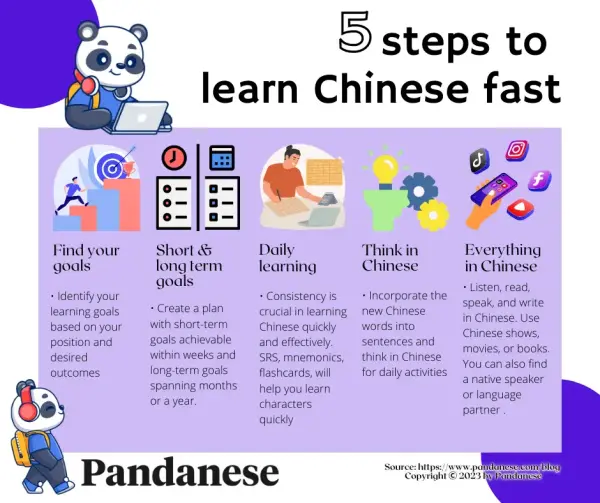
Introduction to Pinyin for Chinese Reading
The most commonly used method for beginning language learners to read Chinese is through Pinyin, a romanization system that represents Mandarin sounds using the Latin alphabet. Pinyin helps learners associate characters with pronunciation before mastering character recognition. Key benefits include:
- Phonetic guidance: Pinyin provides accurate pronunciation cues for unfamiliar characters.
- Transition tool: Learners gradually shift from Pinyin to characters as their familiarity grows.
- Standardization: It follows the official Mandarin pronunciation system, ensuring consistency.
Graded Readers for Progressive Learning
Graded readers are tailored books designed for language learners, featuring simplified vocabulary and Pinyin annotations. They help beginners build reading confidence by:
- Scaffolded difficulty: Texts start with basic words and increase in complexity.
- Contextual learning: Stories reinforce character recognition through repetition.
- Dual-language support: Many include English translations or glossaries.
Flashcards and Spaced Repetition Systems (SRS)
Using flashcards with Chinese characters and their meanings is a popular method, often enhanced by spaced repetition software (e.g., Anki). Advantages include:
- Active recall: Reinforces memory by testing recognition regularly.
- Customization: Learners focus on high-frequency or personally relevant characters.
- Efficiency: SRS algorithms optimize review timing for retention.
Mobile Apps for Interactive Practice
Apps like Duolingo, HelloChinese, and Pleco offer interactive reading exercises. They combine gamification with structured lessons, featuring:
- Bite-sized lessons: Focus on radicals, characters, and sentences.
- Audio support: Native speaker recordings aid pronunciation.
- Progress tracking: Motivates learners through milestones.
Learning Radicals and Character Components
Understanding radicals (the building blocks of Chinese characters) accelerates reading. Beginners benefit by:
- Pattern recognition: Identifying radicals helps decode unfamiliar characters.
- Mnemonics: Associating components with stories aids memorization.
- Systematic learning: Breaking characters into parts simplifies complexity.
Frequently Asked Questions (FAQ)
How important is accuracy when learning Chinese?
Accuracy is crucial when learning Chinese due to the language's tonal nature and complex writing system. Unlike many alphabetic languages, Chinese relies heavily on tones to distinguish meaning, so even slight mispronunciations can lead to misunderstandings. Additionally, the characters (汉字, hànzì) require precise strokes, and incorrect usage can alter meaning entirely. While beginners shouldn’t fear mistakes, striving for precision early on helps build a strong foundation for fluency and avoids reinforcing bad habits.
What are the biggest challenges in communicating effectively in Chinese?
The most significant challenges include mastering tones, understanding contextual usage, and overcoming differences in sentence structure. Mandarin has four tones (plus a neutral tone), and misusing them can change a word’s meaning entirely. Additionally, Chinese relies on context rather than grammatical markers like tenses, which can be confusing for learners. Finally, the subject-verb-object order differs from many languages, requiring mental adjustment. Regular practice with native speakers and immersive learning can help overcome these hurdles.
How can I improve my comprehensibility when speaking Chinese?
To enhance comprehensibility, focus on pronunciation, intonation, and vocabulary selection. Start by practicing tones with tools like Pinyin and shadowing native speakers. Record yourself to identify areas for improvement. Use high-frequency words and avoid overly complex phrases until you’re confident. Listening to Chinese media (podcasts, TV shows) helps internalize natural speech patterns. Lastly, don’t shy away from feedback—native speakers can provide invaluable corrections to refine your clarity and flow.
Why is cultural understanding essential for learning Chinese?
Chinese is deeply tied to its culture, and many phrases or idioms (成语, chéngyǔ) stem from historical or literary contexts. Without cultural awareness, learners may struggle with nuances like politeness levels, indirect communication styles, or humor. For example, refusing a gift outright is common in Chinese culture to show humility, whereas Westerners might misinterpret this as rudeness. Engaging with cultural practices (festivals, customs) alongside language study fosters deeper comprehension and smoother interactions.
Leave a Reply
Related Posts