
How to figure out how good your Chinese is

Determining your proficiency in Chinese can be challenging, especially given the language's complexity and nuances. Whether you're a beginner or an advanced learner, assessing your skills accurately is essential for setting goals and tracking progress. This article explores practical methods to evaluate your Chinese language abilities, from vocabulary and grammar to listening and speaking fluency. By using self-assessment tools, standardized tests, and real-life practice, you can gain a clearer understanding of your strengths and areas for improvement. Whether for academic, professional, or personal reasons, knowing your level empowers you to refine your learning strategy and achieve greater confidence in using Chinese effectively.
How to Assess Your Chinese Language Proficiency Level
1. Self-Evaluation Through Common Language Frameworks
One of the most structured ways to determine your Chinese proficiency is by using established language frameworks like the HSK (Hanyu Shuiping Kaoshi) or the CEFR (Common European Framework of Reference for Languages). These systems categorize skills into levels, from beginner (A1) to advanced (C2). Compare your abilities in listening, speaking, reading, and writing against their benchmarks.
| HSK Level | CEFR Equivalent | Skills Description |
|---|---|---|
| HSK 1-2 | A1-A2 | Basic phrases, simple conversations |
| HSK 3-4 | B1-B2 | Daily communication, intermediate fluency |
| HSK 5-6 | C1-C2 | Advanced comprehension, professional usage |
2. Take Standardized Chinese Proficiency Tests
Official exams like the HSK or TOCFL (for learners of Traditional Chinese) provide certification of your skills. These tests evaluate grammar, vocabulary, and real-world application. For example, passing HSK 4 indicates you can discuss a wide range of topics in Mandarin.
See AlsoHSK 2 Vocabulary Test (150 Words)| Test | Focus Areas | Recognition |
|---|---|---|
| HSK | Simplified Chinese, Modern Standard Mandarin | Globally recognized |
| TOCFL | Traditional Chinese, used in Taiwan | Taiwanese institutions |
3. Measure Fluency in Real-Life Conversations
Engage with native speakers or join language exchange groups to test your spontaneous speaking and comprehension. Note how comfortably you handle topics like ordering food, debating, or understanding slang. Struggles with tones or idioms may indicate intermediate levels.
| Scenario | Beginner | Advanced |
|---|---|---|
| Casual chat | Simple sentences, frequent pauses | Fluid, nuanced responses |
| News discussion | Grasps basic ideas | Understands details and context |
4. Evaluate Your Reading and Writing Skills
Assess how well you read Chinese characters (simplified/traditional) and write essays or messages. Beginners recognize 150-300 characters; advanced learners know 2,500+. Try reading news articles or books—if you need a dictionary often, your level is likely intermediate.
| Material | Beginner | Advanced |
|---|---|---|
| Children's books | Understands 70%+ | Fully comprehensible |
| Newspapers | Gets headlines only | Reads with ease |
5. Track Progress with Language Apps and Tools
Platforms like HelloChinese or Pleco offer progress tracking and mock tests. Regular use helps identify weaknesses (e.g., grammar patterns or character recall). Apps often align with HSK levels, giving a rough estimate of proficiency.
See Also6 benefits of learning Chinese through sports| Tool | Feature | Usefulness |
|---|---|---|
| HelloChinese | Interactive lessons | Beginner to intermediate |
| Pleco | Flashcards, dictionary | All levels |
How to measure Chinese proficiency?
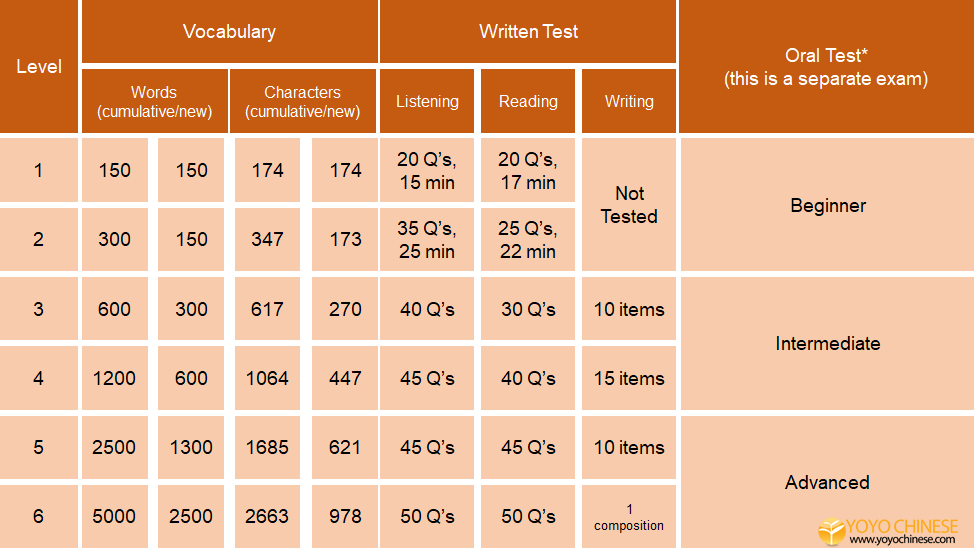
Standardized Tests for Measuring Chinese Proficiency
Standardized tests are the most reliable way to assess Chinese proficiency. These exams evaluate listening, speaking, reading, and writing skills. Below are the most recognized tests:
- HSK (Hanyu Shuiping Kaoshi): The official test for non-native speakers, with six levels covering basic to advanced proficiency.
- HSKK (HSK Speaking Test): Focuses exclusively on speaking skills, divided into beginner, intermediate, and advanced levels.
- YCT (Youth Chinese Test): Designed for younger learners, assessing their ability to use Chinese in daily life.
Self-Assessment Tools for Chinese Proficiency
Self-assessment tools help learners gauge their Chinese language skills without formal testing. These methods include:
See AlsoSkritter review: Boosting your Chinese character learning- CEFR Self-Assessment Grid: Compares skills to the Common European Framework of Reference for Languages.
- Online Quizzes and Apps: Platforms like Duolingo or HelloChinese provide instant feedback on proficiency.
- Checklists for Fluency: Lists of grammar points, vocabulary, and conversational topics to track progress.
Evaluating Speaking and Listening Skills
To measure spoken and listening proficiency, practical assessments are essential. Key methods include:
- Conversation Practice: Engaging in dialogues with native speakers to evaluate fluency and comprehension.
- Dictation Exercises: Transcribing spoken Chinese to test listening accuracy.
- Oral Interviews: Structured interviews with evaluators to assess pronunciation and coherence.
Assessing Reading and Writing Proficiency
Reading and writing skills in Chinese require understanding characters and grammar. Effective evaluation methods are:
- Character Recognition Tests: Identifying and writing characters at different difficulty levels.
- Comprehension Exercises: Answering questions based on written passages.
- Essay Writing: Composing short essays to evaluate grammar, vocabulary, and coherence.
Using Technology to Measure Chinese Proficiency
Modern tools leverage technology to assess Chinese skills efficiently. Popular options include:
See AlsoHow to get honest feedback to boost your Chinese speaking and writing- AI-Powered Language Apps: Apps like Pleco or Skritter track progress in real time.
- Speech Recognition Software: Tools like Google Pinyin evaluate pronunciation accuracy.
- Online Simulated Tests: Platforms offering mock HSK exams to predict proficiency levels.
What is considered intermediate Chinese?

Understanding Intermediate Chinese Proficiency
Intermediate Chinese typically refers to a language level where learners can handle everyday conversations, understand basic texts, and express opinions on familiar topics. Key characteristics include:
- Vocabulary: Knowledge of around 1,500–3,000 words, covering daily life, work, and simple social interactions.
- Grammar: Ability to use common sentence structures, such as comparatives, conditionals, and basic conjunctions.
- Listening/Speaking: Can follow slow-to-moderate speech and participate in discussions with some hesitation.
Key Skills for Intermediate Chinese Learners
To reach intermediate level, learners must develop core competencies:
See AlsoHSK 4 Vocabulary Test - Quick Fire Quiz- Reading: Understanding short articles, emails, or signs with minimal reliance on a dictionary.
- Writing: Composing paragraphs or simple essays on familiar topics with accurate grammar.
- Conversation: Discussing hobbies, travel, or work with clear pronunciation and fluency.
Common Intermediate Chinese Grammar Topics
At this stage, learners tackle more complex grammatical structures, such as:
- 了 (le): Mastering its use for completed actions or changes of state.
- 把 (bǎ) sentences: Understanding how to rearrange sentences for emphasis.
- Passive voice: Using 被 (bèi) to express passive constructions.
Vocabulary Expansion for Intermediate Learners
Building a broader vocabulary is critical. Focus areas include:
- Idiomatic phrases: Learning common chengyu (成语) or colloquial expressions.
- Topic-specific terms: Words related to travel, technology, or culture.
- Synonyms/antonyms: Differentiating between similar words like 高兴 (gāoxìng) vs. 快乐 (kuàilè).
Challenges Faced by Intermediate Chinese Learners
Progressing beyond intermediate level involves overcoming hurdles like:
- Tones: Maintaining accuracy in pronunciation during faster speech.
- Character recognition: Memorizing more complex Hanzi without pinyin.
- Cultural context: Grasping nuances in humor, idioms, or formal/informal speech.
Frequently Asked Questions (FAQ)
How can I assess my current level of Chinese proficiency?
To evaluate your Chinese proficiency, you can start by taking standardized tests like the HSK (Hanyu Shuiping Kaoshi), which measures reading, writing, listening, and speaking skills. Another method is self-assessment using the CEFR (Common European Framework of Reference for Languages) scale, comparing your abilities to descriptors for each level (A1 to C2). Additionally, try real-life practice, such as conversing with native speakers or consuming Chinese media, to gauge your comprehension and fluency.
What are the key indicators of progress in learning Chinese?
Vocabulary expansion, grammar accuracy, and pronunciation clarity are critical markers of improvement. Notice if you can understand native content, like movies or news, without subtitles. Another indicator is your ability to hold conversations on diverse topics without frequent pauses. Tracking how well you recognize Chinese characters and use them in writing also reflects progress.
Are online Chinese proficiency tests reliable?
While online tests can provide a rough estimate of your level, they may not be as comprehensive as official exams like the HSK. Free tests often focus on vocabulary and grammar but lack sections for speaking or writing. For a more accurate assessment, combine online tests with real-world practice or consider enrolling in a certified language program.
How often should I test my Chinese skills to track improvement?
Testing your skills every 3–6 months is ideal to monitor progress without causing burnout. Regular self-evaluation, such as journaling in Chinese or recording speaking exercises, helps track daily growth. For formal assessments, schedule HSK mock exams or tutor evaluations periodically to measure advancement in structured environments.
Leave a Reply
Related Posts