
Why travelling isn’t the best method to learn Chinese

Many people believe that immersing oneself in a foreign country is the fastest way to learn its language. However, when it comes to Mandarin Chinese, traveling alone may not be the most effective method. While exposure to native speakers and daily interactions can help, Chinese is a tonal language with complex characters and grammar, requiring structured study to master. Without a solid foundation, travelers often struggle to progress beyond basic phrases. Additionally, regional dialects and fast-paced conversations can overwhelm beginners. For true fluency, a combination of formal lessons, consistent practice, and cultural understanding is essential—something that travel alone cannot guarantee.
Why Travelling Alone Isn't the Most Effective Way to Learn Chinese
1. Limited Structured Learning Opportunities
While travelling exposes you to the Chinese language in real-life contexts, it often lacks a structured curriculum. Unlike formal classes or online courses, immersion alone doesn't systematically teach grammar, vocabulary, or pronunciation. You may pick up phrases, but without guidance, gaps in understanding persist.
| Issue | Impact on Learning |
|---|---|
| No grammar explanations | Difficulty forming correct sentences |
| Random vocabulary exposure | Inconsistent retention |
2. Over-Reliance on Translation Apps
Travellers often depend on translation tools like Google Translate, which hinders active learning. These apps create a crutch, reducing motivation to memorize characters or practice speaking. Over time, this passive approach slows progress compared to disciplined study methods.
See Also10 Interesting Facts and Figures about Mandarin Chinese| Drawback | Consequence |
|---|---|
| Instant translations | No mental recall practice |
| Inaccurate context | Misunderstood phrases |
3. Time-Consuming Without Guaranteed Progress
Learning Chinese requires consistent practice, but travel schedules are unpredictable. Sightseeing and socializing leave little time for focused study. Unlike a dedicated course, where progress is measurable, immersion alone offers no milestones or feedback loops.
| Challenge | Learning Barrier |
|---|---|
| Irregular practice | Slow skill development |
| No assessments | Unclear proficiency growth |
4. Dialect Variations and Accents
China has numerous regional dialects (e.g., Cantonese, Shanghainese). As a traveller, you might encounter accents or slang that differ from standard Mandarin. This can confuse beginners who haven’t mastered the basics, leading to frustration or incorrect pronunciation habits.
| Problem | Effect |
|---|---|
| Local slang | Miscommunication |
| Non-standard tones | Poor speaking habits |
5. Lack of Feedback and Correction
Locals may not correct your mistakes to avoid embarrassment, reinforcing errors in grammar or tone usage. In a classroom, teachers provide immediate feedback—critical for mastering tones and syntax. Without corrections, bad habits become ingrained.
See Also14 extra songs to learn Chinese and expand your horizons| Issue | Long-Term Risk |
|---|---|
| Uncorrected tones | Fossilized errors |
| Polite nods | False confidence |
What is the most effective way to learn Chinese?
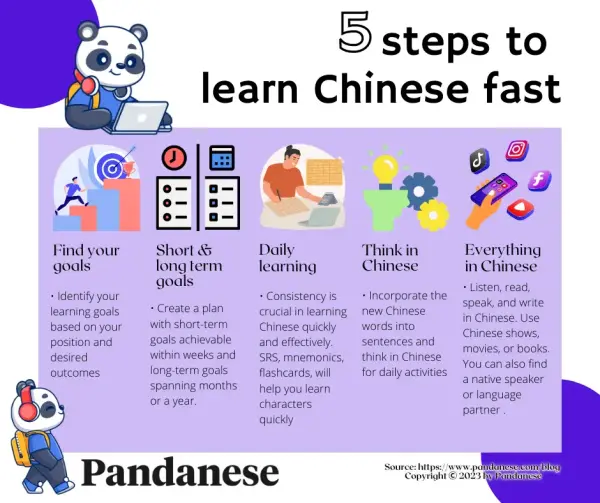
Immerse Yourself in the Language
The most effective way to learn Chinese is through immersion. Surrounding yourself with the language helps your brain adapt quickly. Here’s how to do it:
- Watch Chinese media: Movies, TV shows, and news programs expose you to natural speech patterns.
- Listen to Chinese music or podcasts: Improves listening comprehension and pronunciation.
- Change device languages: Set your phone or computer to Chinese for daily exposure.
Master Pinyin and Tones Early
Pinyin (Romanization of Chinese characters) and tones are foundational. Mispronouncing tones can change meanings entirely. Focus on:
See AlsoLearning simplified and traditional Chinese- Practice tone pairs: Drill combinations like mā (mother) vs. mà (scold).
- Use apps like Pleco: Provides audio examples for accurate pronunciation.
- Record yourself: Compare your speech with native speakers.
Prioritize High-Frequency Vocabulary
Learning the most common words first accelerates fluency. Follow these steps:
- Use frequency lists: Start with the top 500-1000 words used daily.
- Flashcards (Anki): Spaced repetition reinforces memory.
- Contextual learning: Study words in sentences, not isolation.
Practice Speaking Daily
Speaking is crucial for fluency. Even short sessions help. Try these methods:
- Language exchange: Partner with native speakers (e.g., Tandem, HelloTalk).
- Shadowing technique: Repeat dialogues immediately after hearing them.
- Talk to yourself: Describe daily activities in Chinese aloud.
Learn Characters Strategically
Chinese characters are challenging but manageable with a plan. Optimize your approach:
See AlsoHow was your first semester of learning Chinese?- Start with radicals: Understand building blocks of characters.
- Write by hand: Reinforces memory through muscle engagement.
- Use mnemonics: Create stories to remember complex characters.
Why is Chinese the most difficult language to learn?
The Complexity of Chinese Characters
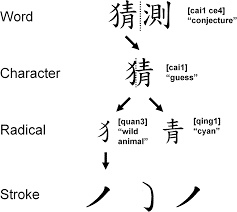
One of the primary reasons Chinese is considered the most difficult language to learn is its writing system. Unlike alphabetic languages, Chinese uses logograms, where each character represents a word or a morpheme. This requires memorizing thousands of characters to achieve basic literacy. Additionally:
- Stroke order must be learned precisely to write characters correctly.
- Many characters look similar but have completely different meanings.
- There is no phonetic consistency, making pronunciation unpredictable from the written form.
Tonal Nature of the Language
Mandarin Chinese is a tonal language, meaning the pitch or intonation used when pronouncing a word can change its meaning entirely. This is particularly challenging for learners whose native languages are non-tonal. Key difficulties include:
See AlsoChinese language question triage: When to ask whom about what- Four main tones (plus a neutral tone) must be mastered to avoid misunderstandings.
- Subtle tone shifts can alter word meanings drastically (e.g., mā (mother) vs. mà (scold)).
- Tone sandhi rules add another layer of complexity, where tones change in specific contexts.
Lack of Cognates and Grammar Differences
Unlike European languages, Chinese shares very few cognates with English or other Indo-European languages. Additionally, its grammar structure is fundamentally different:
- No verb conjugations or tenses, relying instead on context and particles.
- Word order is critical and follows strict patterns (e.g., Subject-Verb-Object).
- Measure words (classifiers) are required when counting nouns, adding another memorization layer.
Regional Variations and Dialects
China has numerous dialects, many of which are mutually unintelligible. While Mandarin is the official language, learners may encounter:
- Cantonese, Shanghainese, and other dialects with distinct pronunciations and vocabularies.
- Regional slang and idioms that differ significantly from standard Mandarin.
- Even within Mandarin, accents and colloquialisms vary widely across regions.
Cultural Context and Idiomatic Expressions
Chinese is deeply rooted in its cultural context, making idiomatic expressions and proverbs difficult to grasp without background knowledge. Challenges include:
- Chengyu (four-character idioms) often reference historical or literary events.
- Politeness and indirect speech patterns differ greatly from Western directness.
- Social hierarchies influence language use, requiring awareness of formal vs. informal speech.
Is Travelling the best way to learn?

The Benefits of Learning Through Travel
Traveling exposes individuals to diverse cultures, languages, and perspectives, making it a powerful learning tool. Unlike traditional education, it offers hands-on experiences that deepen understanding and retention. Here’s why it stands out:
- Cultural immersion: Living among locals fosters empathy and broadens worldviews.
- Language acquisition: Practicing a language in real-life settings accelerates fluency.
- Problem-solving skills: Navigating unfamiliar environments enhances adaptability.
Limitations of Travel as a Learning Method
While traveling offers unique advantages, it isn’t without drawbacks. Some challenges can hinder the learning process:
- Cost barriers: Frequent travel may be financially unsustainable for many.
- Superficial experiences: Short trips may not allow deep cultural understanding.
- Logistical challenges: Language barriers or safety concerns can disrupt learning.
Comparing Travel to Traditional Education
Travel and classroom learning serve different purposes, each with distinct strengths:
- Practical vs. theoretical: Travel emphasizes real-world application, while classrooms focus on structured knowledge.
- Pace of learning: Travel is self-directed, whereas traditional education follows a curriculum.
- Accessibility: Schools are more universally accessible compared to travel opportunities.
How Travel Enhances Personal Growth
Traveling isn’t just about acquiring knowledge—it transforms individuals on a personal level:
- Self-reliance: Managing solo trips builds confidence and independence.
- Open-mindedness: Exposure to diversity reduces prejudices and biases.
- Resilience: Overcoming travel setbacks strengthens emotional endurance.
Alternative Ways to Learn Beyond Travel
For those unable to travel, other methods can replicate its benefits:
- Virtual exchanges: Online platforms connect learners with global peers.
- Cultural events: Local festivals or museums offer immersive experiences.
- Books and documentaries: In-depth resources provide insights into other cultures.
How long does it realistically take to learn Chinese?

Factors Affecting the Time to Learn Chinese
The time it takes to learn Chinese depends on several key factors:
- Prior language experience: If you already know a tonal language like Vietnamese or Thai, learning Mandarin may be easier.
- Study intensity: Studying full-time (20+ hours/week) can lead to basic fluency in 6-12 months, while part-time study may take years.
- Learning methods: Immersion programs or living in a Chinese-speaking country accelerates progress.
Basic Conversational Fluency in Chinese
Achieving basic conversational fluency (HSK 3-4 level) typically requires:
- 6-12 months of consistent study with daily practice.
- Mastering around 1,000-2,000 words and essential grammar structures.
- Regular interaction with native speakers to improve pronunciation and listening.
Intermediate to Advanced Chinese Proficiency
Reaching an intermediate or advanced level (HSK 5-6) generally takes:
- 2-4 years of dedicated study, depending on exposure and practice.
- Learning 2,500-5,000+ words and complex sentence patterns.
- Reading books, watching films, and engaging in in-depth discussions.
The Role of Chinese Characters in Learning Time
Chinese characters significantly impact the learning curve:
- Recognizing 1,000-2,000 characters is needed for basic literacy.
- Memorizing characters requires daily writing practice and repetition.
- Learning radicals and components can speed up character retention.
Accelerating Chinese Learning with Immersion
Immersion drastically reduces learning time:
- Living in China or Taiwan forces daily language use, speeding up fluency.
- Language exchange partners or tutors provide real-time feedback.
- Consuming native media (news, podcasts, TV) improves comprehension.
Frequently Asked Questions (FAQ)
Why isn't travelling the most effective way to learn Chinese?
Travelling to a Chinese-speaking country might seem like the perfect way to immerse yourself in the language, but it often falls short of expectations. While exposure to native speakers is valuable, learning Chinese requires structured study due to its complex writing system, tones, and grammar. Without formal instruction, travellers may pick up basic phrases but struggle with deeper comprehension. Additionally, many locals in tourist areas switch to English, limiting real practice opportunities.
Can you become fluent in Chinese just by travelling?
Fluency in Chinese is highly unlikely to be achieved through travel alone. The language's intricacies, such as tones and characters, demand systematic learning. While immersion helps with listening and speaking, mastering reading and writing requires dedicated study. Travellers often miss critical grammar rules and vocabulary, leading to gaps in proficiency. For true fluency, combining travel with formal classes or self-study is far more effective.
What are the limitations of learning Chinese while travelling?
The main limitations include inconsistent exposure and lack of structured learning. Travellers may encounter dialectal variations (like Mandarin vs. Cantonese) that confuse beginners. Additionally, without a teacher, correcting mistakes becomes difficult, reinforcing bad habits. Social interactions often remain superficial, missing the depth needed for advanced language skills. Lastly, the focus on tourism rather than education means less time for deliberate practice.
How does travelling compare to classroom learning for Chinese?
Classroom learning provides a clear curriculum, expert guidance, and progressive challenges—key elements missing in travel-based learning. While travelling offers real-world practice, classrooms ensure systematic coverage of tones, grammar, and characters. Self-study apps or online courses can supplement travel, but relying solely on immersion often results in uneven progress. For a balanced approach, combining both methods maximizes exposure and structured growth.
Leave a Reply
Related Posts