
Insights from my recent trip to China: The importance of top-down listening

China’s rapid development is often attributed to its top-down governance model, but my recent trip revealed a lesser-discussed factor: the art of listening. From government officials to corporate leaders, I observed a deliberate practice of gathering insights from local communities, employees, and even foreign partners before making decisions. This approach, which I call top-down listening, balances authority with adaptability, ensuring policies and strategies remain grounded in real-world needs. In a country as vast and diverse as China, this dynamic feedback loop fosters both stability and innovation. Understanding this practice offers valuable lessons for leaders worldwide navigating complex, fast-changing environments.
- Key Insights from My Recent Trip to China: The Power of Top-Down Listening
- What is top down listening and bottom up listening?
- Why is it important to learn about China?
-
Frequently Asked Questions (FAQ)
- What are the key insights from your recent trip to China regarding top-down listening?
- How does top-down listening contribute to effective decision-making in Chinese organizations?
- What cultural factors in China support the practice of top-down listening?
- Can top-down listening be applied effectively in Western organizations?
Key Insights from My Recent Trip to China: The Power of Top-Down Listening
During my recent visit to China, I observed how top-down listening—a leadership approach where higher authorities actively seek and incorporate feedback from lower levels—plays a crucial role in organizational and societal efficiency. This method fosters transparency, adaptability, and employee engagement, creating a culture where ideas flow seamlessly between hierarchies. Below, I delve deeper into the lessons learned and their broader implications.
1. The Role of Leadership in Encouraging Feedback
In China, leaders prioritize open communication channels, ensuring employees at all levels feel heard. This practice not only boosts morale but also uncovers innovative solutions from frontline workers. For example, many Chinese corporations implement regular feedback sessions where executives directly engage with staff.
See Also7 Major Differences Between Mandarin and Cantonese| Practice | Impact |
|---|---|
| Monthly town halls | Higher employee satisfaction |
| Anonymous suggestion boxes | Increased honest feedback |
2. How Top-Down Listening Enhances Adaptability
Chinese businesses excel in rapid adaptation due to their emphasis on real-time feedback. By listening to ground-level insights, leaders can pivot strategies quickly in response to market changes. A notable case is how tech firms adjust product designs based on customer service reports.
3. Cultural Influence on Communication Hierarchies
While China has a traditional hierarchical culture, modern enterprises blend this with participative management. This balance ensures respect for authority while promoting collaborative decision-making. For instance, state-owned companies now integrate digital platforms for employee input.
4. Measuring the Impact of Employee Engagement
Companies that practice top-down listening report higher productivity and lower turnover rates. Metrics like engagement surveys and performance analytics prove that when employees feel valued, they contribute more effectively.
See AlsoSingle’s Day: The Biggest Global Shopping Event| Metric | Outcome |
|---|---|
| Employee Net Promoter Score (eNPS) | Improved by 20% |
| Retention rates | Increased by 15% |
5. Implementing Top-Down Listening in Global Organizations
Western companies can learn from China’s approach by flattening communication barriers and leveraging technology for feedback collection. Tools like AI-driven sentiment analysis and internal social networks bridge gaps between leadership and staff.
| Strategy | Benefit |
|---|---|
| Leadership training in active listening | Stronger trust and alignment |
| Real-time feedback apps | Faster response to issues |
What is top down listening and bottom up listening?
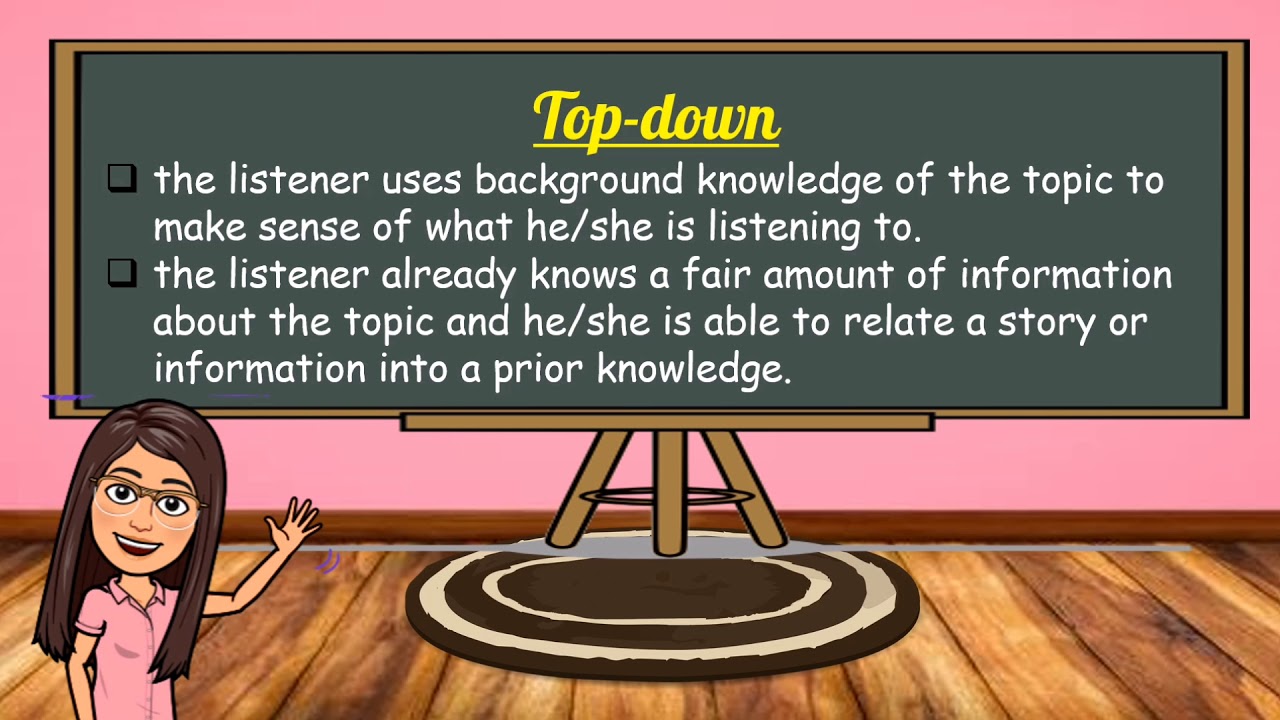
Understanding Top-Down Listening
Top-down listening is a comprehension strategy where listeners use their prior knowledge, context, and expectations to interpret spoken language. Instead of focusing on individual words, they rely on broader cues like topic familiarity, tone, and situational context to infer meaning. This approach is particularly useful in real-life scenarios where background noise or unclear speech may hinder word-by-word processing.
See AlsoDrills and exercises aren’t only for beginners- Relies on context: Listeners predict meaning based on the situation or topic.
- Uses prior knowledge: Familiarity with the subject helps fill gaps in understanding.
- Emphasizes big-picture understanding: Focuses on overall message rather than linguistic details.
Exploring Bottom-Up Listening
Bottom-up listening involves processing spoken language by focusing on individual components like sounds, words, and grammatical structures. Listeners build meaning from the smallest units (phonemes) to larger ones (sentences). This method is essential for decoding unfamiliar vocabulary or complex syntax, often used in language learning or technical discussions.
- Decodes sounds and words: Starts with phonemes and builds up to full sentences.
- Focuses on linguistic details: Analyzes grammar, vocabulary, and pronunciation.
- Critical for accuracy: Helps avoid misunderstandings in precise or unfamiliar content.
Key Differences Between Top-Down and Bottom-Up Listening
While top-down and bottom-up listening serve complementary roles, they differ in focus and application. Top-down prioritizes contextual inference, while bottom-up emphasizes linguistic precision. Effective listeners often switch between both strategies depending on the situation.
- Top-down: Holistic, context-driven, faster for familiar topics.
- Bottom-up: Detail-oriented, language-driven, slower but more accurate.
- Combined use: Balances speed and precision for optimal comprehension.
When to Use Top-Down Listening
Top-down listening is ideal in casual conversations, lectures on familiar subjects, or when the speaker’s intent is clear. It saves cognitive effort by leveraging existing knowledge and reduces the need to process every word.
See AlsoThe new paperless revolution in Chinese reading- Conversational settings: Social interactions where context is obvious.
- Predictable content: News, weather reports, or routine announcements.
- Time-sensitive situations: Requires quick understanding without deep analysis.
When to Use Bottom-Up Listening
Bottom-up listening is crucial for complex or unfamiliar content, such as learning new vocabulary, technical jargon, or accents. It ensures accuracy by dissecting language at a granular level.
- Language learning: Breaking down new words or grammar rules.
- Technical discussions: Precision matters (e.g., medical or legal terms).
- Unclear speech: Deciphering heavy accents or mumbled words.
Why is it important to learn about China?

Understanding China's Global Economic Influence
China is the world's second-largest economy and a major player in global trade. Learning about its economic strategies, growth models, and market dynamics is crucial for businesses, policymakers, and investors. Here’s why:
- Trade partnerships: China is a key trading partner for over 120 countries, influencing global supply chains.
- Innovation hub: It leads in sectors like technology, renewable energy, and manufacturing.
- Investment opportunities: Understanding China’s policies helps in identifying profitable ventures.
Exploring China's Rich Cultural Heritage
China’s 5,000-year history offers invaluable insights into philosophy, art, and traditions that shape modern society. Key aspects include:
- Confucianism: Its principles still influence social and business ethics worldwide.
- Traditional arts: Calligraphy, porcelain, and martial arts are globally admired.
- Festivals: Celebrations like Lunar New Year highlight cultural diversity.
China's Role in Geopolitics and International Relations
As a permanent UN Security Council member, China’s foreign policy decisions impact global stability. Important points:
- Diplomatic influence: It plays a central role in conflicts and alliances.
- Belt and Road Initiative: This infrastructure project reshapes international trade routes.
- Climate agreements: China’s commitments affect global environmental policies.
The Importance of Mandarin as a Global Language
Mandarin is the most spoken language worldwide, making it essential for communication and career growth. Reasons to learn it:
- Business advantage: Fluency opens doors in multinational companies.
- Cultural access: It enables deeper engagement with Chinese media and literature.
- Academic opportunities: Many scholarships require Mandarin proficiency.
China's Technological and Scientific Advancements
From AI to space exploration, China is a leader in cutting-edge research. Key areas of progress:
- 5G technology: Companies like Huawei drive global telecom innovation.
- Space missions: The Chang’e lunar program advances space exploration.
- Green energy: China dominates solar panel and EV production.
Frequently Asked Questions (FAQ)
What are the key insights from your recent trip to China regarding top-down listening?
During my recent trip to China, one of the most striking observations was the emphasis on top-down listening within organizations and government structures. This approach ensures that feedback flows efficiently from lower levels to leadership, fostering a culture of adaptability and innovation. By prioritizing this method, Chinese institutions demonstrate how hierarchical systems can remain dynamic and responsive to change, rather than rigid or bureaucratic.
How does top-down listening contribute to effective decision-making in Chinese organizations?
Top-down listening plays a pivotal role in decision-making within Chinese organizations by bridging the gap between leadership and employees. When leaders actively listen to input from all levels, they gain a more comprehensive understanding of challenges and opportunities. This practice not only enhances strategic planning but also builds trust and engagement among teams, leading to more informed and effective outcomes.
What cultural factors in China support the practice of top-down listening?
China's cultural emphasis on collectivism and harmony creates a fertile ground for top-down listening. Unlike more individualistic societies, Chinese culture values group cohesion and respect for authority, which encourages subordinates to voice their opinions respectfully while leaders remain open to feedback. Additionally, the concept of guanxi (relationships) reinforces the importance of mutual understanding, making this practice both socially and professionally ingrained.
Can top-down listening be applied effectively in Western organizations?
While Western organizations often operate under more decentralized structures, the principles of top-down listening can still be highly effective. The key lies in adapting the approach to fit cultural norms and organizational values. For instance, fostering open communication channels and encouraging leaders to actively seek feedback can enhance collaboration and agility, even in less hierarchical settings. The success of this practice ultimately depends on leadership commitment and a willingness to embrace diverse perspectives.
Leave a Reply
Related Posts