
Learning Chinese as a beginner

Learning Chinese as a beginner can be both exciting and challenging. With its unique characters, tones, and grammar, Mandarin Chinese offers a fascinating linguistic journey. For new learners, mastering the basics—such as pinyin, common phrases, and simple characters—lays a strong foundation. While the writing system may seem daunting, consistent practice and exposure make it manageable. Understanding tones is crucial, as they change word meanings entirely. Fortunately, numerous resources, from apps to language partners, can support your progress. Whether for travel, work, or personal growth, starting Chinese opens doors to rich cultural experiences. Patience and persistence will help you navigate this rewarding language adventure.
Essential Tips for Learning Chinese as a Beginner
1. Understanding the Basics of Mandarin Chinese
When starting to learn Mandarin Chinese, it's crucial to grasp the fundamentals, such as tones, Pinyin, and basic characters. Mandarin has four main tones, and mastering them early prevents misunderstandings. Pinyin, the Romanization system, helps beginners pronounce words correctly before learning characters. Start with simple characters and radicals to build a strong foundation.
| Key Aspect | Why It's Important |
|---|---|
| Tones | Changes in tone alter word meanings. |
| Pinyin | Helps with pronunciation and typing. |
| Basic Characters | Forms the foundation for reading and writing. |
2. Effective Learning Resources for Beginners
Choosing the right resources can make learning Chinese easier. Apps like Duolingo or HelloChinese offer interactive lessons, while textbooks like Integrated Chinese provide structured learning. YouTube channels and podcasts are great for listening practice. Flashcards (physical or digital) help reinforce vocabulary.
See AlsoMemrise Review (Updated for 2025) - Is It Worth Downloading?| Resource Type | Best Options |
|---|---|
| Apps | Duolingo, HelloChinese, Anki |
| Textbooks | Integrated Chinese, New Practical Chinese Reader |
| Listening Practice | YouTube (ChinesePod, Yoyo Chinese), Podcasts |
3. Building a Strong Vocabulary Foundation
As a beginner, focus on high-frequency words like greetings, numbers, and common phrases. Learning measure words (used with nouns) is also essential. Group related words (e.g., family terms, food items) to make memorization easier. Consistent daily practice is key.
| Vocabulary Category | Examples |
|---|---|
| Greetings | 你好 (nǐ hǎo), 谢谢 (xièxie) |
| Numbers | 一 (yī), 二 (èr), 三 (sān) |
| Measure Words | 个 (gè), 本 (běn), 张 (zhāng) |
4. Practicing Speaking and Listening Skills
To improve speaking and listening, engage in language exchanges with native speakers via platforms like Tandem or HelloTalk. Mimic native pronunciation and record yourself to identify mistakes. Watching Chinese shows or listening to music helps train your ear to the language's rhythm and tones.
| Practice Method | Benefits |
|---|---|
| Language Exchange | Real conversation practice with feedback. |
| Shadowing Technique | Improves pronunciation and fluency. |
| Media Consumption | Enhances listening comprehension. |
5. Overcoming Common Challenges for Beginners
Beginners often struggle with tones, character memorization, and grammar differences. To tackle tones, practice with tone pairs. For characters, use mnemonics or spaced repetition. Chinese grammar lacks verb conjugations, but word order is critical—study sentence patterns early.
See AlsoHow to get good grades when studying Chinese| Challenge | Solution |
|---|---|
| Tones | Drill tone pairs and use tone marks. |
| Characters | Break down radicals; use flashcards. |
| Grammar | Focus on word order and particles. |
How do I start learning Chinese for beginners?
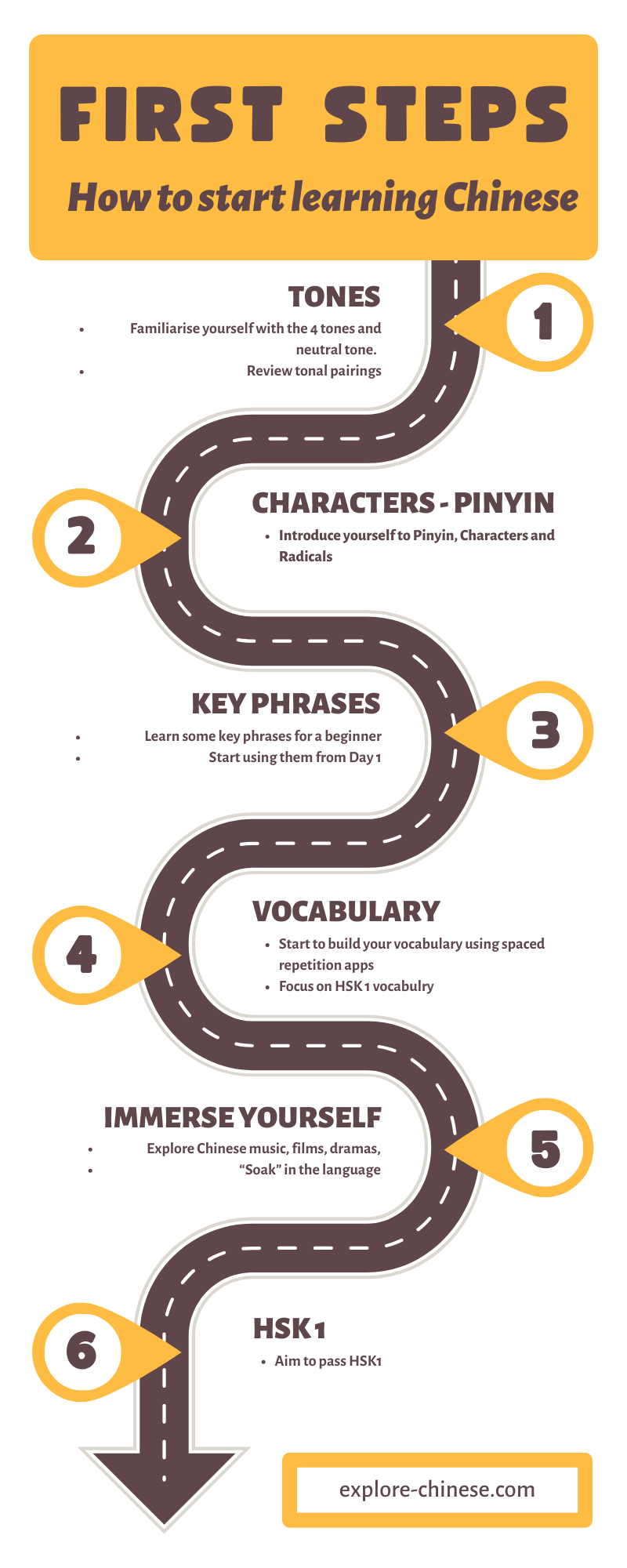
1. Understand the Basics of Chinese Language
To begin learning Chinese, it's essential to grasp the foundational elements. Chinese is a tonal language with four main tones, and mastering these is crucial for accurate pronunciation. Additionally, familiarize yourself with Pinyin, the Romanization system for Chinese characters, as it helps with reading and pronunciation.
- Learn the four tones and practice them daily.
- Study Pinyin to understand how characters sound.
- Start with basic vocabulary like greetings and numbers.
2. Start with Simple Chinese Characters
Chinese characters, or Hanzi, are the building blocks of the language. Begin with the most common characters, which often appear in daily conversations. Focus on recognizing and writing them correctly, as stroke order is important.
See Also7 Disney Songs in Chinese - Learn Chinese The Fun Way- Learn basic radicals to understand character composition.
- Practice writing characters using the correct stroke order.
- Use flashcards or apps like Anki for memorization.
3. Practice Listening and Speaking Early
Developing listening and speaking skills early is vital for fluency. Listen to Chinese podcasts, watch movies, or use language apps to immerse yourself in the sounds of the language.
- Use apps like HelloTalk or Tandem to practice with native speakers.
- Watch Chinese TV shows or YouTube channels with subtitles.
- Repeat phrases aloud to improve pronunciation and tone accuracy.
4. Use Structured Learning Resources
Structured courses or textbooks provide a clear path for beginners. Look for resources tailored to HSK levels, the standard proficiency test for Chinese learners.
- Enroll in an online course like Coursera or Udemy.
- Follow a textbook series such as Integrated Chinese.
- Track progress using HSK vocabulary lists.
5. Immerse Yourself in Chinese Culture
Cultural immersion enhances language learning by providing context. Engage with Chinese media, food, and traditions to make the process more enjoyable and meaningful.
- Join language exchange groups or local Chinese communities.
- Celebrate Chinese festivals to learn cultural nuances.
- Read children's books or simple articles in Chinese.
How to start self-learning Chinese?

Setting Clear Goals for Learning Chinese
Before diving into self-learning, define your objectives. Are you learning for travel, business, or cultural interest? Break your goals into short-term and long-term milestones. For example:
- Short-term: Learn basic greetings and numbers in the first month.
- Mid-term: Hold a 5-minute conversation within six months.
- Long-term: Pass the HSK 3 exam in a year.
Choosing the Right Learning Resources
Select high-quality materials tailored to your level. A mix of textbooks, apps, and online courses works best. Consider these:
- Apps: Duolingo, HelloChinese, or Anki for vocabulary.
- Textbooks: Integrated Chinese or New Practical Chinese Reader.
- YouTube: Channels like Yoyo Chinese or ChinesePod.
Mastering Pronunciation and Tones
Mandarin tones are critical. Mispronouncing a tone can change a word’s meaning. Follow these steps:
- Listen: Use apps like Pinyin Trainer or watch native speakers.
- Repeat: Practice daily with audio recordings.
- Record: Compare your pronunciation to natives using tools like Speechling.
Building a Strong Vocabulary Foundation
Start with high-frequency words and gradually expand. Use these strategies:
- Flashcards: Focus on 10-15 new words daily.
- Context: Learn words in sentences, not isolation.
- Review: Use spaced repetition systems (SRS) like Pleco.
Practicing Consistently and Immersively
Daily practice is key. Immerse yourself even outside study sessions:
- Media: Watch Chinese shows or listen to podcasts.
- Language exchange: Use Tandem or HelloTalk to chat with natives.
- Writing: Keep a journal or use Skritter for characters.
How long does it realistically take to learn Chinese?
Factors That Influence Learning Chinese
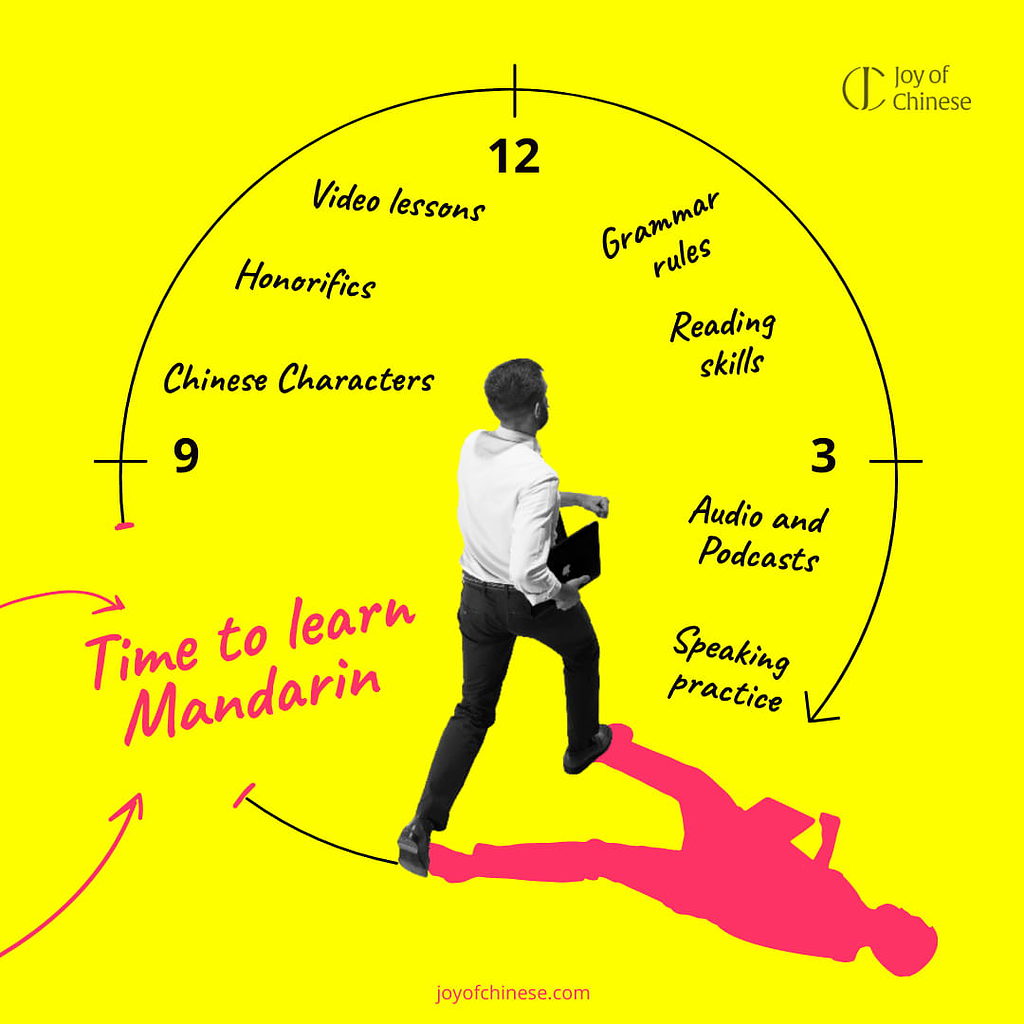
The time it takes to learn Chinese depends on several key factors:
- Prior language experience: If you already speak a tonal language like Vietnamese or Thai, learning Mandarin may be easier.
- Study intensity: Studying full-time (20+ hours/week) can lead to basic fluency in 1-2 years, while casual study may take 4-5 years.
- Learning methods: Immersion programs or living in a Chinese-speaking country accelerates progress.
Basic Conversational Fluency Timeline
Achieving basic conversational fluency (HSK 3-4) typically requires:
- 6-12 months of dedicated study (10-15 hours/week) for simple daily interactions.
- Mastery of 600-1,200 words and fundamental grammar structures.
- Regular practice with native speakers to improve pronunciation and listening.
Intermediate Proficiency Expectations
Reaching intermediate proficiency (HSK 4-5) usually involves:
- 2-3 years of consistent study, including reading and writing Chinese characters.
- Knowledge of 1,500-2,500 words to understand news, TV shows, and work discussions.
- Structured classes or tutoring to refine complex sentence patterns.
Advanced Fluency and Mastery
Attaining advanced fluency (HSK 6 or beyond) often demands:
- 4-5+ years of immersive learning, including specialized vocabulary for business or academia.
- 5,000+ words and the ability to comprehend nuanced expressions and idioms.
- Daily engagement with native materials like literature or professional documents.
Accelerating Your Chinese Learning
To speed up the learning process, consider:
- Language immersion: Living in China or Taiwan forces rapid adaptation.
- Spaced repetition tools (e.g., Anki) for efficient character memorization.
- Focusing on speaking first, delaying character writing until foundational skills are solid.
Frequently Asked Questions (FAQ)
What is the best way to start learning Chinese as a beginner?
Starting to learn Chinese as a beginner can feel overwhelming, but focusing on the basics is key. Begin with Pinyin, the romanization system for Mandarin, to master pronunciation. Learning simple greetings and common phrases will build confidence early on. Additionally, using flashcards or apps like Anki or HelloChinese can help reinforce vocabulary. Consistency is crucial—practicing daily, even for short periods, will yield better results than sporadic, lengthy sessions.
How important is learning Chinese characters for beginners?
While Chinese characters may seem intimidating, they are essential for long-term fluency. Beginners should start with basic characters, such as numbers (一, 二, 三) and common words like 你好 (nǐ hǎo). Understanding radicals—the building blocks of characters—can make memorization easier. However, balancing character study with spoken Mandarin is important; focusing solely on writing early on may slow progress in conversation. Tools like Skritter or Pleco can help with character recognition and writing practice.
Should beginners focus on tones when learning Chinese?
Tones are a fundamental aspect of Mandarin Chinese and can change the meaning of words entirely. For example, mā (妈) means mom, while mà (骂) means scold. Beginners should prioritize tone practice early to avoid developing bad habits. Listening to native speakers, repeating words aloud, and using tone drills can improve accuracy. Apps like Pinyin Trainer or working with a tutor can provide structured tone practice. Ignoring tones may lead to misunderstandings, so consistent practice is vital.
What resources are best for beginners learning Chinese?
Beginners should use a mix of interactive and traditional resources for a well-rounded approach. Apps like Duolingo, Memrise, or ChineseSkill offer gamified learning. For structured lessons, textbooks like Integrated Chinese or online platforms like Coursera and Yabla are excellent. Watching Chinese dramas or listening to podcasts (e.g., Slow Chinese) can improve listening skills. Finally, language exchange partners on Tandem or HelloTalk provide real-world practice. Combining these tools ensures progress in speaking, listening, reading, and writing.
Leave a Reply
Related Posts