
10 Must-know Chinese Number Slang

Chinese number slang is a fascinating aspect of modern Mandarin, where numbers replace words based on their phonetic similarities. This clever linguistic shortcut is widely used in texting, social media, and everyday conversations, especially among younger generations. From expressing emotions to sharing secret codes, these numeric phrases add a playful yet efficient layer to communication. Whether you're learning Mandarin or just curious about internet culture, understanding these slang terms can offer insight into contemporary Chinese life. In this article, we’ll explore 10 must-know Chinese number slang phrases, their meanings, and how to use them—helping you decode messages and even impress native speakers with your cultural savvy.
10 Must-know Chinese Number Slang
1. What is Chinese Number Slang?
Chinese number slang is a creative way of using numbers to represent words or phrases based on their pronunciation in Mandarin. This form of slang is widely used in text messages, social media, and online chats to convey messages quickly and playfully. For example, 520 (wǔ èr líng) sounds like I love you (wǒ ài nǐ) in Chinese.
| Number | Pronunciation | Meaning |
|---|---|---|
| 520 | wǔ èr líng | I love you (wǒ ài nǐ) |
| 88 | bā bā | Bye-bye (similar sound) |
2. Why Do Chinese People Use Number Slang?
Chinese number slang is popular because it is short, easy to type, and fun. It allows people to communicate quickly in digital conversations while adding a layer of cultural nuance. Additionally, some phrases are considered too direct in Chinese culture, so numbers provide a subtle alternative.
See AlsoJianbing: How to Order Your Favourite Breakfast in China| Reason | Example |
|---|---|
| Speed | Typing 520 is faster than I love you |
| Cultural Nuance | Using 748 (qī sì bā) to insult subtly |
3. Most Common Chinese Number Slang Terms
Here are some of the most frequently used Chinese number slang terms in daily conversations:
| Number | Meaning |
|---|---|
| 1314 | Forever (yī shēng yī shì - one life, one world) |
| 250 | Idiot (èr bǎi wǔ - a foolish person) |
| 666 | Awesome (liù liù liù - sounds like smooth) |
4. Romantic Chinese Number Slang
Romantic number slang is especially popular among couples. These codes express affection without being overly explicit.
| Number | Meaning |
|---|---|
| 520 | I love you (wǒ ài nǐ) |
| 3344 | Forever together (sān shēng sì shì) |
| 770 | Kiss you (qīn qī nǐ) |
5. Negative or Insulting Number Slang
Some number combinations are used to mock or insult indirectly. These are often used humorously but can be offensive if misused.
See AlsoHSK 5 Vocabulary Test - Quick (+ Full) Quizzes Available| Number | Meaning |
|---|---|
| 748 | Drop dead (qī sì bā - sounds like an insult) |
| 38 | Rude woman (sān bā - derogatory term) |
What does 777 mean in Chinese slang?

The Origin of 777 in Chinese Slang
The number 777 in Chinese slang originates from online gaming and streaming culture, particularly in platforms like DouYu and Huya. It symbolizes good luck or celebration, similar to how 666 represents something impressive. The repetition of 7 amplifies its meaning, as the number 7 (七, qī) sounds like 起 (qǐ), which means to rise or to start.
- Gaming culture: Used to cheer on players during live streams.
- Lucky connotations: Associated with success or winning streaks.
- Phonetic similarity: The pronunciation aligns with positive words like rise or begin.
How 777 Differs from 666 in Chinese Internet Slang
While 666 is widely known as praise for someone’s skill (awesome or smooth), 777 carries a slightly different nuance. It emphasizes luck and upward momentum rather than sheer excellence. Here’s how they contrast:
See AlsoHow to Pass HSK 5 (In Under a Year)- 666: Focuses on admiration for ability.
- 777: Highlights fortune or a turning point.
- Usage context: 777 is common in gambling or competitive scenarios where luck plays a role.
Common Scenarios Where 777 Is Used
777 frequently appears in specific online interactions, especially where luck or achievement is involved. Examples include:
- Live streams: Viewers spam 777 when a streamer gets a rare item or wins a match.
- Esports: Fans use it to celebrate a team’s comeback or clutch play.
- Social media: Posted as a comment to wish someone success in endeavors.
Regional Variations in the Meaning of 777
While 777 is broadly understood in Chinese internet slang, regional dialects or communities might interpret it differently:
- Mainland China: Strong ties to gaming and livestreaming culture.
- Taiwan/Hong Kong: May associate it more with casino luck due to the influence of gambling terminology.
- Overseas Chinese communities: Usage might be less widespread but still recognized among younger netizens.
Pop Culture References Featuring 777
The prominence of 777 has led to its inclusion in memes, merch, and even music. Key examples:
See AlsoBest 10 Free Chinese Reading Materials for Beginners to Learn to Read Mandarin- Streamer catchphrases: Popular influencers adopt 777 as a trademark cheer.
- Gaming merchandise: Appears on apparel or accessories as a symbol of luck.
- Song lyrics: Referenced in hip-hop or internet-themed music celebrating success.
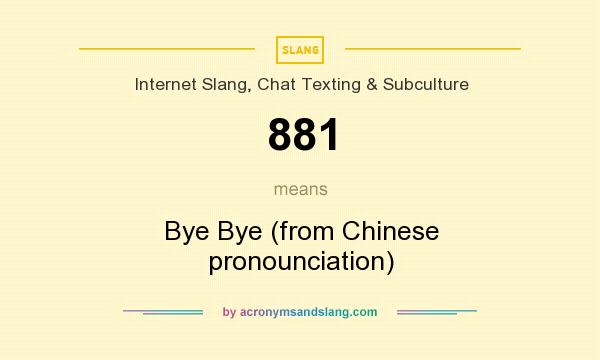
What does 881 mean in Chinese slang?
The Origin and Meaning of 881 in Chinese Slang
The term 881 in Chinese slang is derived from the pronunciation of the numbers in Mandarin. When spoken aloud, 8-8-1 sounds similar to bye-bye in English, making it a playful and informal way to say goodbye in online chats or text messages. Here’s a breakdown of its significance:
- Pronunciation: 8 is ba, and 1 is yi, so 881 sounds like ba ba yi, mimicking bye-bye.
- Usage: Commonly used in casual digital communication, especially among younger generations.
- Cultural Context: Reflects the creativity of Chinese netizens in adapting numbers for slang.
How 881 is Used in Online Communication
In digital spaces like social media, texting, or gaming, 881 serves as a quick and friendly way to end a conversation. Its usage includes:
- Informal Goodbyes: Often paired with emojis or stickers to convey warmth.
- Gaming Culture: Popular among gamers to sign off after a session.
- Variations: Sometimes extended to 8811 for added emphasis.
Comparing 881 to Other Chinese Numeric Slang
Chinese internet slang frequently uses numbers to represent phrases. Here’s how 881 fits into this broader trend:
- 520: Means I love you (五二零, wǔ èr líng).
- 666: Symbolizes awesome or smooth (溜溜溜, liù liù liù).
- 748: A rude phrase meaning go die (去死吧, qù sǐ ba).
The Popularity of 881 Among Younger Generations
881 has gained traction as a lighthearted, trendy way to say goodbye, particularly with:
- Gen Z and Millennials: Favored for its brevity and phonetic cleverness.
- Memes and Trends: Often appears in viral content or hashtags.
- Global Influence: Used even in non-Chinese communities familiar with the slang.
Misinterpretations and Common Mistakes with 881
While 881 is widely understood, misunderstandings can occur:
- Confusion with Dates: New learners might mistake it for a year or code.
- Overuse: Some find it overly casual for formal settings.
- Regional Differences: Pronunciation nuances may vary in dialects like Cantonese.
What does 282 mean in Chinese slang?

The Origin of 282 in Chinese Slang
The term 282 originates from Chinese internet slang, where numbers are often used to represent phrases based on their pronunciation. In this case, 282 sounds like èr bā èr (二八二) in Mandarin, which is a playful or mocking way to describe someone as silly, foolish, or childish. It’s commonly used in online communities to tease someone in a lighthearted manner.
- Pronunciation: The numbers 2-8-2 mimic the sound of èr bā èr, which doesn’t have a direct meaning but implies absurdity.
- Internet Culture: Like other numeric slang (e.g., 520 for I love you), 282 relies on phonetic similarity.
- Context: Often used among friends or in memes to joke about someone’s naive or quirky behavior.
How 282 Is Used in Online Conversations
In digital communication, 282 is typically employed to call out someone’s ridiculous or illogical actions. It’s not inherently offensive but can be sarcastic depending on tone.
- Teasing: Friends might say You’re such a 282 to mock harmless stupidity.
- Memes: Frequently appears in humorous posts or comments.
- Variations: Sometimes combined with emojis (e.g., ) to emphasize the joke.
282 vs. Other Chinese Numeric Slang
Unlike positive numeric codes like 520 (love) or 666 (awesome), 282 carries a negative or mocking connotation. Here’s how it compares:
- Positive Codes: 1314 (forever), 530 (I miss you).
- Neutral Codes: 555 (crying sound).
- Negative Codes: 250 (idiot), 282 (silly/foolish).
Regional Differences in Understanding 282
While 282 is recognized in many Chinese-speaking regions, its usage and interpretation can vary:
- Mainland China: Widely understood in online youth culture.
- Taiwan/Hong Kong: Less common; locals might use different slang.
- Dialects: In Cantonese, the pronunciation doesn’t map as clearly, reducing its popularity.
Examples of 282 in Pop Culture
The term occasionally appears in social media trends, streamer chats, or comedy skits. Notable cases include:
- Livestreams: Viewers spam 282 when a host acts goofy.
- Viral Videos: Used in captions to label silly antics.
- Fan Communities: Adopted as inside jokes among followers of certain influencers.
Frequently Asked Questions (FAQ)
What are the most common Chinese number slangs and their meanings?
Chinese number slangs are a fascinating part of modern Mandarin, where numbers represent phrases based on their pronunciation. For example, 520 (wǔ èr líng) sounds like I love you (wǒ ài nǐ), while 1314 (yī sān yī sì) means forever due to its similarity to 一生一世 (yīshēng yīshì). Other popular ones include 88 (bā bā) for bye-bye and 250 (èr bǎi wǔ), a playful insult calling someone foolish. These slangs are widely used in texts, social media, and even marketing.
Why do Chinese speakers use numbers as slang in conversations?
Using numbers as slang in Chinese is efficient and adds a layer of creativity to communication. Since Mandarin is a tonal language, numbers often sound like full phrases when spoken aloud. For instance, 748 (qī sì bā) sounds like go die (qù sǐ ba), making it a quick way to convey strong emotions. This shorthand is especially popular among younger generations and in digital messaging, where brevity is key. It also adds humor and cultural nuance to everyday chats.
How can I remember and use Chinese number slangs correctly?
To master Chinese number slangs, start by learning the most common ones, like 520 (I love you) or 666 (awesome). Associate the numbers with their pronunciations and meanings—for example, 555 (wǔ wǔ wǔ) mimics crying sounds, expressing sadness. Practice by using them in casual texts or social media comments. However, be cautious with slangs like 250 (foolish), as they can be offensive if misused. Context matters, so observe how native speakers apply them before jumping in.
Are Chinese number slangs used in formal settings or only informally?
Chinese number slangs are primarily informal and used in casual chats, memes, or online platforms. You’d rarely see them in formal writing or professional emails, as they’re considered playful or even slangy. However, some, like 520 (I love you), have crossed into mainstream culture, appearing in ads or romantic contexts. Slangs such as 250 (foolish) or 748 (go die) should be avoided in formal or polite conversations due to their negative or rude connotations.
Leave a Reply
Related Posts