
Study Chinese Characters: 6 Easy Points to Start Today

Learning Chinese characters may seem daunting, but with the right approach, it can be an engaging and rewarding experience. Whether you're a beginner or looking to refine your skills, starting with simple strategies can make a significant difference. This article outlines six easy points to help you dive into Chinese characters today. From understanding basic strokes to using mnemonics, these practical tips will build your confidence and set a strong foundation. By breaking down the process into manageable steps, you’ll discover that mastering characters is not only achievable but also enjoyable. Let’s explore how to begin your journey effectively.
Study Chinese Characters: 6 Easy Points to Start Today
1. Understand the Basic Structure of Chinese Characters
Chinese characters, or Hanzi, are composed of strokes and radicals. The basic strokes (like horizontal, vertical, and dot strokes) form the foundation, while radicals (components with meaning or pronunciation clues) help categorize characters. For example, the radical 水 (shuǐ, meaning water) appears in characters like 河 (hé, river). Learning these building blocks simplifies memorization.
| Element | Purpose | Example |
|---|---|---|
| Strokes | Basic writing units | 一 (horizontal), 丨 (vertical) |
| Radicals | Meaning/pronunciation hints | 氵(water-related characters) |
2. Start with High-Frequency Characters
Focus on the most commonly used characters first. The top 1,000 characters cover ~90% of written Chinese. Begin with simple ones like 人 (rén, person), 日 (rì, sun), or 好 (hǎo, good). Apps like Pleco or Anki can help prioritize these.
See Also5 of the Strangest Chinese Foods| Character | Pinyin | Meaning |
|---|---|---|
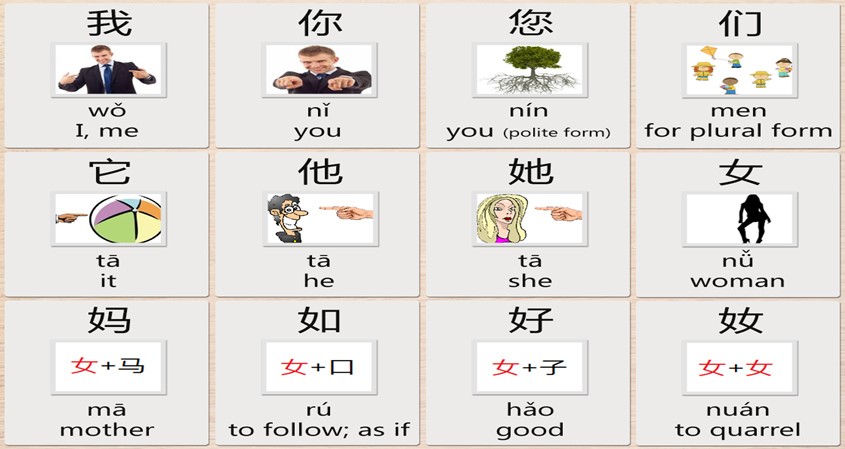
| 我 | wǒ | I, me |
| 你 | nǐ | you |
3. Use Mnemonics for Memorization
Create visual or story-based associations to remember characters. For instance, 休 (xiū, rest) combines the radical 亻(person) and 木 (tree), picturing someone leaning against a tree to rest. Tools like Remembering the Hanzi specialize in this technique.
| Character | Mnemonic |
|---|---|
| 明 (míng, bright) | Sun (日) + moon (月) = bright |
4. Practice Writing Characters Regularly
Repetition is key. Use grid paper to practice stroke order, which follows specific rules (top-to-bottom, left-to-right). For example, 三 (sān, three) is written with three horizontal strokes from top to bottom. Apps like Skritter gamify writing practice.
| Rule | Example |
|---|---|
| Horizontal before vertical | 十 (shí): 一 then 丨 |
5. Learn Characters in Context
Study characters within words or sentences instead of isolation. For example, 学 (xué, study) becomes clearer in 学生 (xuésheng, student). Watch Chinese dramas or read graded readers to see characters used naturally.
See AlsoIce Hockey in China: Time for Face-off| Character | Contextual Usage |
|---|---|
| 电 (diàn, electricity) | 电话 (diànhuà, phone) |
6. Leverage Technology and Apps
Use digital tools like HelloChinese or Duolingo for interactive learning. Many apps offer stroke-order animations and pronunciation guides. For example, the character 爱 (ài, love) can be broken down into its components with app-assisted visuals.
| Tool | Feature |
|---|---|
| Pleco | Flashcards + OCR |
Which Chinese characters should I learn first?
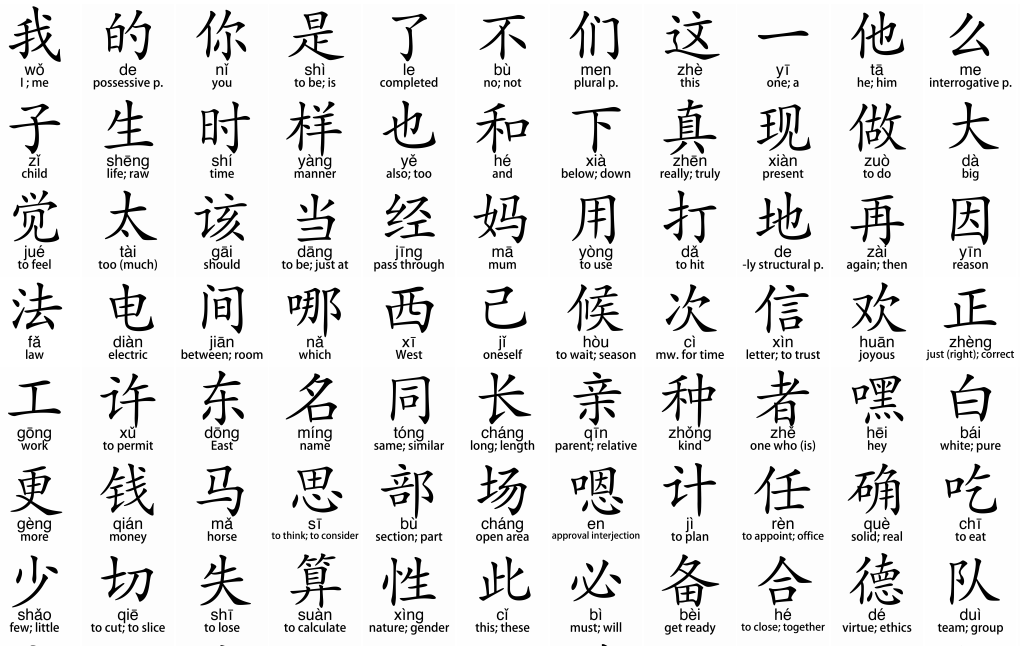
Most Common Chinese Characters for Beginners
Learning the most frequently used characters first will help you build a strong foundation. These characters appear in everyday conversations and written texts:
See AlsoHSK 6 Vocabulary Test - Quick & Full Quizzes- 的 (de) – A possessive particle, often used like 's in English.
- 是 (shì) – Means to be and is essential for basic sentences.
- 我 (wǒ) – Translates to I or me, crucial for self-expression.
Basic Chinese Characters for Daily Communication
These practical characters are useful for daily interactions, such as greetings and simple questions:
- 你 (nǐ) – Means you, necessary for addressing others.
- 好 (hǎo) – Means good or well, used in greetings like 你好 (nǐ hǎo).
- 吗 (ma) – A question particle, turning statements into yes/no questions.
Chinese Numbers and Their Characters
Mastering numbers early on is essential for counting, shopping, and telling time:
- 一 (yī) – The number one, simple and frequently used.
- 二 (èr) – Means two, another basic numeral.
- 十 (shí) – Represents ten, a building block for larger numbers.
Chinese Characters for Family Members
Learning family-related characters helps in conversations about relationships:
See AlsoChina’s ’38 Yuan Large Prawn’ Scandal Leaves Sour Taste- 妈 (mā) – Means mom, a common term in daily life.
- 爸 (bà) – Translates to dad, equally important.
- 家 (jiā) – Means home or family, useful in many contexts.
Simple Action Verbs in Chinese
Basic verbs allow you to form simple sentences and express actions:
- 吃 (chī) – Means to eat, essential for dining conversations.
- 喝 (hē) – Translates to to drink, another daily-life verb.
- 去 (qù) – Means to go, useful for directions and plans.
How to learn Chinese quickly and easily?
1. Set Clear and Achievable Goals
To learn Chinese quickly and easily, start by defining your objectives. Break them into manageable milestones, such as mastering basic greetings or learning 50 characters per week. This approach keeps you motivated and tracks progress effectively.
- Identify your purpose: Are you learning for travel, business, or personal interest?
- Set short-term targets: Focus on daily or weekly goals to avoid overwhelm.
- Measure progress: Use apps or journals to track vocabulary and grammar improvements.
2. Immerse Yourself in the Language
Surrounding yourself with Chinese accelerates learning. Exposure to native content helps internalize pronunciation, tones, and colloquial expressions naturally.
- Watch Chinese media: Movies, TV shows, or YouTube videos with subtitles.
- Listen to podcasts/music: Improves auditory comprehension and tone recognition.
- Change device language: Switch your phone or computer to Chinese for constant practice.
3. Use Spaced Repetition Systems (SRS)
SRS tools like Anki or Pleco optimize memorization by reviewing words at increasing intervals, ensuring long-term retention.
- Flashcards: Create decks for vocabulary, characters, and phrases.
- Consistent reviews: Dedicate 10-15 minutes daily to reinforce learning.
- Customize content: Focus on high-frequency words relevant to your goals.
4. Practice Speaking Early and Often
Overcoming the fear of speaking is crucial. Engage in conversations to build confidence and improve pronunciation and fluency.
- Language partners: Use apps like Tandem or HelloTalk to chat with natives.
- Shadowing technique: Repeat after native speakers to mimic tones and rhythm.
- Record yourself: Compare your speech with native audio to identify areas for improvement.
5. Leverage Mnemonics for Characters
Chinese characters can seem daunting, but mnemonics simplify memorization by associating shapes with stories or images.
- Break down characters: Learn radicals (building blocks) to understand composition.
- Create vivid associations: Link characters to familiar objects or concepts.
- Use apps like Skritter: Combines mnemonics with handwriting practice for retention.
How do you say 1, 2, 3, 4, 5, 6, 7, 8, 9, 10 in Chinese?

How to Say Numbers 1-10 in Chinese
Here’s how to say the numbers 1 to 10 in Chinese:
- 1 – 一 (yī)
- 2 – 二 (èr)
- 3 – 三 (sān)
- 4 – 四 (sì)
- 5 – 五 (wǔ)
- 6 – 六 (liù)
- 7 – 七 (qī)
- 8 – 八 (bā)
- 9 – 九 (jiǔ)
- 10 – 十 (shí)
Pronunciation Tips for Chinese Numbers 1-10
Correct pronunciation is key when learning Chinese numbers. Here are some tips:
- Yī (1) – Pronounced like ee with a high, flat tone.
- Èr (2) – Similar to the English word are but with a falling tone.
- Sān (3) – Sounds like sahn with a high, level tone.
- Sì (4) – Pronounced like suh but with a sharp, falling tone.
- Wǔ (5) – Sounds like woo with a dipping tone.
Writing Chinese Numbers 1-10 in Characters
Learning to write Chinese numbers involves understanding their characters:
- 一 (yī) – A single horizontal line.
- 二 (èr) – Two horizontal lines.
- 三 (sān) – Three horizontal lines.
- 四 (sì) – A more complex character with a box-like structure.
- 五 (wǔ) – A character with multiple strokes, resembling a zigzag.
Common Uses of Numbers 1-10 in Chinese
Numbers in Chinese are used in various contexts, such as:
- Counting objects – 一个苹果 (yī gè píngguǒ) means one apple.
- Telling time – 三点 (sān diǎn) means 3 o'clock.
- Phone numbers – Numbers are recited individually (e.g., 一, 二, 三).
- Prices – 五元 (wǔ yuán) means 5 yuan.
- Age – 我十岁 (wǒ shí suì) means I am 10 years old.
Cultural Significance of Numbers in Chinese
Numbers in Chinese culture often carry symbolic meanings:
- 8 (bā) – Considered lucky, sounding like prosperity.
- 4 (sì) – Avoided due to its similarity to the word for death.
- 6 (liù) – Associated with smoothness and good fortune.
- 9 (jiǔ) – Symbolizes longevity and eternity.
- 10 (shí) – Represents completeness and perfection.
Frequently Asked Questions (FAQ)
What are the benefits of learning Chinese characters?
Learning Chinese characters opens doors to understanding one of the world's oldest and richest cultures. Mastering these characters enhances cognitive abilities, such as memory and pattern recognition, while also providing a competitive edge in business and academia. Additionally, knowing Chinese characters allows you to access original texts, literature, and media, deepening your appreciation for the language beyond just spoken communication.
How can beginners start learning Chinese characters effectively?
Beginners should focus on basic radicals and strokes, as these are the building blocks of all Chinese characters. Starting with high-frequency characters, like those for numbers or common objects, helps build confidence. Using mnemonics and visual associations can make memorization easier, while practicing writing by hand reinforces retention. Consistency and repetition are key to progress.
Are there any tools or resources to help with studying Chinese characters?
Yes, numerous digital tools can aid in learning, such as apps like Pleco, Anki, or Skritter, which offer flashcards and writing practice. Online platforms like YouTube tutorials or websites such as HanziCraft break down character structures. Traditional methods like workbooks and flashcards remain effective, especially when combined with immersive techniques like watching Chinese shows or reading simple texts.
How long does it take to become proficient in reading and writing Chinese characters?
The time required varies based on dedication, study methods, and prior language experience. On average, mastering 1,000-2,000 characters can take one to two years of consistent study, enabling basic literacy. However, achieving fluency in reading and writing 3,000+ characters, needed for advanced comprehension, may take several more years. Regular practice and immersion significantly accelerate progress.
Leave a Reply
Related Posts